Artwork
The Temple of Flora, or Garden of Nature: The Persian Cyclamen
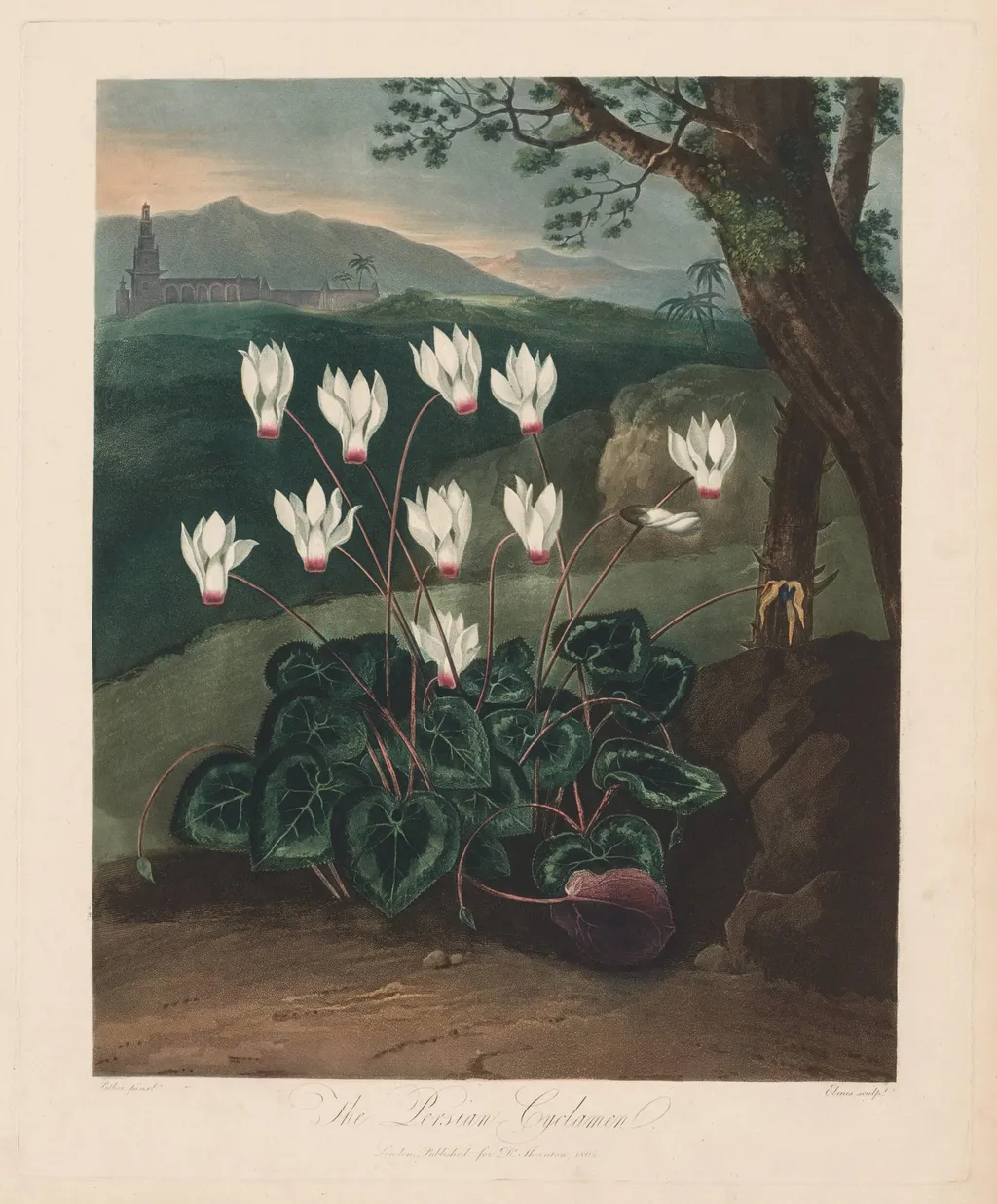
The Temple of Flora, or Garden of Nature: The Persian Cyclamen is a print by the Romanticist artist Robert John Thornton. It dates from 1803 and is held in the collection of the Cleveland Museum of Art.
About this work
You can learn more about this style by looking up the technique of chiaroscuro.
This painting shows a detailed picture of a Persian cyclamen flower.
It was created over several years, from 1799 to 1807.
The artist put a lot of effort into drawing the flower's petals and leaves.
The painting is interesting because it shows the artist's attention to detail.
He drew each part of the flower carefully, making it look very realistic.
You can learn more about this style by looking up the technique of chiaroscuro.
Overview
The Temple of Flora, or Garden of Nature: The Persian Cyclamen is a botanical print produced by Robert John Thornton between 1799 and 1807. Part of a larger illustrated work on plants, it was published in 1803 as an engraving with hand-coloring. The piece is now held by The Cleveland Museum of Art and exemplifies the scientific and aesthetic aims of early 19th-century botanical illustration.
Subject & Meaning
The subject is the Persian cyclamen, a flowering plant native to the eastern Mediterranean. Its delicate, upward-facing blooms and heart-shaped leaves are rendered with precision, reflecting the era’s interest in cataloging nature’s diversity. The image serves both as a taxonomic record and a tribute to botanical beauty, aligning with Enlightenment ideals of order and observation in the natural world.
Technique & Style
Thornton employed fine-line engraving, meticulously hand-colored to capture the flower’s subtle tones. The petals and foliage are rendered with sharp detail, emphasizing texture and form. While not strictly using chiaroscuro, the work achieves depth through careful gradation of color and shadow, enhancing the three-dimensionality of the specimen without dramatic contrast.
History & Provenance
Created as part of Thornton’s ambitious project The Temple of Flora, the print was produced over eight years with the help of artists and engravers. It was intended for subscribers interested in botany and natural history. The Cleveland Museum of Art acquired the print as part of its collection of scientific illustrations, preserving its role in the history of botanical publishing.
Context
During the late 18th and early 19th centuries, botanical illustration flourished alongside colonial exploration and scientific classification. Thornton’s work emerged in a climate where accurate plant depiction was vital for horticulture and medicine. His publication competed with other illustrated florilegia, aiming to combine scientific rigor with artistic elegance for an educated audience.
Legacy
Thornton’s The Temple of Flora remains a significant example of early scientific publishing. Though not widely known today, its detailed plates influenced later botanical artists and contributed to the standardization of plant illustration. The Persian cyclamen print endures as a testament to the intersection of art, science, and craftsmanship in the pre-photographic era.
Artist & collection

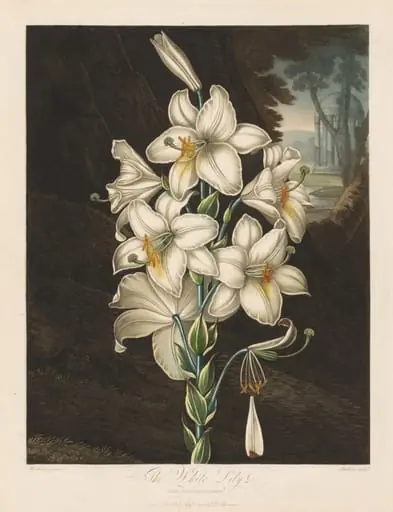 The Temple of Flora, or Garden of Nature: The White Lily with Variegated Leaves
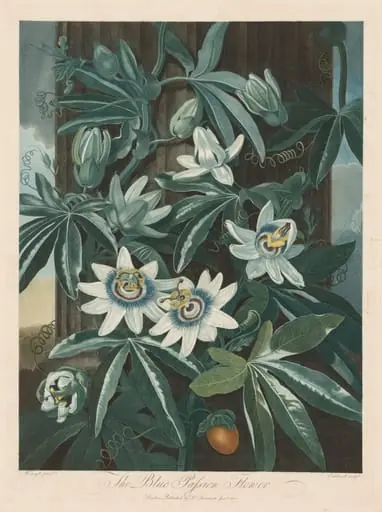 The Blue Passion-flower
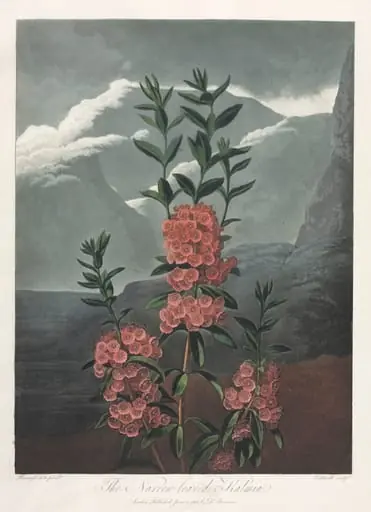 The Temple of Flora, or Garden of Nature: The Narrow-leaved Kalmia
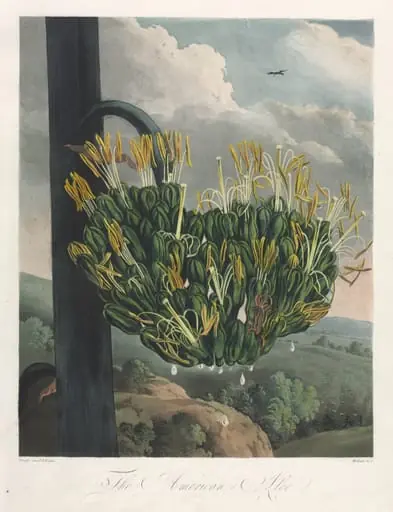 The Temple of Flora, or Garden of Nature: The American Aloe
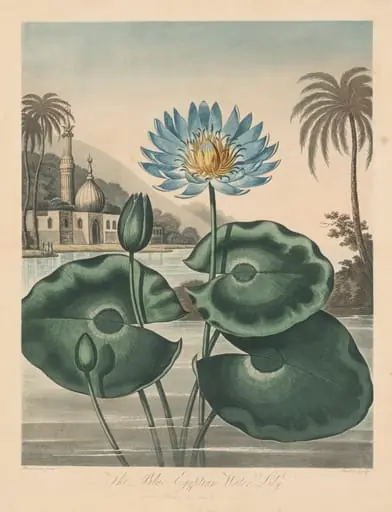 The Temple of Flora, or Garden of Nature: Blue Egyptian Waterlily
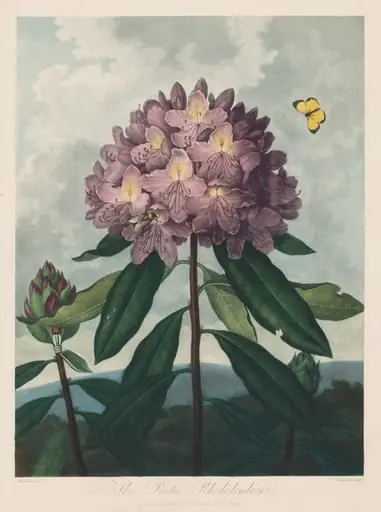 The Temple of Flora, or Garden of Nature: The Pontic Rhododendron
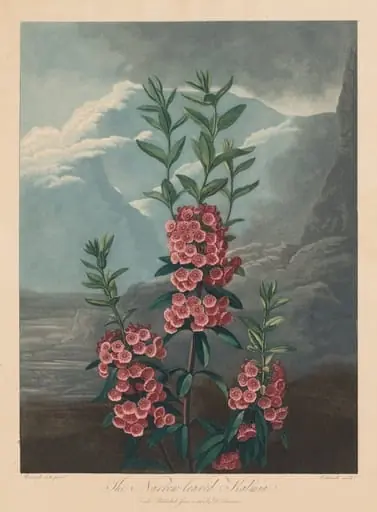 The Temple of Flora, or Garden of Nature: The Narrow-leaved Kalmia, Mountain Laurel
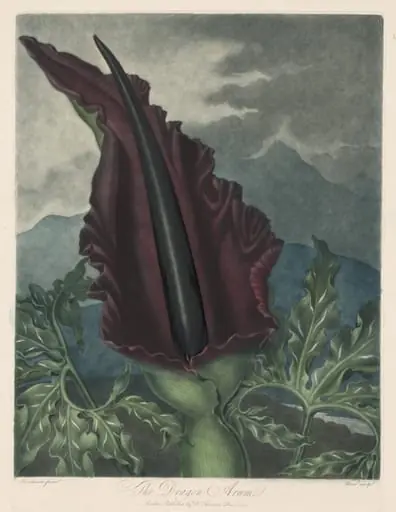 The Dragon Arum, Black Calla or Solomon's Lily
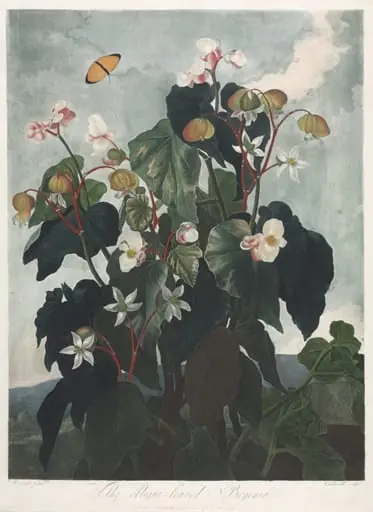 The Temple of Flora, or Garden of Nature: The Obique-leaved Begonia
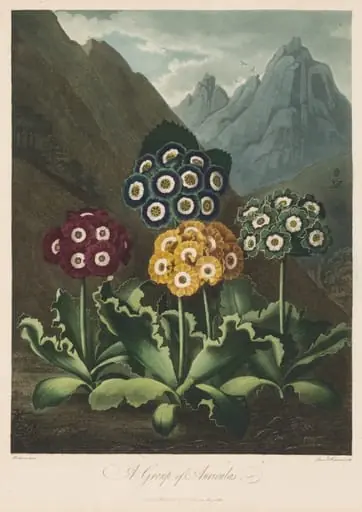 The Temple of Flora, or Garden of Nature: A Group of Auriculas
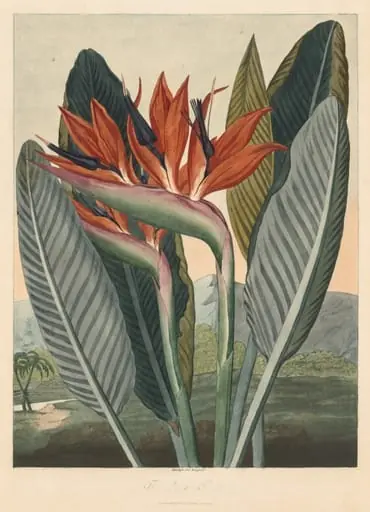 The Temple of Flora; or Garden of Nature: The Queen Flower
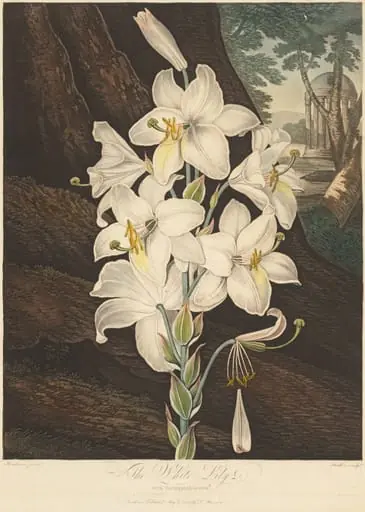 The Temple of Flora; or Garden of Nature: White Lily with Variegated Leaves
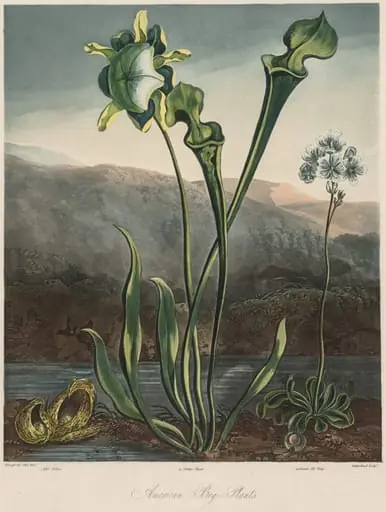 The Temple of the Flora: American Bog Plants
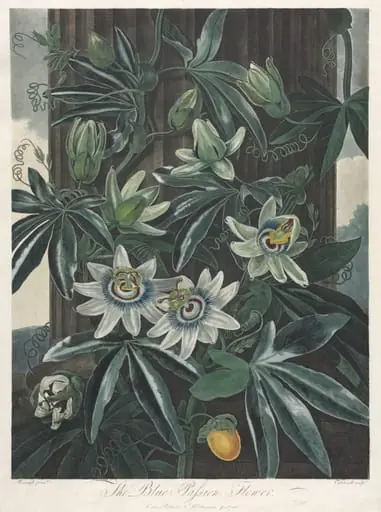 The Temple of Flora, or Garden of Nature: The Blue Passion Flower