Artwork
The Temple of Flora, or Garden of Nature: The Pontic Rhododendron
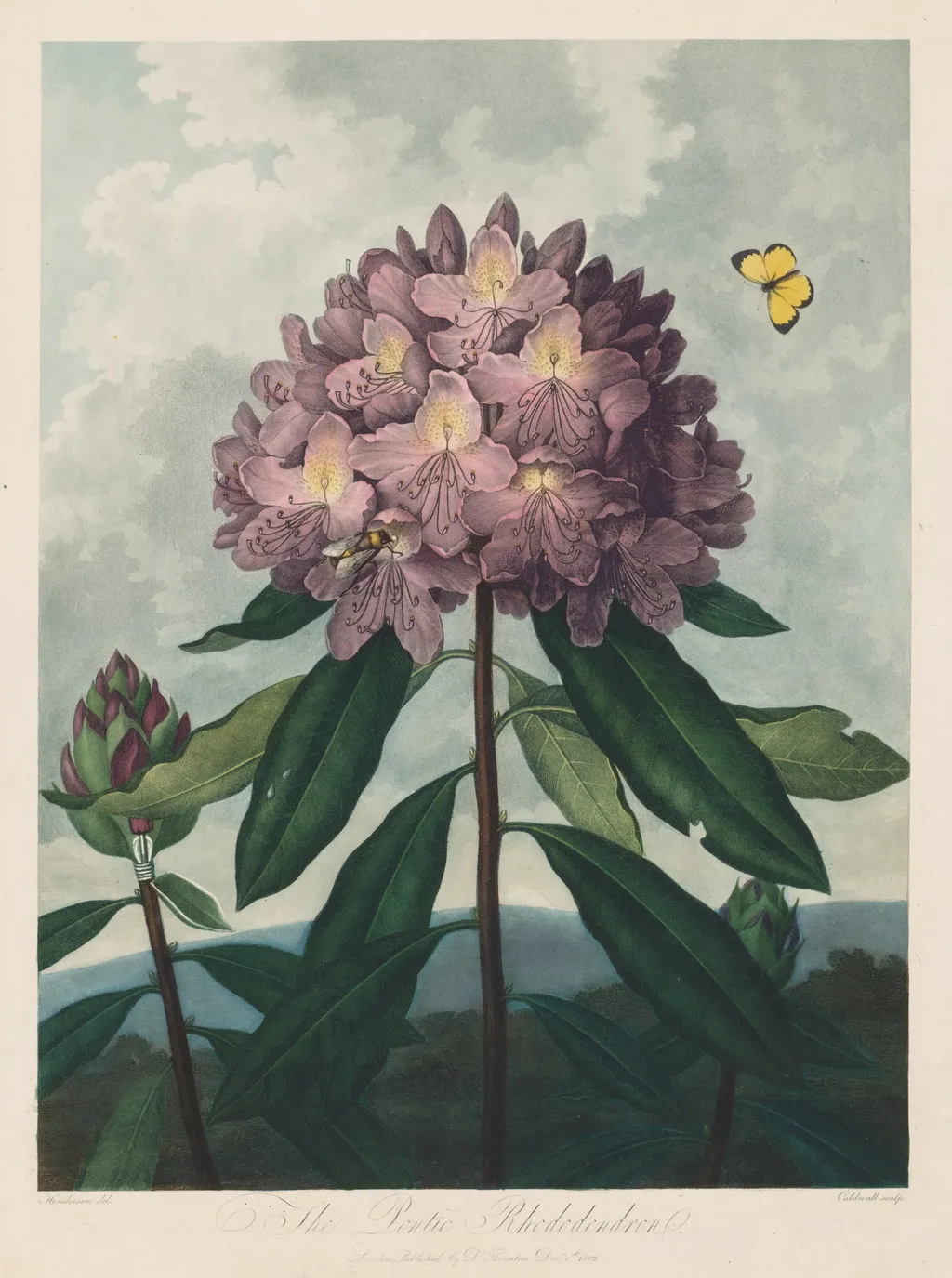
The Temple of Flora, or Garden of Nature: The Pontic Rhododendron is a print by the Romanticist artist Robert John Thornton. It dates from 1803 and is held in the collection of the Cleveland Museum of Art.
About this work
If this grabs you, hunt down Robert John Thornton (British, 1768–1837) next.
This painting shows a single pink flower in a pot on a rocky ledge. Tiny bugs and a butterfly hover near the bloom. Soft light casts shadows on the stone.
It’s part of a giant book project. Thornton wanted art to teach botany, mixing science and beauty. The print looks almost like oil paint because of special engraving tricks.
If this grabs you, hunt down Robert John Thornton (British, 1768–1837) next.
Overview
This print is one of many in Robert John Thornton’s ambitious botanical publication, intended as both a scientific reference and an aesthetic experience. Created in the late 18th century, it reflects a period when printmaking techniques evolved to capture the subtle textures and lighting of living plants. The work belongs to a larger series designed to educate viewers on botany through visually refined imagery.
Subject & Meaning
The image centers on a single pink rhododendron in a ceramic pot, placed on a weathered stone ledge. Surrounding it are small insects and a butterfly, suggesting the plant’s role in a living ecosystem. The composition avoids idealization, instead emphasizing the quiet intimacy of a specimen observed in nature. The inclusion of fauna implies interdependence between plant and pollinator, reinforcing the project’s scientific intent.
Technique & Style
The print employs aquatint to achieve the soft gradations and translucent washes typical of watercolor, while fine etching defines the flower’s delicate contours and the stone’s rough surface. These methods allowed artists to mimic the luminosity and depth of painted works without using pigment. The result is a tactile realism that bridges the precision of scientific illustration with the atmospheric qualities of fine art.
History & Provenance
Produced between 1797 and 1812, the print was part of Thornton’s multi-volume work, 'The Temple of Flora,' published in London. Though financially unsuccessful in its time, the series was widely distributed among botanical institutions and private collectors. The plates were engraved by skilled artisans under Thornton’s direction, blending his vision with technical expertise from the printmaking trade.
Context
During the late 1700s, British interest in botany surged due to colonial exploration and the rise of natural philosophy. Thornton’s project responded to this trend by making plant science accessible through art. His work stood apart from purely technical floras by prioritizing visual harmony, aligning with Enlightenment ideals that valued beauty as a path to knowledge.
Legacy
Though Thornton’s publication faded from public view after his death, its plates remained influential in botanical illustration. Later naturalists and artists cited its fusion of scientific accuracy and aesthetic care as a model. Surviving copies are now held in major libraries and museums, valued for their technical innovation and historical insight into the intersection of art and science.
Artist & collection

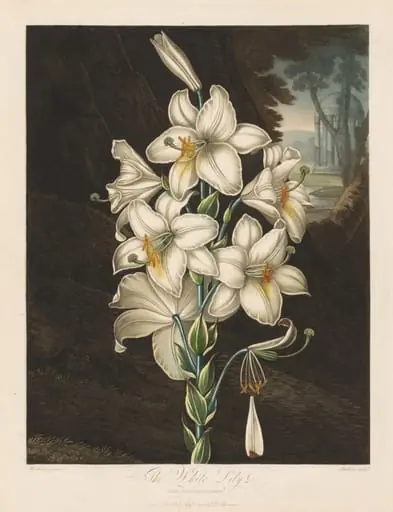 The Temple of Flora, or Garden of Nature: The White Lily with Variegated Leaves
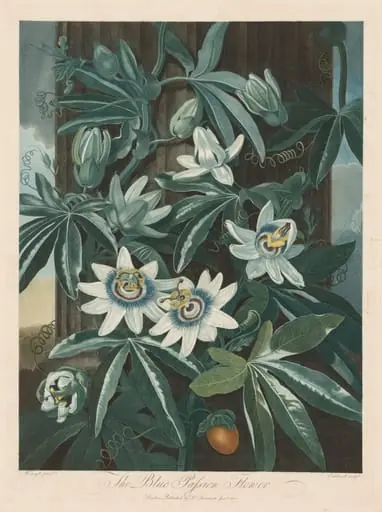 The Blue Passion-flower
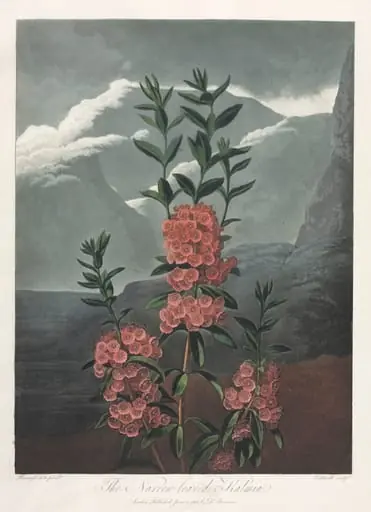 The Temple of Flora, or Garden of Nature: The Narrow-leaved Kalmia
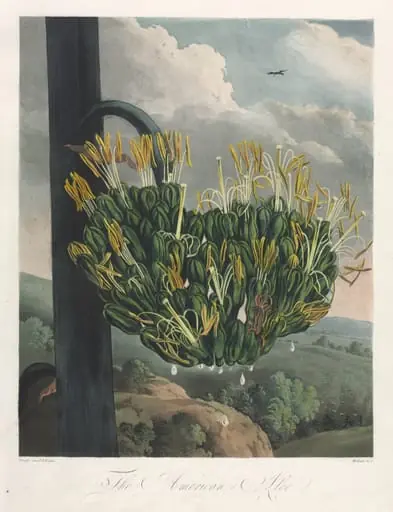 The Temple of Flora, or Garden of Nature: The American Aloe
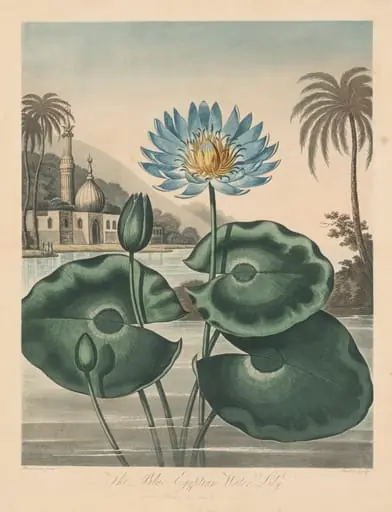 The Temple of Flora, or Garden of Nature: Blue Egyptian Waterlily
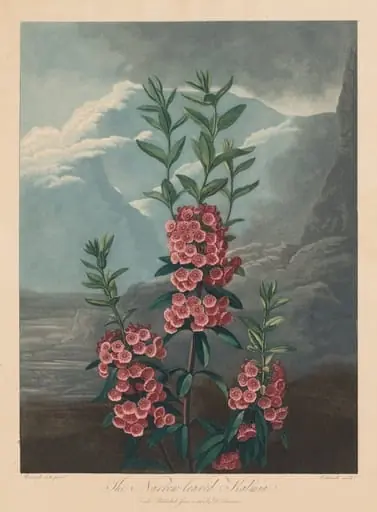 The Temple of Flora, or Garden of Nature: The Narrow-leaved Kalmia, Mountain Laurel
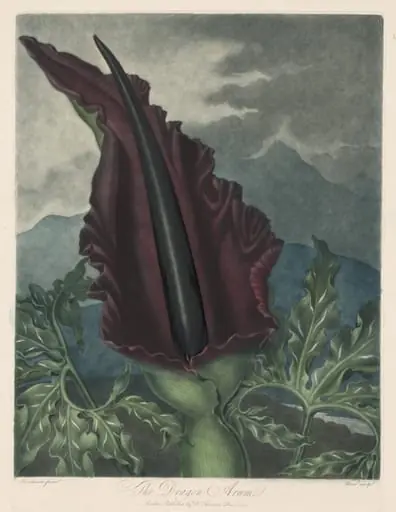 The Dragon Arum, Black Calla or Solomon's Lily
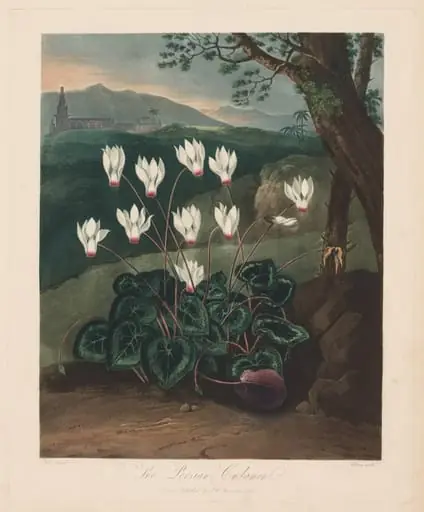 The Temple of Flora, or Garden of Nature: The Persian Cyclamen
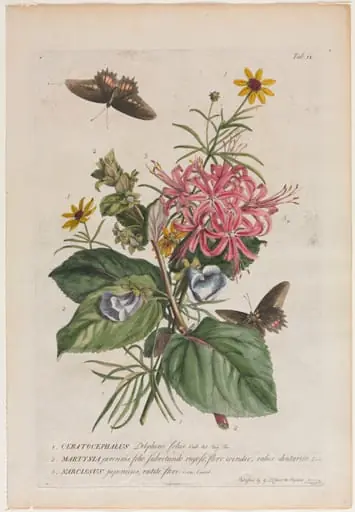 Plantae et papiliones rariores: No. 9
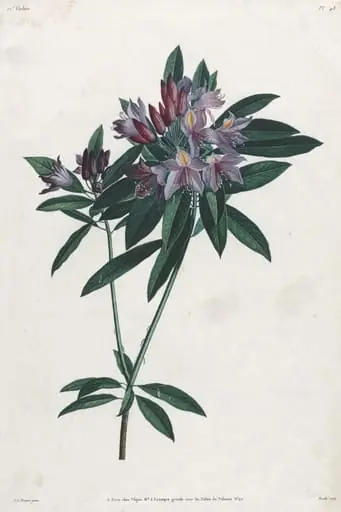 Pontic Rhododendron
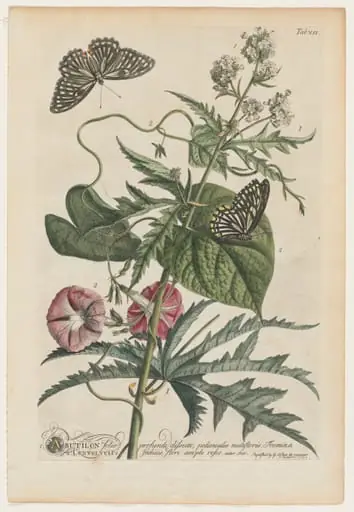 Plantae et papiliones rariores: No. 7
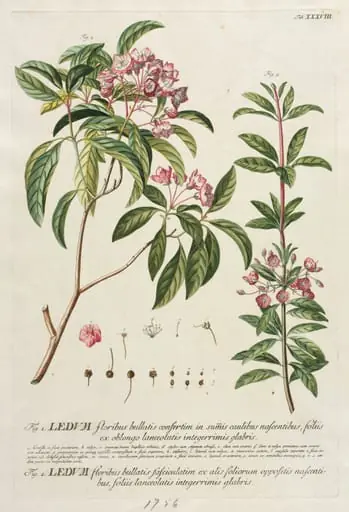 Plantae Selectae: No. 38
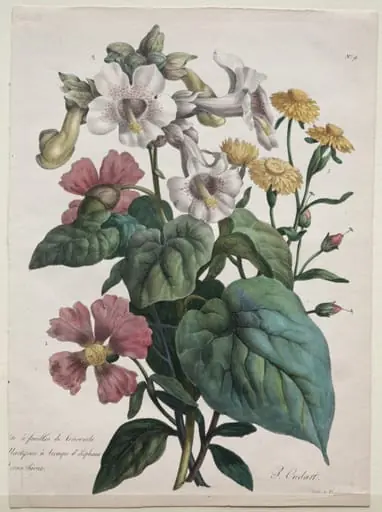 Cours d'Histoire Naturelle, contenant les principales espèces du règne animal, classées methodiquemenet: Martynia or Unicorn Plant
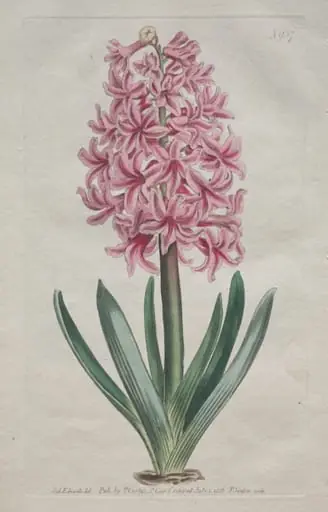 The Botanical Magazine or Flower Garden Displayed: Garden Hyacinth
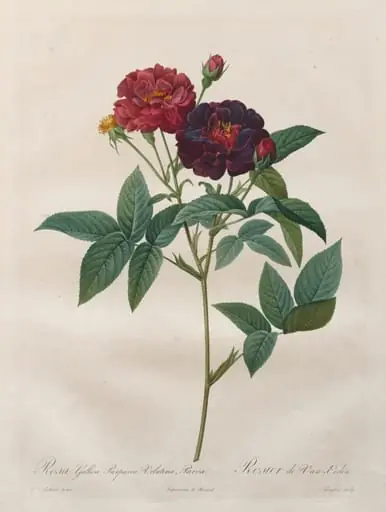 The Roses: Rosa Gallica Purpurea Velutina Parva
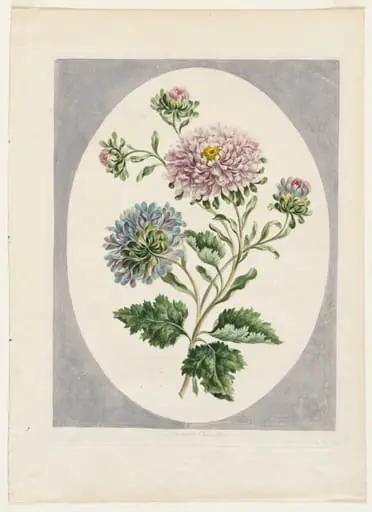 A Collection of Flowers Drawn from Nature: Large Double China Aster
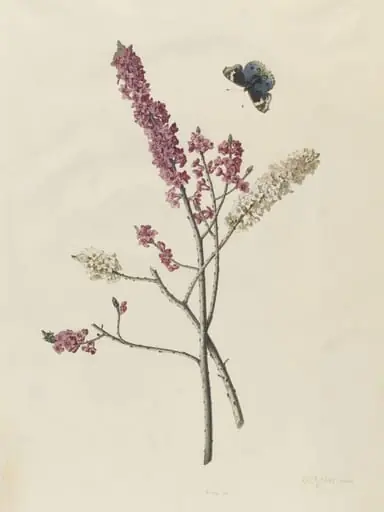 <i>Daphne mezereum</i> with butterfly
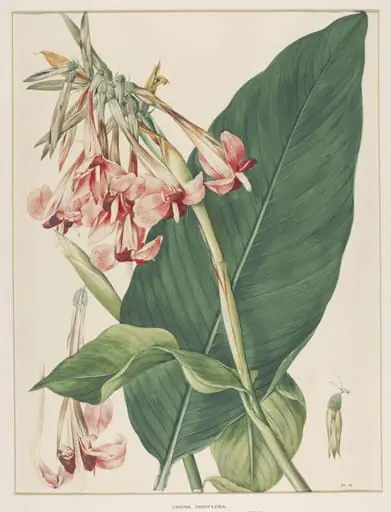 Canna Iridiflora