Artwork
Untitled
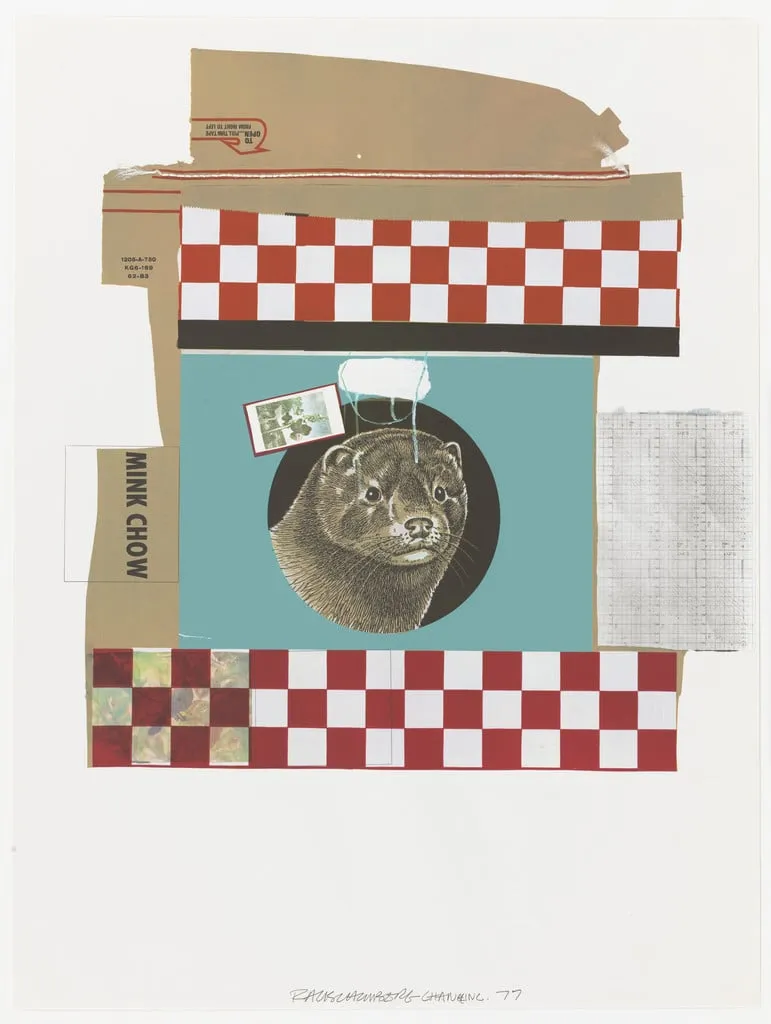
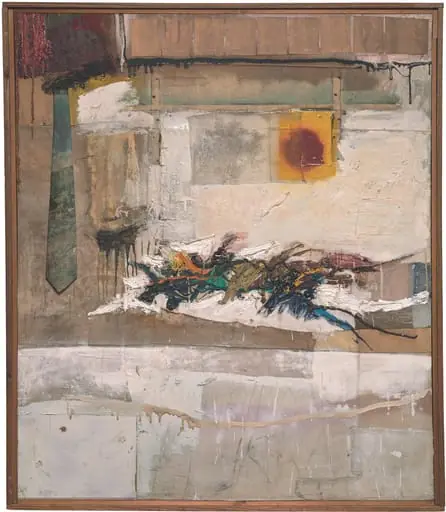
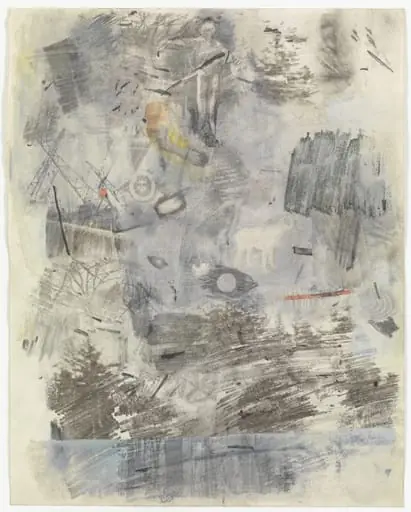
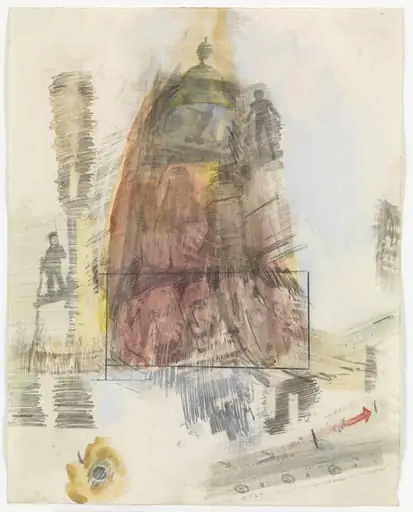
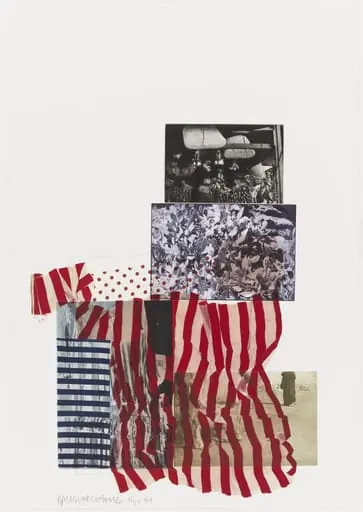
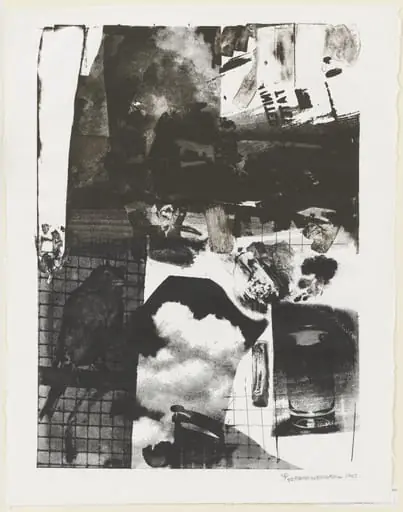
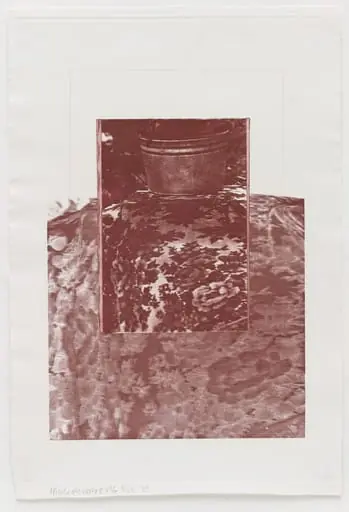
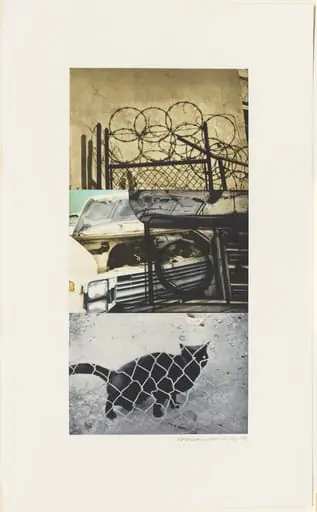
Untitled is a graphite print by Robert Rauschenberg. It dates from 1977 and is held in the collection of the Museum of Modern Art.
About this work
Overview
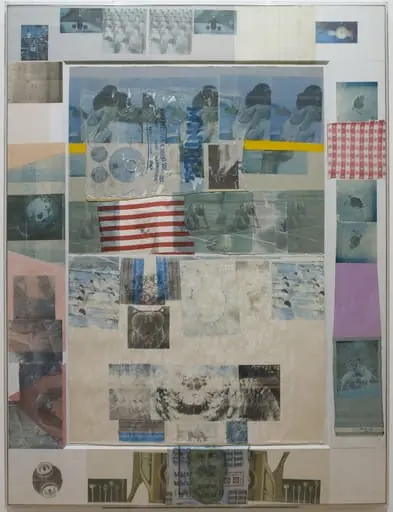
Created in 1977, this work by Robert Rauschenberg combines screenprinting with physical collage elements, including sewn cord and pencil markings.
Created in 1977, this work by Robert Rauschenberg combines screenprinting with physical collage elements, including sewn cord and pencil markings. It belongs to a series of prints that blur the boundary between image and object, incorporating found materials into a layered composition. The piece is part of The Museum of Modern Art’s collection, reflecting Rauschenberg’s ongoing exploration of materiality and visual fragmentation.
Subject & Meaning
The central image—a mink’s face—is framed by domestic and commercial references: a checkered tablecloth, a package labeled 'Mink Chow,' and handwritten signage. These elements suggest a tension between nature and consumption, animal life and industrial packaging. The inclusion of a landscape photograph and abstract grids introduces spatial dislocation, inviting interpretation without fixed narrative.
Technique & Style
Rauschenberg layered screenprinted photographs with cut-out collage fragments, then reinforced the composition with hand-sewn cord along the edges. Pencil lines subtly trace contours and connections between elements, adding a gestural, intimate counterpoint to the mechanical prints. The mix of textures—paper, fabric, cardboard—creates a tactile surface that resists flatness, characteristic of his post-Dada approach.
History & Provenance
This work was produced during a period when Rauschenberg was intensively experimenting with printmaking techniques, often using imagery sourced from mass media and personal archives. It entered The Museum of Modern Art’s collection shortly after its creation, recognized for its innovative fusion of print and assemblage. No earlier ownership records are publicly documented beyond its exhibition history.
Context
Made in the late 1970s, the piece aligns with Rauschenberg’s continued engagement with the legacy of Duchamp and the Neo-Dada movement. It reflects broader cultural anxieties around consumerism and animal welfare, while also engaging with contemporary debates in art about the legitimacy of everyday materials in fine art contexts.
Legacy
The work exemplifies Rauschenberg’s influence on subsequent generations of artists who embraced collage, mixed media, and the integration of non-art objects into gallery spaces. Its unorthodox materials and open-ended symbolism helped expand definitions of printmaking, encouraging artists to treat the print surface as a site for physical and conceptual accumulation.
Artist & collection

Artist
Milton Ernest "Robert" or "Bob" Rauschenberg was an American painter and multi-media artist, whose work has been associated with numerous mid-20th century art movements including the New York School, Conceptual Art, Pop art, and Neo-Dada.