Artwork
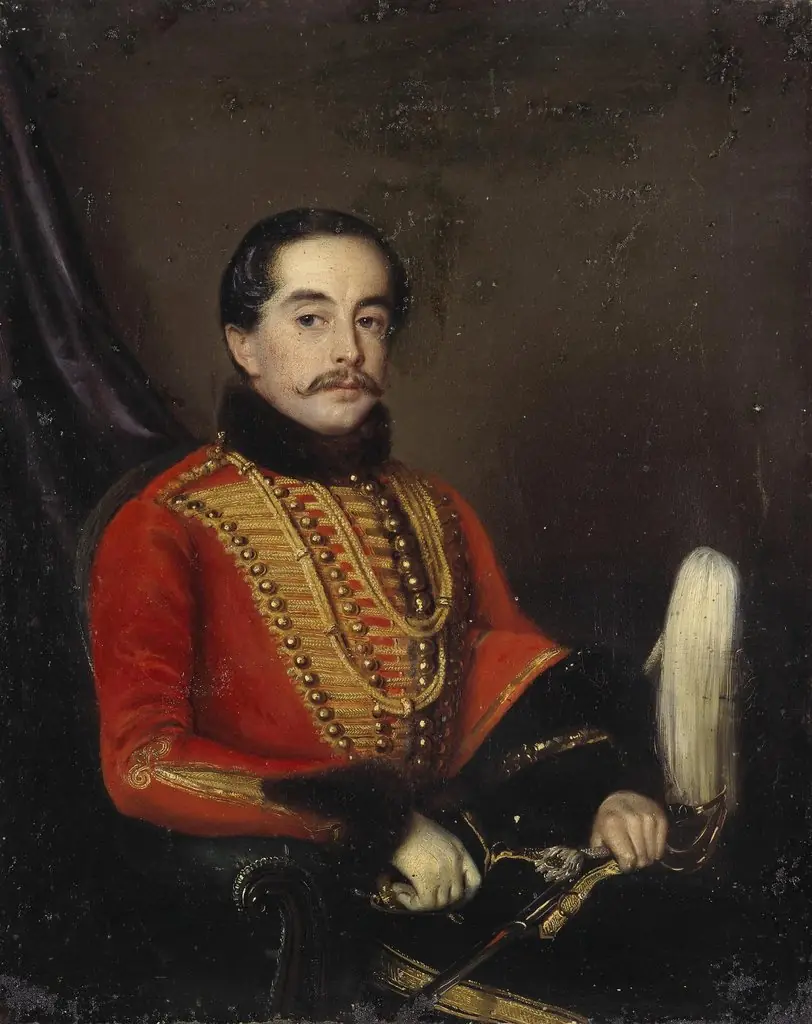
Portrait of the Decembrist N.I. Lorer
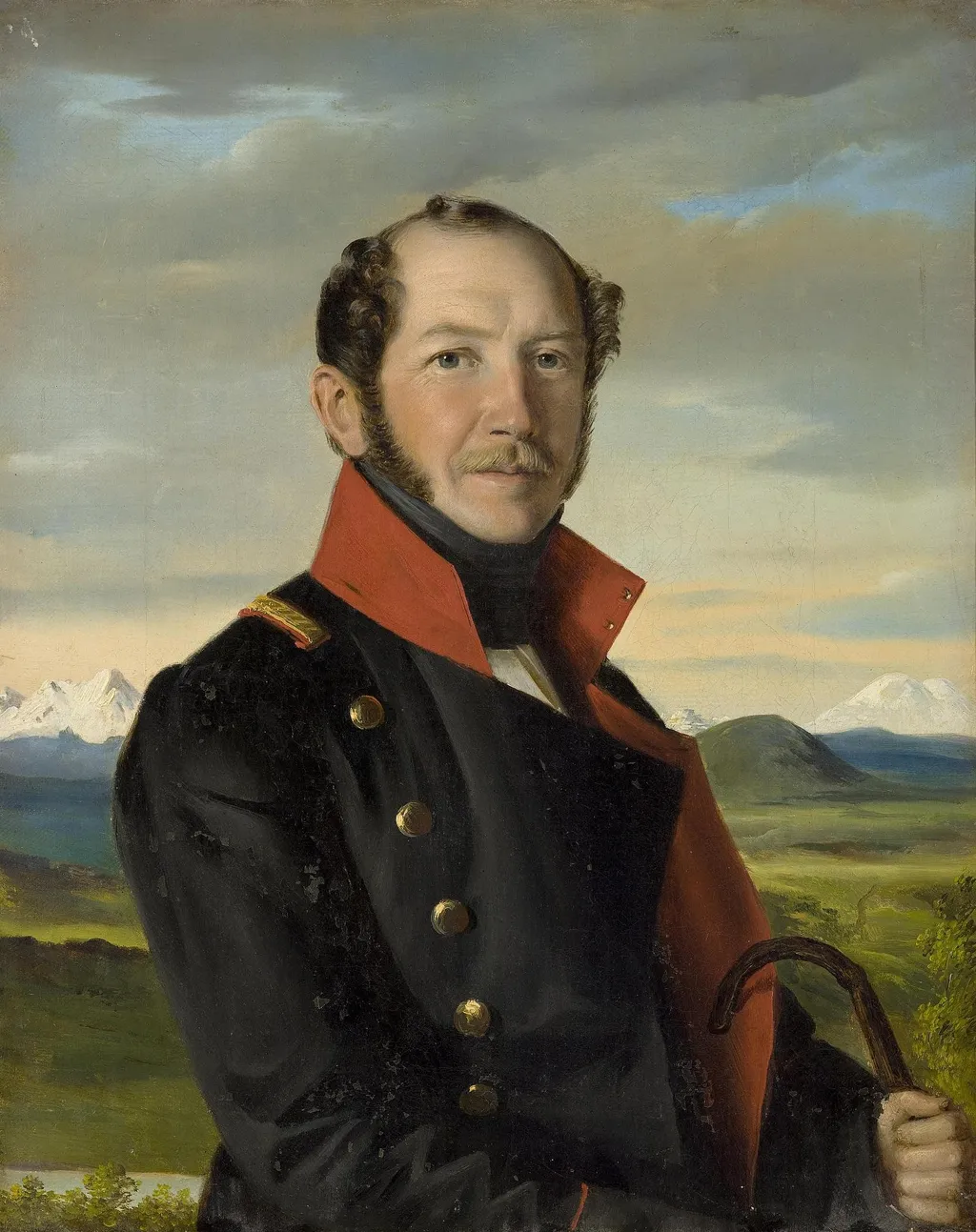
Portrait of the Decembrist N.I. Lorer is an oil painting by Robert Schwede. It dates from 1841 and is held in the collection of the Hermitage Museum. Portrait of the Decembrist N.
About this work
This painting has a specific historical context, as it depicts a Decembrist, which refers to a group of Russian revolutionaries.
The painting is titled Portrait of the Decembrist N.I. Lorer.
It was created by Robert Schwede in 1841.
The artist chose oil paint as the medium for this work, which is now held at the State Hermitage Museum.
This painting has a specific historical context, as it depicts a Decembrist, which refers to a group of Russian revolutionaries.
The Decembrists were known for their uprising in 1825, and this painting may offer insight into that period.
To learn more about similar artworks, look up the museum: State Hermitage Museum.
Overview
Painted in 1841 by Robert Schwede, this oil portrait depicts Nikolai Ivanovich Lorer, a participant in the 1825 Decembrist uprising. The work is part of the State Hermitage Museum’s collection in Saint Petersburg. Schwede, a Baltic German artist active in Russia, captured Lorer with a restrained realism that reflects the political gravity of his subject. The portrait stands as a quiet testament to a suppressed movement in Russian history.
Subject & Meaning
Nikolai Ivanovich Lorer was a nobleman and army officer who joined the Decembrist revolt, a failed attempt to establish a constitutional monarchy in Russia. Though the uprising was crushed, its participants became symbols of dissent. This portrait, made over a decade after the rebellion, does not glorify but rather documents Lorer’s presence with solemnity, acknowledging his role without overt political commentary.
Technique & Style
Schwede employed traditional oil-on-canvas techniques, favoring muted tones and precise brushwork to render Lorer’s features with quiet dignity. The background is unadorned, focusing attention on the subject’s face and posture. The lighting is even and naturalistic, avoiding dramatic contrasts. This restrained approach aligns with the academic portraiture of the period, emphasizing character over spectacle.
History & Provenance
The painting entered the State Hermitage Museum’s collection in the 19th century, likely acquired through official channels connected to the imperial court or aristocratic circles. Its survival reflects the museum’s broader effort to preserve images of figures associated with the Decembrist movement, even as their political legacy remained officially controversial. No significant changes to the work’s condition or ownership are documented after its acquisition.
Context
Created during the reign of Nicholas I, a ruler who suppressed Decembrist memory, the portrait exists in tension with state ideology. While public commemoration of the rebels was forbidden, private and institutional preservation of their likenesses persisted. Schwede’s portrait thus operates as a subtle act of historical record-keeping, offering a visual counterpoint to official narratives of the era.
Legacy
The portrait remains one of the few surviving visual records of a Decembrist from the immediate post-revolt generation. It contributes to scholarly understanding of how individuals associated with the uprising were perceived and represented in the decades following their defeat. Though not widely exhibited, it holds value as a material artifact of Russia’s early liberal opposition.
Own this work as a print
Artist & collection

 Portrait of Nikolai A. Chicherin (1771/73-1837) (1st)
 Portrait of Lieutenant-General Frederik Knotzer
 Portrait of Dmitry V. Lyalin (1772-1847/48)
 Portrait of Paisy S. Kaisarov (1783-1844)
 Portret de bărbat
 Portrait of Alexey S. Kologrivov (1776-1818)
 Portrait of Johannes, Graaf van den Bosch, Governor-General of the Dutch East Indies, Minister of the Colonies
 Portrait of Gerasim A. Shostakov (1756-1837)
 Portrait of Vasily S. Trubetskoy (1776-1841)
 Portrait of Yegor A. Akhte (1772-1826)
 Portrait of Cyprian A. von Kreuz (1778-1850)
 Per Otto Adelborg