Artwork
Christ Teacheth Humility
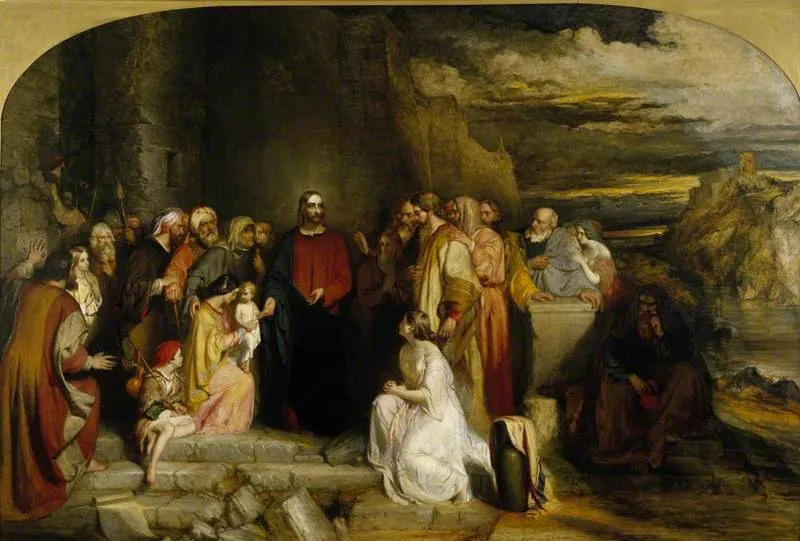
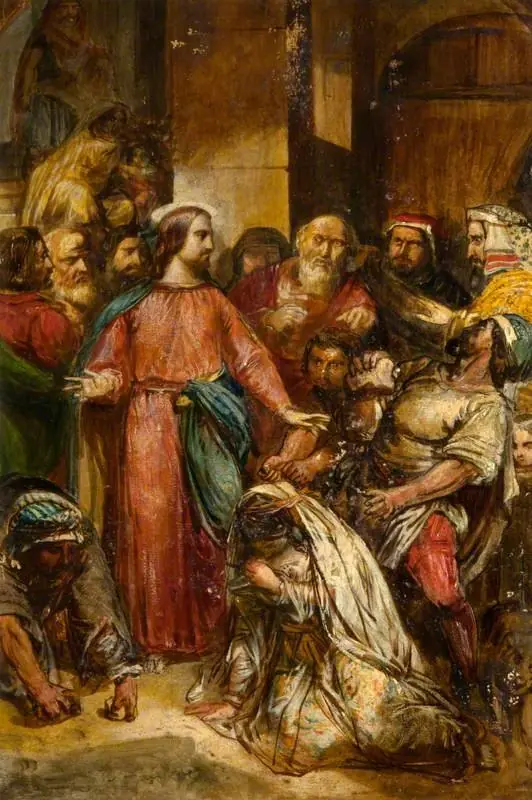
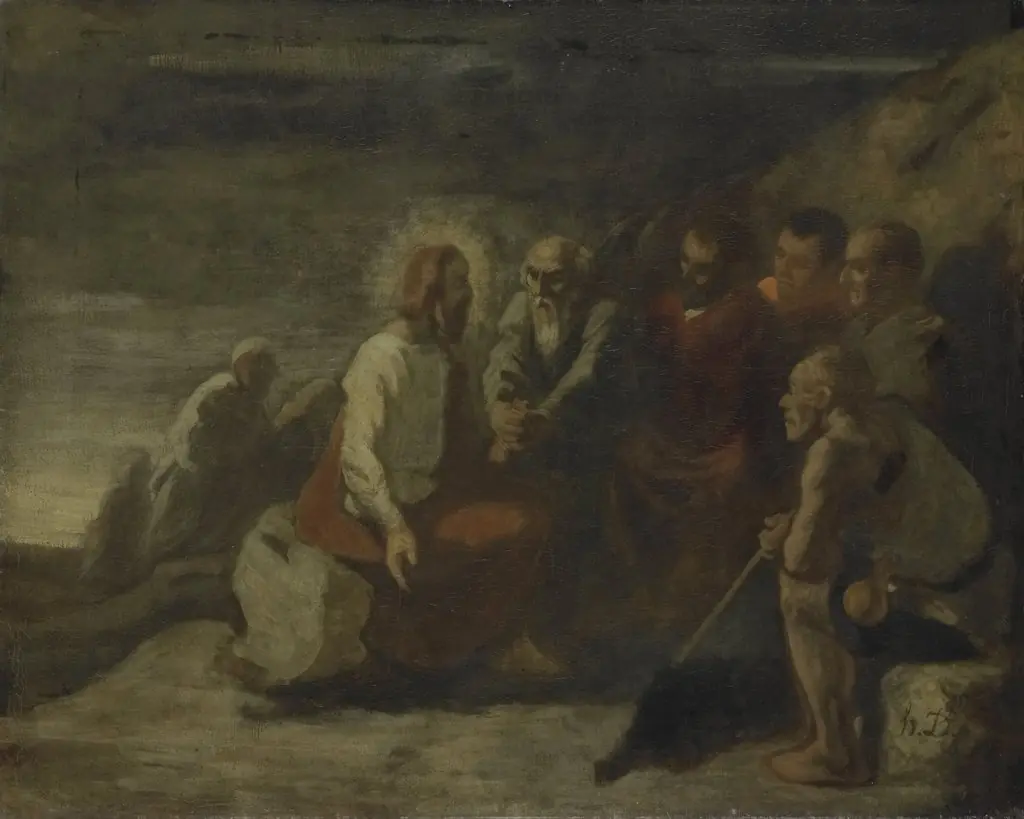
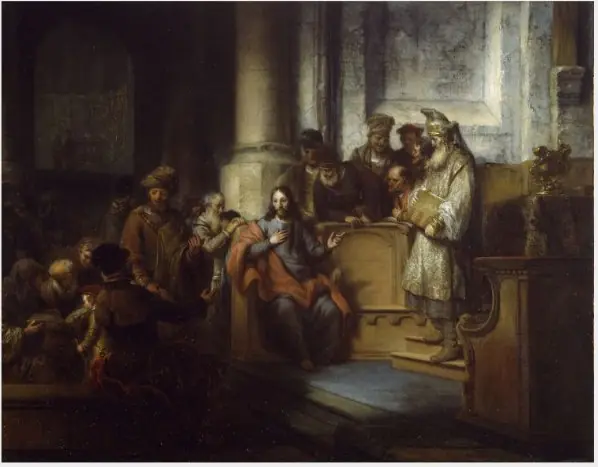
Christ Teacheth Humility is an oil painting by the Realist artist Robert Scott Lauder. It dates from 1847 and is held in the collection of the National Galleries Scotland.
About this work
Overview
Robert Scott Lauder, a Scottish artist and founding member of the Royal Scottish Academy, completed this oil painting in 1847.
Robert Scott Lauder, a Scottish artist and founding member of the Royal Scottish Academy, completed this oil painting in 1847. It portrays a quiet moment from the life of Christ, focusing on moral instruction rather than spectacle. The work reflects the artist’s engagement with contemporary Realist tendencies, prioritizing naturalism and emotional restraint over idealized religious imagery. It remains part of the Scottish National Gallery’s permanent collection.
Subject & Meaning
The scene captures Christ addressing a group of followers, his posture and gesture conveying humility as a central virtue. Surrounding figures, some kneeling or seated on the ground, respond with quiet attention, suggesting a moment of personal reflection rather than public spectacle. The absence of dramatic lighting or divine signs shifts focus to human behavior, framing humility as an accessible, earthly practice rather than a transcendent mystery.
Technique & Style
Lauder employed oil paint with careful attention to texture and form, rendering fabric folds, weathered skin, and subtle facial expressions with observational precision. The palette is restrained, dominated by earth tones—ochres, muted greens, and soft browns—enhancing the scene’s quiet gravity. Light falls naturally across the figures, avoiding theatrical contrast, and supports a sense of intimate, unembellished reality.
History & Provenance
Painted in 1847, the work was acquired by the Scottish National Gallery not long after its completion. Lauder, known for his historical and biblical subjects, was active in Edinburgh’s artistic circles and helped shape the institutional framework of Scottish art. The painting’s early acquisition suggests it was recognized within its time as a significant contribution to national religious art, though it never entered widespread public circulation beyond Scotland.
Context
In mid-19th century Scotland, religious art was undergoing a shift from grand allegory toward domesticated, morally grounded narratives. Lauder’s painting aligns with this trend, reflecting broader cultural interest in ethical living and the dignity of ordinary people. The setting, with its rocky shoreline and simple attire, avoids biblical exoticism, grounding Christ’s teaching in a recognizable, contemporary environment.
Legacy
While not widely reproduced or celebrated beyond national collections, the painting remains a quiet example of how Scottish artists reimagined religious themes through realism. Lauder’s emphasis on human dignity and understated emotion influenced later generations focused on moral narrative over spectacle. Its continued presence in the Scottish National Gallery affirms its role as a representative work of its time and place.
Artist & collection
Artist
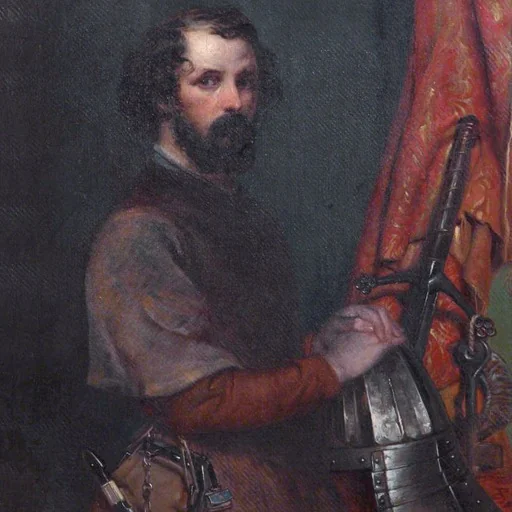
Robert Scott Lauder (25 June 1803 – 21 April 1869) was a Scottish artist who described himself as a "historical painter". He was one of the original members of the Royal Scottish Academy.