Artwork
Coal Pockets at New Bedford
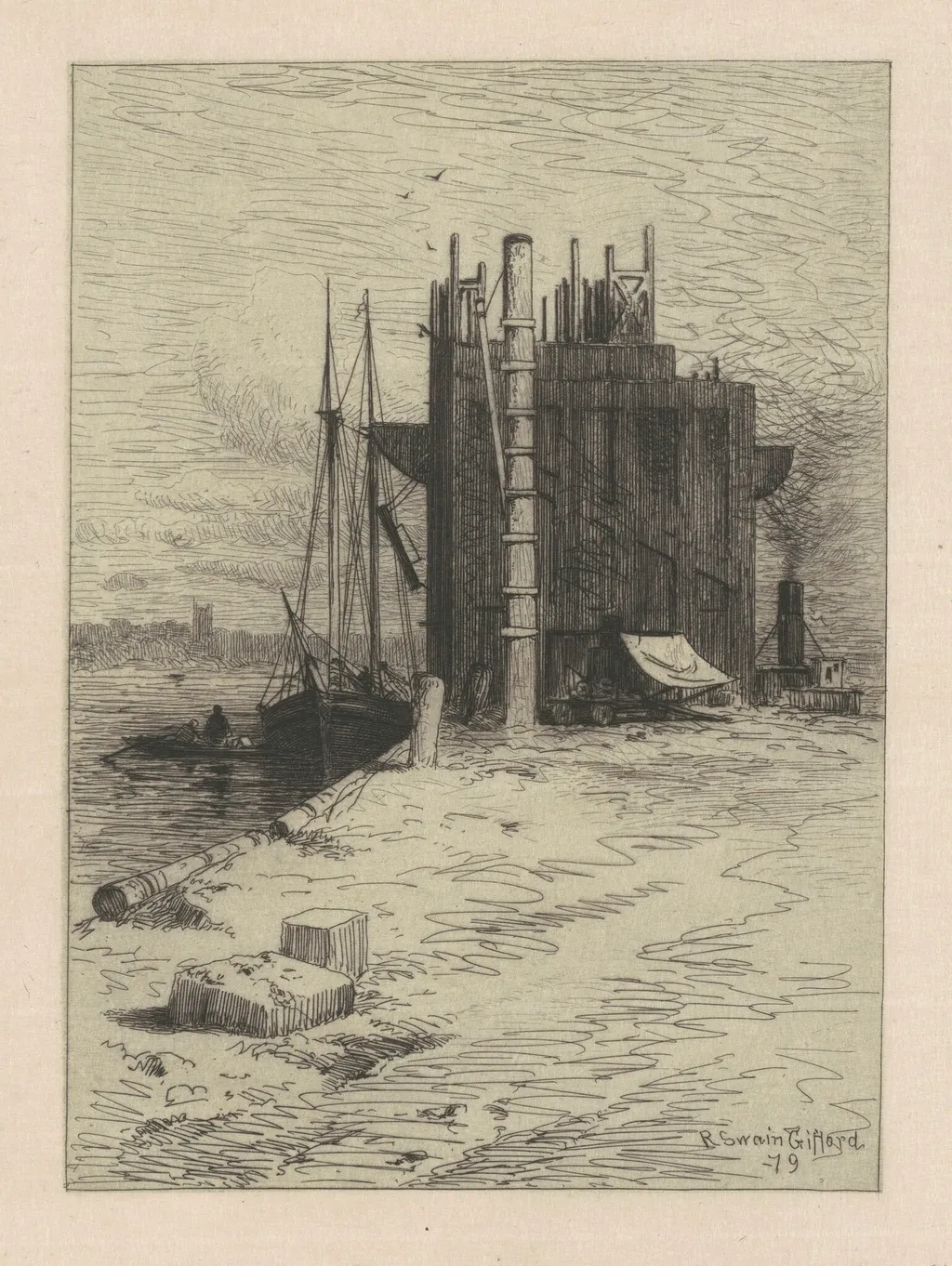
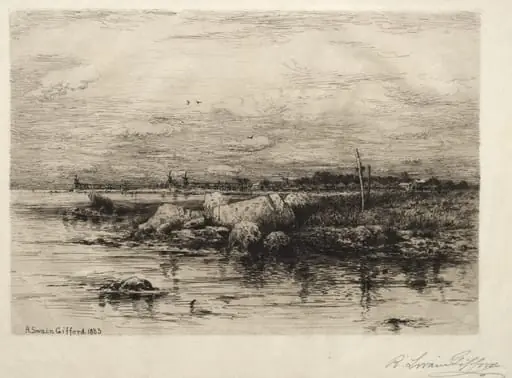
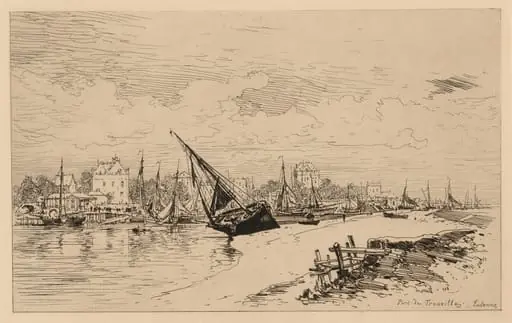
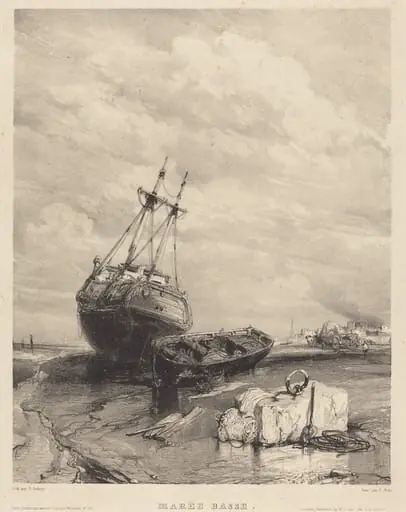
Coal Pockets at New Bedford is an ink print by the Impressionist artist Robert Swain Gifford. It dates from 1879 and is held in the collection of the National Gallery of Art.
About this work
Overview
Rendered in black ink on laid paper, the work belongs to a series of prints documenting industrial and natural landscapes of the northeastern United States.
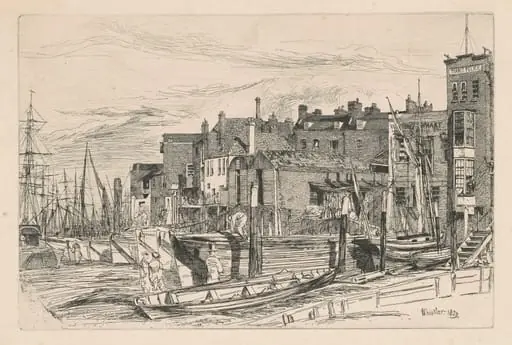
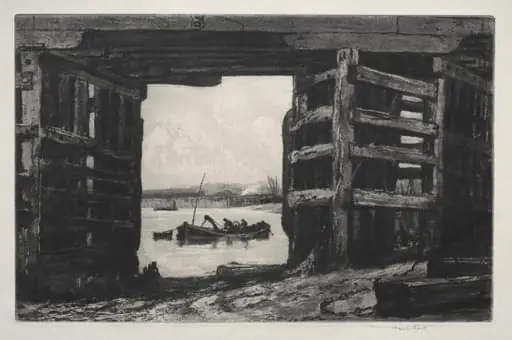
Created in 1879, Coal Pockets at New Bedford is an etching by Robert Swain Gifford that captures a quiet maritime scene along the Massachusetts coast. Rendered in black ink on laid paper, the work belongs to a series of prints documenting industrial and natural landscapes of the northeastern United States. Its subdued palette and deliberate composition reflect Gifford’s interest in atmospheric tone over dramatic narrative.
Subject & Meaning
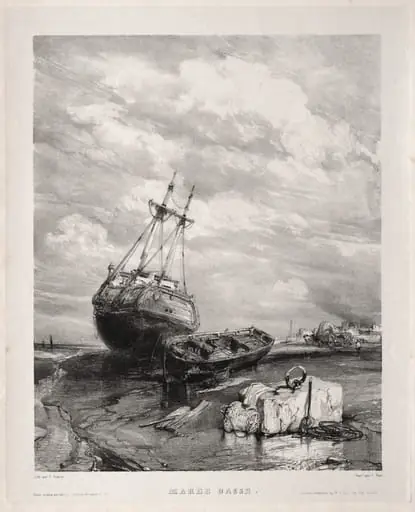
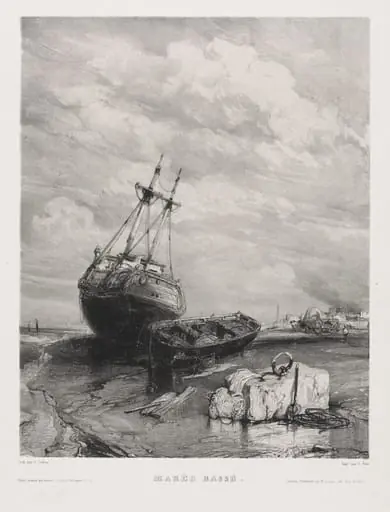
The scene depicts a moored vessel beside a substantial waterfront structure, likely a coal storage facility, with scattered timber and debris along the shore. The furled sails and still water suggest a pause in labor, evoking a moment of suspension between work and rest. The absence of figures amplifies a sense of solitude, inviting reflection on the rhythms of coastal industry and the quiet persistence of nature amid human activity.
Technique & Style
Gifford employed bold, expressive etching lines to define forms and suggest texture, particularly in the woodpile and water’s surface. He layered soft grays and deep blacks to model the heavy clouds and the solidity of the building, using subtle tonal gradations to convey depth. The print’s controlled spontaneity balances precision with a loose, almost sketchlike quality, characteristic of his approach to landscape printmaking.
History & Provenance
The etching was produced during Gifford’s active period documenting New England’s changing coastlines. It likely originated from sketches made during his travels in the region, part of a broader effort to record industrial sites before they vanished. The work entered institutional collections in the early 20th century, where it has been preserved as an example of American tonal printmaking.
Context
In the late 19th century, New Bedford was a hub for whaling and coal distribution, its waterfronts shaped by commerce and labor. Gifford’s image does not glorify industry but observes it with neutrality, aligning with the aesthetic values of the American Barbizon school. His focus on atmosphere over spectacle reflects a shift in art toward quiet realism and the emotional resonance of everyday places.
Legacy
Coal Pockets at New Bedford remains a representative work of Gifford’s printmaking, illustrating his contribution to American tonal etching. While not widely exhibited today, it is cited in scholarly studies of 19th-century landscape prints for its restrained composition and sensitive handling of light and texture. The piece endures as a quiet record of a transitional American coastline.
Artist & collection

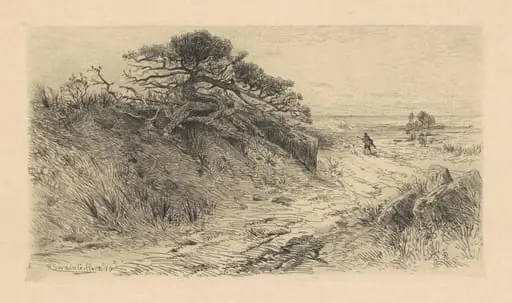
![Old Trees at Naushon Island [plate 2], by Robert Swain Gifford](https://artifactworldgallery.com/img/robert-swain-gifford--old-trees-at-naushon-island-plate-2--74282486ac5ae211-w320.webp)
![Near the Coast [large plate], by Robert Swain Gifford](https://artifactworldgallery.com/img/robert-swain-gifford--near-the-coast-large-plate--8d769538188085e0-w320.webp)