Artwork
Harlingen
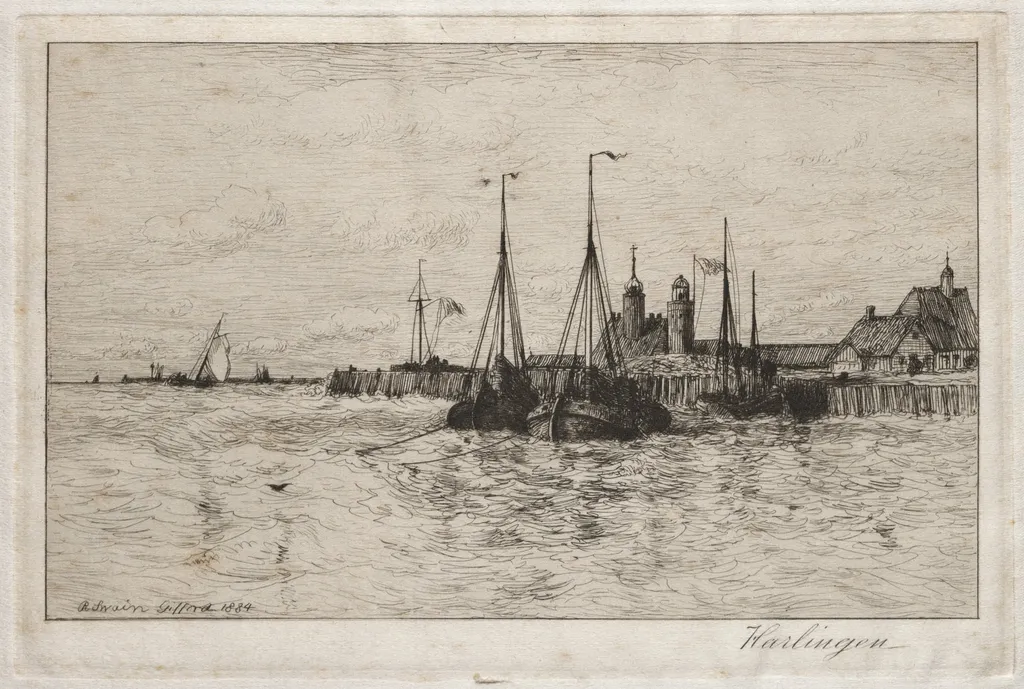
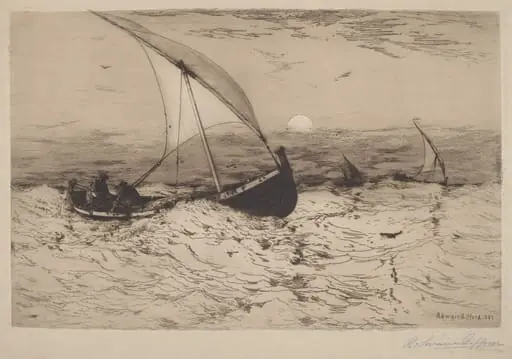
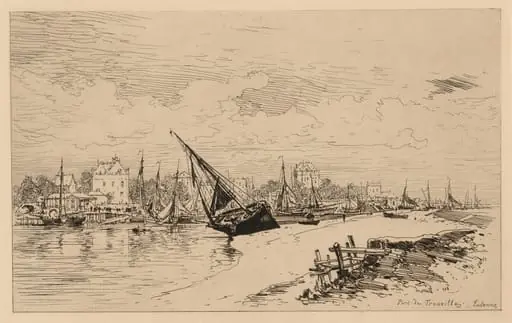
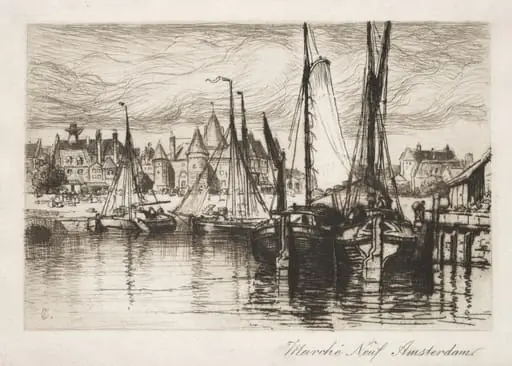
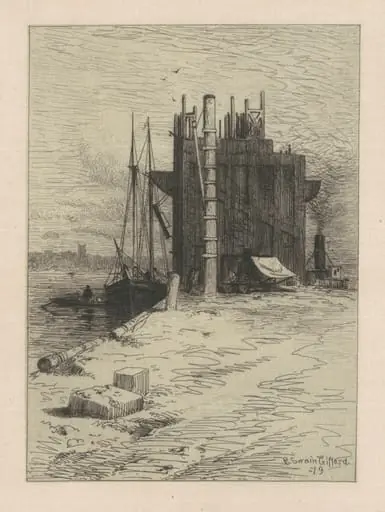
Harlingen is a print by the Impressionist artist Robert Swain Gifford. It dates from 1884 and is held in the collection of the Cleveland Museum of Art.
About this work
Overview
An American artist with ties to the Barbizon tradition and the Society of American Artists, Gifford favored understated naturalism over theatricality.
Robert Swain Gifford created *Harlingen* in 1884 as a quiet coastal scene rendered in print form. An American artist with ties to the Barbizon tradition and the Society of American Artists, Gifford favored understated naturalism over theatricality. The work reflects his deep familiarity with maritime environments and his preference for calm, observational depictions of shorelines. It resides today in the collection of The Cleveland Museum of Art.
Subject & Meaning
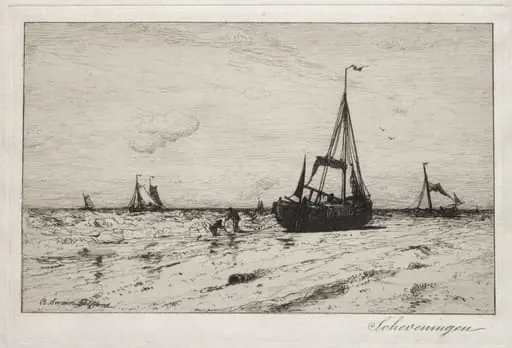
The scene depicts Harlingen, a harbor town in the Netherlands, rendered with restrained detail. Boats rest gently on still water beneath a broad, overcast sky. There is no narrative drama—only the quiet rhythm of daily maritime life. Gifford’s focus on ordinary activity, without embellishment, suggests an appreciation for the dignity of routine labor and the subdued beauty of coastal light.
Technique & Style
Gifford employed soft, blended brushwork to convey atmosphere rather than sharp definition. Hulls and waves are rendered in near-monochromatic tones, allowing the sky’s diffused light to unify the composition. His technique avoids theatrical contrast, favoring subtle gradations that mimic natural visibility. This restrained approach aligns with his Barbizon-inspired commitment to truthfulness over idealization.
History & Provenance
Created in 1884, *Harlingen* emerged during a period when Gifford was actively exploring European and American coastlines. The print likely resulted from his travels and studies abroad. It entered The Cleveland Museum of Art’s collection through documented acquisition, preserving its place within a broader context of late 19th-century American landscape printmaking.
Context
Gifford’s work reflects a shift in American art toward intimate, non-heroic landscapes during the late 1800s. Influenced by French Barbizon painters, he rejected grandiose vistas in favor of modest, everyday scenes. His coastal studies, including *Harlingen*, contributed to a growing interest in regional and foreign harbors as subjects worthy of quiet contemplation.
Legacy
Gifford’s prints like *Harlingen* helped establish a quieter, more contemplative strand in American landscape art. His emphasis on atmospheric effect over narrative detail influenced later generations of printmakers and regional painters. Though less celebrated than his contemporaries, his work remains a quiet testament to the value of observation over spectacle.
Artist & collection

![Old Trees at Naushon Island [plate 2], by Robert Swain Gifford](https://artifactworldgallery.com/img/robert-swain-gifford--old-trees-at-naushon-island-plate-2--74282486ac5ae211-w320.webp)
![Near the Coast [large plate], by Robert Swain Gifford](https://artifactworldgallery.com/img/robert-swain-gifford--near-the-coast-large-plate--8d769538188085e0-w320.webp)