Artwork
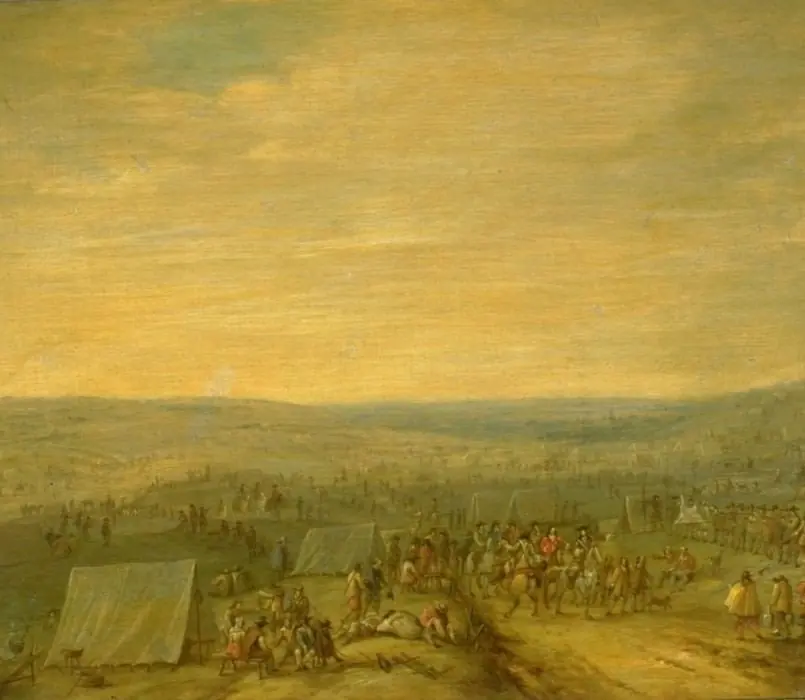
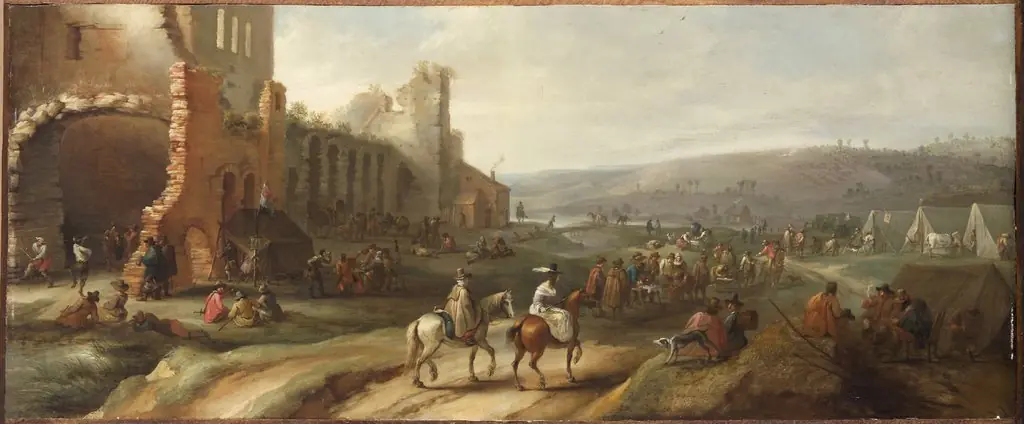
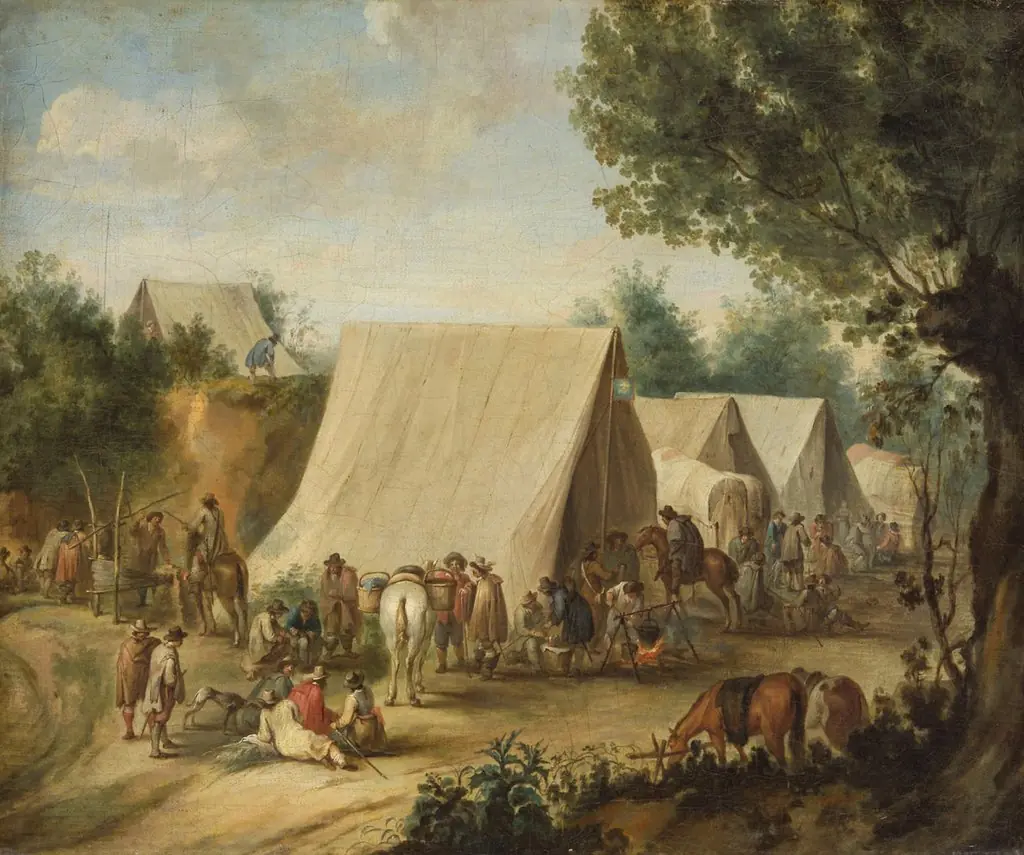
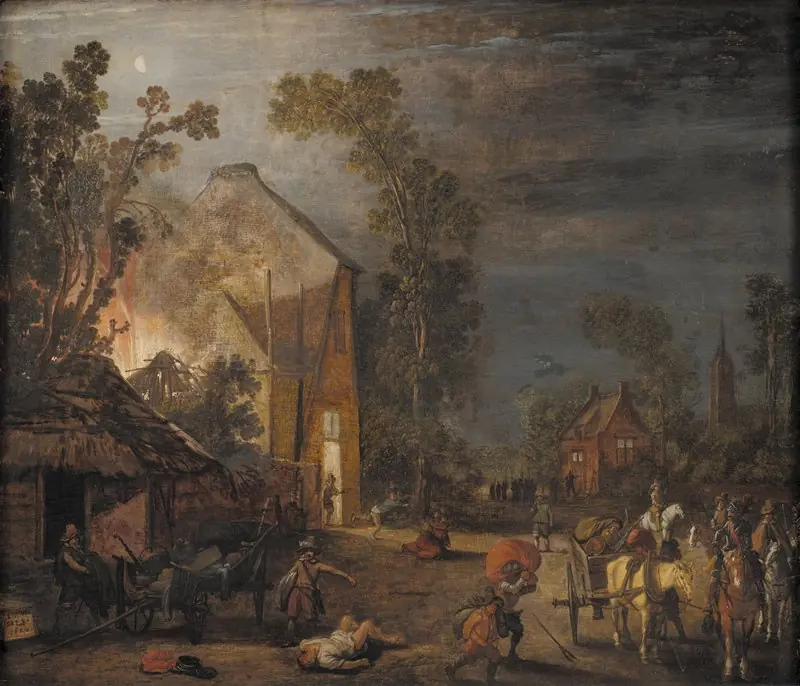
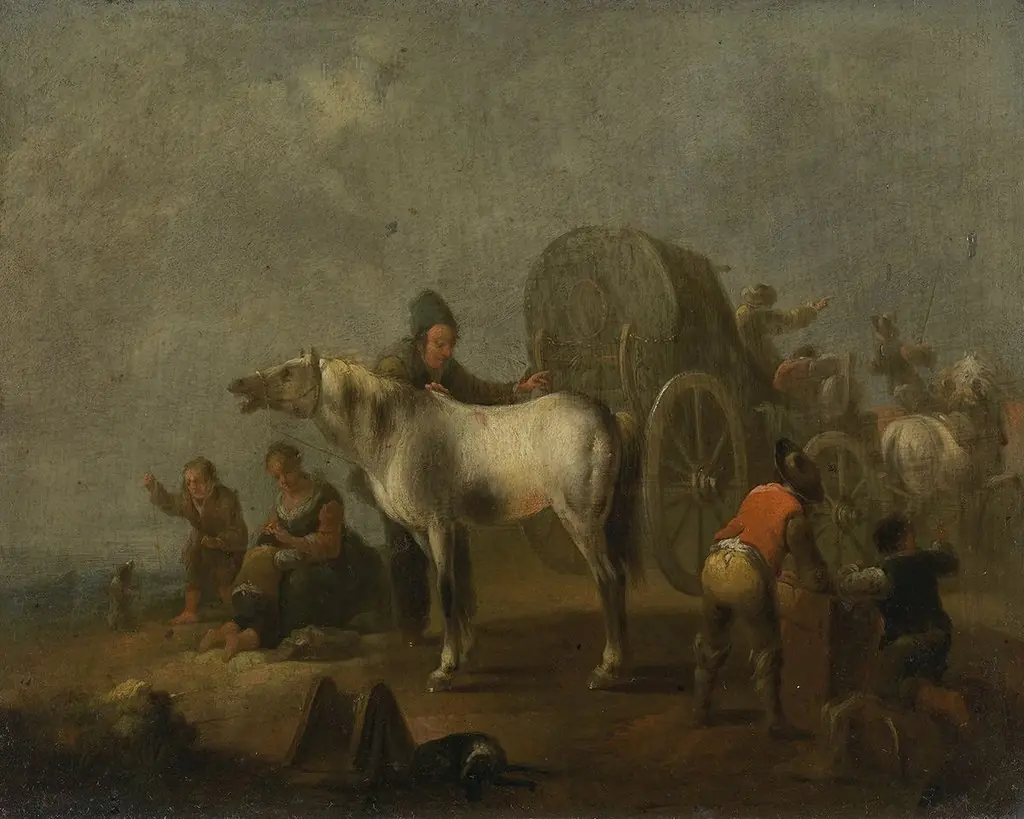
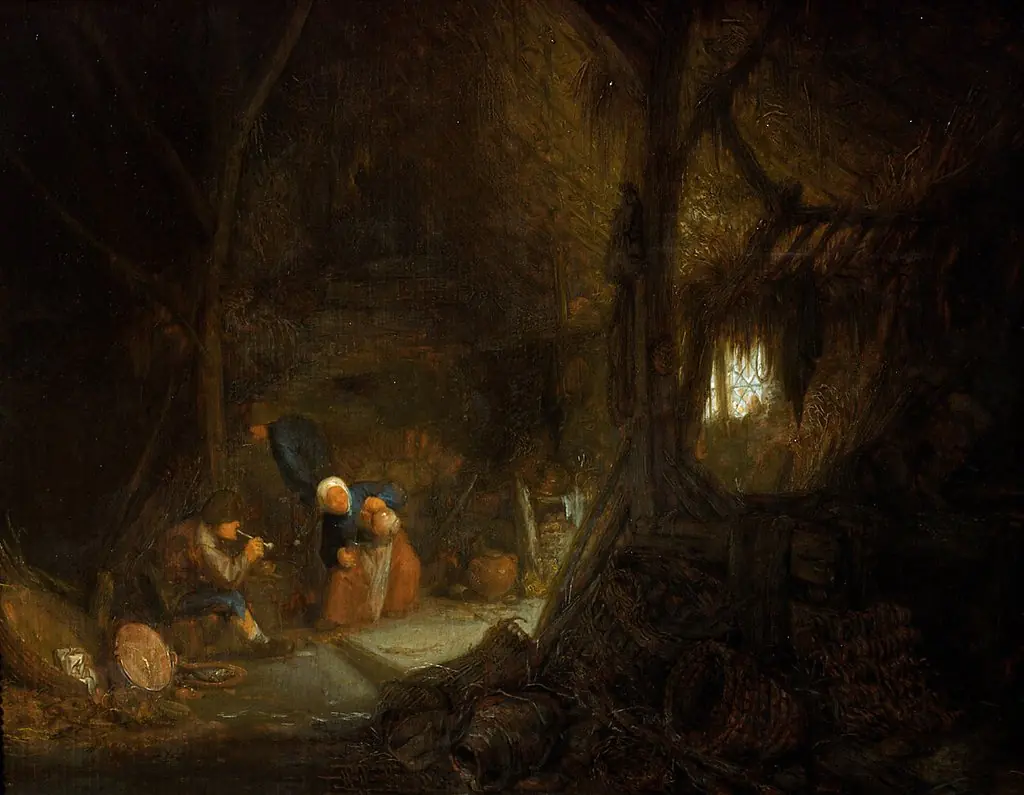
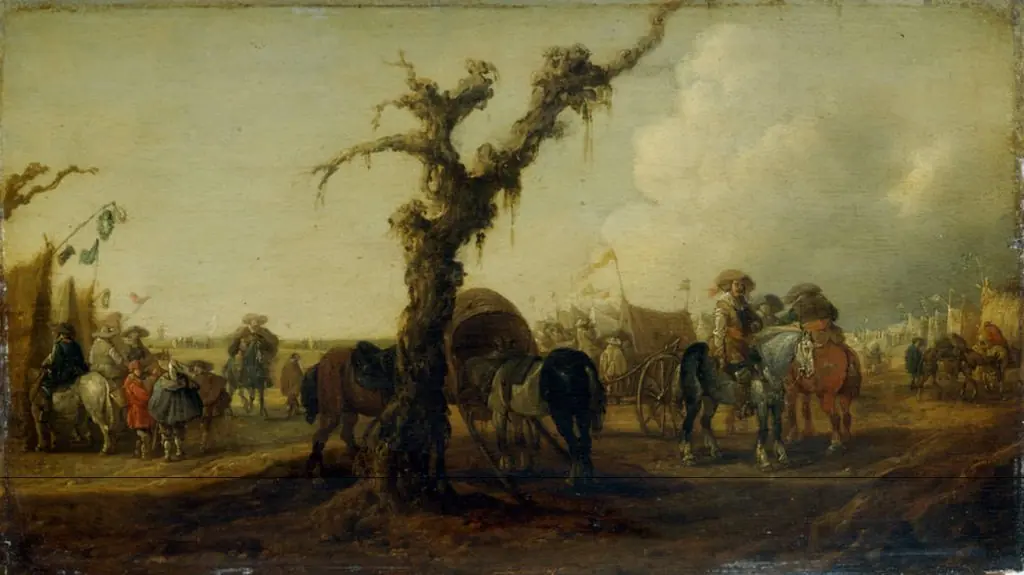
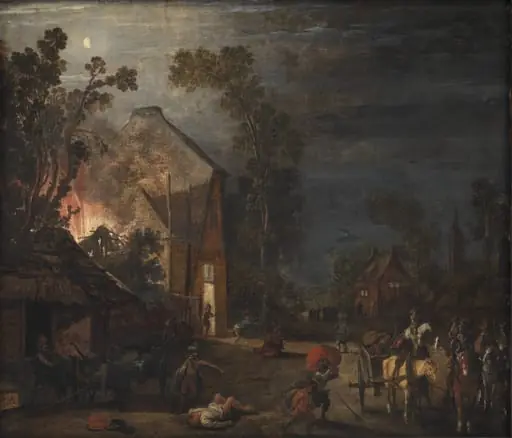
Bivouac in front of a building
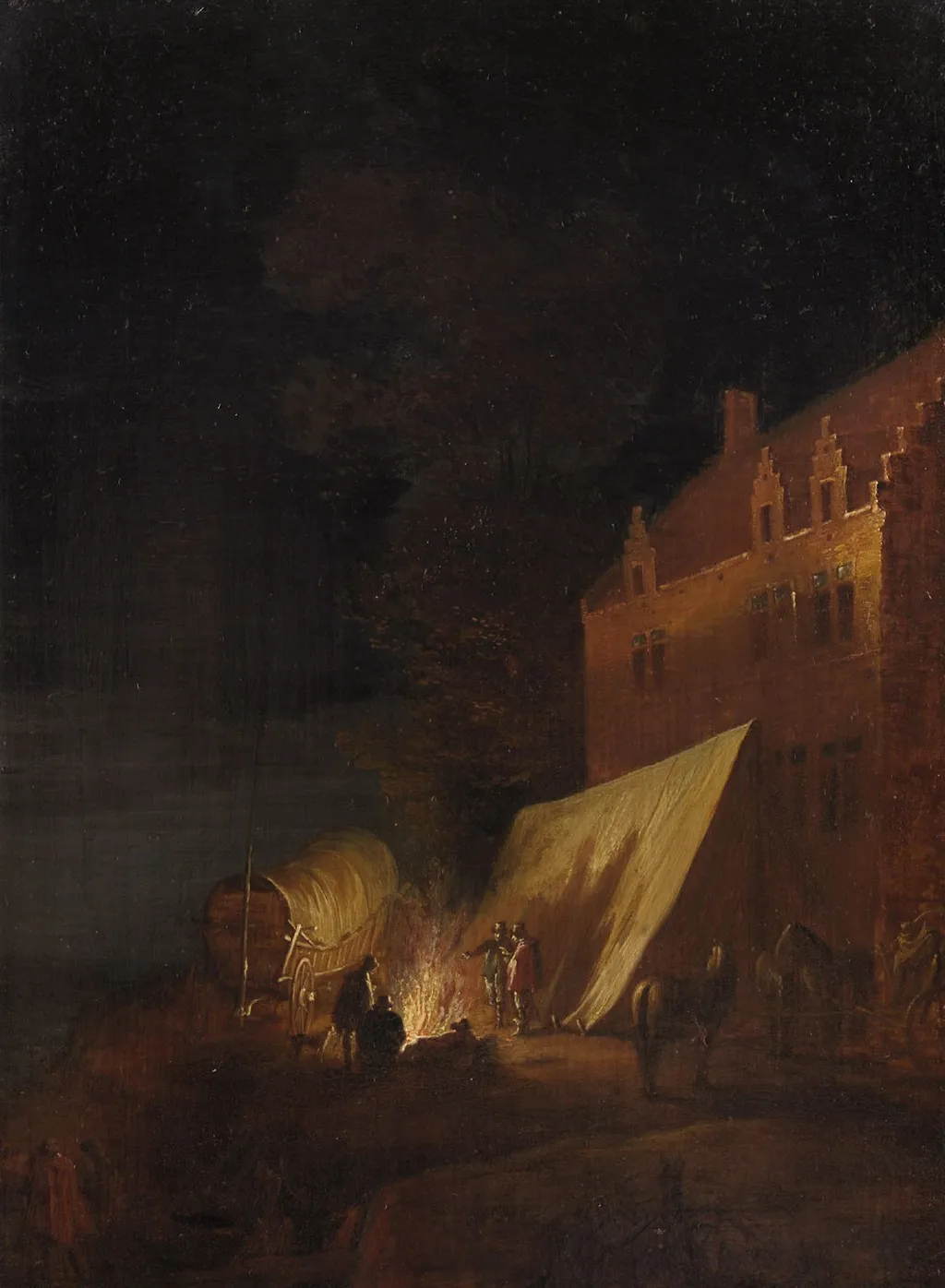
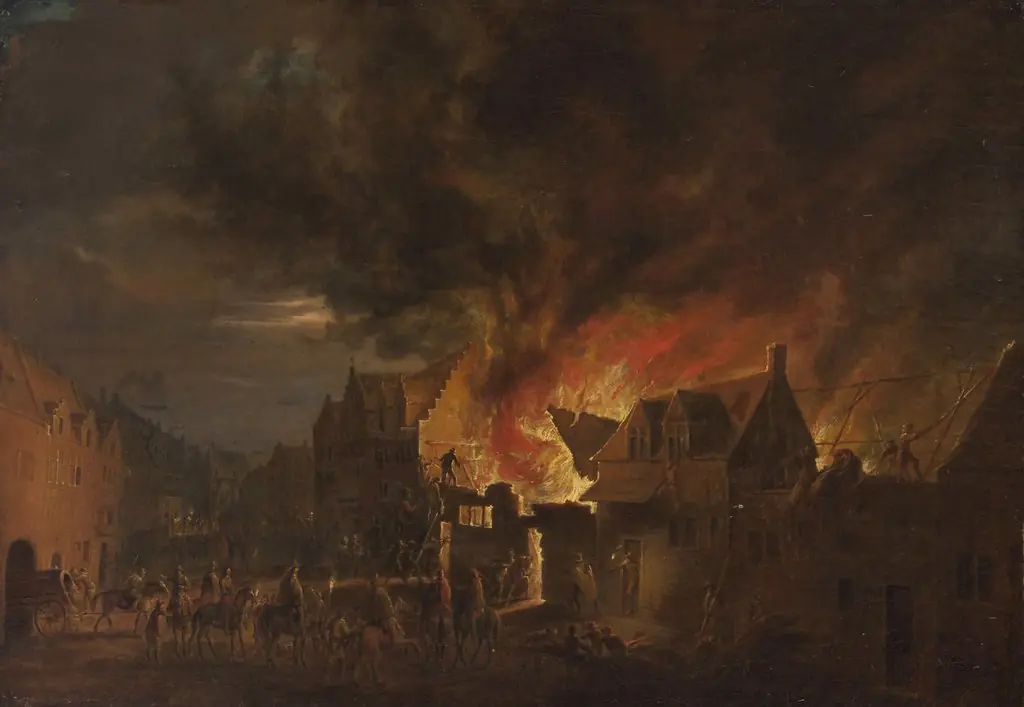
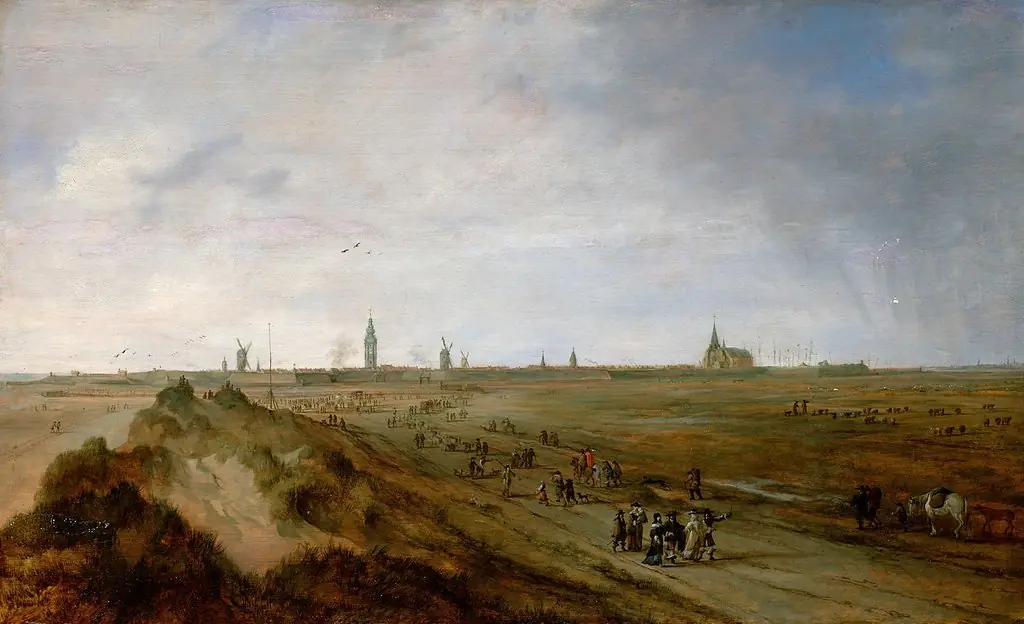
Bivouac in front of a building is an unspecified painting by the Dutch Golden Age artist Robert van den Hoecke. It dates from 1650 and is held in the collection of the Kunsthistorisches Museum.
About this work
Overview
Bivouac in front of a building is a 17th-century painting by Flemish artist Robert van den Hoecke, dating to circa 1650. It captures a nighttime military encampment situated in front of a large, multi-windowed building.
Subject & Meaning
The scene conveys warmth and comfort amidst a military setting, focusing on the everyday life of soldiers. A lit tent, a gathering around a fire, and a nearby horse compose the tranquil nocturnal atmosphere.
Technique & Style
Van den Hoecke employs chiaroscuro to create depth and dimensionality, with the internally lit tent contrasting against the dark sky and the building's silhouette. This technique enhances the sense of intimacy and spatial layering.
History & Provenance
Created during the Dutch Golden Age, the painting is part of the Kunsthistorisches Museum's collection. Van den Hoecke, trained in Antwerp and later working in Brussels under Archduke Leopold Wilhelm, was known for landscapes and battle scenes.
Context
While typically recognized for panoramic battle scenes, this work showcases Van den Hoecke's ability to capture quieter moments within a military context, reflecting the broader Flemish interest in nocturnal landscapes during this period.
Legacy
As part of Van den Hoecke's oeuvre, *Bivouac in front of a building* contributes to the understanding of 17th-century Flemish art's thematic and technical breadth, though it is not highlighted as a seminal work in his primarily battle-oriented catalog.
Artist & collection
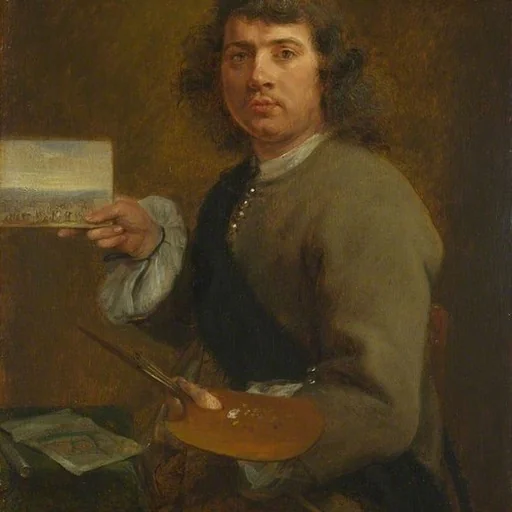
Artist
Robert van den Hoecke (30 November 1622 in Antwerp – 1668 in Bergues-Saint-Winoc) was a Flemish painter, engraver and architect.