Artwork
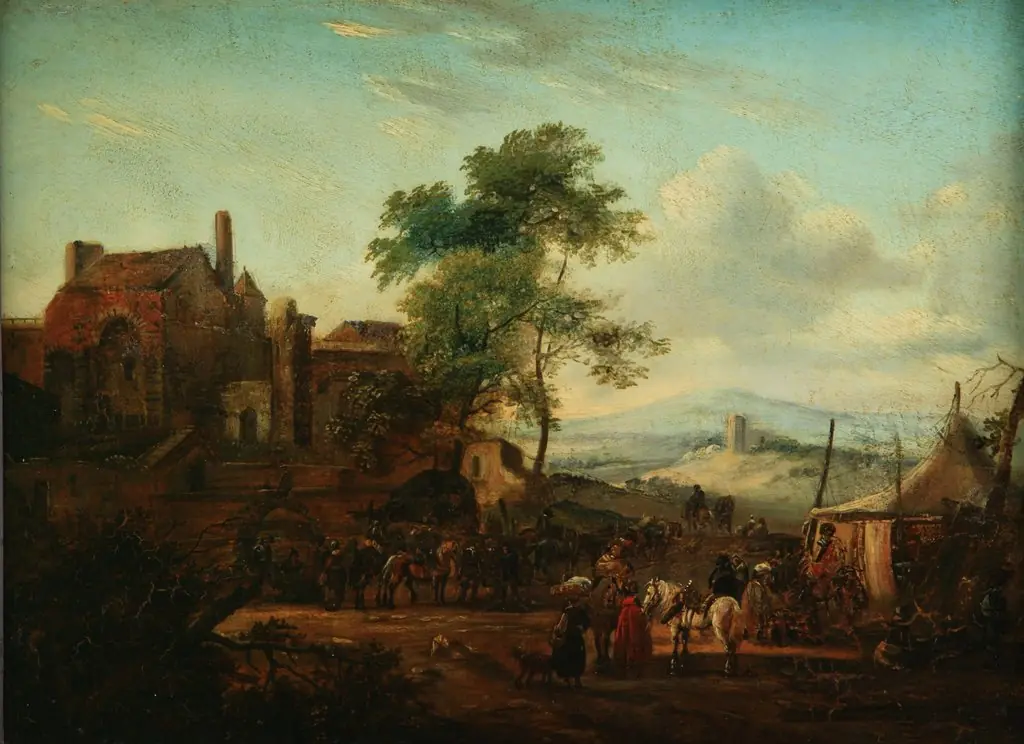
Landscape with camp
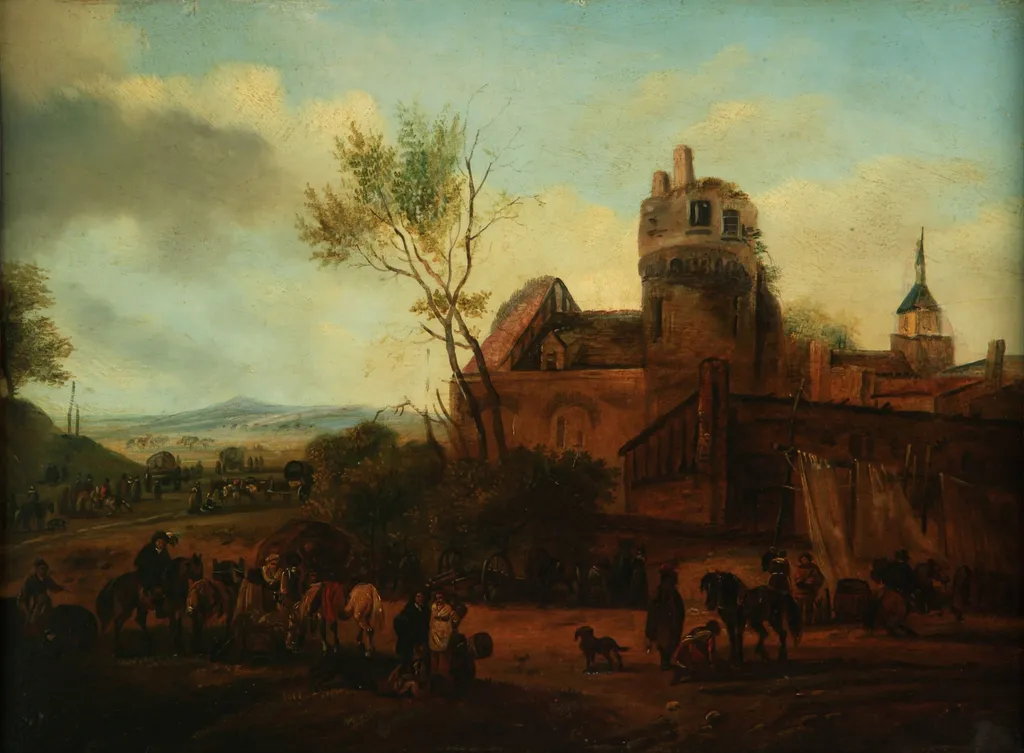
Landscape with camp is an unspecified painting by Unknown. It is held in the collection of the National Museum of Fine Arts, Argentina.
About this work
Overview
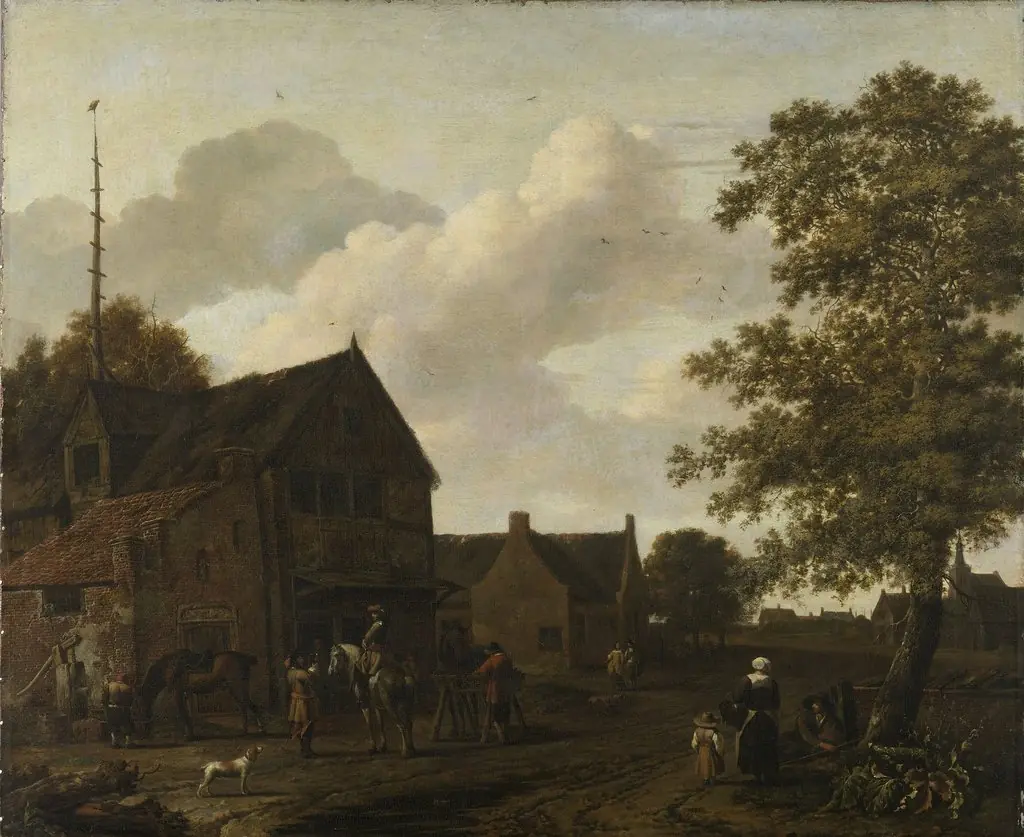
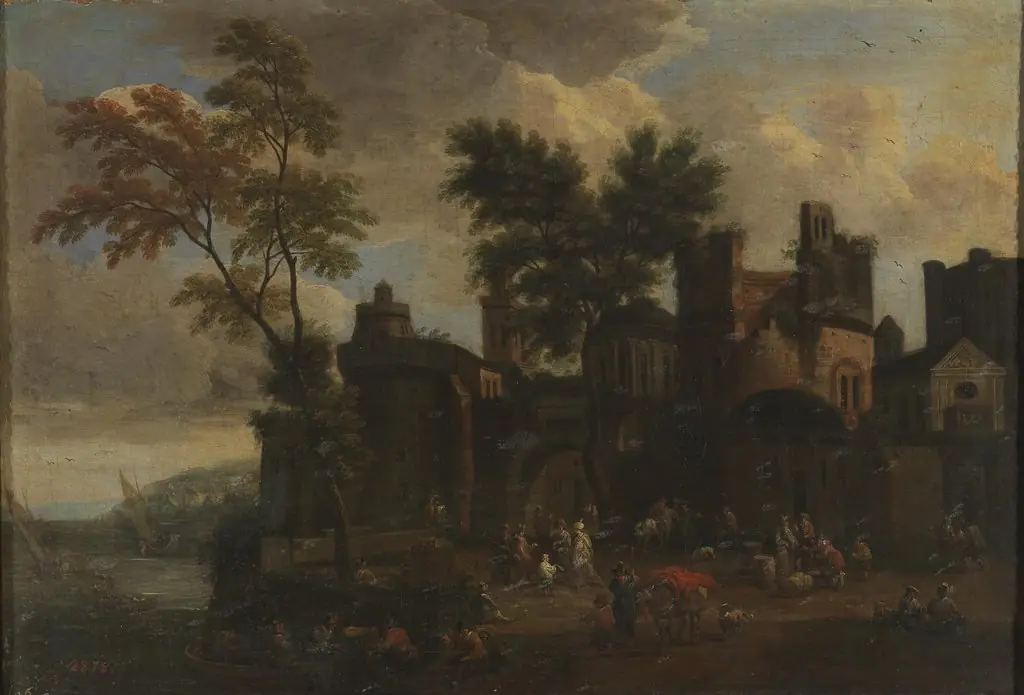
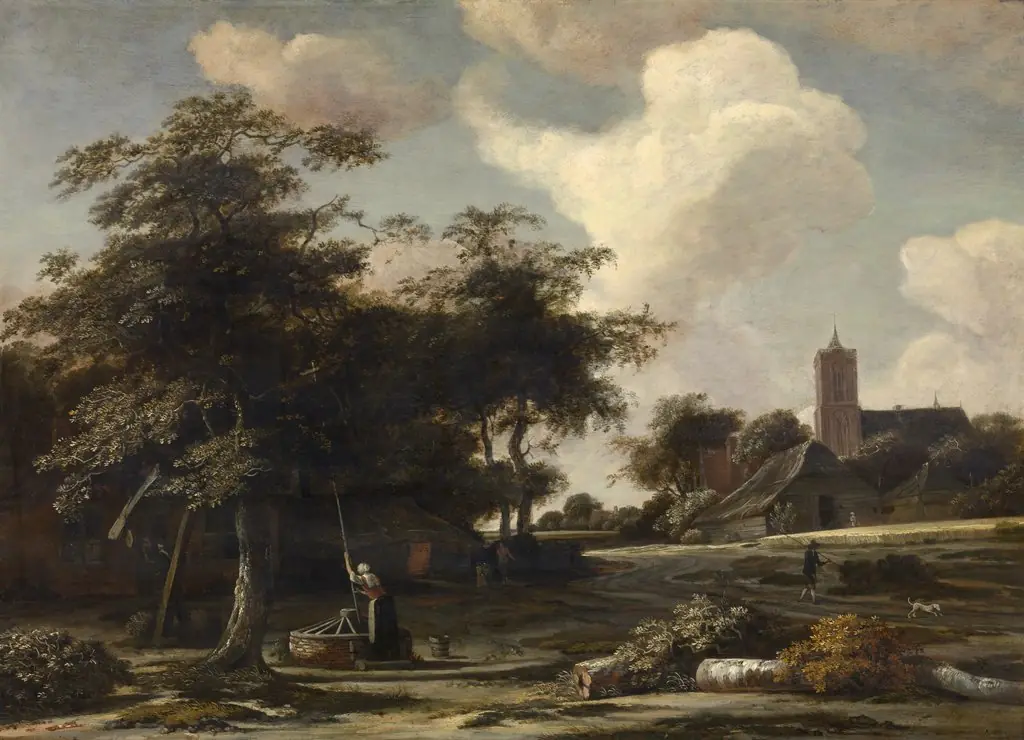
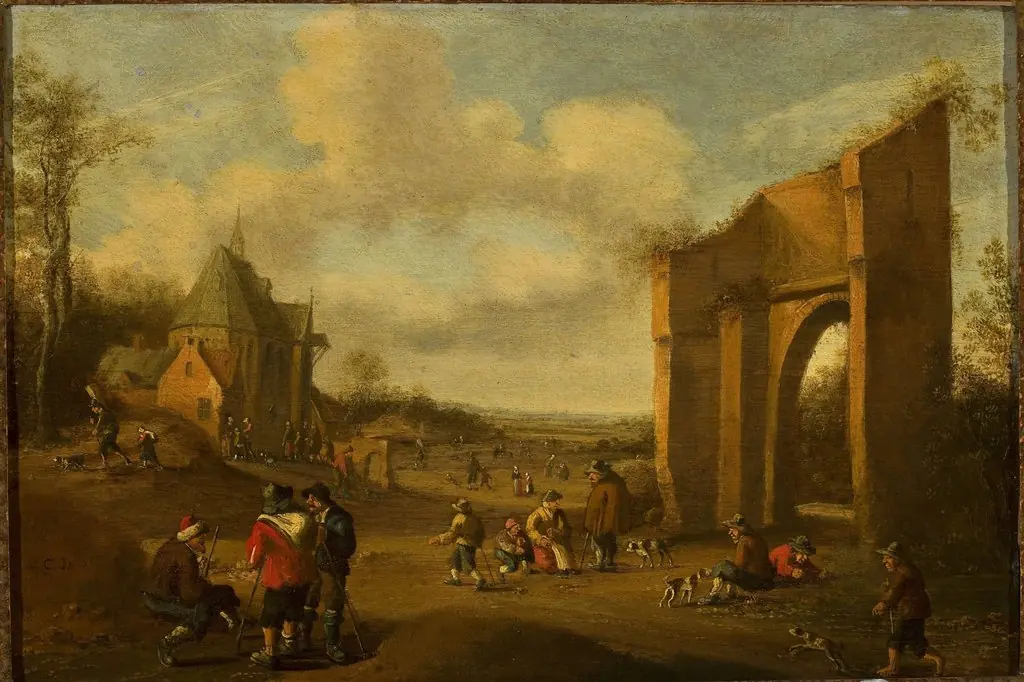
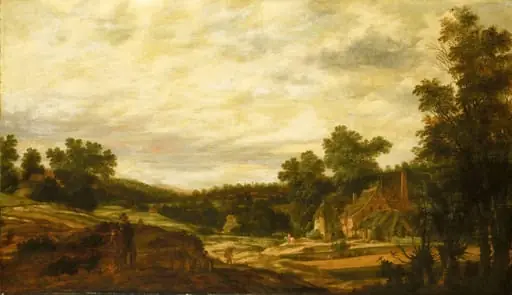
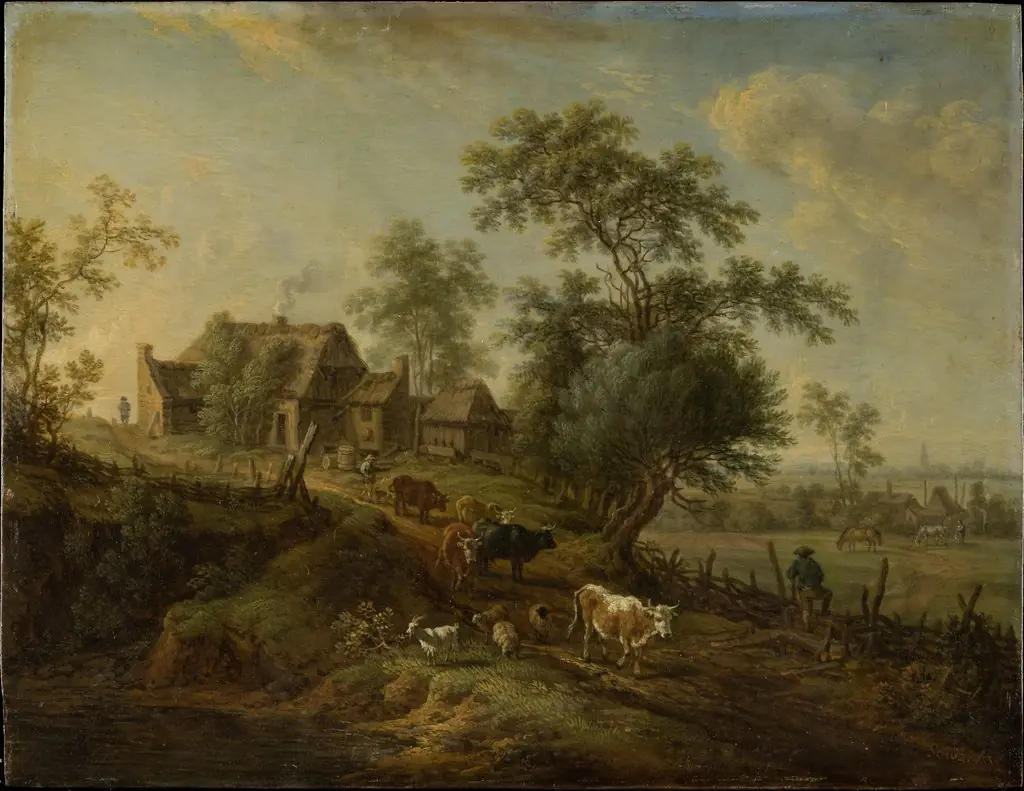
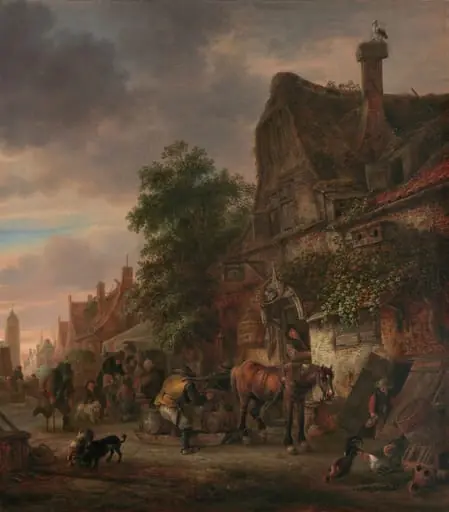
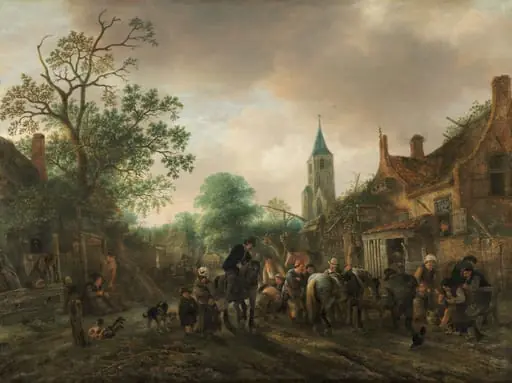
This oil painting depicts a rural landscape with a temporary encampment in the foreground and a substantial architectural structure in the distance.
This oil painting depicts a rural landscape with a temporary encampment in the foreground and a substantial architectural structure in the distance. Figures and animals are engaged in quiet, everyday activities, suggesting transit or rest. The sky, rendered in soft blues and white clouds, provides a calm atmospheric backdrop. The composition balances natural elements with human intervention, emphasizing scale and stillness.
Subject & Meaning
The scene portrays a moment of pause—people and animals preparing for or recovering from travel. The presence of horses, dogs, and scattered gear implies movement, while the distant tower and clock suggest a fixed, institutional presence. The contrast between transient life and enduring architecture may reflect themes of impermanence versus permanence, though no explicit narrative is given.
Technique & Style
The artist employs a restrained palette and soft brushwork to convey light and texture. Foreground figures are rendered with loose, suggestive strokes, while the distant building is more defined, creating spatial depth. The sky is gently modeled with subtle gradations, avoiding dramatic contrasts. The style leans toward observational realism, prioritizing atmosphere over narrative detail.
History & Provenance
The painting resides in the collection of the National Museum of Fine Arts in Buenos Aires. Its origin and early ownership are not widely documented, but its inclusion in the museum’s permanent holdings suggests it was acquired as part of a broader effort to preserve regional artistic output during the late 19th or early 20th century.
Context
Created during a period when Latin American artists increasingly turned to local landscapes and rural life, this work aligns with a broader trend of documenting everyday scenes beyond urban centers. The inclusion of a monumental building may reference colonial or civic structures, reflecting tensions between indigenous or nomadic traditions and imposed institutional order.
Legacy
Though not widely exhibited outside Argentina, the painting contributes to the museum’s representation of regional landscape traditions. It remains a quiet example of how artists of the era captured the rhythm of rural life without romanticizing it, offering a grounded view of movement, labor, and place.
Artist & collection

Museum
National Museum of Fine Arts, Argentina
Continue through works from the same source collection.
 Domestic Scene
 Giacomo and Cardinal Marco, investing Andrea, Abbot of San Zeno, with his Benefice
 The Nymph of Fontainebleau
 Portrait of a Woman
 Madonna and Child with Saints in the Enclosed Garden
 Venus and Minerva
 Family Group of Four on Sofa
 Wall painting from Room H of the Villa of P. Fannius Synistor at Boscoreale