Artwork
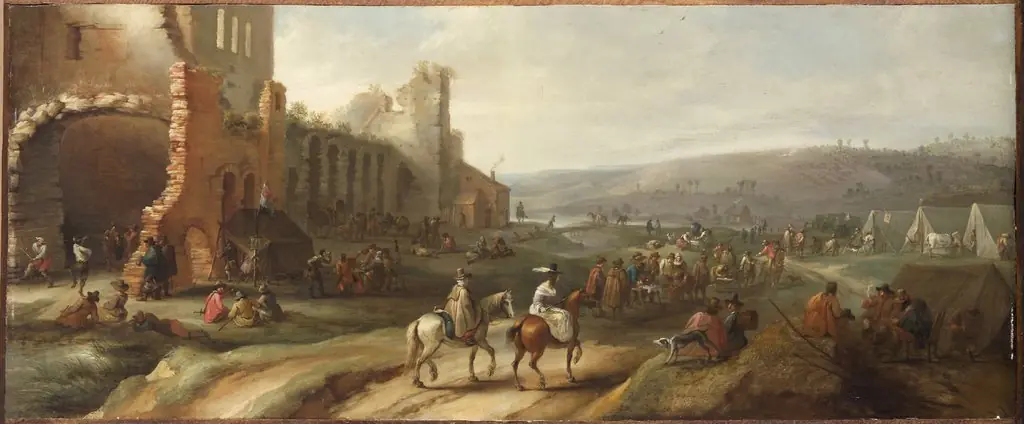
Feldlager mit Ruinen
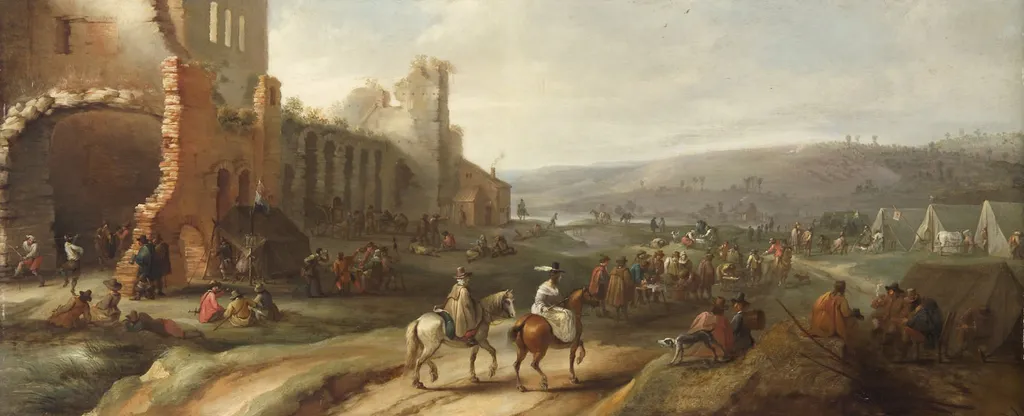
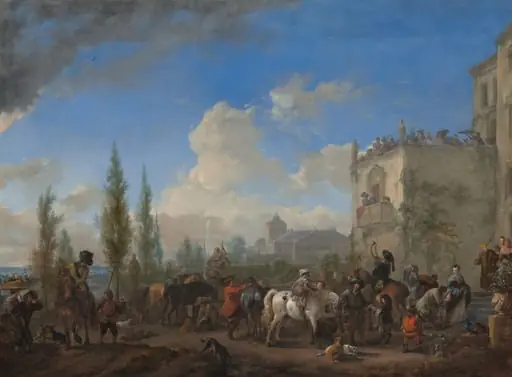
Feldlager mit Ruinen is an unspecified painting by Robert van den Hoecke. It dates from 1655 and is held in the collection of the Kunsthistorisches Museum.
About this work
Overview
The composition unfolds across a wide horizontal plane, integrating figures, animals, and ruins into a cohesive, atmospheric whole.
Painted around 1655 by Robert van den Hoecke, *Feldlager mit Ruinen* is a landscape-oriented work that merges military encampment activity with architectural decay. Van den Hoecke, trained in Antwerp and employed by Archduke Leopold Wilhelm in Brussels, specialized in expansive scenes that balanced human movement with natural and built environments. The composition unfolds across a wide horizontal plane, integrating figures, animals, and ruins into a cohesive, atmospheric whole.
Subject & Meaning
The scene portrays a transient military encampment nestled among ancient ruins, suggesting the intersection of war and time. Figures gather around a fire, tend to animals, and move along paths, evoking daily life amid temporary occupation. The crumbling stone structures behind them imply the passage of empires, subtly contrasting the fleeting nature of human conflict with enduring ruins. No single narrative dominates; instead, the painting invites contemplation of impermanence and order in chaos.
Technique & Style
Van den Hoecke employs chiaroscuro to model forms and guide the viewer’s eye through layered space. Light falls unevenly across the landscape, illuminating figures in the foreground while receding into shadowed hills and distant ruins. Brushwork is precise yet unobtrusive, allowing details—tents, harnesses, stone textures—to emerge without overwhelming the overall harmony. The composition avoids dramatic focal points, favoring a quiet, observational rhythm that enhances its documentary quality.
History & Provenance
Created during van den Hoecke’s tenure in Brussels under Archduke Leopold Wilhelm, the painting reflects the artistic environment of a Habsburg court with interest in military and topographical imagery. While its early ownership is undocumented, it aligns with other works from his Brussels period that combined topographical accuracy with anecdotal detail. The painting remained within European collections, likely passing through private hands before entering institutional care.
Context
In mid-17th-century Flanders, landscape and military scenes gained prominence as patrons sought depictions of real-world events and terrain. Van den Hoecke’s work responds to this trend, blending the influence of Dutch landscape traditions with the Flemish penchant for intricate detail. The inclusion of ruins reflects broader European fascination with classical antiquity, even as contemporary warfare reshaped the continent’s geography and social order.
Legacy
Van den Hoecke’s *Feldlager mit Ruinen* exemplifies a quiet but influential strand of Flemish painting that prioritized observation over spectacle. Though less celebrated than contemporaries like Rubens, his approach to landscape and human activity informed later generations of topographical artists. The work stands as a testament to the value placed on nuanced, atmospheric scenes that captured the texture of everyday life within larger historical currents.
Artist & collection
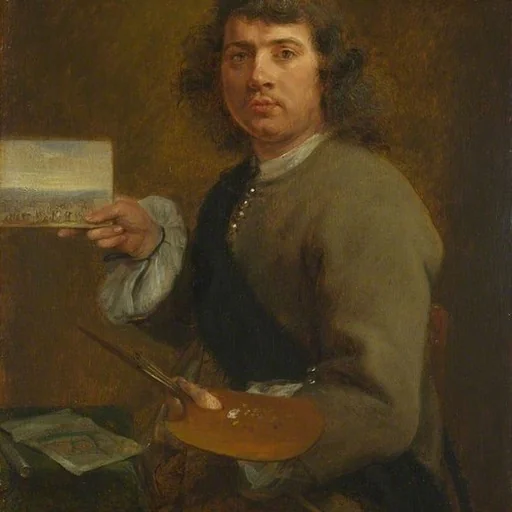
Artist
Robert van den Hoecke (30 November 1622 in Antwerp – 1668 in Bergues-Saint-Winoc) was a Flemish painter, engraver and architect.

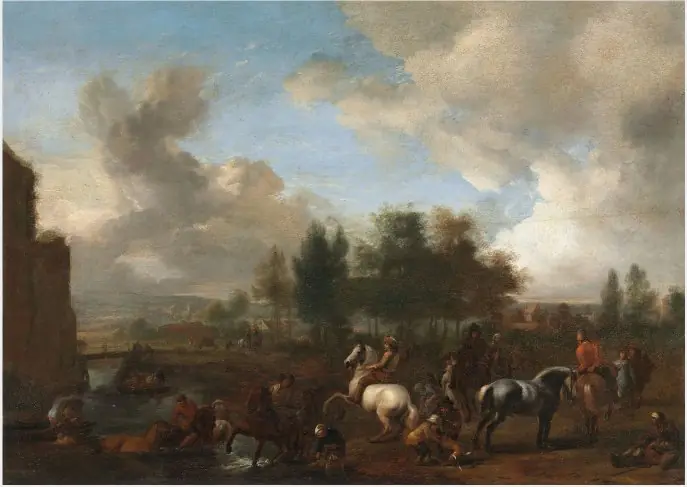 Horses Watering: a Landscape
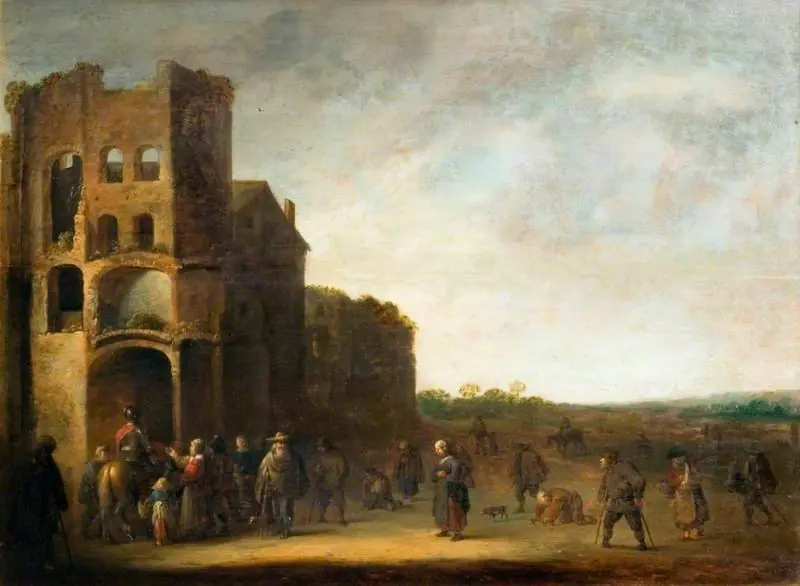 Saint Martin and the Beggar
 Landskab i italiensk manér
 Landskab i italiensk manér
 River Landscape with Riders
 A Stop at an Inn
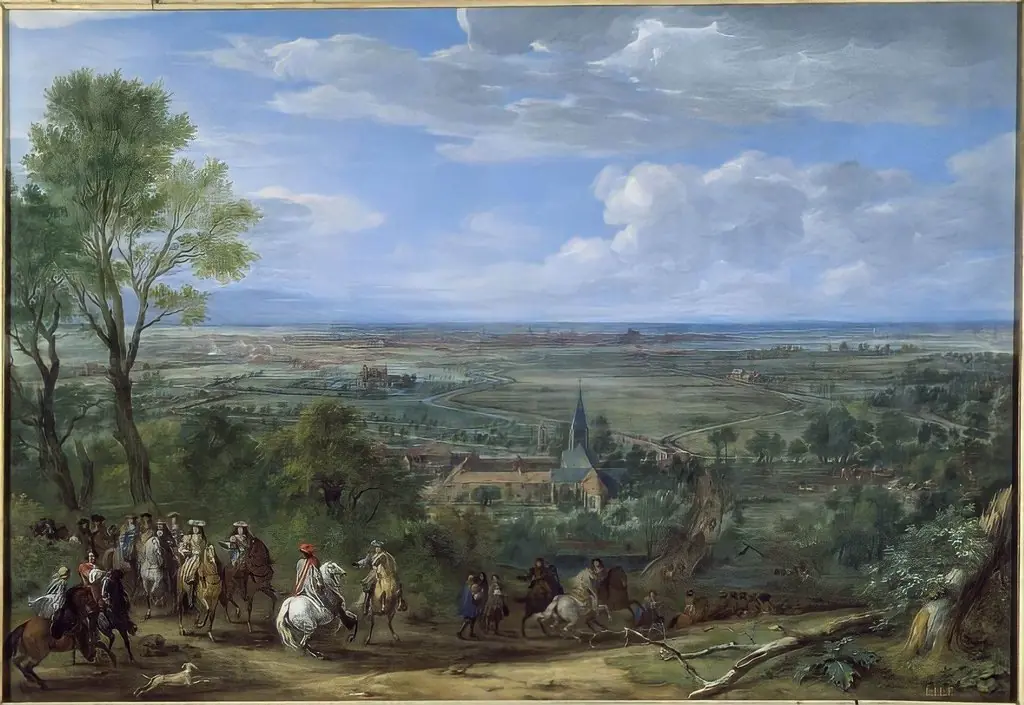 View of the siege of Lille, from the side of the Prory of Fives, August 1667
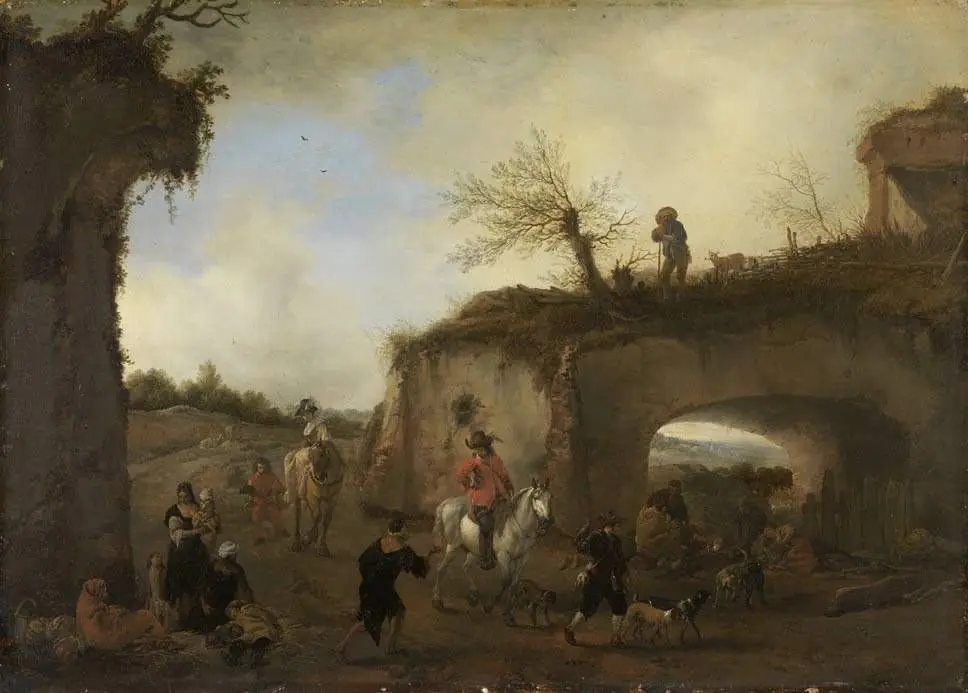 The falconry
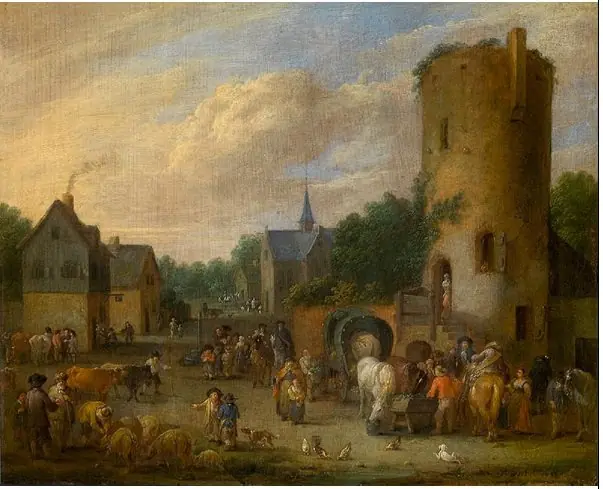 Village Scene
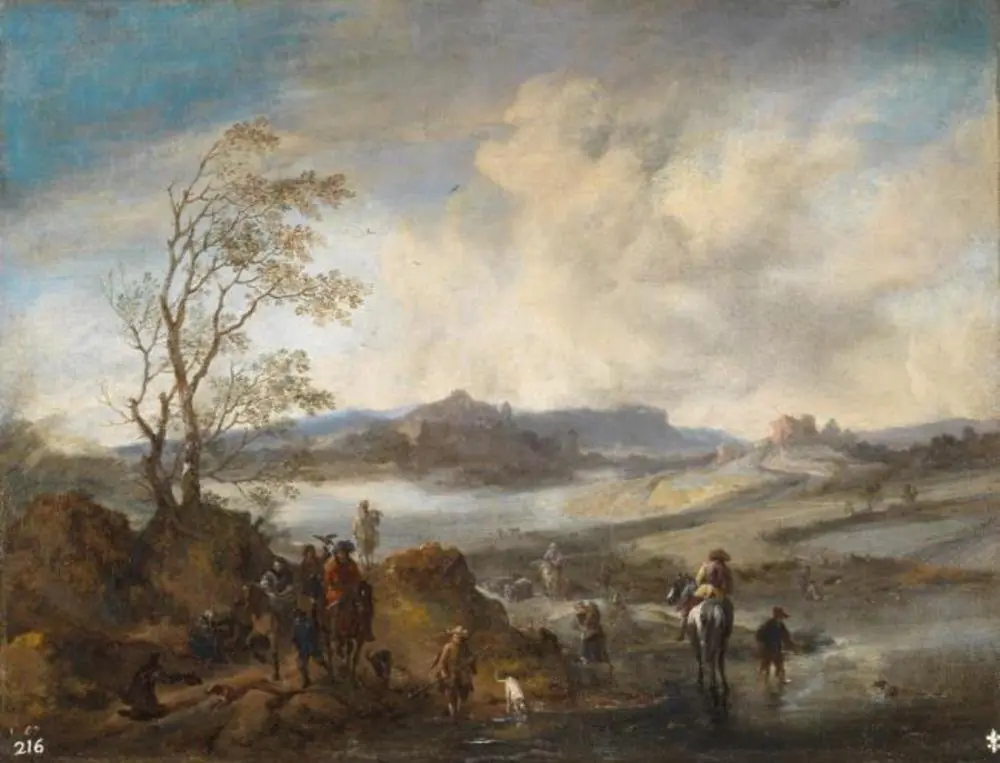 Hawking Party by a River
 The Departure for the Hunt