Artwork
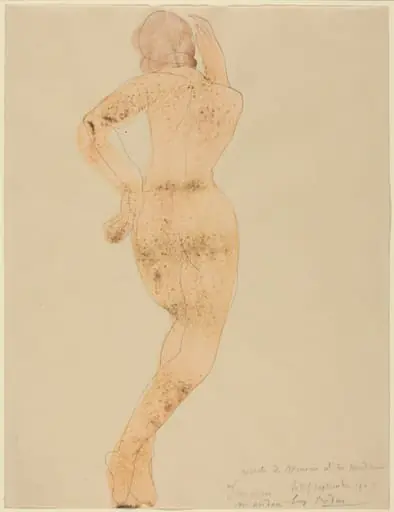
Caresse - moi danc, chéri
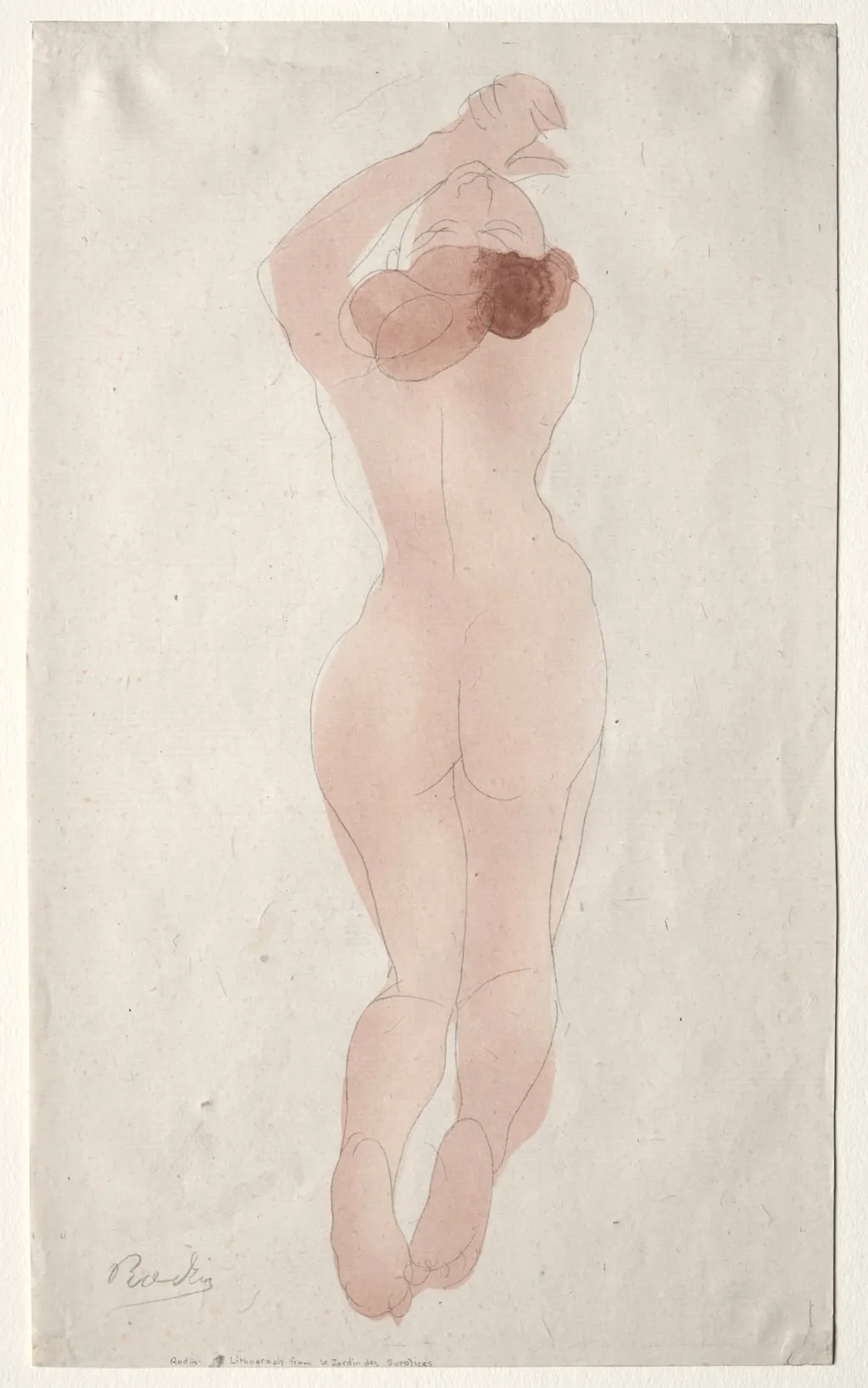
Caresse - moi danc, chéri is a print by Auguste Rodin. It dates from 1902 and is held in the collection of the Cleveland Museum of Art.
About this work
Overview
The work reflects Rodin’s habit of using drawing as a means to explore form and gesture, separate from his larger sculptural projects.
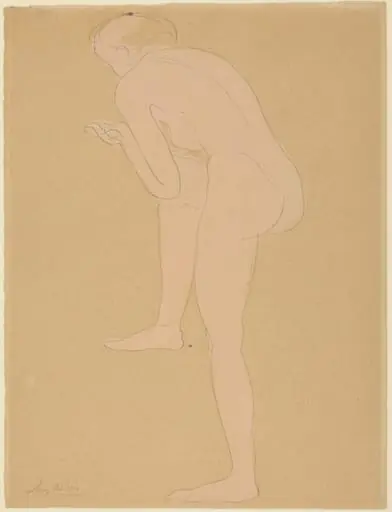
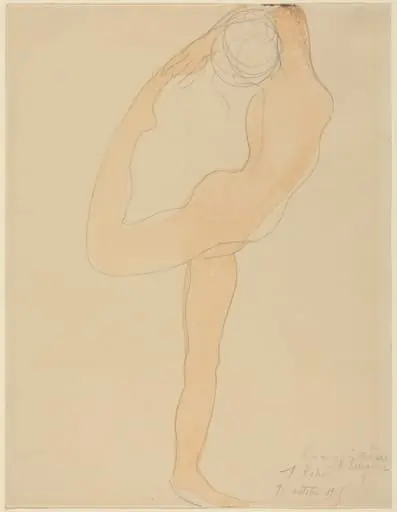
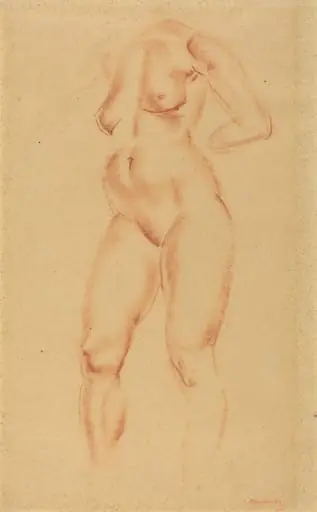
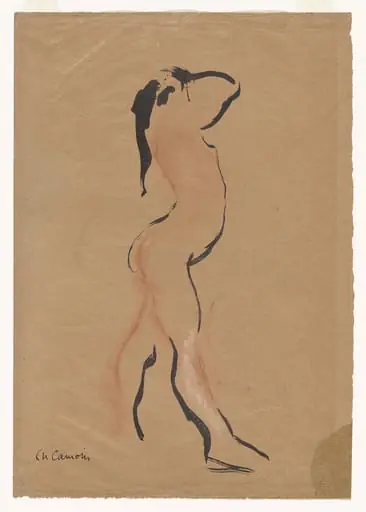
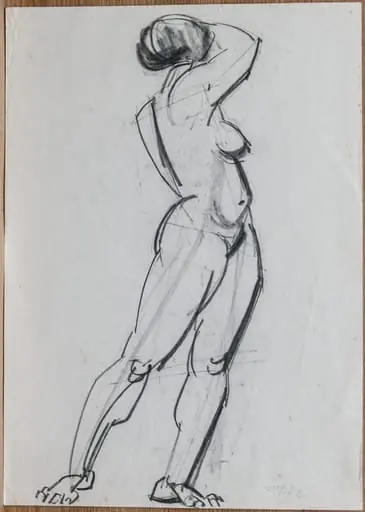
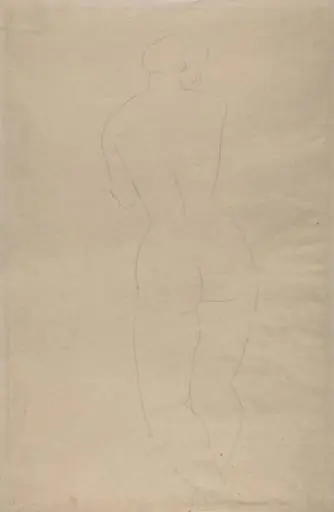
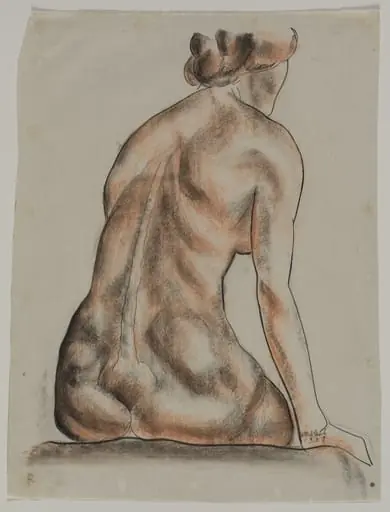
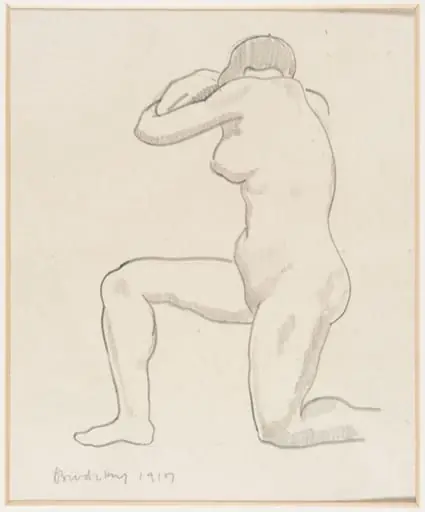
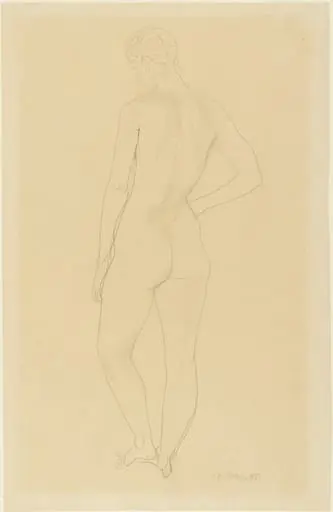
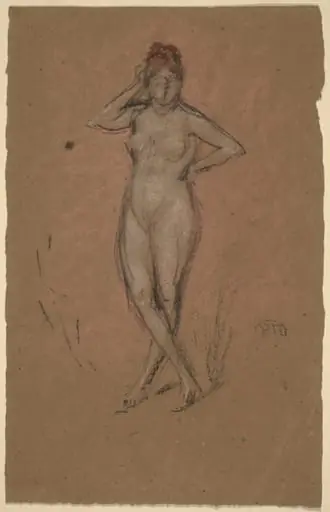
Created in 1902, this ink and wash drawing by Auguste Rodin is a spontaneous study of a nude figure viewed from behind. Executed on rough paper, it captures a moment of quiet stillness despite its title’s suggestion of motion. The work reflects Rodin’s habit of using drawing as a means to explore form and gesture, separate from his larger sculptural projects. Its intimate scale and informal quality distinguish it from his more monumental works.
Subject & Meaning
The figure, rendered from behind, presents a relaxed posture—one arm raised, the other resting on the hip—suggesting a private, unguarded moment. The French title, translating to 'Caress me, darling,' implies intimacy, yet the figure is motionless, creating a tension between implied action and actual stillness. The absence of facial features and the focus on the back emphasize physicality over narrative, inviting contemplation of touch and presence rather than story.
Technique & Style
Rodin employed loose, fluid lines with soft pink and brown washes to model the figure’s form, suggesting volume through subtle tonal shifts rather than defined contours. The rough texture of the paper interacts with the washes, enhancing the tactile quality of the skin. The sketch’s immediacy—evident in its rapid strokes and minimal detail—reveals Rodin’s preference for direct observation over polished finish, aligning with his broader rejection of academic idealism.
History & Provenance
The drawing entered the collection of The Cleveland Museum of Art as part of a broader acquisition of Rodin’s works on paper. It was likely produced during a period when Rodin was deeply engaged in figure studies, often using models in informal settings. While not part of a documented series, its style and date place it within his late 19th- to early 20th-century practice of using drawing as a laboratory for sculptural ideas.
Context
In the early 1900s, Rodin was increasingly focused on the expressive potential of the human body in motion and repose, often working from live models in private studios. This drawing reflects a shift away from public monuments toward personal, experimental studies. His contemporaries, including Degas and Matisse, were similarly exploring the body through rapid sketches, but Rodin’s emphasis on texture and emotional resonance remained distinct.
Legacy
This sketch exemplifies Rodin’s enduring influence on modern drawing practices, demonstrating how informal, unfinished works could carry profound artistic weight. It helped redefine the status of the artist’s study, elevating it from preparatory sketch to autonomous expression. Today, such works are valued for their honesty and immediacy, offering insight into the creative process behind his more celebrated sculptures.
Artist & collection
Artist
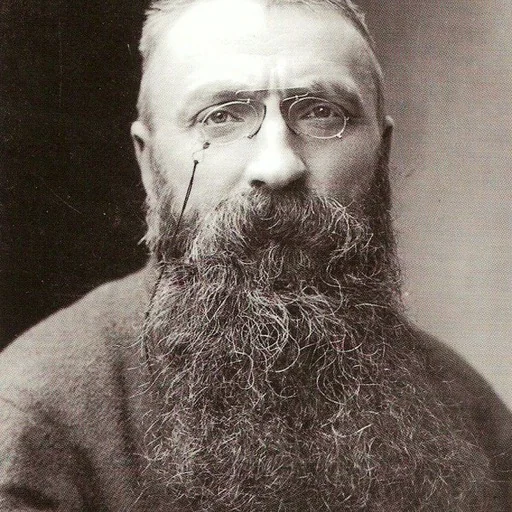
François Auguste René Rodin (; French: ; 12 November 1840 – 17 November 1917) was a French sculptor generally considered the founder of modern sculpture.