Artwork
Holy Family with Deer
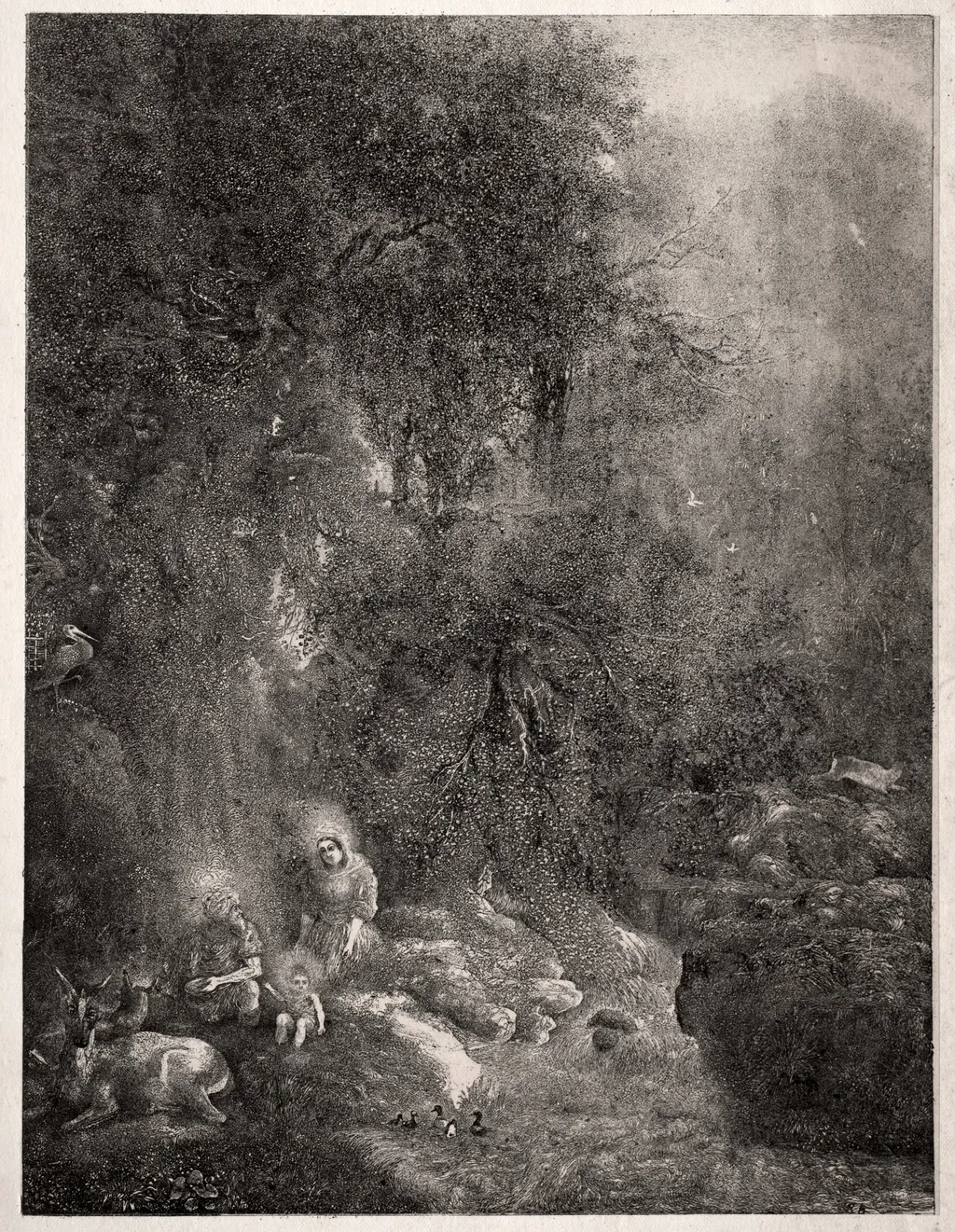
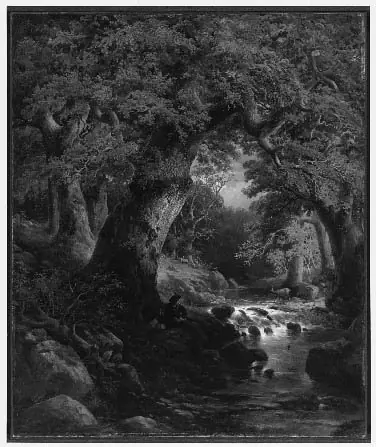
Holy Family with Deer is a print by the Impressionist artist Rodolphe Bresdin. It dates from 1871 and is held in the collection of the Cleveland Museum of Art.
About this work
Overview
Created in 1871 by Rodolphe Bresdin, this print depicts a sacred scene rendered with unconventional intensity.
Created in 1871 by Rodolphe Bresdin, this print depicts a sacred scene rendered with unconventional intensity. Unlike traditional depictions of the Holy Family, it places them within a somber, untamed landscape. The work is part of the collection at The Cleveland Museum of Art, where it is noted for its emotional gravity and distinctive graphic style, diverging from the polished aesthetics of its time.
Subject & Meaning
The Virgin Mary, her features softened and indistinct, holds the infant Jesus beside a calm, watchful deer. A distant, crouching figure near a fallen log suggests a silent witness, possibly Joseph or an angelic presence. The deer, a symbol of piety and divine grace in medieval iconography, anchors the sacred in nature, implying a quiet, intimate revelation rather than a grand theological moment.
Technique & Style
Bresdin employed dense, scratchy linework and deep chiaroscuro to build texture and atmosphere. The heavy shadows and grainy contrasts obscure detail, creating a sense of mystery and stillness. The roughness of the etching technique enhances the primal quality of the scene, rejecting smooth finish in favor of emotional resonance through tactile, almost visceral mark-making.
History & Provenance
Produced in 1871, the print emerged during a period when Bresdin was exploring spiritual themes through increasingly personal, nonconformist imagery. It entered The Cleveland Museum of Art’s collection in the 20th century, where it has been studied for its departure from academic norms and its alignment with Romantic and Symbolist sensibilities in printmaking.
Context
In the late 19th century, religious imagery was often idealized or monumental. Bresdin’s work resisted this, drawing instead from folk traditions and medieval symbolism. His use of dark, wooded settings and ambiguous figures reflected broader artistic interests in the sublime and the unseen, aligning him with contemporaries who sought emotional depth over narrative clarity.
Legacy
Though little known during his lifetime, Bresdin’s prints gained recognition in the 20th century for their psychological depth and technical innovation. 'Holy Family with Deer' exemplifies his ability to transform religious subject matter into a haunting, introspective vision, influencing later artists drawn to the expressive potential of printmaking beyond mere reproduction.
Artist & collection

Artist
Rodolphe Bresdin (12 August 1822 – 11 January 1885) was a French draughtsman and engraver.

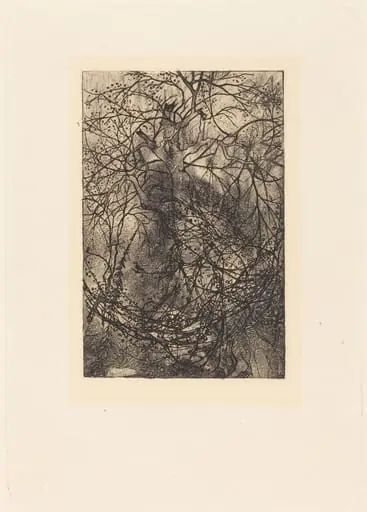
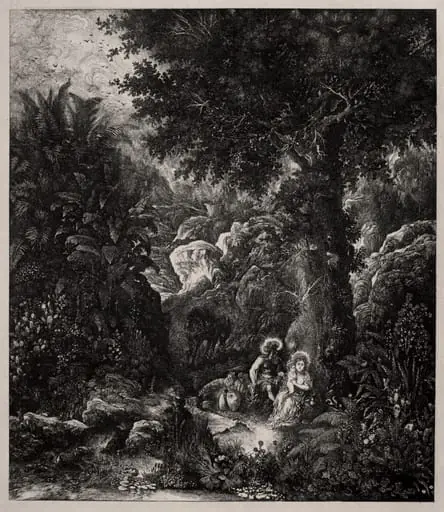 Rest on the Flight into Egypt with a Saddled Donkey
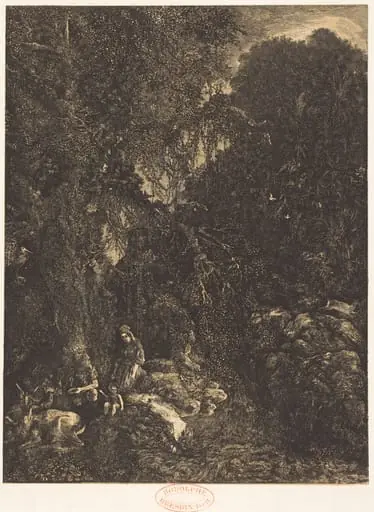 The Holy Family with the Does
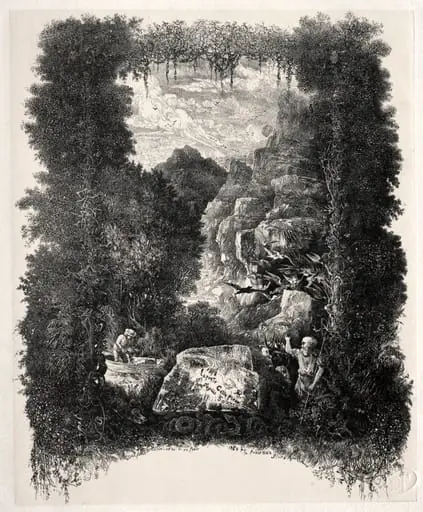 First frontispiece for Fables and Fairy-Tales by Thierry-Faletans
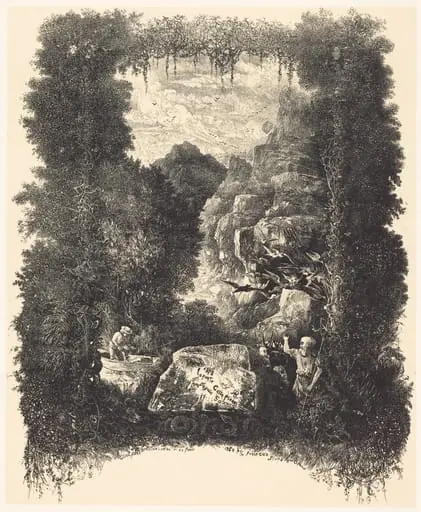 Frontispiece
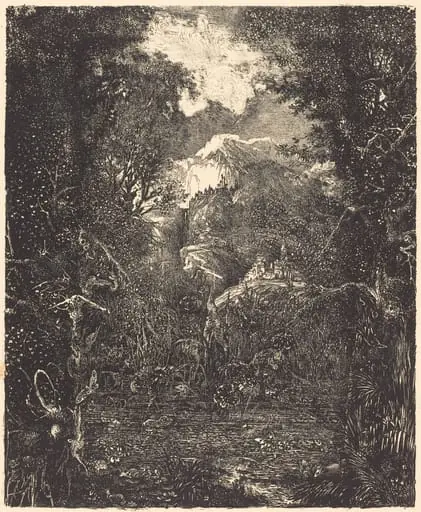 The Towns Behind the Marsh
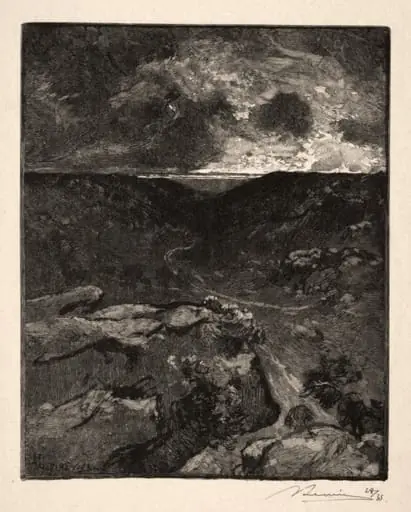 La vallèe de Franchard
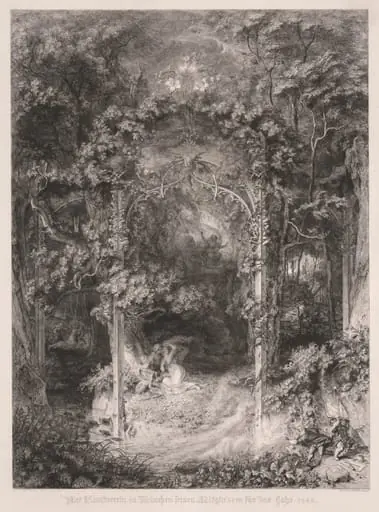 The Forest Maiden
 Gebirgslandschaft
 Landscape (Paysage)
 The Stream
 Waldlandschaft mit Personenstaffage und Architektur
 Jacques and the Forest of Arden