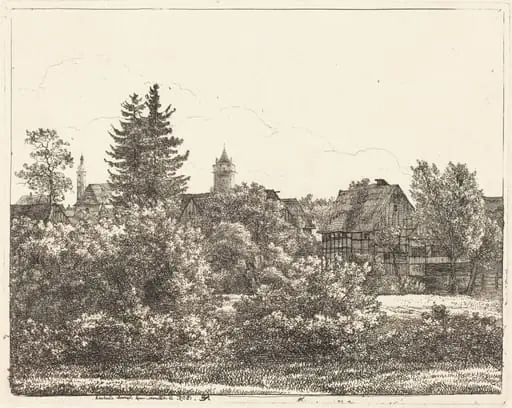
Artwork
Views: The Terrace
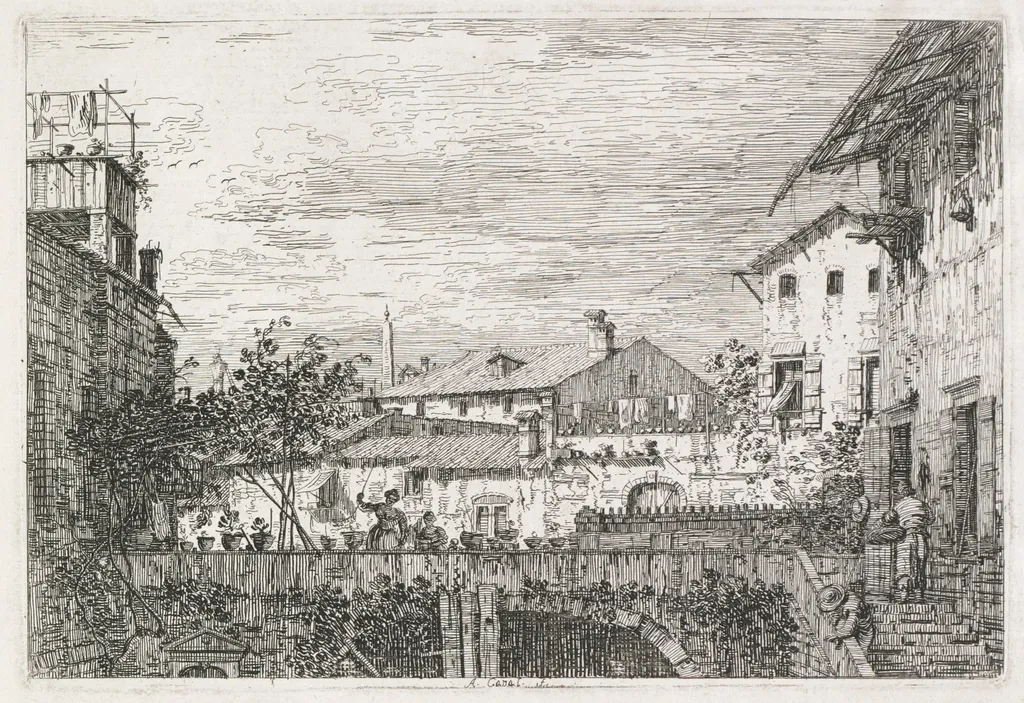
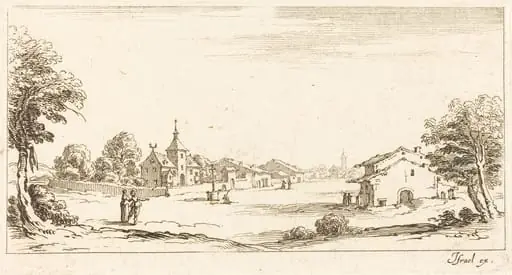
Views: The Terrace is a print by the Baroque artist Canaletto. It dates from 1740 and is held in the collection of the Cleveland Museum of Art.
About this work
Overview
Though best known for oil paintings, Canaletto also produced detailed prints that captured the architecture and social rhythms of Venice.
Created in 1740, *Views: The Terrace* is an etching by Antonio Canaletto, part of a broader series documenting Venetian urban life. Though best known for oil paintings, Canaletto also produced detailed prints that captured the architecture and social rhythms of Venice. This work exemplifies his precision in rendering public spaces, combining observed reality with compositional control to present an orderly, vivid snapshot of daily activity.
Subject & Meaning
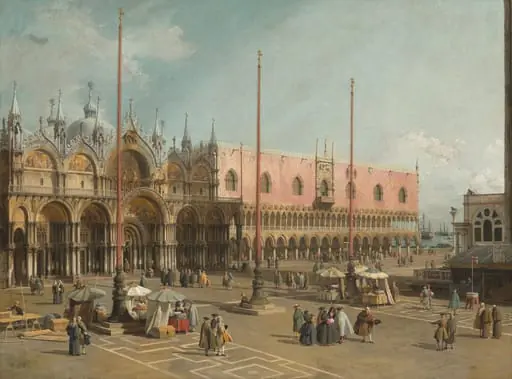
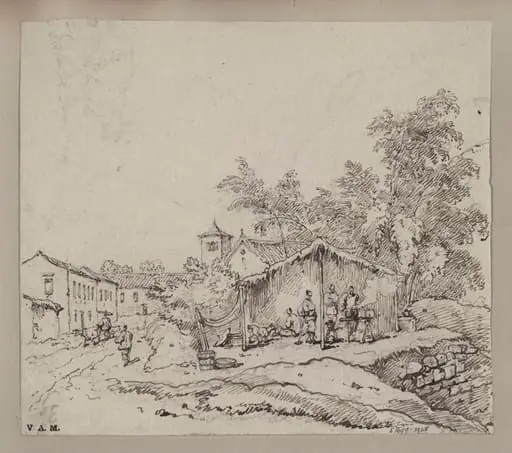
The scene depicts a bustling terrace overlooking the Venetian lagoon, populated by figures engaged in leisure—dining, strolling, conversing. The architecture, including a distant church steeple and row of windowed buildings, anchors the composition in a recognizable Venetian context. The image conveys neither grandeur nor narrative, but rather the quiet rhythm of civic life, reflecting an 18th-century fascination with the observable world and its social patterns.
Technique & Style
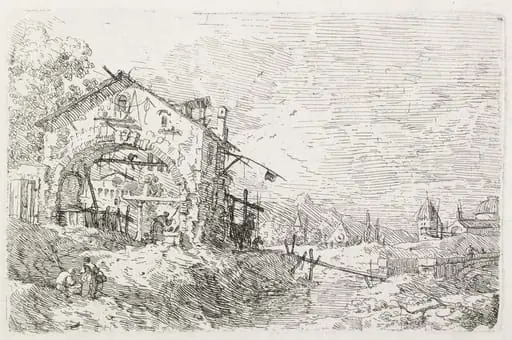
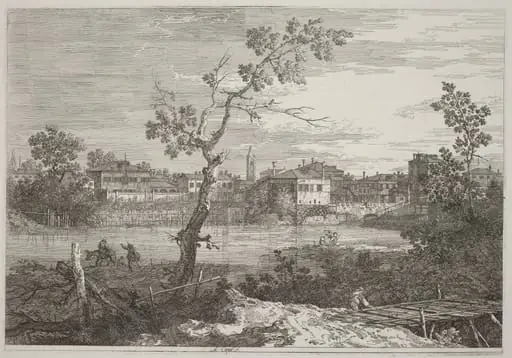
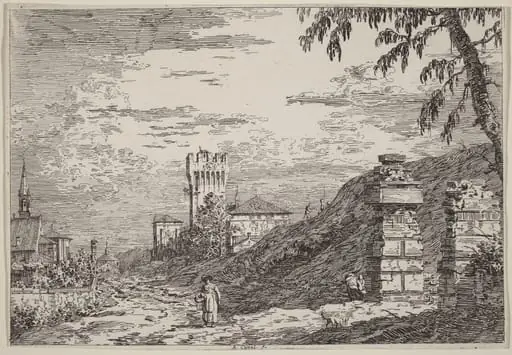
Canaletto employed fine, controlled etching lines to define surfaces, textures, and spatial depth. Clothing folds, foliage, and architectural details are rendered with meticulous attention, enhancing realism without ornamentation. The use of linear perspective and careful tonal gradation creates a sense of airiness and distance, characteristic of his vedute tradition. His technique prioritized clarity and accuracy over expressive brushwork, aligning with contemporary demand for topographical fidelity.
History & Provenance
The etching was produced during Canaletto’s peak period in Venice, before his extended stay in England. It entered the Cleveland Museum of Art’s collection through documented acquisitions in the 20th century, part of a broader effort to assemble works representing European printmaking traditions. Its preservation reflects its value as a primary source for understanding Venetian urban culture and artistic practice in the mid-1700s.
Context
In the 18th century, vedute prints like this one served as both artistic expression and visual documentation, catering to travelers and collectors seeking souvenirs of Venice. Canaletto’s work aligned with a growing interest in topographical accuracy and urban observation, influenced by Enlightenment ideals. His prints circulated widely, shaping European perceptions of the city as a place of order, beauty, and social vitality.
Legacy
Canaletto’s etchings, including *Views: The Terrace*, influenced later topographical artists and contributed to the development of urban landscape as a distinct genre. His method of combining precise observation with compositional harmony became a reference point for 19th-century printmakers. While overshadowed in popular memory by his paintings, his prints remain vital for understanding the mechanics of visual culture in pre-industrial Europe.
Artist & collection
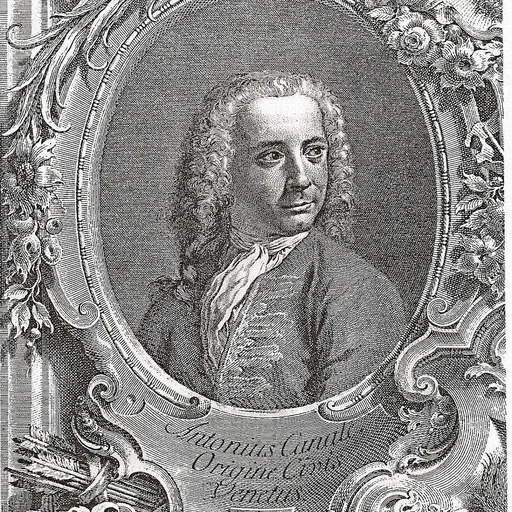
Artist
Giovanni Antonio Canal (18 October 1697 – 19 April 1768), commonly known as Canaletto (Italian: ), was an Italian painter from the Republic of Venice, considered an important member of the 18th-century Venetian school.

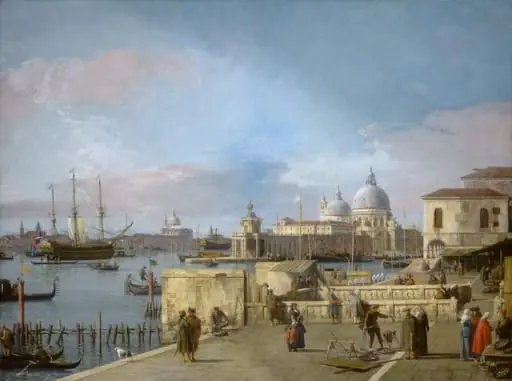
![Landscape with a Woman at a Well [lower left], by Canaletto](https://artifactworldgallery.com/img/canaletto--landscape-with-a-woman-at-a-well-lower-left--b513e9050350c0fb-w320.webp)