Artwork
Stone Bridge over A Mountain Brook
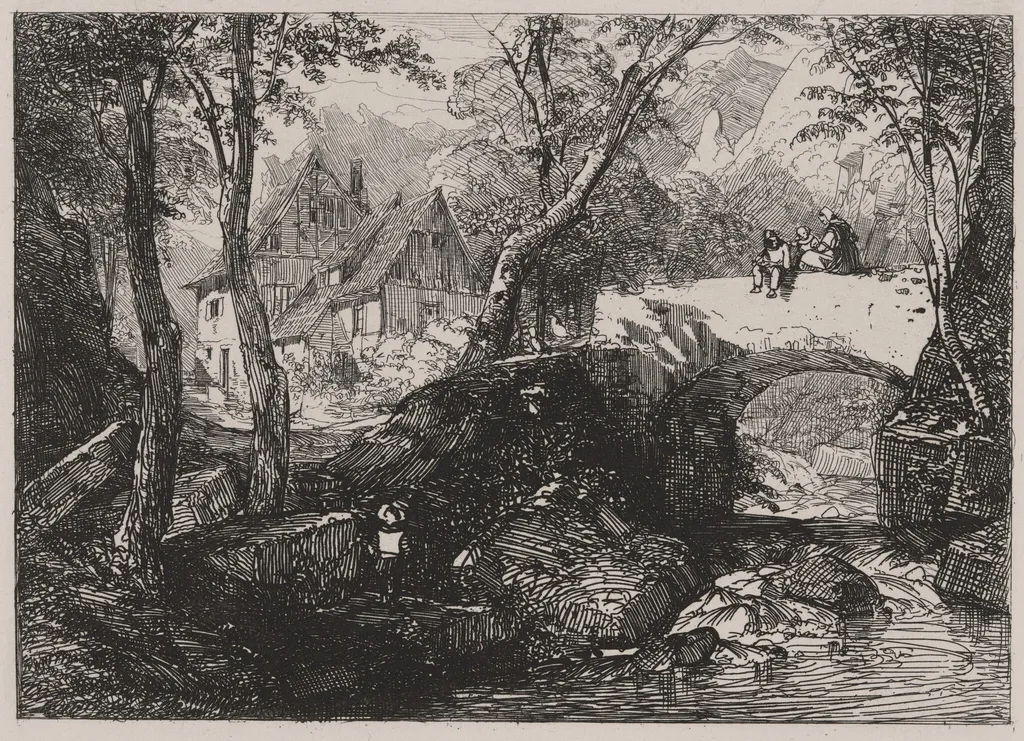
Stone Bridge over A Mountain Brook is an ink print by the Romanticist artist Caspar Johann Nepomuk Scheuren. It dates from 1842 and is held in the collection of the National Gallery of Art.
About this work
Overview
A solitary figure rests on the bridge while another moves along its path, introducing subtle human presence without disrupting the scene’s quietude.
Created in 1842, this black-and-white etching by Caspar Johann Nepomuk Scheuren depicts a tranquil forest landscape centered on a modest stone bridge spanning a narrow mountain stream. The composition is framed by dense, upward-reaching trees, with distant buildings barely visible through the foliage. A solitary figure rests on the bridge while another moves along its path, introducing subtle human presence without disrupting the scene’s quietude.
Subject & Meaning
The scene evokes a contemplative harmony between nature and human presence. The bridge, a modest structure of local stone, serves as both a functional crossing and a symbolic threshold between wilderness and habitation. The minimal human figures suggest solitude and reflection rather than activity, reinforcing a mood of stillness and introspection common in 19th-century German landscape traditions.
Technique & Style
Scheuren employed fine, controlled etching lines to render textures—rough stone surfaces, gnarled tree bark, and the delicate play of light through leaves. The inked plate was incised with a needle, then etched in acid to hold the image, allowing for precise tonal gradations. The monochrome palette enhances the atmospheric depth, relying on line and contrast rather than color to define form and space.
History & Provenance
The print was produced in 1842 during Scheuren’s active period as a Romantic-era artist in Germany. Though not widely exhibited in his lifetime, it was likely circulated among private collectors and art societies interested in topographical and landscape prints. Its survival in institutional collections suggests early recognition of its technical refinement within niche artistic circles.
Context
This work emerged during a period when German artists increasingly turned to intimate natural scenes as a counterpoint to industrialization. Etching, long used for reproductive prints, was revived by Romantic-era creators seeking expressive, handcrafted alternatives to mass-produced imagery. Scheuren’s focus on quiet, unidealized landscapes aligns with broader trends in regional German art of the 1840s.
Legacy
While Scheuren is not among the most widely studied artists of his time, this etching exemplifies the quiet precision of mid-19th-century German printmaking. It remains a representative example of how artists used etching to capture subtle naturalism, influencing later generations interested in the interplay between landscape and human solitude within a rapidly changing world.
Own this work as a print
Artist & collection

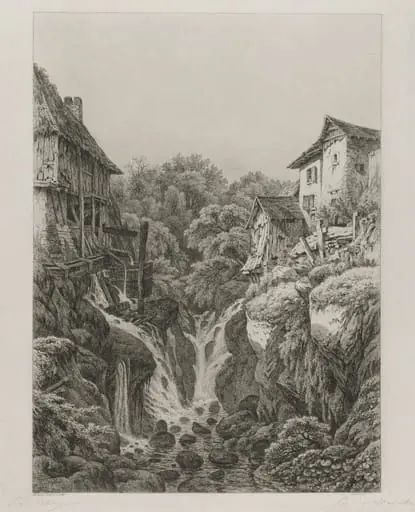 The Mill and Waterfall of Grésy near Aix-les-Bains
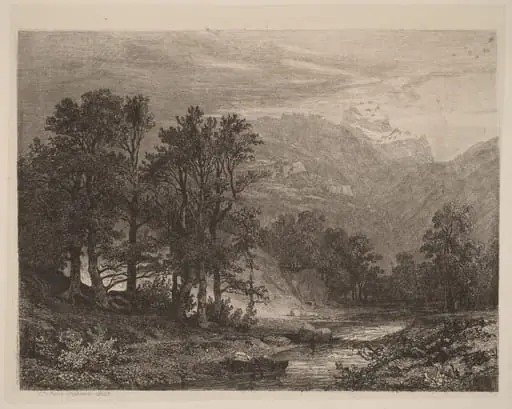 Mountain Stream
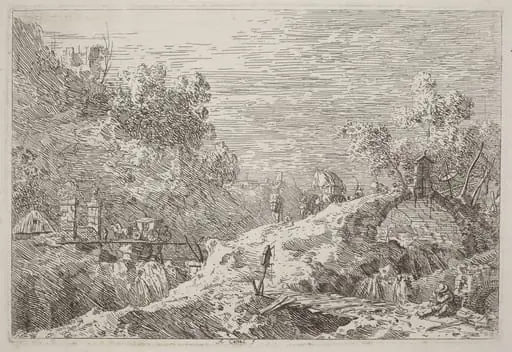 Mountain Landscape with Five Bridges
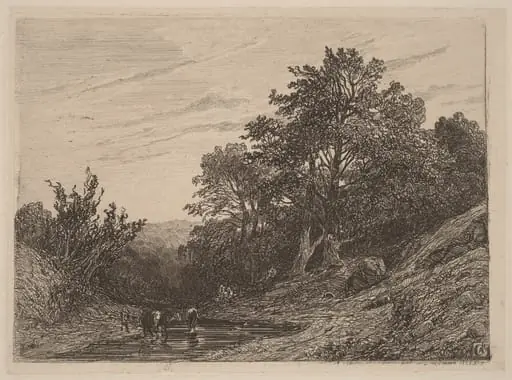 Herd in a Stream
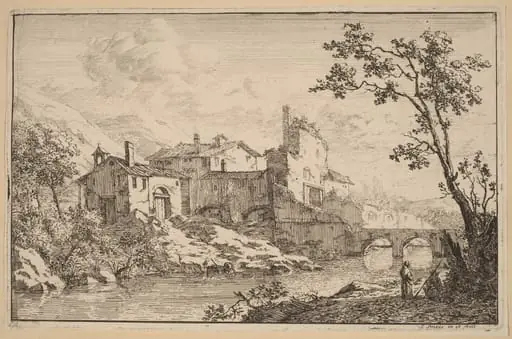 Houses at the Side of a River
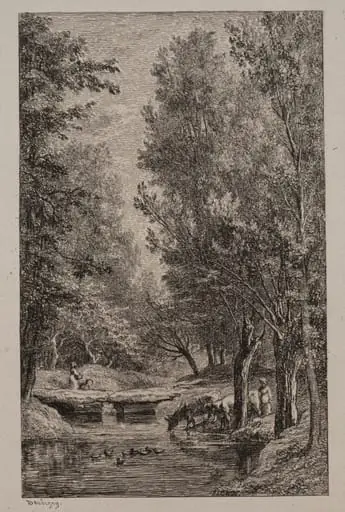 Brook in the Val Mondois
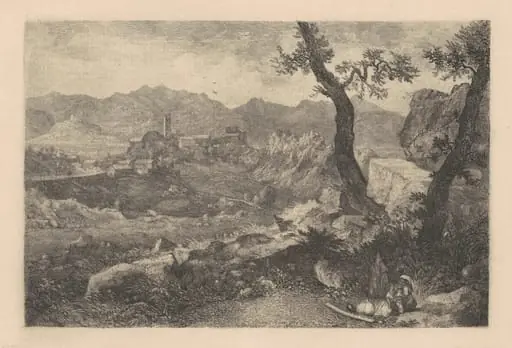 View Near Rome
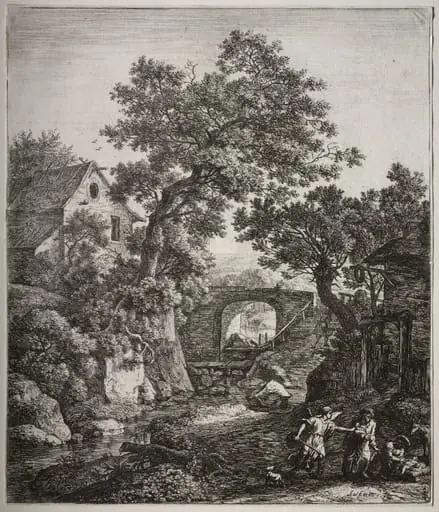 Six large upright landscapes with scenes from the Old Testament: Zipporah circumcising Her Son
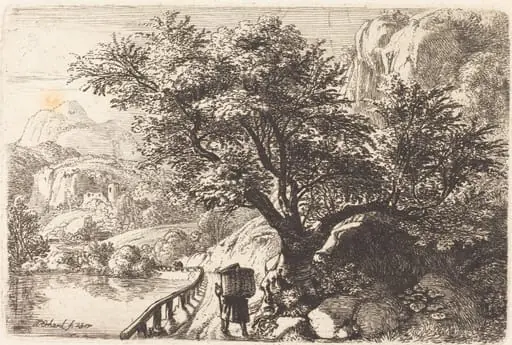 Peasant Walking along a River
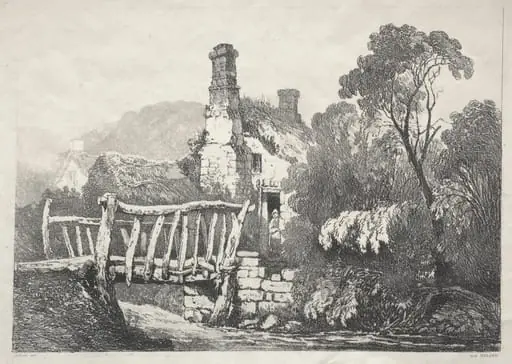 A Series of Ancient Buildings and Rural Cottages in the North of England: Near Byland
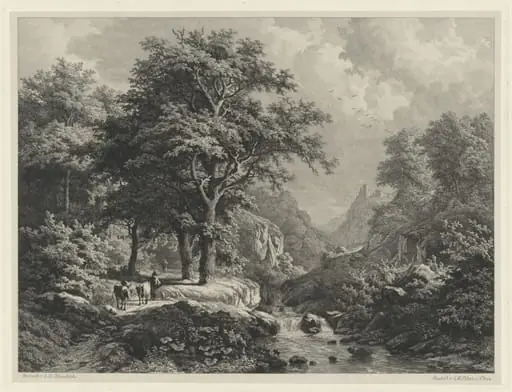 Mountainous Landscape with a Brook