Artwork
The Ruin of Huis 't Sant at Katwijk aan Zee
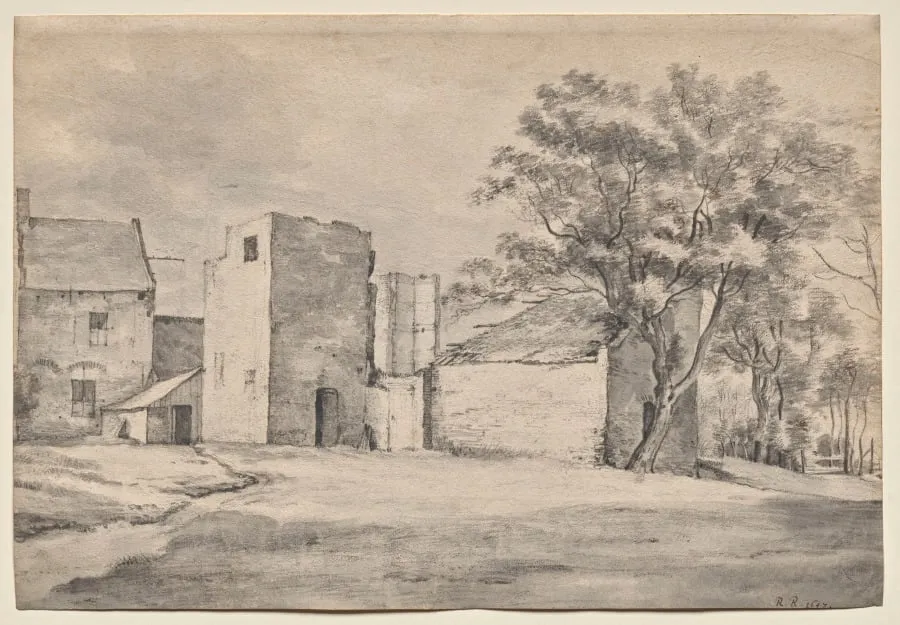
The Ruin of Huis 't Sant at Katwijk aan Zee is a drawing by the Baroque artist Roelant Roghman. It dates from 1647 and is held in the collection of the Cleveland Museum of Art.
About this work
Overview
Roelant Roghman’s drawing of the ruined Huis ’t Sant at Katwijk aan Zee depicts a solitary brick tower, its walls weathered and partially collapsed, perched on a sandy dune with sea water touching its base. The work belongs to a series of more than two hundred sketches of Dutch castles, manor houses and fortifications created during Roghman’s extensive field study of the country’s architectural remnants.
Subject & Meaning
The image records the physical decay of a once‑defended structure, emphasizing the passage of time and the impact of the coastal environment. By isolating the tower against a muted landscape, Roghman underscores the vulnerability of human constructions when confronted with nature’s relentless forces.
Technique & Style
Executed on a large sheet of paper, the drawing combines ink wash with charcoal. Roghman rendered the ruin on site, then later enriched the composition with additional landscape elements, employing a soft gradation of tones reminiscent of the sfumato approach to suggest atmospheric depth.
History & Provenance
Roghman produced the work shortly after the Eighty‑Years’ War with Spain, traversing the Netherlands on foot to document the state of its war‑damaged edifices. The drawing was later incorporated into his extensive collection of architectural studies, which circulated among collectors of the period.
Context
The drawing reflects a broader 17th‑century Dutch interest in documenting the nation’s heritage and the scars left by conflict. It also aligns with contemporary efforts to preserve visual records of historic sites before further deterioration or demolition.
Legacy
Roghman’s systematic approach to field sketching set a precedent for later topographical and antiquarian artists, influencing how ruins were recorded and interpreted in both artistic and scholarly contexts.
Artist & collection


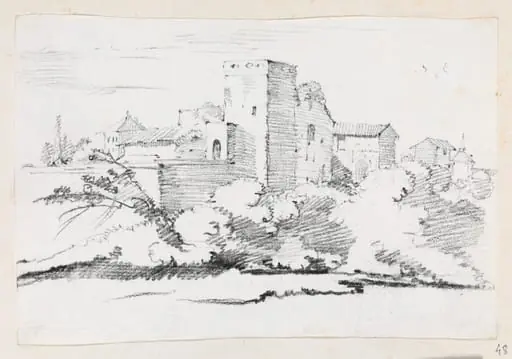 Buildings behind the Vatican
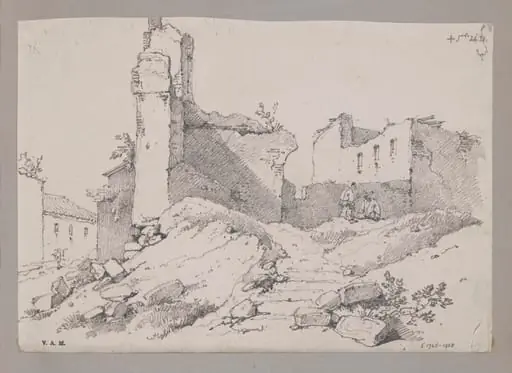 Ruins of the Swedish Factory, Macao, 1831
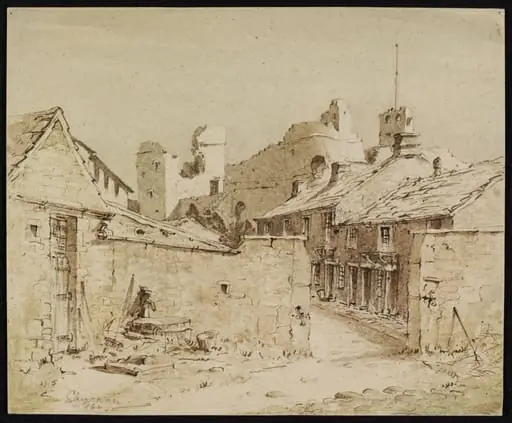 Middleham Street and Castle
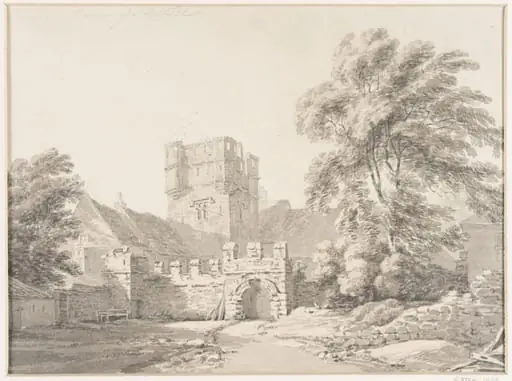 Mortham Tower, near Rokeby, Yorkshire.
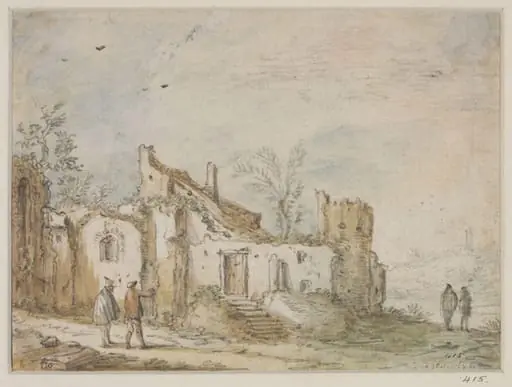 Untitled
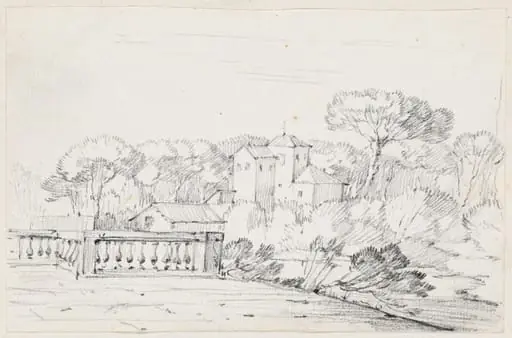 Terrace by a River with a Villa and Trees Beyond
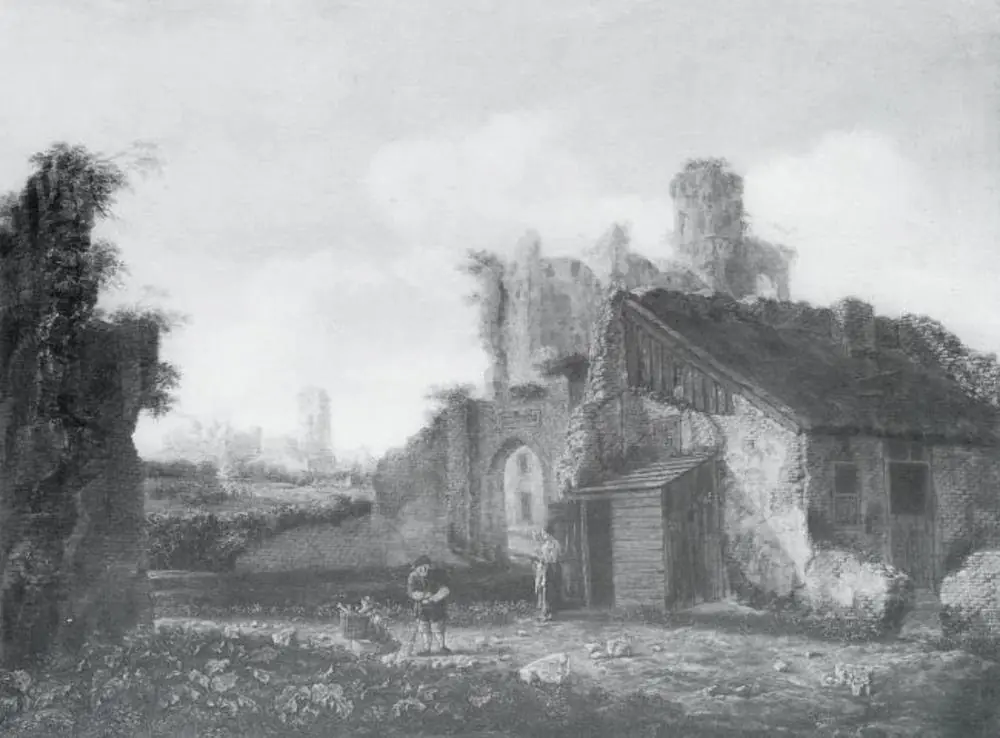 Italian Landscape with Antique Ruins
 Raglan Castle, Wales
 Boley Hill and Castle, Rochester, with the "Justice Tree"
 Square in Front of an Inn