Artwork
Landscape with rocks
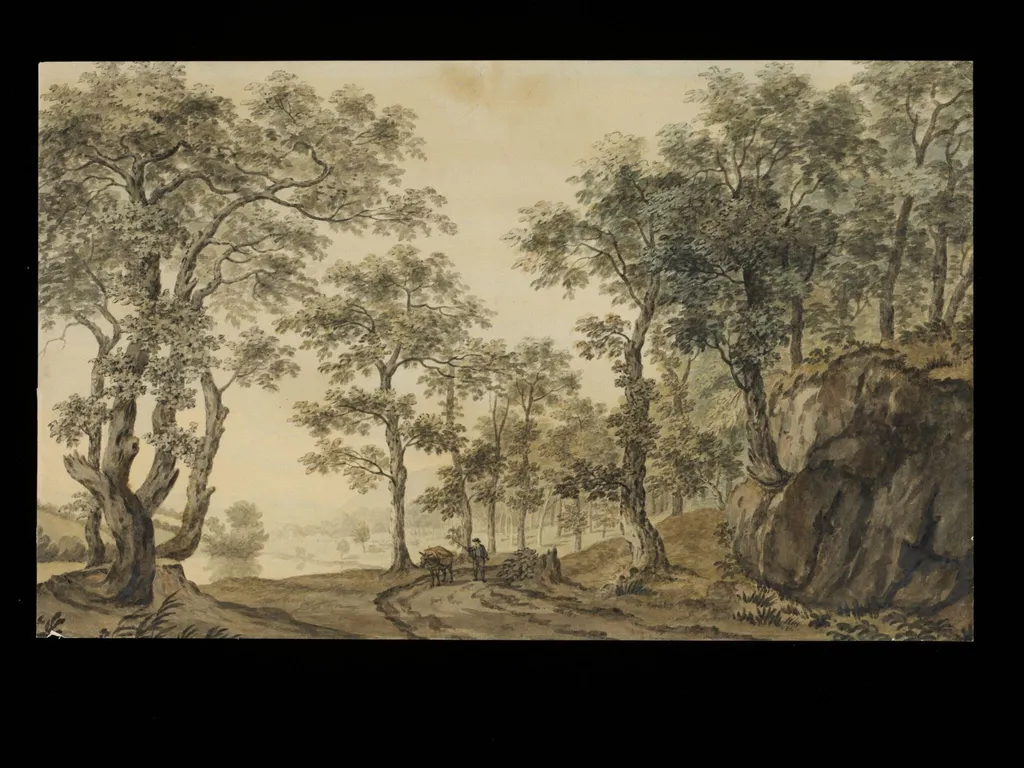
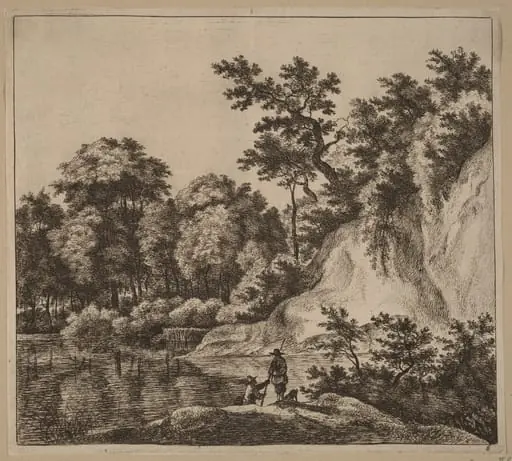
Landscape with rocks is a watercolor work on paper by the Rococo painting artist George Rogers. It dates from 1760 and is held in the collection of the Victoria and Albert Museum.
About this work
Overview
The work is part of the Victoria and Albert Museum’s collection, where it is preserved as an example of 18th-century British landscape watercolor.
Landscape with rocks is a watercolor painting by George Rogers, dated to around 1760. It depicts a tranquil woodland scene characterized by muted tones and careful attention to natural textures. The work is part of the Victoria and Albert Museum’s collection, where it is preserved as an example of 18th-century British landscape watercolor. Its quiet composition reflects a growing interest in intimate, observational depictions of the natural world during this period.
Subject & Meaning
The scene portrays a secluded forest path, where two figures and a horse-drawn cart move slowly inward, suggesting quiet travel or labor. The absence of human dwellings and the dense, unspoiled vegetation evoke a sense of solitude and contemplation. Rather than dramatizing nature, Rogers presents it as a serene, ongoing environment—emphasizing movement through space rather than narrative climax. The mood is introspective, inviting the viewer to linger in the stillness.
Technique & Style
Rogers employs delicate watercolor washes to build subtle gradations of green, brown, and gray, capturing the diffuse light filtering through dense foliage. Fine brushwork renders the roughness of tree bark and the layered shadows beneath leaves with precision. The composition avoids sharp outlines, relying instead on tonal transitions to suggest depth and form. This restrained approach reflects the period’s preference for naturalism over theatricality in landscape representation.
History & Provenance
The painting was created in the mid-18th century and entered the Victoria and Albert Museum’s collection through its established holdings of British watercolors. While little is documented about its early ownership, its preservation in a major institutional collection indicates its recognition as a representative work of its time. It has remained in the museum’s care since at least the 19th century, with no known alterations or significant restorations recorded.
Context
During the 1760s, British artists increasingly turned to landscape as a subject worthy of serious study, moving beyond idealized classical scenes toward observed, local environments. Rogers’s work aligns with this shift, reflecting the influence of topographical drawing and the rising appreciation for rural tranquility. Watercolor, valued for its portability and immediacy, became a favored medium for such intimate studies, particularly among amateur and professional artists alike.
Legacy
Landscape with rocks stands as a modest but thoughtful example of early British watercolor practice. Though not widely exhibited or reproduced, it contributes to the broader understanding of how artists of the period engaged with nature through quiet observation. Its presence in the Victoria and Albert Museum ensures its role as a reference point for studying the evolution of landscape watercolor in Britain during the 18th century.
Artist & collection
Artist
A British watercolor painter active in the late 1700s, George Rogers specialized in small, textured landscapes that feel like quiet walks through the countryside.

 Woods at Night with Travelers
 Landscape (recto)
 Forest scenery
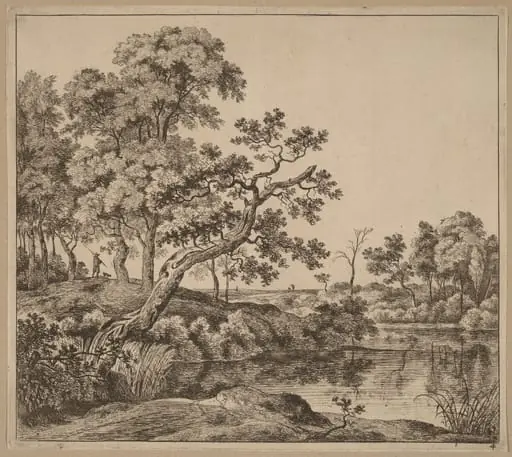 Landscape with a Bending Tree
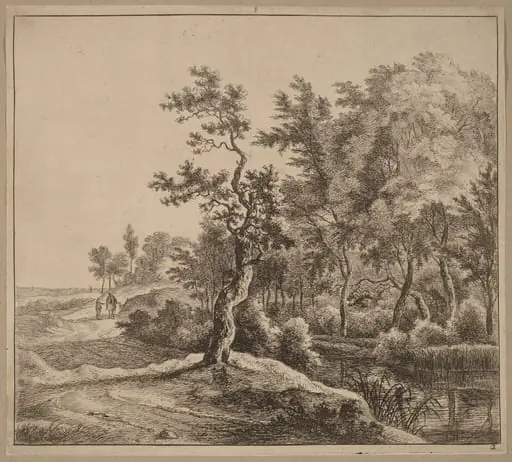 Landscape with a Winding Road
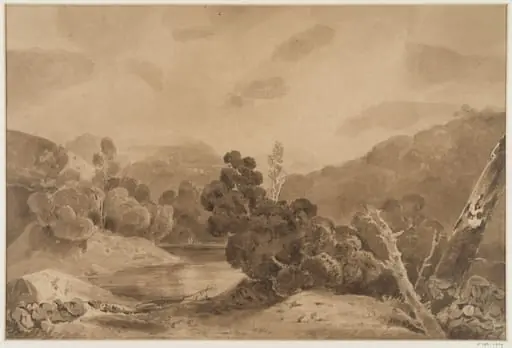 River scene with a temple or palace in the clouds
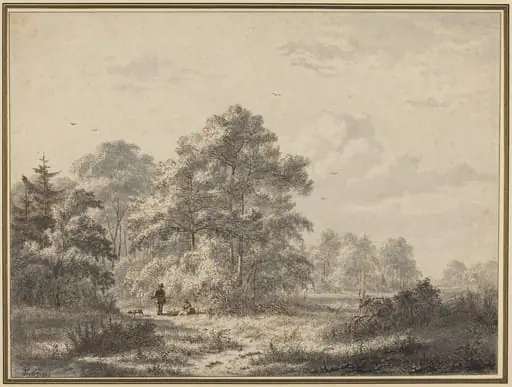 Hunters at the Edge of the Woods
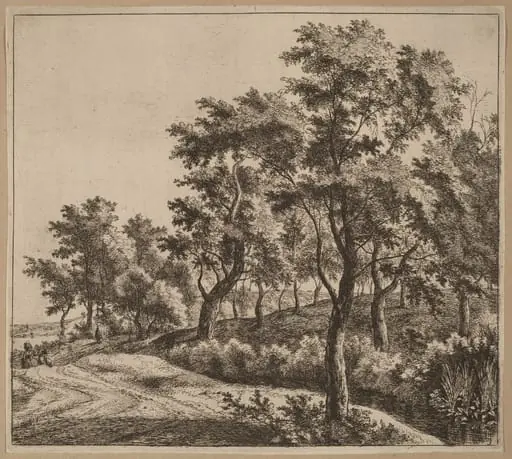 Landscape with a Stream
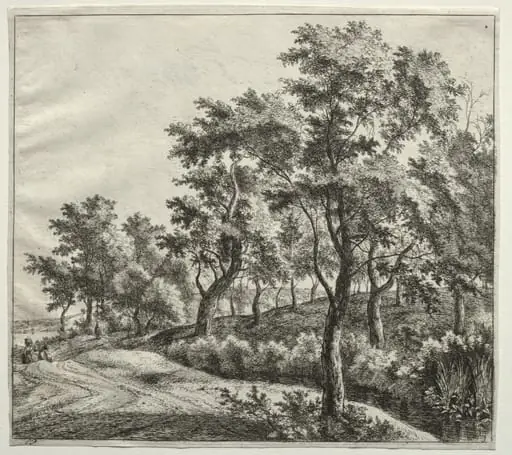 The Narrow Stream
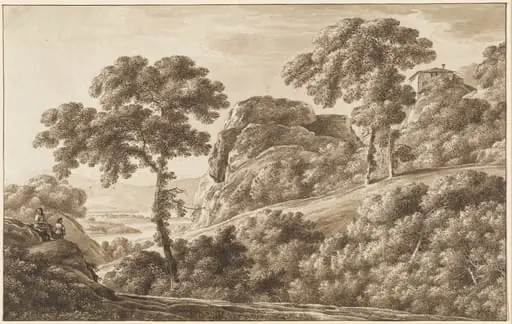 The Isar with Boulders on the Isarhohe
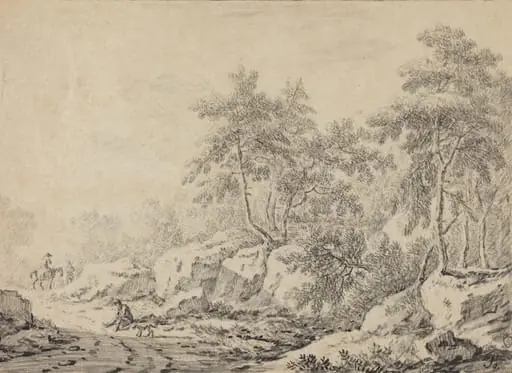 Travelers in a Rocky Wood
 Landscape with River and Rock