Artwork
Return of the Prodigal Son
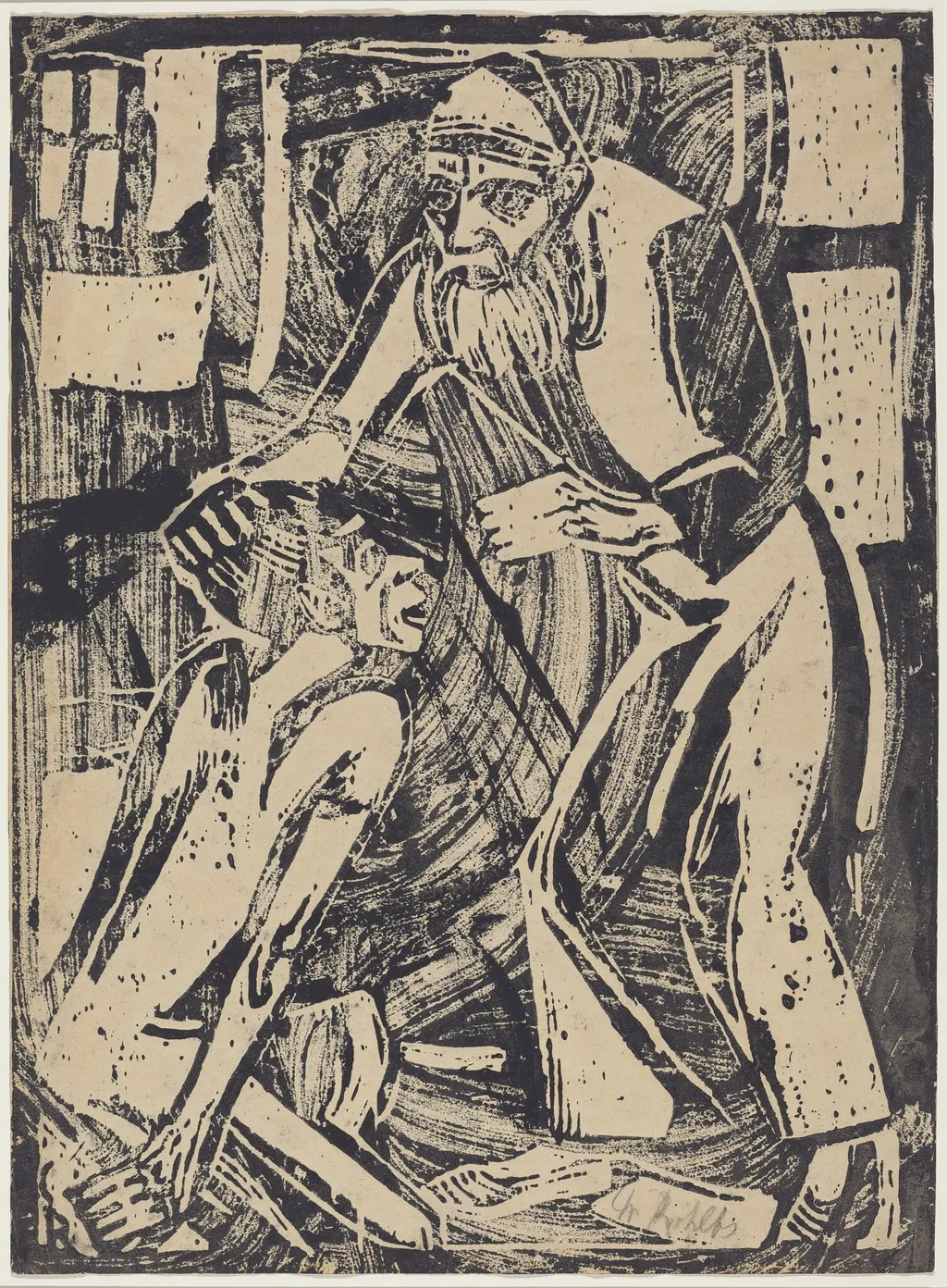
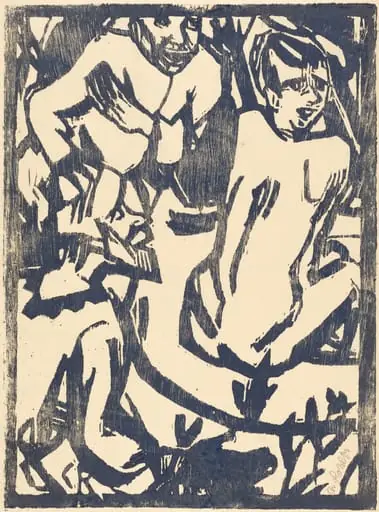
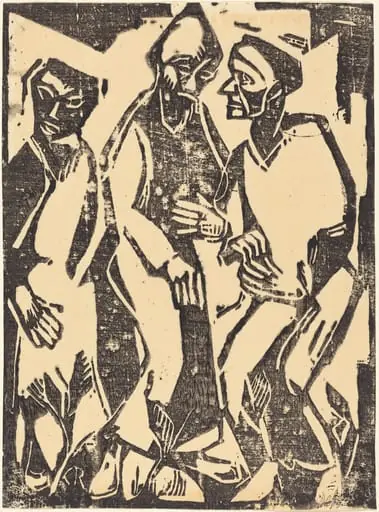
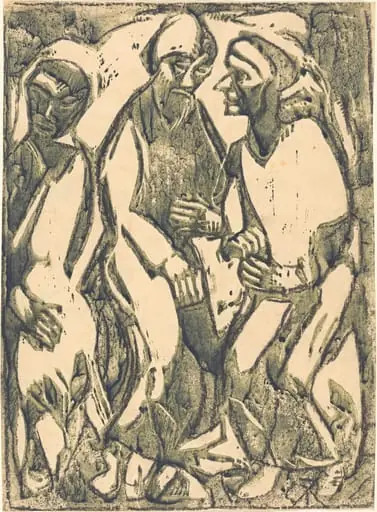
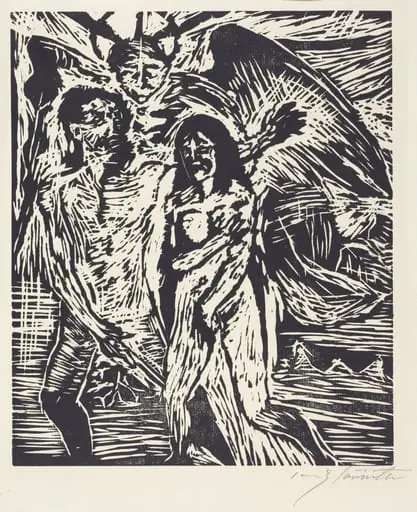
Return of the Prodigal Son is an ink print by Christian Rohlfs. It dates from 1916 and is held in the collection of the National Gallery of Art.
About this work
Overview
Created in 1916, *Return of the Prodigal Son* is a woodcut by German artist Christian Rohlfs, who was linked to the Expressionist movement.
Created in 1916, *Return of the Prodigal Son* is a woodcut by German artist Christian Rohlfs, who was linked to the Expressionist movement. The print captures a moment from the biblical parable through stark, simplified forms and high-contrast tonal areas. Rohlfs used the woodcut process to carve directly into a wooden block, resulting in a graphic image defined by jagged lines and heavy shadows, emphasizing emotional weight over naturalistic detail.
Subject & Meaning
The scene illustrates the moment of reconciliation between a father and his repentant son, as described in the Gospel of Luke. The father, seated and draped in a loose robe, extends his arms in embrace, while the younger figure kneels before him, hands clasped in submission. The absence of context beyond the figures and fractured architecture focuses attention on the act of forgiveness, rendered with raw, unadorned intensity.
Technique & Style
Rohlfs employed the woodcut method, carving into the surface of a wooden block to create raised areas that would receive ink. The resulting print features abrupt, angular lines and uneven textures, mimicking the grain and resistance of the wood. This technique amplifies the emotional tension of the scene, replacing soft modeling with bold, almost violent contrasts that align with Expressionist priorities over realism.
History & Provenance
Produced during World War I, the print emerged from a period of social and spiritual upheaval in Germany. Rohlfs, though not formally part of any Expressionist group, shared their interest in inner experience over external appearance. The work was likely circulated among avant-garde circles and collected by institutions interested in modern German printmaking, though its early ownership remains undocumented.
Context
In 1916, Germany was deeply embroiled in war, and many artists turned to religious and moral themes as a response to collective trauma. Rohlfs’s choice of the prodigal son narrative resonated with contemporary anxieties about redemption, loss, and reconciliation. His stylistic choices—distorted forms, compressed space, and stark lighting—reflected broader Expressionist tendencies to convey psychological states rather than observed reality.
Legacy
Though less widely known than his contemporaries, Rohlfs’s woodcuts, including this one, contributed to the evolution of modern German printmaking. His fusion of traditional biblical subject matter with radical formal language influenced later artists exploring emotional expression through print. The work remains a quiet but potent example of how spiritual narratives were reimagined through the lens of early 20th-century modernism.
Own this work as a print
Artist & collection

Artist
Christian Rohlfs (November 22, 1849 - January 8, 1938) was a German painter and printmaker, one of the important representatives of German expressionism.