Artwork
Execution of the Gunpowder Conspirators
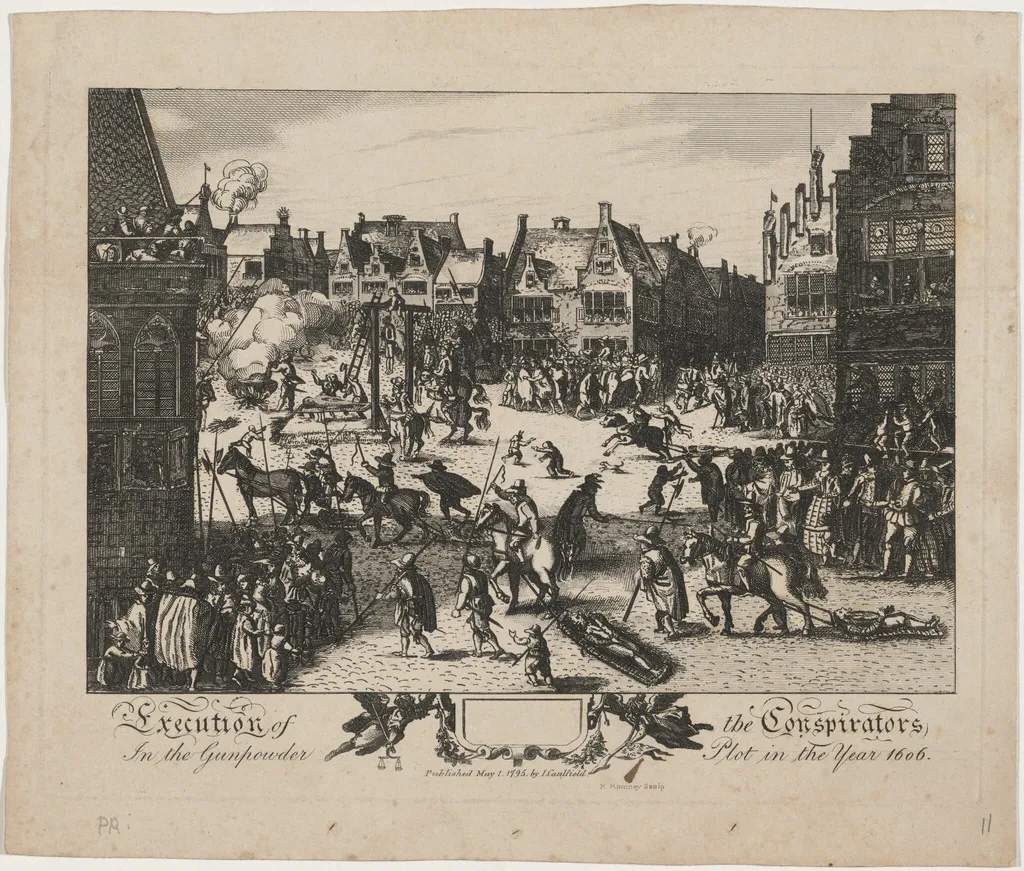
Execution of the Gunpowder Conspirators is a print by the Romanticist artist R. Romney. It dates from 1795 and is held in the collection of the National Gallery of Art. This 1795 facsimile print by R.
About this work
Overview
Rendered as a dramatic scene in a crowded urban square, it captures the moment of punishment with heightened emotional intensity.
This 1795 facsimile print by R. Romney depicts the public execution of those involved in the Gunpowder Plot of 1605. Rendered as a dramatic scene in a crowded urban square, it captures the moment of punishment with heightened emotional intensity. Though not an eyewitness record, the image reflects how the event was remembered in late 18th-century Britain, serving as both historical reference and moral allegory.
Subject & Meaning
The print portrays condemned conspirators standing on a cart, bound and surrounded by soldiers and spectators. The presence of onlookers at windows, in the streets, and even dogs moving through the crowd underscores the public nature of the spectacle. The scene functions as a warning against treason, reinforcing state authority through the visible consequences of rebellion, a theme resonant in post-revolutionary Britain.
Technique & Style
Romney employs strong linear contrasts and deep chiaroscuro to heighten the scene’s tension. Sharp outlines define figures against shadowed backgrounds, while areas of intense darkness draw focus to the condemned and their executioners. The use of light and shadow does not aim for realism but rather emphasizes moral contrast—illuminating the gravity of the moment while obscuring the anonymity of the crowd.
History & Provenance
Created in 1795, the print is a facsimile likely derived from earlier engravings of the 1605 executions. It was produced during a period of renewed interest in national history amid political unrest, possibly to reinforce loyalty to the crown. Its circulation as a printed image suggests it was intended for domestic display, serving as a visual reminder of the consequences of sedition.
Context
In the late 18th century, Britain was wary of revolutionary ideas following events in France. The Gunpowder Plot, long a symbol of Catholic treachery, was invoked to affirm Protestant state authority. Romney’s print taps into this cultural memory, transforming a century-old event into a contemporary moral lesson, aligning public spectacle with political stability.
Legacy
Though not widely known today, the print contributes to a broader tradition of historical propaganda in print media. It exemplifies how visual culture was used to shape collective memory, turning judicial punishment into a public ritual. Its stylistic choices influenced later depictions of historical events, embedding drama and moral clarity into the representation of state justice.
Artist & collection

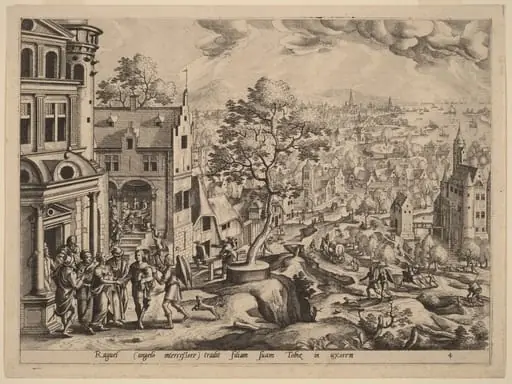 Tobias and the Angel Arriving at Raguel's House
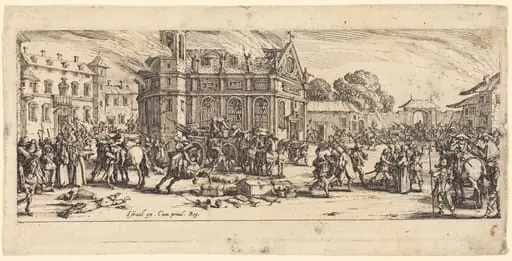 Destruction of a Convent
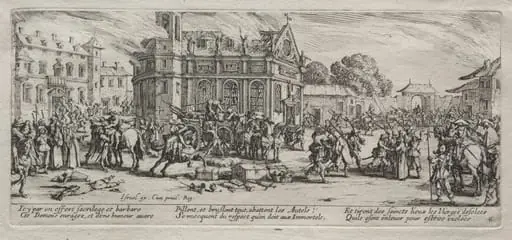 The Large Miseries of War: Devastation of a Monastery
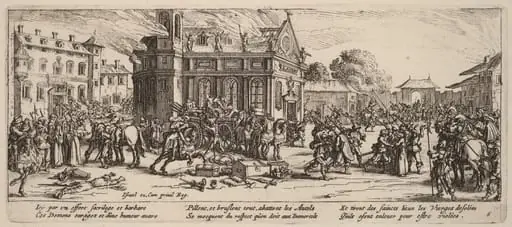 Destruction of a Convent
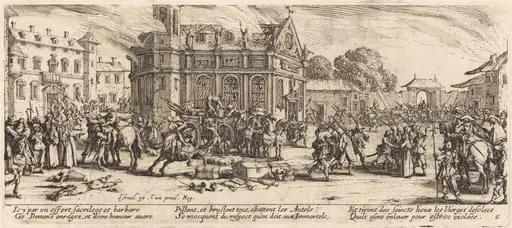 Destruction of a Convent
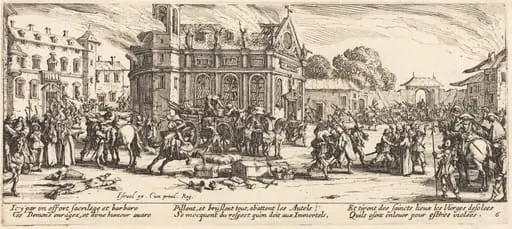 Destruction of a Convent
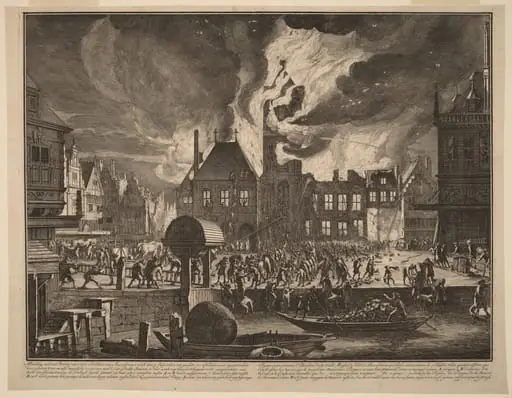 Burning of the Old Amsterdam Town Hall
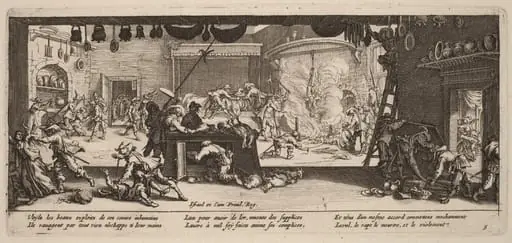 Plundering a Large Farmhouse
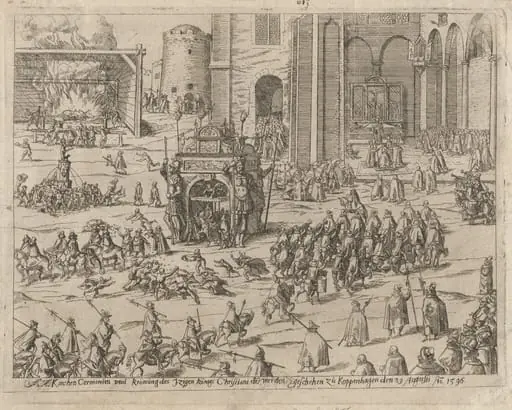 Kirchen Cermonien und Krönung des Zweigen Königs Christiani der Vierden... (Church Ceremonies and Coronation of the Eternal King Christian IV in Copenhagen on August 29, 1596