Artwork
Newport on the Usk, Monmouthshire
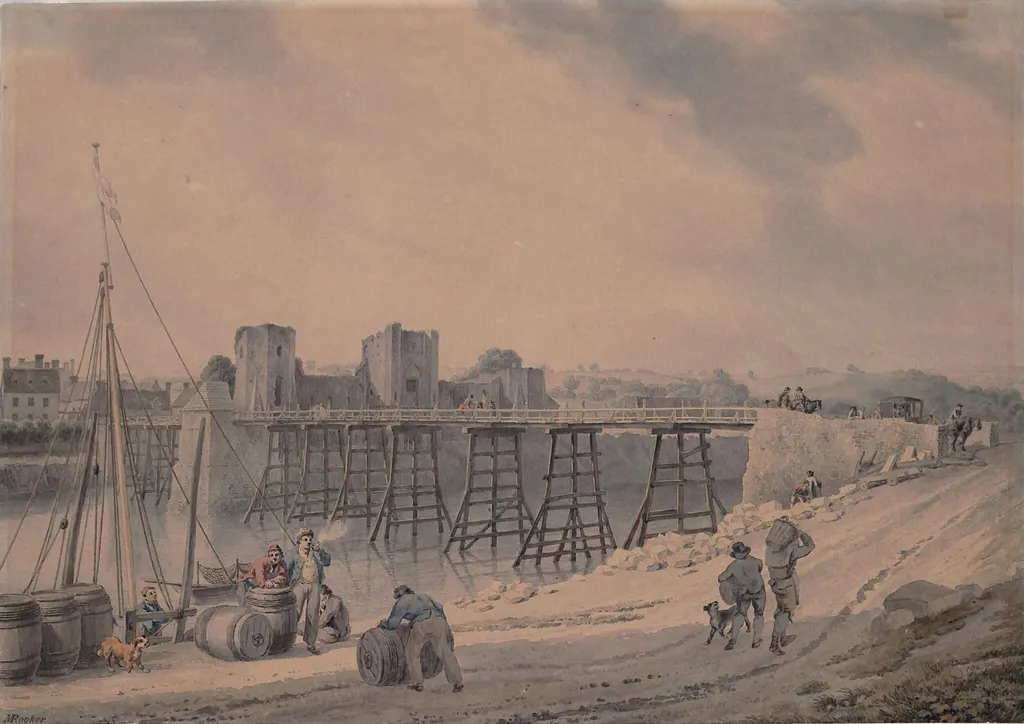
Newport on the Usk, Monmouthshire is a watercolor work on paper by the Rococo painting artist Rooker. It dates from 1760 and is held in the collection of the Victoria and Albert Museum.
About this work
Overview
The scene centers on a wooden bridge under construction, with figures engaged in labor near barrels and a small vessel.
This watercolour, signed by Rooker in 1760, captures the riverside town of Newport on the Usk in Monmouthshire. The scene centers on a wooden bridge under construction, with figures engaged in labor near barrels and a small vessel. Distant structures, including a ruined castle and modest dwellings, frame the composition beneath a gently graded sky. The work reflects topographical observation typical of 18th-century British watercolour practice.
Subject & Meaning
The painting documents a moment of local infrastructure development, emphasizing the interplay between human activity and the natural landscape. The unfinished bridge suggests progress, while the ruined castle evokes historical continuity. Figures going about their tasks ground the scene in daily life, avoiding idealization in favor of quiet, unembellished realism.
Technique & Style
Rooker employs transparent watercolour washes to model light on timber and stone, creating subtle volume without heavy outline. The sky transitions softly into the hills, enhancing spatial depth. Delicate brushwork defines the texture of wooden supports and weathered masonry, demonstrating a restrained yet precise handling of the medium suited to topographical accuracy.
History & Provenance
Executed in 1760, the work is one of several topographical watercolours by Rooker documenting Welsh and English towns. Its survival and signature suggest it was intended as a record rather than a commercial piece. The piece entered the Victoria and Albert Museum’s collection through established channels of 19th-century British art acquisition.
Context
In the mid-18th century, watercolour was increasingly used for land surveys and regional documentation. Rooker’s work aligns with a broader trend among artists and antiquarians to record architectural and civic change. Newport’s position as a port town made it a frequent subject for such studies, reflecting its economic role in regional trade.
Legacy
Rooker’s watercolour contributes to a corpus of early British topographical art that prioritized observation over ornament. Though not widely exhibited in his lifetime, such works later informed historical studies of urban development. The piece remains a quiet example of how watercolour served practical and documentary ends before its later romanticization.
Artist & collection

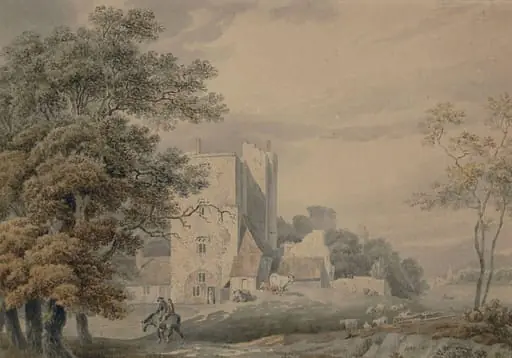
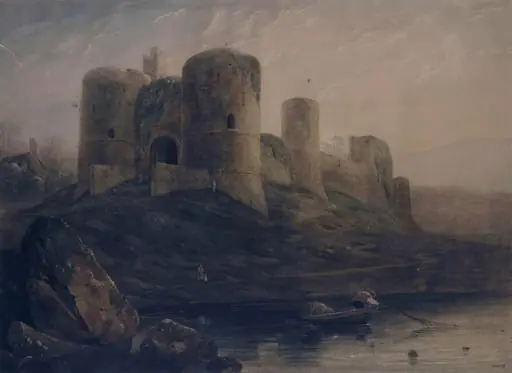 Manorbier Castle, near Tenby, Pembrokeshire: Sunset Effect
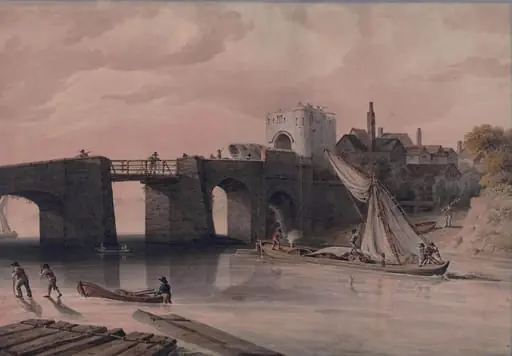 West Gate and bridge, Gloucester.
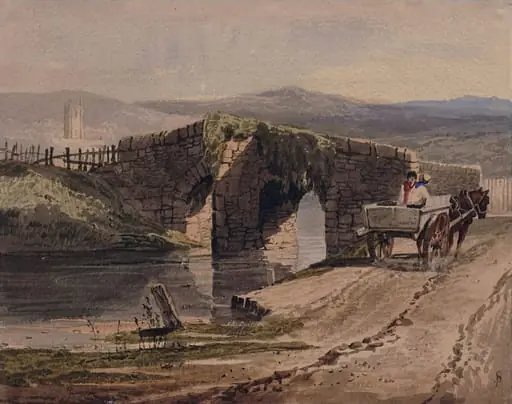 Okehampton
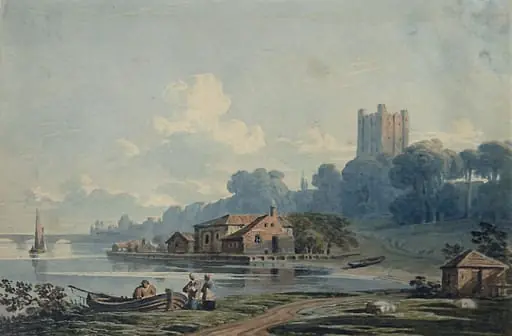 Rochester Castle
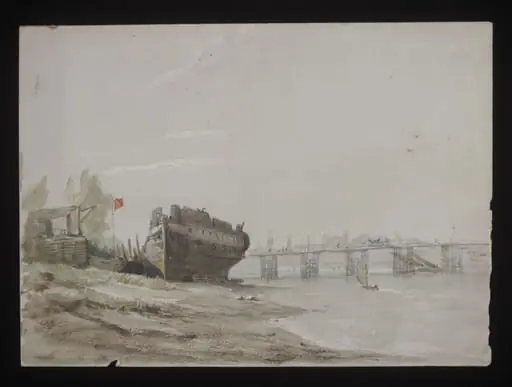 Watercolour drawing by the Grieve family, showing Battersea Bridge
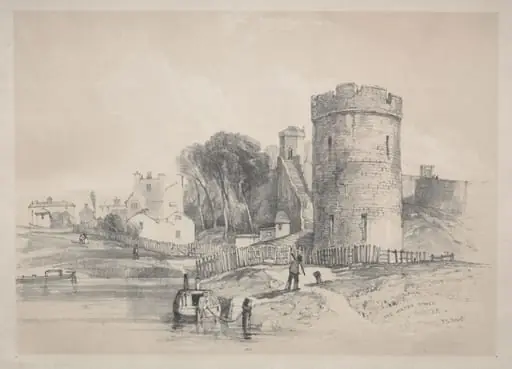 The Water Tower, Chester
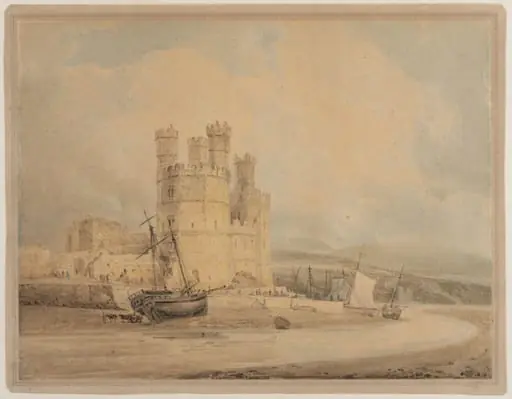 Carnarvon Castle
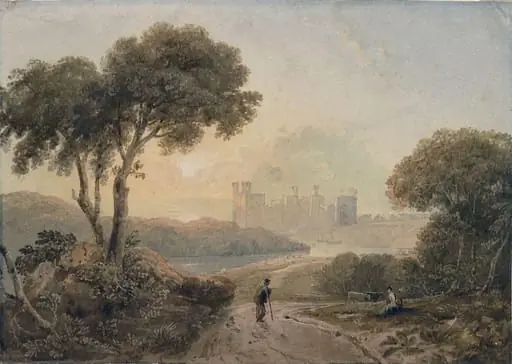 Carnarvon Castle
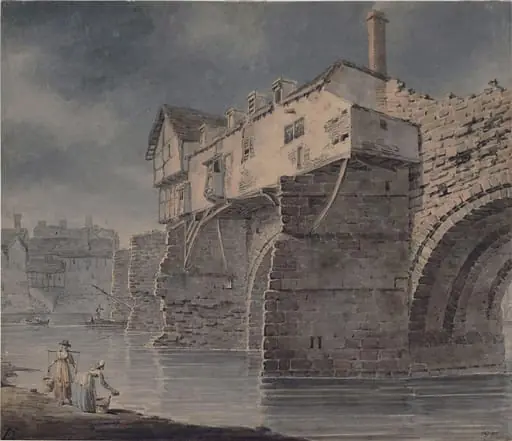 Bewdley, Worcestershire - Old Bridge with Houses
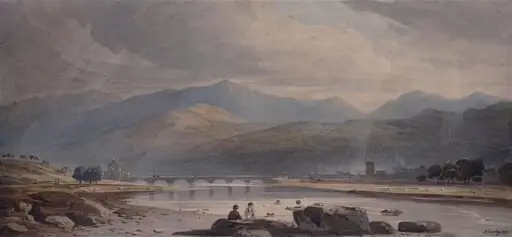 Dolgelly, North Wales
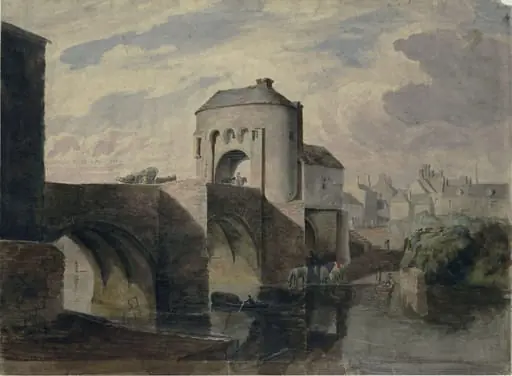 Bridge over the River Monmow, Monmouth