Artwork
Virgin and Child
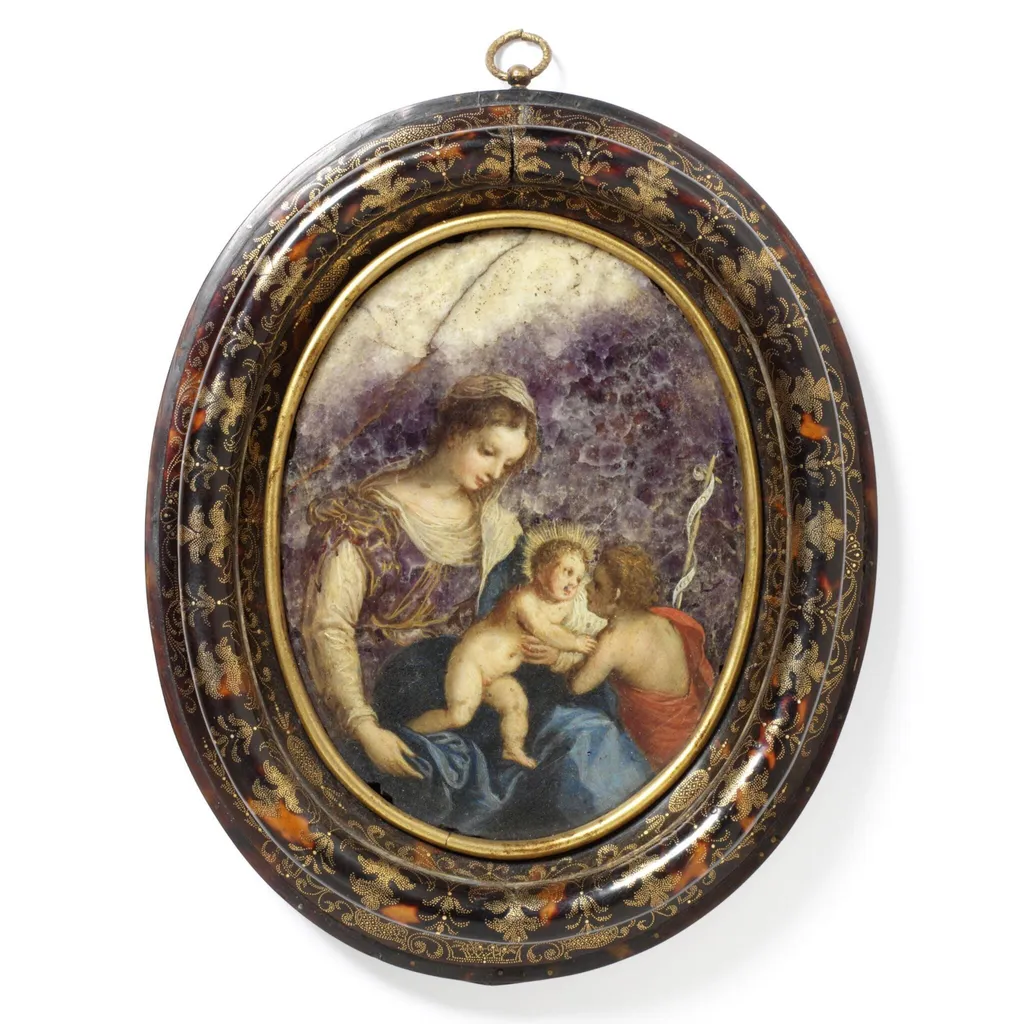
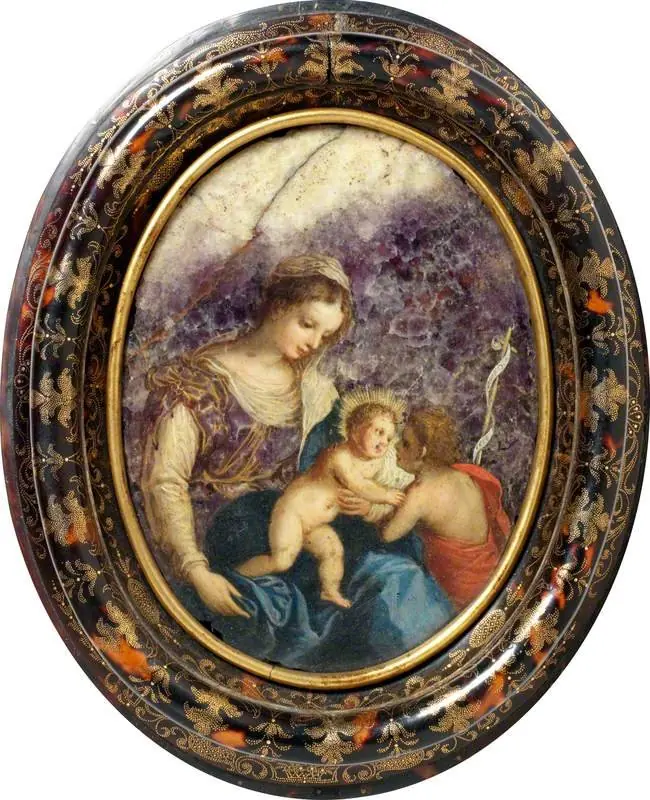
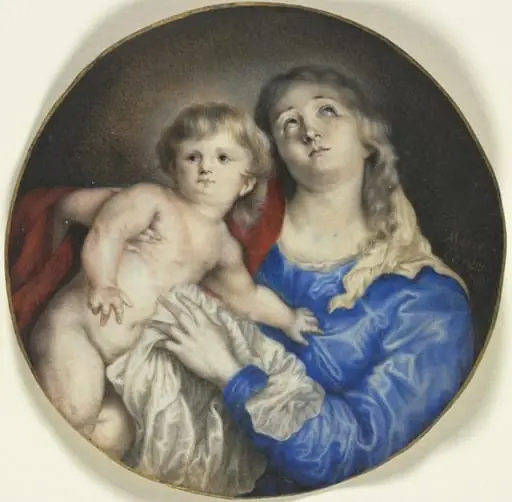
Virgin and Child is a paint painting by the Mannerist artist Hans Rottenhammer. It dates from 1598 and is held in the collection of the Victoria and Albert Museum.
About this work
Overview
This small oil painting on an amethyst plaque depicts the Virgin and Child with the Infant Saint John the Baptist, showcasing Hans Rottenhammer's skill in capturing intimate religious scenes.
Subject & Meaning
The painting portrays a tender moment with Mary, baby Jesus, and two angels peeking from behind clouds, conveying a sense of warmth and quiet devotion. The inclusion of the Infant Saint John the Baptist adds a layer of religious symbolism, highlighting the anticipated relationship between Jesus and John.
Technique & Style
Rottenhammer demonstrates his technical prowess through subtle, soft lighting that illuminates the subjects' faces, and meticulous details such as the gold thread in Mary’s blue robe. The use of an amethyst plaque as the painting's support is unusual for the artist.
History & Provenance
Executed between 1591 and 1606, likely during Rottenhammer's time in Italy (Venice or Rome), this work is a rare example of his use of stone as a painting surface. The artist's studio in Venice was known for attracting collectors with similar small, religious copper plate paintings.
Context
Created during Rottenhammer's Italian period, the painting reflects his exposure to Italian influences while maintaining elements of his Northern European training, evident in the detailed, realistic portrayal of the subjects.
Legacy
While the painting itself does not have a widely documented impact, it represents Rottenhammer's contribution to the tradition of small, exquisite religious paintings popular among collectors during his time. His work, in turn, influenced a family legacy of painting, though the output of his sons has largely not survived.
Artist & collection


 Virgin and Child with Saint John
 Madonna op de maansikkel
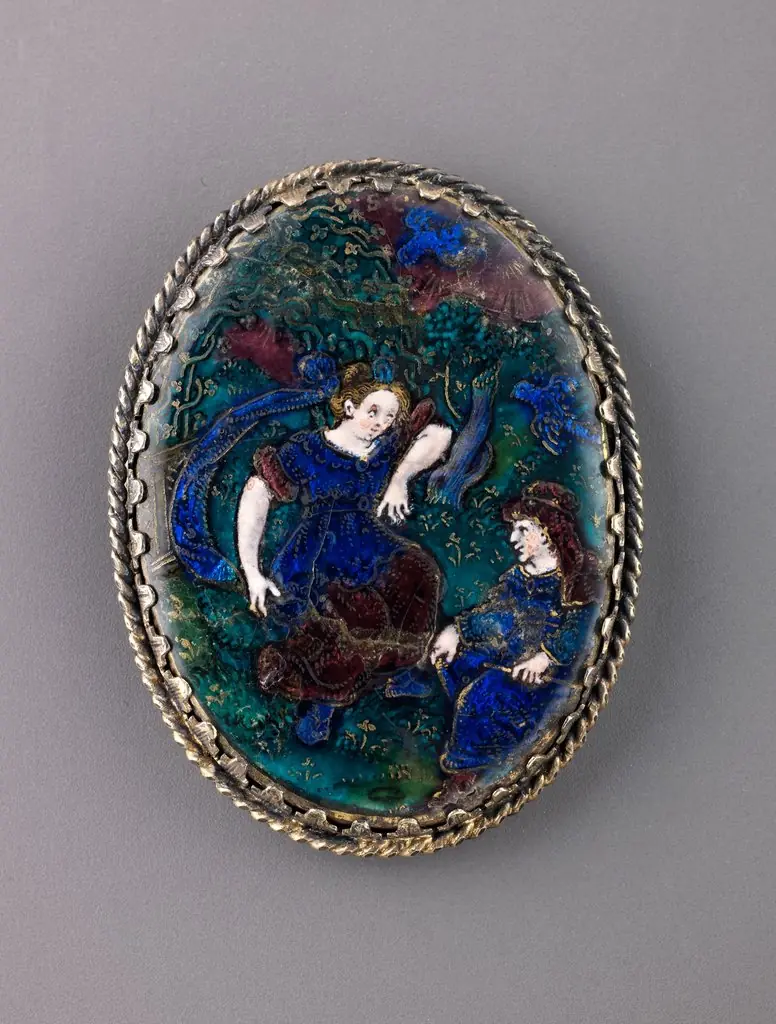 Watchcase cover: Pomona and Vertumnus
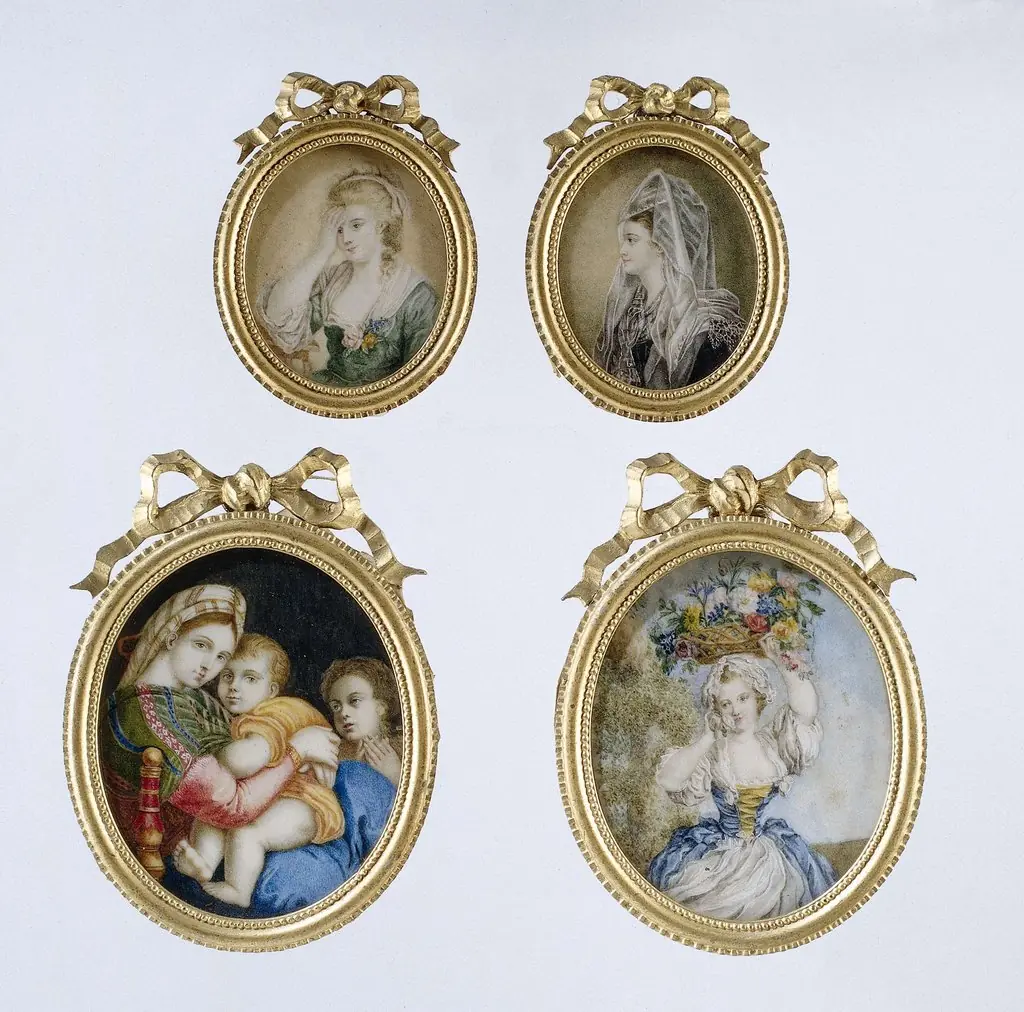 Schilderij met voorstelling van een vrouw met sluier
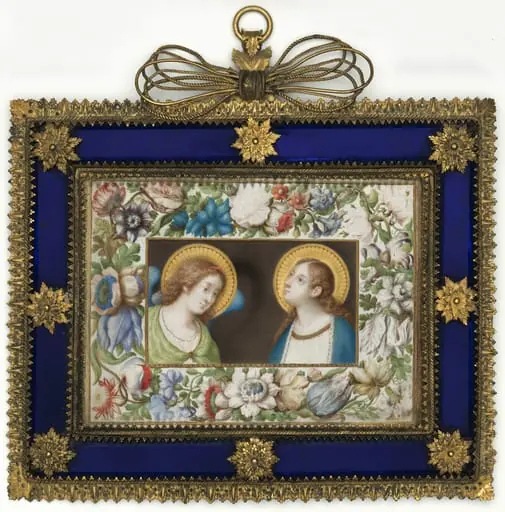 The Annunciation
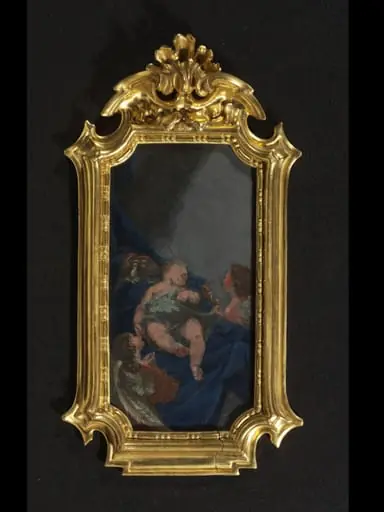 The Infant Christ asleep, adored by two angels
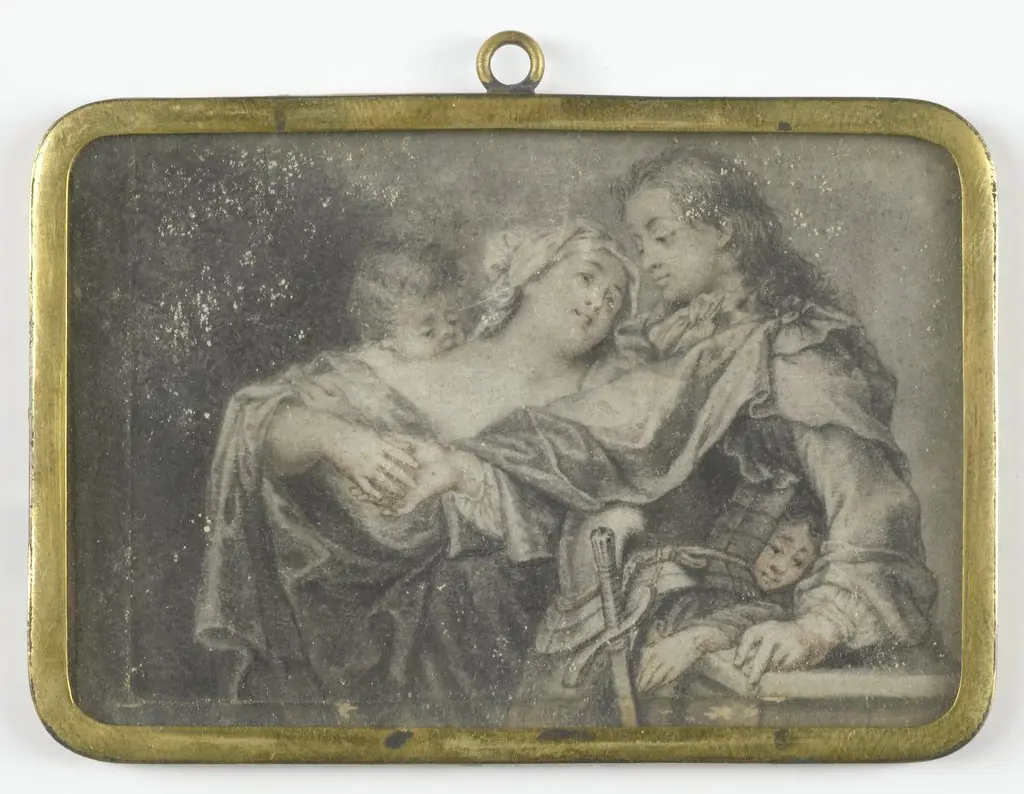 Een jonge vrouw die een krijgsman afleidt terwijl een van haar kinderen hem berooft
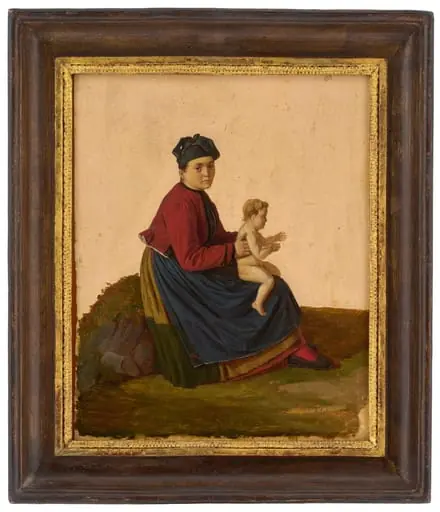 Hauensteinerin mit Kind
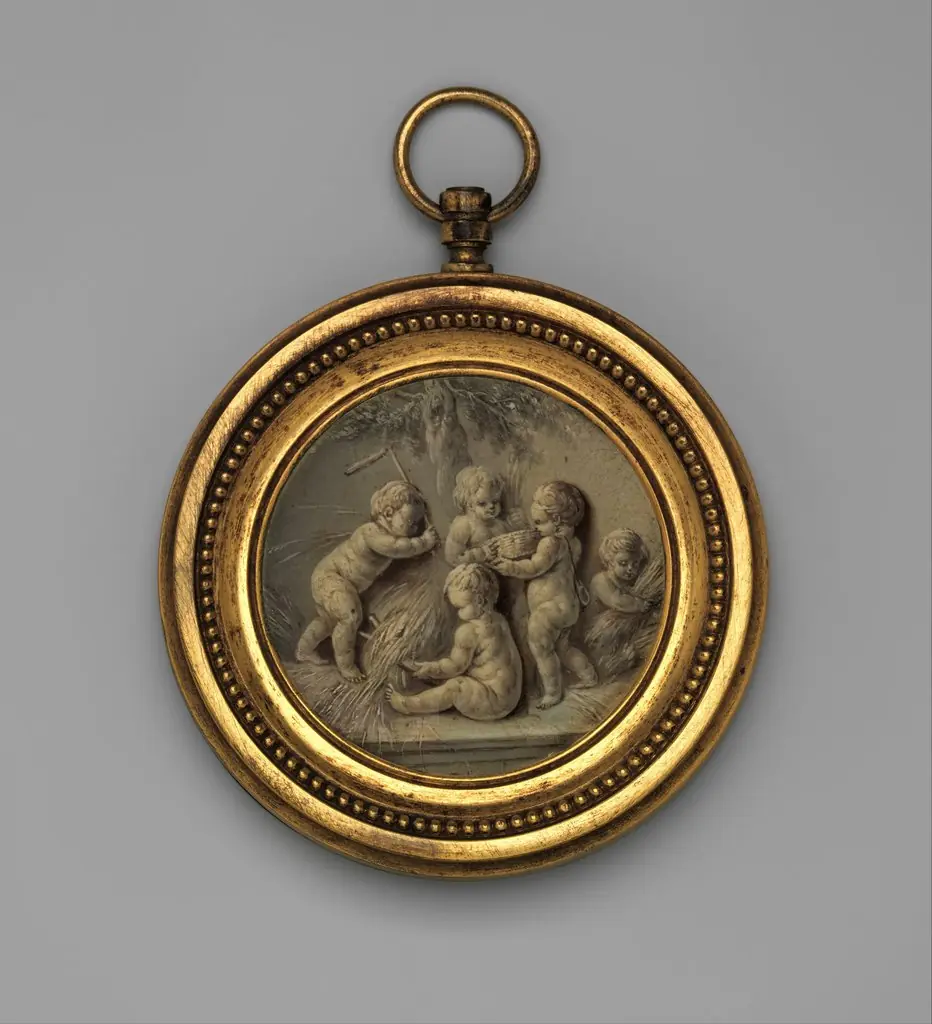 Putti Harvesting Wheat
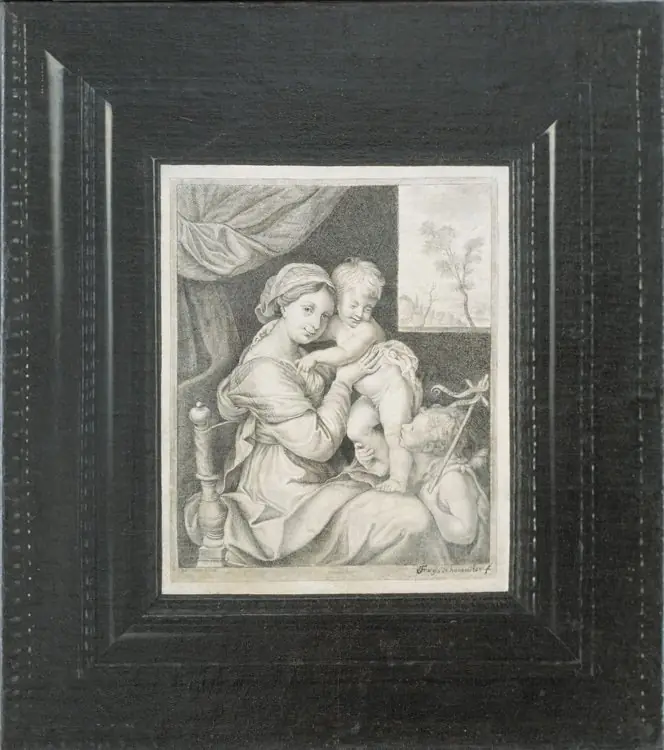 Trompe l'oeil af et indrammet kobberstik af Maria med Barnet
 Portrait of a Woman Reclining on a Sofa
 Virgin and Child