Artwork
Minerva and the Muses
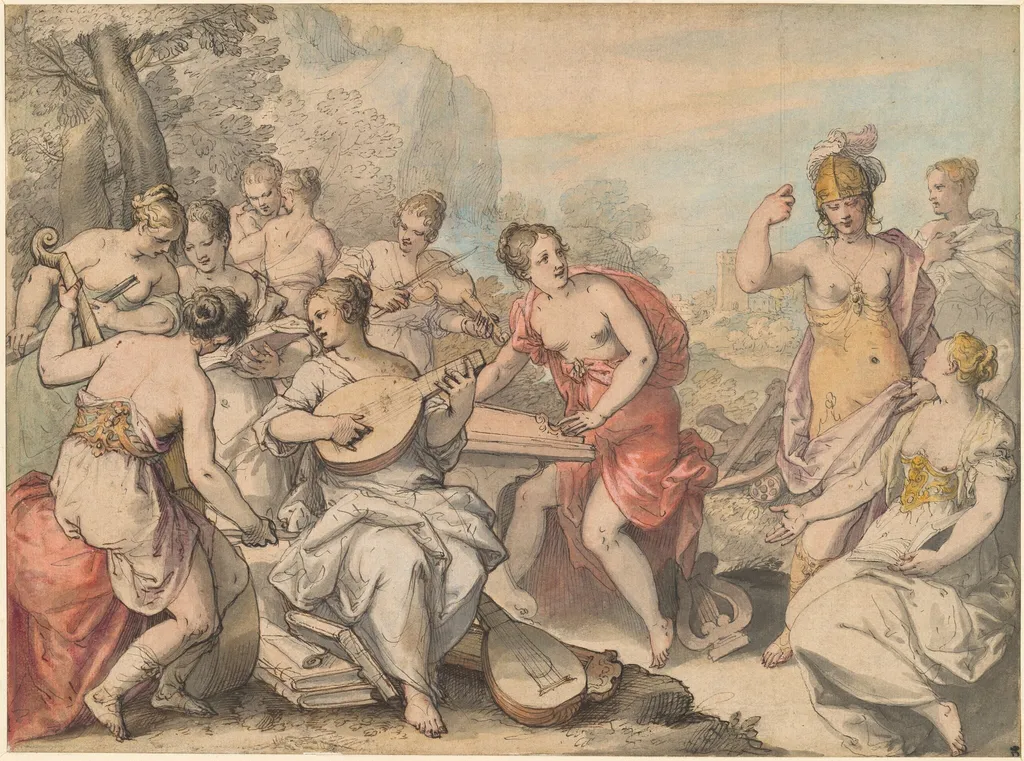
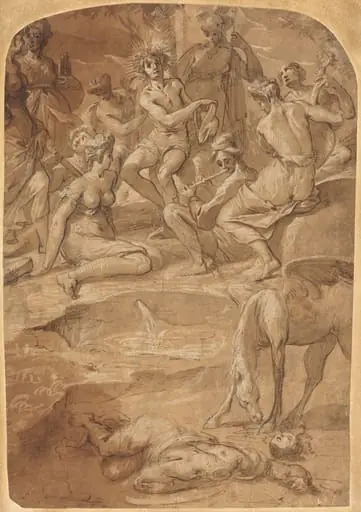
Minerva and the Muses is an ink drawing by the Baroque artist Hans Rottenhammer. It is held in the collection of the National Gallery of Art.
About this work
Overview
The work’s delicate tonality and layered washes distinguish it as a refined example of early 17th-century graphic art.
Created around 1610, this drawing by Hans Rottenhammer depicts Minerva and the Muses in a forested setting. Executed in watercolor over pen and ink, with subtle graphite underdrawing and touches of white gouache, it reflects the artist’s engagement with Northern Renaissance draftsmanship and Italianate mythological themes. The work’s delicate tonality and layered washes distinguish it as a refined example of early 17th-century graphic art.
Subject & Meaning
The scene portrays Minerva, goddess of wisdom, surrounded by the nine Muses, figures associated with the arts and sciences. The central figure, likely Minerva, plays a lute, symbolizing harmony between intellect and creativity. The surrounding figures, engaged with musical instruments or in contemplative poses, reinforce the theme of artistic inspiration under divine guidance. The setting suggests an idealized realm where culture flourishes in nature.
Technique & Style
Rottenhammer employed translucent watercolor washes built in layers to achieve subtle gradations of light and form. Pen and ink defined contours with precision, while traces of graphite guided composition. White gouache highlights accentuate skin and fabric, enhancing luminosity without opacity. The soft, atmospheric rendering and restrained palette reflect a preference for lyrical elegance over dramatic contrast, aligning with contemporary Northern European aesthetic ideals.
History & Provenance
The drawing’s early ownership is undocumented, but it entered a major European collection by the late 19th century. Its survival in good condition suggests careful preservation, likely due to its small scale and refined execution. No records indicate public exhibition before the 20th century, and its current location reflects institutional acquisition aimed at preserving rare examples of early Baroque graphic art.
Context
Rottenhammer, active in Munich and Venice, absorbed Italian Renaissance composition and Northern detail traditions. This work aligns with a trend among Northern artists to reinterpret classical mythology through intimate, poetic imagery rather than grand narrative. The use of watercolor, uncommon for mythological subjects, signals a shift toward personal expression and experimental media among courtly draftsmen of the period.
Legacy
Though not widely reproduced in its time, the drawing contributes to understanding how mythological themes were adapted in graphic form during the early Baroque. Its technical finesse influenced later collectors and artists interested in the expressive potential of watercolor. Today, it stands as a quiet testament to the intersection of classical subject matter and intimate artistic practice in early 17th-century Europe.
Own this work as a print
Artist & collection


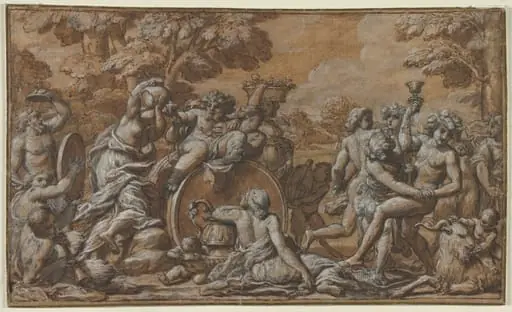 Bacchanal
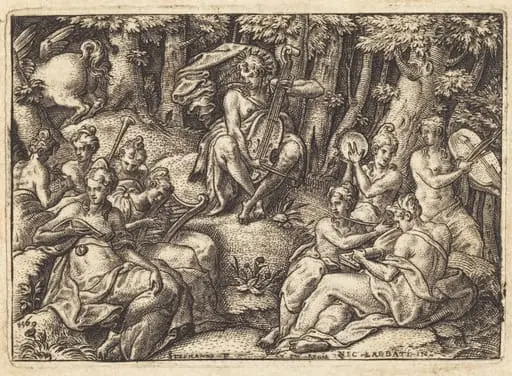 Apollo on Mount Parnassus
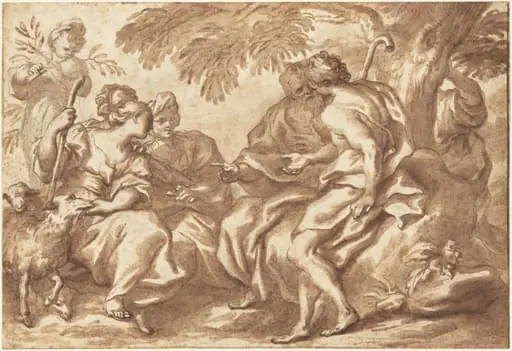 The Meeting of Jacob and Rachel
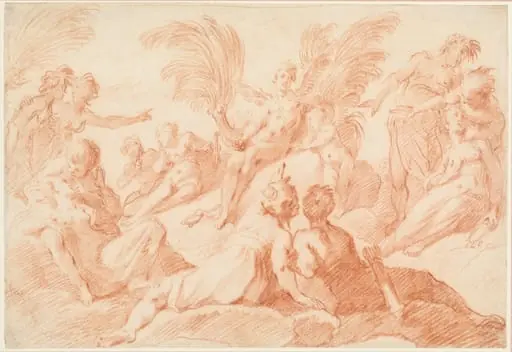 Harpocrates
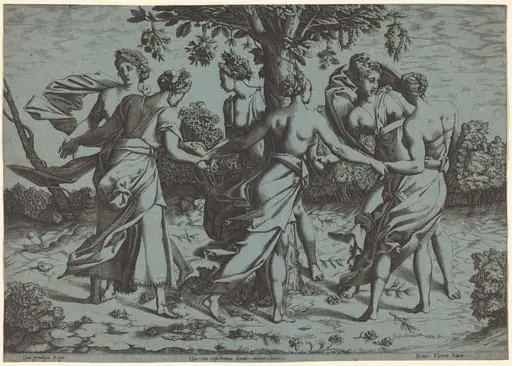 Dance of the Dryades
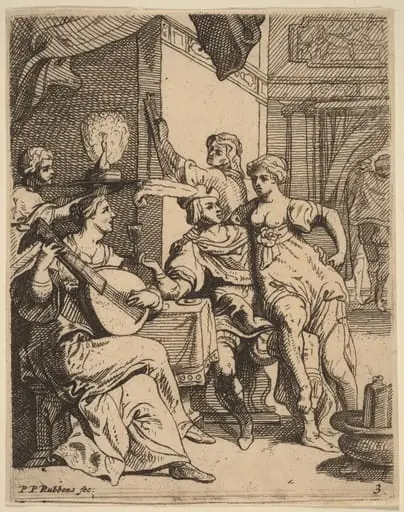 The Prodigal Wasting His Substance in the Tavern
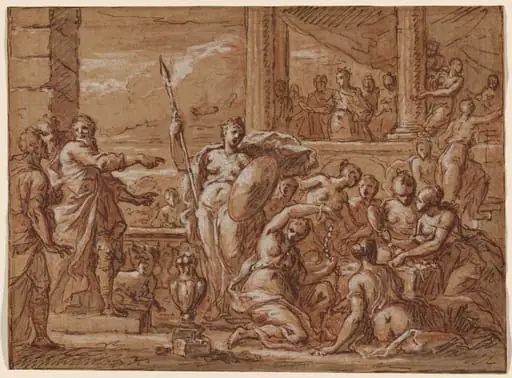 The Discovery of Achilles among the Daughters of Lycomedes
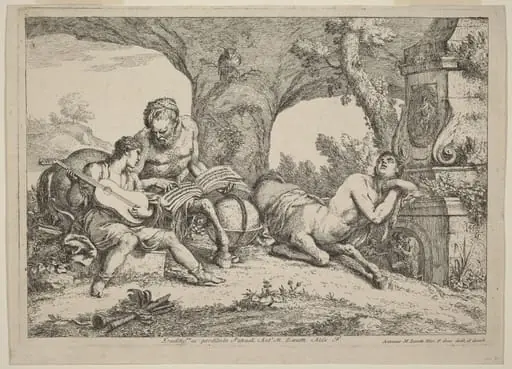 Chiron Teaching Music to Achilles
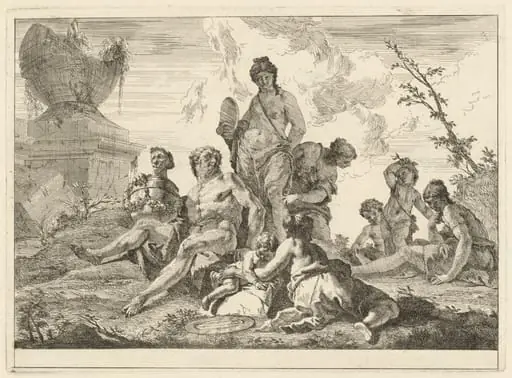 Venus and Vulcan with Three Nymphs and Three Cupids
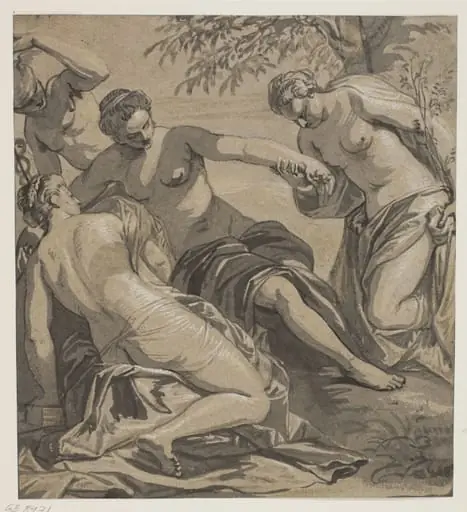 The three Graces and Mercury, after the painting in the Anticollegio, Palazzo Ducale, Venice
 Apollo and the Muses on Mount Parnassus
 Allegory of Minerva as the Head of the Muses