Artwork
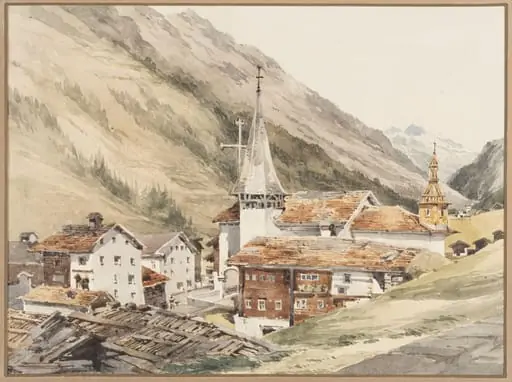
Church at Zermatt, Switzerland
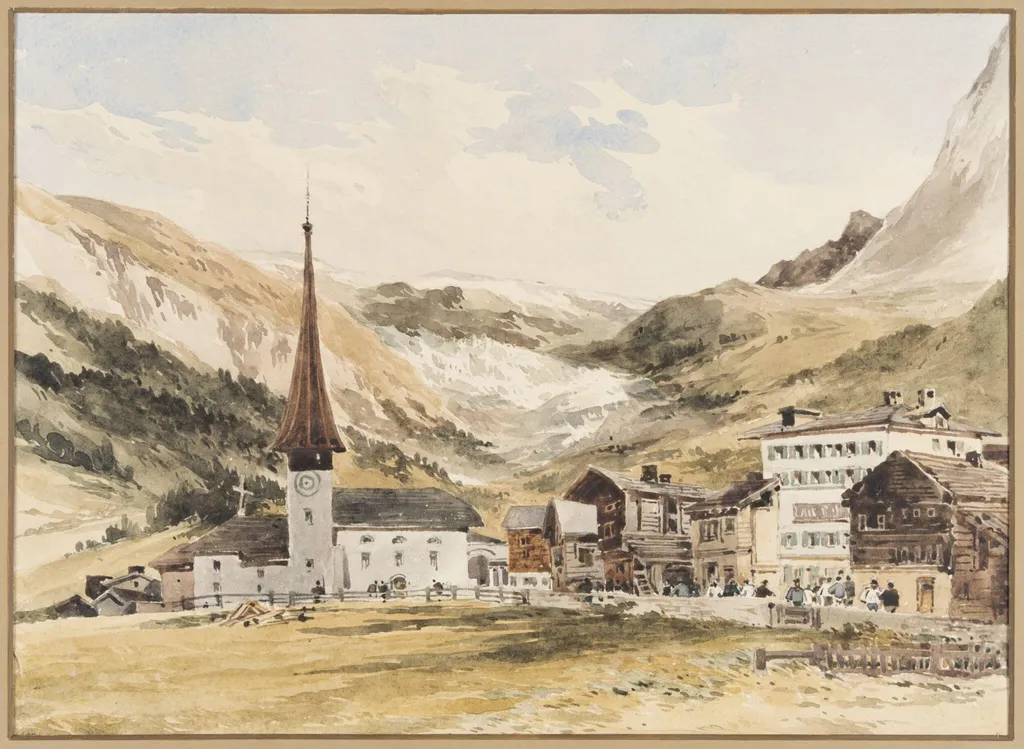
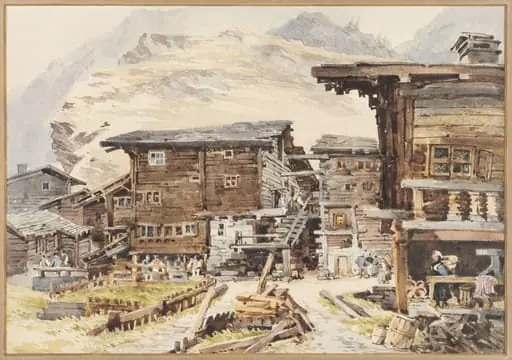
Church at Zermatt, Switzerland is a watercolor work on paper by the British Romanticist artist Charles Claude Pyne. It dates from 1822 and is held in the collection of the Victoria and Albert Museum. This watercolour captures a quiet Alpine village scene in Zermatt, Switzerland, centered on the St.
About this work
Overview
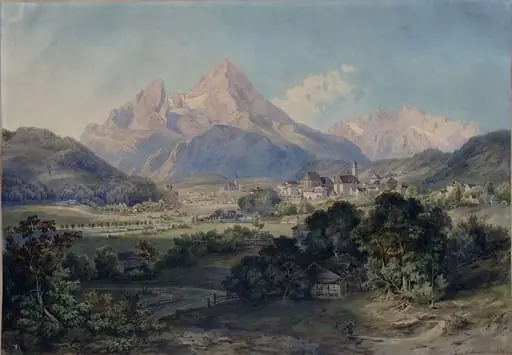
This watercolour captures a quiet Alpine village scene in Zermatt, Switzerland, centered on the St. Mauritius Church. The composition balances architectural detail with expansive mountain terrain, rendered in soft, translucent washes. The work conveys a sense of stillness, with human figures present but unobtrusive, reinforcing the harmony between settlement and landscape.
Subject & Meaning
The St. Mauritius Church serves as the focal point, its tall spire rising above clustered wooden dwellings. The inclusion of villagers suggests daily life in a remote community, while the surrounding peaks frame the scene as both intimate and monumental. The painting reflects a quiet reverence for rural religious architecture and the enduring presence of nature in Swiss mountain life.
Technique & Style
Executed in watercolour, the piece employs delicate layering to suggest texture and depth. The church’s white walls and dark roof contrast with the muted greens and greys of the mountains. Clouds and sky are rendered with light washes, allowing the paper’s whiteness to suggest luminosity. The brushwork is precise yet fluid, avoiding dramatic contrasts in favor of atmospheric harmony.
History & Provenance
The work dates from the 19th century, a period when Swiss landscapes attracted European artists seeking authentic, unspoiled scenery. While the artist’s identity is not widely documented, the piece aligns with travel sketches made by artists and tourists drawn to the Alps. Its survival suggests it was likely kept in private collections rather than exhibited publicly.
Context
During the 1800s, Zermatt was becoming a destination for early mountaineers and artists influenced by Romantic ideals. This painting reflects a broader trend of depicting rural religious sites within natural settings, emphasizing spiritual connection to landscape. Unlike grand Alpine panoramas, this view focuses on the modest scale of village life amid towering peaks.
Legacy
The painting contributes to a visual record of 19th-century Swiss village architecture and topography. Though not widely reproduced, it remains a quiet example of how watercolour was used to document regional character. Its preservation offers insight into the aesthetic values of travelers and artists who sought tranquility in the high Alps.
Artist & collection