Artwork
Vas de formă tronconică cu picior, pereți rotunjiți, margine înaltă ușor oblică, baza plată și două toarte mici: Prezintă decor geometric: cerc de puncte albe și negre pe fond de roșeață; pe pereți sunt cercuri concetrice albe întrerupte de grupuri de linii oblice și un șir alb negru; pe buza linie zig-zag. Are aplicat smalț incolor. Cromatică: cărămiziu; motive: alb; negru.
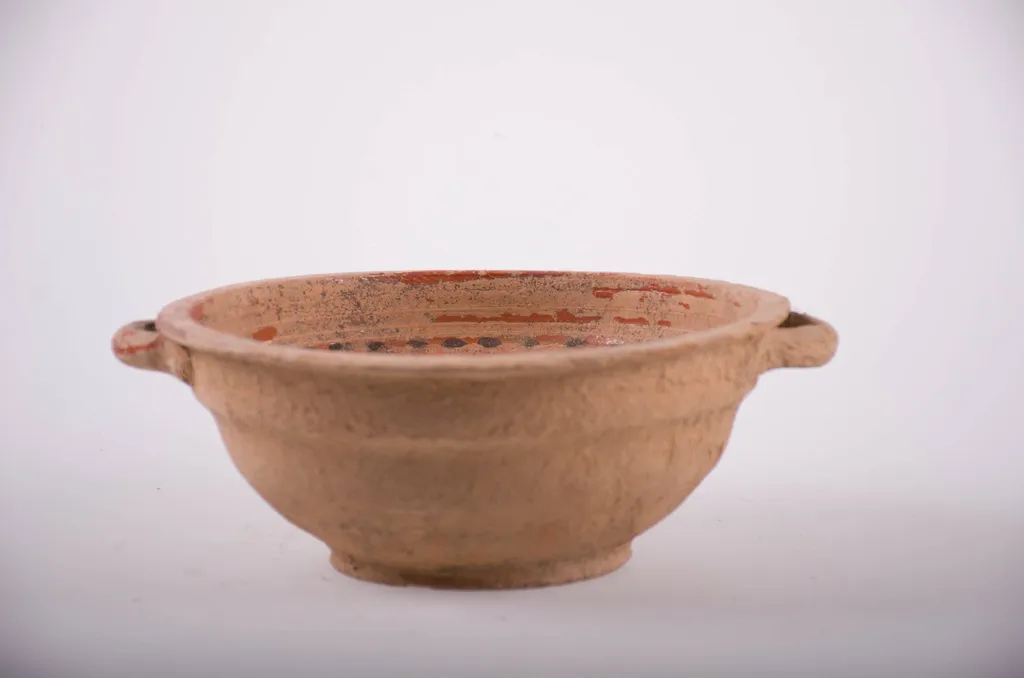
Vas de formă tronconică cu picior, pereți rotunjiți, margine înaltă ușor oblică, baza plată și două toarte mici: Prezintă decor geometric: cerc de puncte albe și negre pe fond de roșeață; pe pereți sunt cercuri concetrice albe întrerupte de grupuri de linii oblice și un șir alb negru; pe buza linie zig-zag. Are aplicat smalț incolor. Cromatică: cărămiziu; motive: alb; negru. is a photography by Rovența Vasile. It is held in the collection of the ASTRA National Museum Complex. The object is a clay bowl with a broad, slightly oblique rim, a flat base and two modest handles.
About this work
Overview
The object is a clay bowl with a broad, slightly oblique rim, a flat base and two modest handles. Its body tapers conically and the walls are gently rounded. The surface bears a glaze of clear enamel, allowing the natural reddish‑brown hue of the fired clay to dominate the overall appearance.
Subject & Meaning
The decorative scheme consists of geometric motifs: a ring of alternating white and black dots set against a reddish background, concentric white circles interrupted by groups of slanted lines, a black‑and‑white linear band, and a zig‑zag pattern along the lip. The stark contrast of light and dark elements suggests a focus on visual rhythm rather than narrative content.
Technique & Style
The bowl was formed by hand‑building a conical shape, then refined to achieve rounded walls and a slightly inclined rim. After shaping, a transparent glaze was applied, preserving the natural clay tone while protecting the surface. The geometric ornamentation was incised or painted before firing, employing a limited palette of white, black and the inherent brick‑red of the clay.
History & Provenance
The piece is presented as an ancient‑looking vessel, though no specific archaeological context is provided. Its stylistic traits align with traditional pottery that emphasizes simple, repetitive patterns, a characteristic found in various historic ceramic traditions across Eastern Europe.
Context
Geometric decoration on utilitarian ware such as bowls reflects a longstanding aesthetic in folk and regional crafts, where visual order and contrast serve both decorative and symbolic purposes. The use of a clear glaze indicates an awareness of functional durability alongside ornamental intent.
Artist & collection
Artist
This potter kept his hands dusted red from firing clay in his backyard shed outside Cluj.

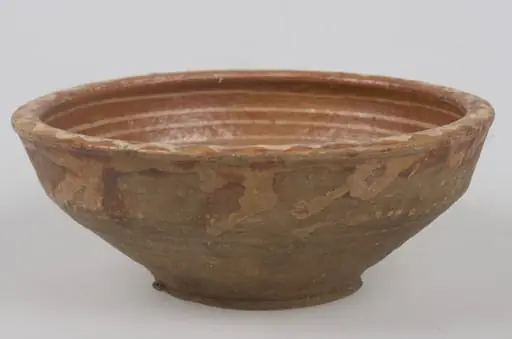 Vasul are forma tronconică cu pereții adânciți și deschidere largă la nivelul gurii. Acesta este smălțuit la interior iar pe pereții exteriori prezintă scurgeri de smalț. Buza acestuia este profilată spre exterior, exteriorul fiind nesmălțuit. Decorul interior este geometric, linia vălurită regăsindu-se pe buza vasului. Pe fundul vasului se întâlnesc două cercuri concentrice. Cromatică: fond: cărămiziu; motive: alb; negru.
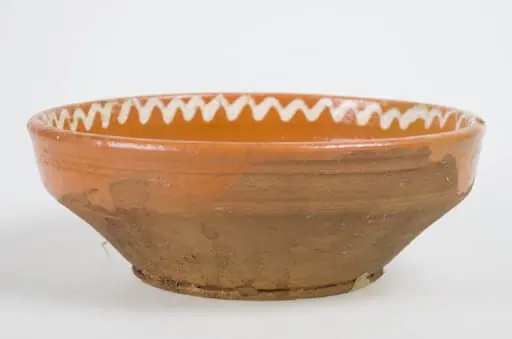 Blidul adânc are formă tronconică, cu buza îngroșată și ușor răsfrântă. Acesta este modelat la roată, ars, smălțuit (pe interior) și ornamentat cu motive florale și geometrice (liniare și oblice) dispuse după cum urmează: motivele floral vegetale dispuse într-un registru în zona mediană a vasului; pe fundul vasului, în interior, se identifică de asemenea motive floral vegetale încadrate într-un cerc. Pe zona diametrului maxim se identifică motivul liniei vălurite urmată de un cerc obținut prin pictare. Vasul are buza înaltă fiind nesmălțuit și neornamentat la exterior. Acesta este smălțuit la exterior doar pe buză. Prezintă scurgeri de smalț pe exteriorul buzei. Blidul este prevăzut cu două orificii pe fundul vasului, pentru agățare. Cromatică: fond: cărămiziu; motive: alb; verde.
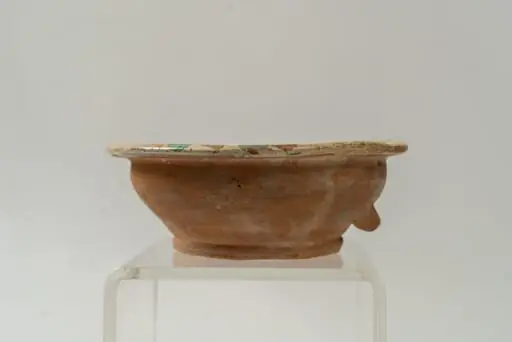 Farfurie mică, adâncă, cu buză mică, răsfrântă. Piesa este modelată la roata olarului, angobată pe fața interioară. Decorul este realizat prin pictare cu pensula și constă în motive florale (floare cu frunze, dispusă central, pe fundul farfuriei) și geometrice (trei grupuri de linii paralele, oblice, dispuse pe buza farfuriei). Cromatica: alb, verde, galben-ocru.
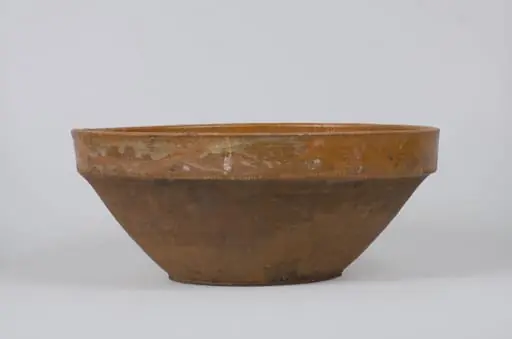 Vas de formă tronconică, foarte adâncită, cu buza înălțată. Este smălțuit în interior și exterior. În zona mediană interioară a vasului se identifică un registru decorativ alcătuit din motive florale și vegetale stilizate, geometrice (punctul și cercul) iar pe fundul vasului se identifică un cerc realizat din puncte. Motivele decorative sunt realizate prin pictare, foarte șterse. Cromatică: fond cărămiziu; verde; galben.
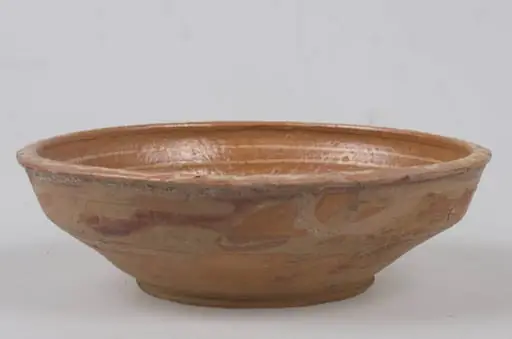 Vas tronconic cu pereții adînciți, cu buza răsfrântă, ușor profilată și pereții supraînălțați. Este smălțuit la interior și nesmălțuit la exterior. Pe interior smalțul prezintă degradări (în special pe fundul vasului) cu scurgeri de smalț la exterior. Motivul decorativ al liniei vălurite pe buza vasului. De asemnea se identifică motive decorative geometrice și pe interiorul vasului în zona diametrului maxim: două linii pararlele care cadrează patru micro-registre de linii pararelele verticale ușor îngroșate. De asemnea pe fundul vasului se identifică trei cercuri concentrice. Cromatică: fond: la interior: maro; exterior: maro deschis; motive: maro închis; alb.
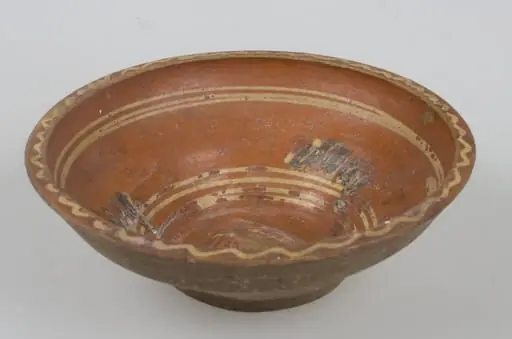 Vasul are formă tronconică cu pereții adânciți și deschidere largă la nivelul gurii. Acesta este smălțuit la interior iar pe pereții exteriori prezintă scurgeri de smalț. Buza acestuia este profilată spre exterior, exteriorul fiind nesmălțuit. Decorul interior este geometric, linia vălurită regăsindu-se pe buza vasului. Pe fundul vasului se întâlnesc patru cercuri, încadrate de motive vegetale. Cromatica: fond: cărămiziu; motive: galben; negru.
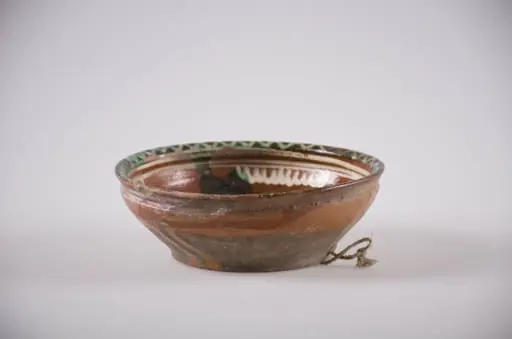 Blid de formă tronconică, adânc cu pereți ușor evazați și buza dreaptă, Decor cu motive geometrice: linie ondulată pe buză; cercuri concentrice pe trei câmpuri pe fundul blidului. În centru avem o floare stilizată; pete stropite pe vas. Smălțuit maro. Cromatică: fond: maro; motive: verde; alb. Prezintă două găuri pe fundul vasului pentru atârnare.
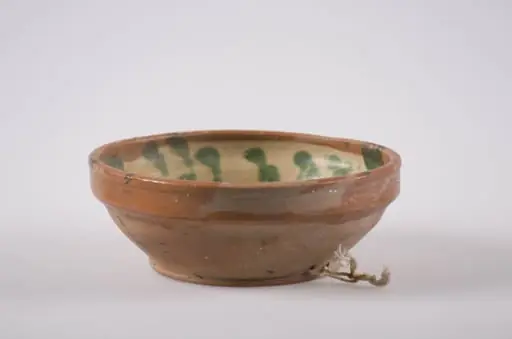 Vasul de formă tronconică cu pereții evazați ce se termină cu buza greaptă. Pe un fond crem s-au stropit pete de culoare verde. Buza vasului este smălțuită. Partea posterioară prezintă două găuri prin care trece ața de agățat.
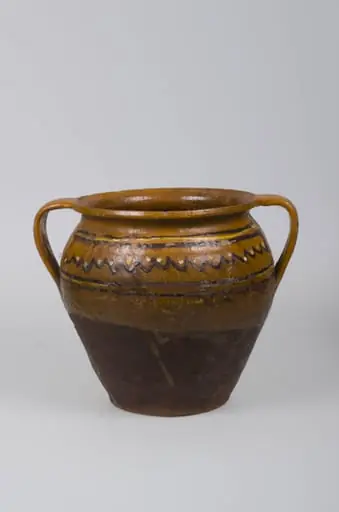 Vasul are formă bitronconică, prevăzut cu două toarte dispuse vertical în opoziție una față de cealalltă. Gâtul foarte profilat și buza evazată. Toartele pornesc din buza vasului și se unesc cu corpul în zona diametrului vasului, fiind aplatizate. Oala are urme de ardere secundară; este smălțuită în interior și în exterior (doar jumătatea superioară). Este folosită atât la pregătirea hranei cât și pentru păstrarea alimentelor și pentru transportul hranei la câmp. Oala este decorată pe umăr cu motive geometrice: linii drepte, linie în val, puncte. Cromatică cărămiziu; galben; maro închis.
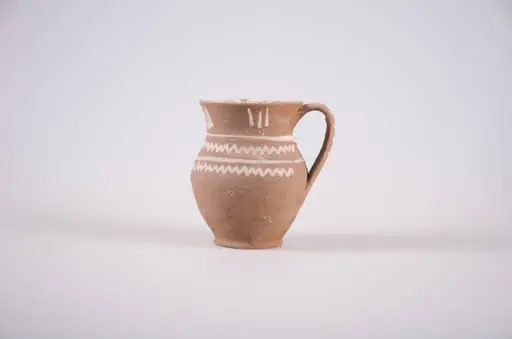 Recipient bitronconic cu gura largă. Are o toartă laterală care pleacă din buză până la diametrul maxim al vasului. Decor cu motive geometrice pe partea superioară a vasului și pe toartă: linii paralele, doua cercuri, linii ondulate. Cromatică: fond: cărămiziu; motive din angobă albă. Vasul este nesmălțuit.