Artwork
Farfurie mică, adâncă, cu buză mică, răsfrântă. Piesa este modelată la roata olarului, angobată pe fața interioară. Decorul este realizat prin pictare cu pensula și constă în motive florale (floare cu frunze, dispusă central, pe fundul farfuriei) și geometrice (trei grupuri de linii paralele, oblice, dispuse pe buza farfuriei). Cromatica: alb, verde, galben-ocru.
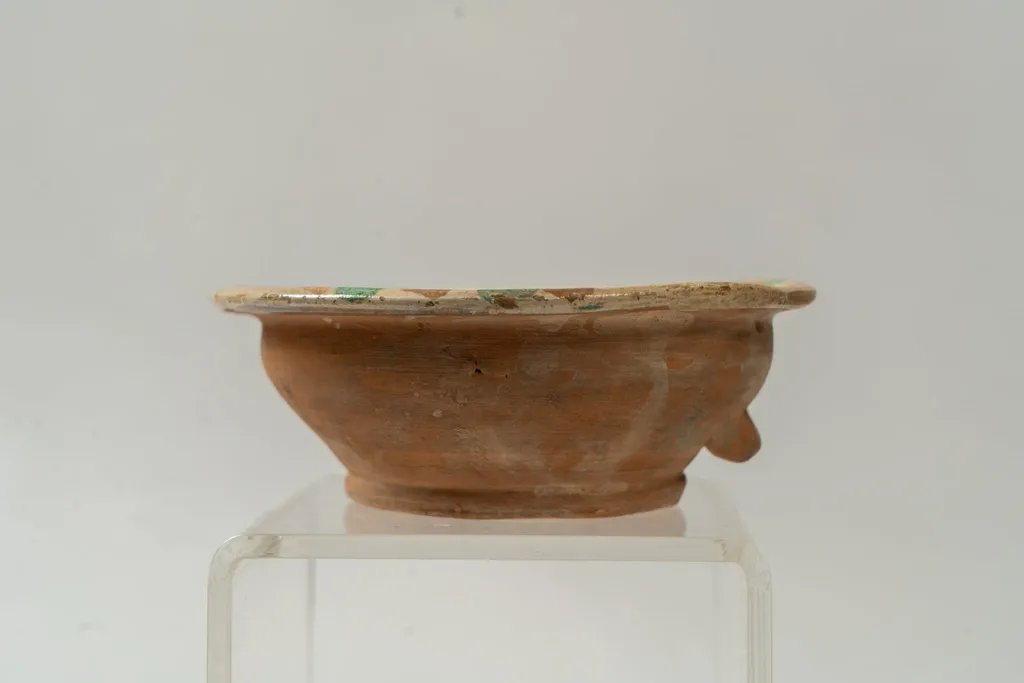
Farfurie mică, adâncă, cu buză mică, răsfrântă. Piesa este modelată la roata olarului, angobată pe fața interioară. Decorul este realizat prin pictare cu pensula și constă în motive florale (floare cu frunze, dispusă central, pe fundul farfuriei) și geometrice (trei grupuri de linii paralele, oblice, dispuse pe buza farfuriei). Cromatica: alb, verde, galben-ocru. is a print by Unknown. It dates from 1850 and is held in the collection of the Ethnographical Museum of Transylvania. A modestly sized, deep clay bowl with a small, outward‑flaring rim, the piece is mounted on a transparent support.
About this work
Overview
A modestly sized, deep clay bowl with a small, outward‑flaring rim, the piece is mounted on a transparent support. Its exterior is a uniform brown, while the interior bears a subtle greenish hue near the edge, the remainder remaining unadorned.
Subject & Meaning
The decorative program consists of a central floral motif—flower with leaves—situated on the bowl’s base, complemented by three groups of oblique parallel lines arranged along the rim. The combination of natural and geometric elements reflects a traditional aesthetic balance.
Technique & Style
Formed on a potter’s wheel, the vessel’s walls were shaped by centrifugal force, then the interior surface was deliberately roughened, likely by scraping. The painted decoration was applied with a brush, employing a limited palette of white, green, and ochre‑yellow.
History & Provenance
The bowl originates from a folk‑ceramic tradition, typical of regional household ware. Its precise cultural and chronological origins are not documented, but the style and technique align with vernacular pottery practices documented in ethnographic collections.
Context
Such utilitarian vessels were commonly used for serving food or liquids in everyday domestic settings. The modest scale and restrained ornamentation suggest a functional object rather than a ceremonial piece, embodying the practical aesthetics of its makers.
Artist & collection
Museum
Ethnographical Museum of Transylvania
Continue through works from the same source collection.
 Domestic Scene
 Giacomo and Cardinal Marco, investing Andrea, Abbot of San Zeno, with his Benefice
 The Nymph of Fontainebleau
 Portrait of a Woman
 Madonna and Child with Saints in the Enclosed Garden
 Venus and Minerva
 Family Group of Four on Sofa
 Wall painting from Room H of the Villa of P. Fannius Synistor at Boscoreale
 Farfurie mare, adâncă, cu buză lată, răsfrântă. Piesa este modelată la roata olarului, angobată cu humă albă. Decorul este realizat prin sgrafitare în angoba crudă, peste care se aștern cu pensula culorile de smalț: verde, galben, albastru. Motivele decorative sunt florale și vegetale stilizate, dispuse pe toată suprafața farfuriei și un motiv avimorf stilizat, dispus în zona centrală a acesteia. Cromatica decorului: alb, albastru, galben, verde.
 Farfurie adâncă, cu buza răsfrântă, modelată la roata olarului și angobată cu humă albă pe fața interioară a farfuriei. Decorul este pictat cu pensula și se compune din motive decorative vegetale stilizate (buchet de flori cu frunze, dispuse central, pe fundul farfuriei) și motive decorative geometrice (grupuri de linii paralele, linii sub formă de cercuri concentrice și grupuri de semicercuri umplute cu culoare) dispuse pe buza farfuriei. Cromatica: alb, verde, maro, galben ocru.
 Farfurie adâncă, cu buză lată, evazată; piesa este modelată din lut la roata olarului și acoperită cu un strat de angobă verde pe fața interioară. Decorul este realizat prin pictare cu pensula și se compune din motive florale și vegetale stilizate (un buchet cu trei flori albe și frunze de culoare verde-închis, plasat în zona centrală, pe fundul farfuriei și cinci flori albe pictate pe buza acesteia, intercalate de cinci grupuri de frunze). Cromatica: verde, alb, verde-închis. Fața ornamentată a farfuriei este acoperită cu un strat de smalț transparent.
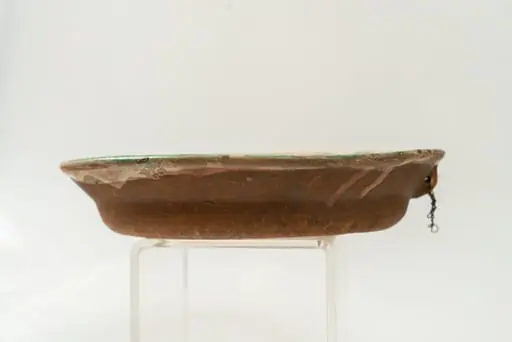 Farfurie adâncă, cu buza răsfrântă, modelată la roata olarului, angobată cu humă albă pe fața interioară. Decorul, bogat, este realizat prin pictare cu pensula și cu cornul și se compune din motive decorative florale stilizate și geometrice, acoperind întreaga suprafață a farfuriei. Cromatica: alb, verde, galben ocru, maro.
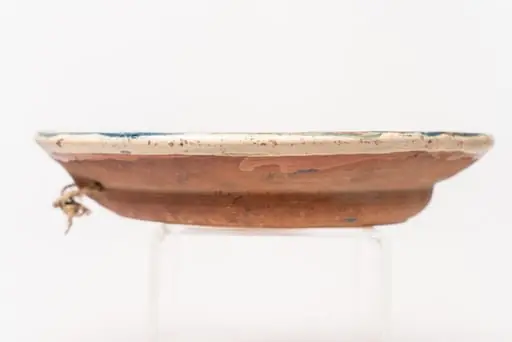 Farfurie semi-adâncă, cu răsfrântă; piesa este modelată la roata olarului și angobată cu humă albă pe fața interioară a acesteia. Decorul este realizat prin pictare cu cornul și cu pensula și constă în motive decorative florale și vegetale stilizate (flori de culoare galbenă cu contur albastru și frunze, dispuse în șir continuu pe fundul farfuriei și pe toată buza acestei), un motiv zoomorf (un cerb pictat central și înscris într-un cerc albastru cu puncte) și motive geometrice (linii sub formă de cerc și linie vălurită, sub bordura interioară a farfuriei; muchia buzei este marcată cu o linie albastră). Cromatica: alb, albastru, galben. Farfuria este smălțuită pe interior, cu smalț transparent.
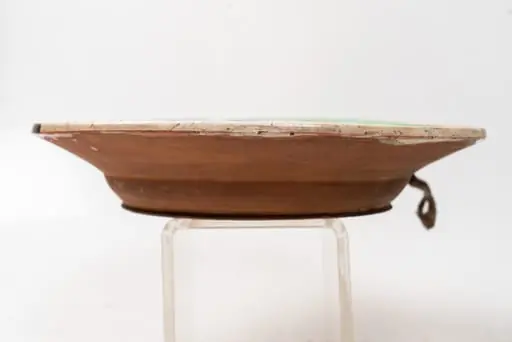 Farfurie mare, semi-adâncă, cu buza răsfrântă; piesa este modelată la roata olarului și angobată cu humă albă pe fața interioară. Decorul este realizat prin sgrafitare în pasta albă de angobă și prin pictare cu pensula și cu cornul și se compune din motive decorative vegetale (o floare foarte stilizată, cu patru petale, dispusă în registrul central de pe fundul farfuriei) și geometrice (linii circulare, de culoare verde și siena arsă, pe buza farfuriei). Cromatica: alb, verde, siena arsă, maro. Fața ornamentată a farfuriei este acoperită cu un strat de smalț transparent.
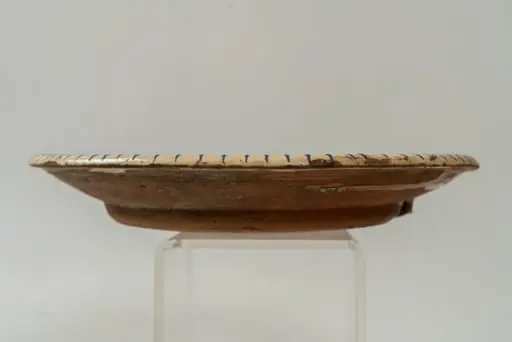 Farfurie de formă aplatizată, modelată la roata olarului, angobată cu humă albă pe fața interioară a acesteia. Decorul este realizat prin pictare cu pensula și cu cornul și constă în motive decorative vegetale stilizate (floare cu frunze - dispuse central, pe fundul farfuriei) și motive geometrice (grupuri de linii paralele, descrescătoare ca mărime - motivul brăduțului - și un șir de linii paralele pe toată lungimea muchiei buzei). Cromatica decorului: alb, albastru. Farfuria este smălțuită pe interior, cu smalț transparent.
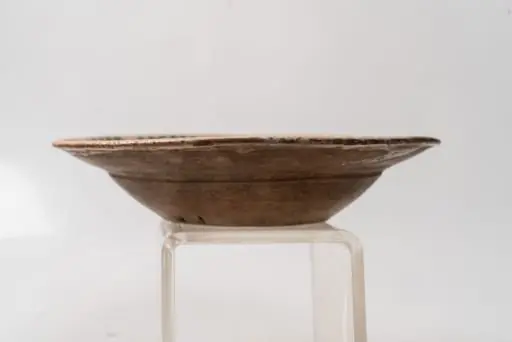 Farfurie adâncă, cu corp tronconic ușor rotunjit și buză evazată; piesa este modelată din lut la roata olarului și angobată pe interior cu humă albă. Decorul este realizat prin pictare cu cornul și se compune din motive geometrice și florale geometrizate (registrul decorativ central de pe fundul farfuriei conține o floare cu petale conturate cu câte patru linii paralele de culori diferite și cu mijlocul umplut cu linii hașurate; buza farfuriei este decorată cu grupuri de linii ondulate paralele. Cromatica: alb cu halouri maro, verde, galben-ocru, maro, gri. Fața ornamentată a farfuriei este acoperită cu un strat de smalț transparent.
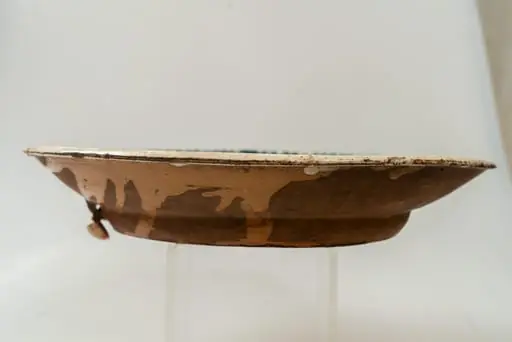 Farfurie mare, lată, cu buză răsfrântă. Este modelată la roata olarului și angobată cu humă albă pe fața interioară. Decorul este realizat prin pictare cu cornul și cu pensula și se compune din motive decorative florale stilizate (buchet central, pe fundul farfuriei) și motive geometrice variate, dispuse pe buza farfuriei. Cromatica: alb, brun, verde, galben, albastru. Fața interioară a farfuriei este acoperită de un strat de smalț transparent.