Artwork
Vasul de formă tronconică cu pereții evazați ce se termină cu buza greaptă. Pe un fond crem s-au stropit pete de culoare verde. Buza vasului este smălțuită. Partea posterioară prezintă două găuri prin care trece ața de agățat.
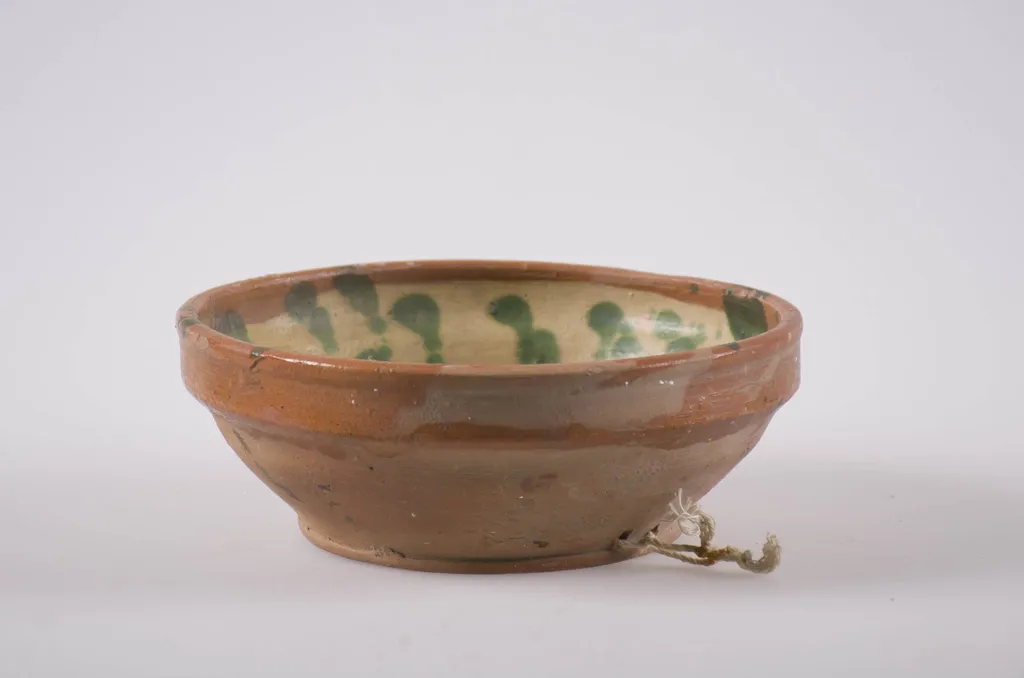
Vasul de formă tronconică cu pereții evazați ce se termină cu buza greaptă. Pe un fond crem s-au stropit pete de culoare verde. Buza vasului este smălțuită. Partea posterioară prezintă două găuri prin care trece ața de agățat. is a poster by Unknown. It dates from 1850 and is held in the collection of the ASTRA National Museum Complex. The object is a shallow, conical clay bowl whose walls flare outward and terminate in a flared lip.
About this work
Overview
The object is a shallow, conical clay bowl whose walls flare outward and terminate in a flared lip. Its exterior displays a muted orange‑brown tone with a rough texture, while the interior is a pale cream that bears irregular splashes of dark green pigment. Two small perforations near the lower rim allow a string to be threaded through the vessel.
Subject & Meaning
The bowl’s simple form and decorative green spots suggest a utilitarian object that also carries a modest aesthetic intention, possibly indicating personal or communal identity through the hand‑applied coloration.
Technique & Style
Formed from earthenware clay, the vessel was likely hand‑built and then fired, with the rim receiving a glaze that gives it a smooth, glossy finish distinct from the matte body. The green markings appear to have been applied after firing, using a brush or finger technique that leaves a spontaneous, uneven pattern.
History & Provenance
The piece originates from a tradition of everyday pottery, though specific cultural or chronological details are not provided. Its construction and decorative approach align with regional handcrafted ceramics used in domestic settings.
Context
Such shallow, flared bowls are common in many folk‑art traditions, serving both functional purposes—such as serving food or holding small items—and as a canvas for informal decorative gestures, reflecting the maker’s personal touch.
Artist & collection

 Domestic Scene
 Giacomo and Cardinal Marco, investing Andrea, Abbot of San Zeno, with his Benefice
 The Nymph of Fontainebleau
 Portrait of a Woman
 Madonna and Child with Saints in the Enclosed Garden
 Venus and Minerva
 Family Group of Four on Sofa
 Wall painting from Room H of the Villa of P. Fannius Synistor at Boscoreale
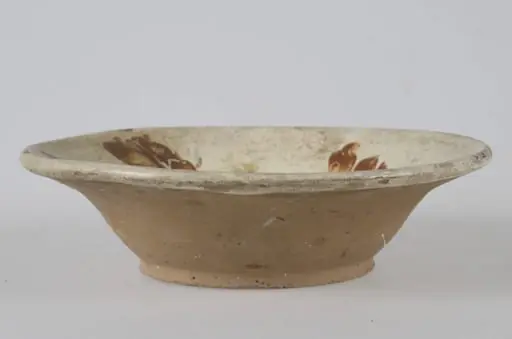 Vasul este unul adânc, din lut, de formă rotundtronconică, cu marginea evazată. Ca și decor întâlnim, pe fundalul de culoare crem, pictate pete de culoare maro și verde. Blidul este smălțuit la interior și pe buză, la exterior.
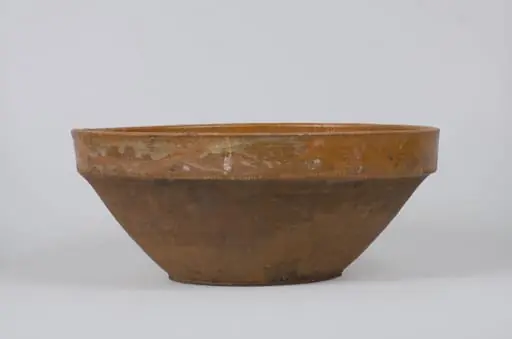 Vas de formă tronconică, foarte adâncită, cu buza înălțată. Este smălțuit în interior și exterior. În zona mediană interioară a vasului se identifică un registru decorativ alcătuit din motive florale și vegetale stilizate, geometrice (punctul și cercul) iar pe fundul vasului se identifică un cerc realizat din puncte. Motivele decorative sunt realizate prin pictare, foarte șterse. Cromatică: fond cărămiziu; verde; galben.
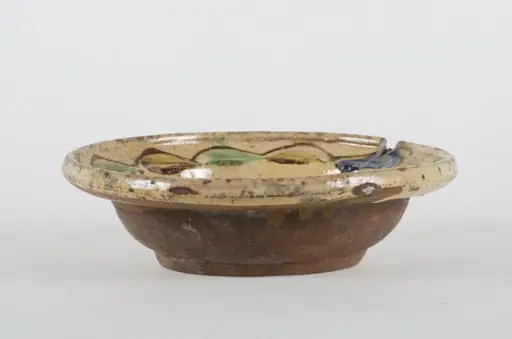 Vasul din lut de formă tronconică este lucrat la roata rapidă; prezintă buza puternic îngroșată, pereții abrupți, blidul fiind foarte adâncit. Este smălțuit în interior iar decorul este împărțit după cum urmează: pe interiorul buzei se identifică motive vegetale dispuse într-un registru continuu iar pe fundul vasului se regăsesc decorațiuni floral-vegetale. Cromatică: crem; verde; albastru; maro; galben.
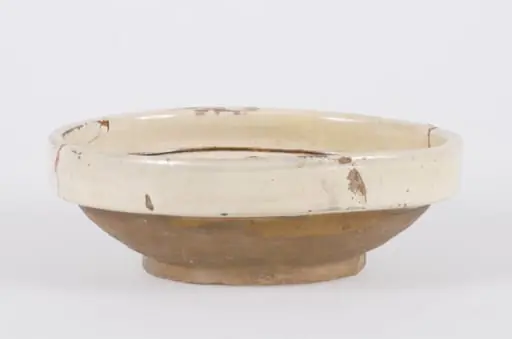 Vasul ceramic are formă tronconică, cu pereții evazați și buza dreaptă și ieșită în afară. Exteriorul pereților și fundul, au fond cărămiziu, restul suprafeței interioare și buza exterioară, având fond alb-gălbui. Decorul este format din două registre despărțite de două cercuri concentrice: unul plasat în marginea buzei și altul în centrul fundului vasului. Primul registru central este decorat cu o floare cu frunze verzi, petale maro și un punct albastru în centru. Al doilea registru amplasat pe pereții interiori ai vasului este format din două flori similare cu cea centrală mărginite spre tulpină și vârf de mai multe frunze, despărțite de două aglomerări de linii de diferite dimensiuni. Cromatică: fond: alb-gălbui; motive: verde; maro; albastru.
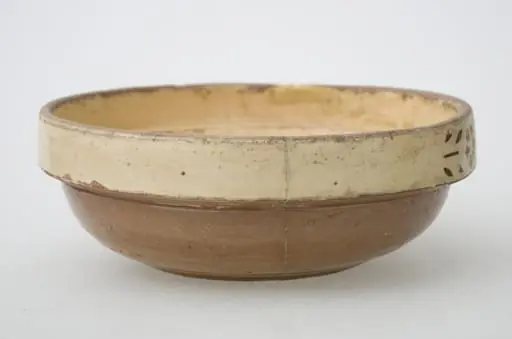 Vasul este realizat la roată, smălțuit în interior și pe buza exterioară. Fundul este îngustat și deschiderea largă. Pe buza exterioară se identifică motive vegetale stilizate.pe diametrul maxim interior se identifică 2 cercuri concentrice. Baza exterioară a vasului este nesmălțuită. Prezintă urme de uzură funcțională și exfolieri insulare. Cromatică: maro la exterior, smalț alb la interior.
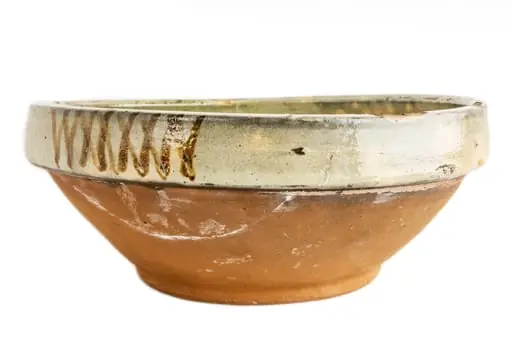 Formă tronconică; fond alb - cenușiu; în centru este amplasată o floare cu petale verzi peste care a fost suprapusă o alta cu petale de culoare cărămizie; sub buza vasului este dispus un cerc de culoare maro. În exterior sub buza vasului pe un fond alb sînt amplasate romburi de culoare maro cu galben. Folosită la decorarea interiorului țărănesc în așa numita - cameră bună.
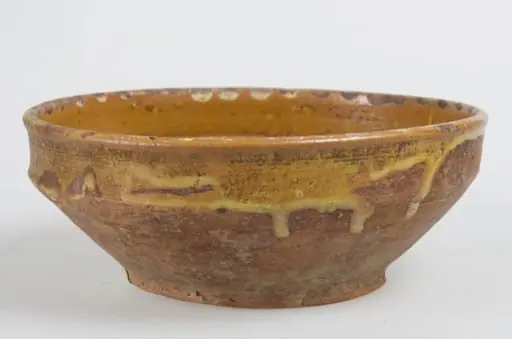 Blidul de formă tronconică este adânc, smălțuit pe interior. Obiectul prezintă ornamente cu motive florale, având buza înaltă. La exterior obiectul nu prezintă ornamente. Vasul este smălțuit la exterior doar pe buză. Acesta prezintă puncte pictate cu pensula pe buză, la interior. Fundul vasului este circular și este prevăzut cu două orificii pentru agățare. Cromatică: fond: cărămiziu; decor: verde; alb; ocru; maro.
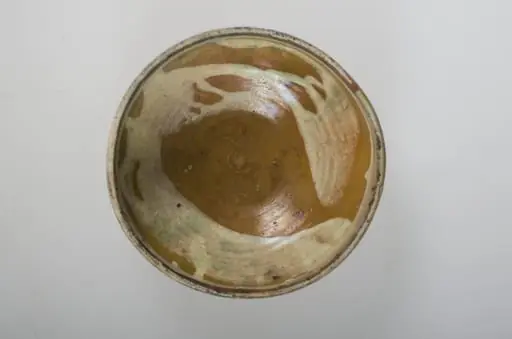 Vas de formă tronconică cu buza înălțată și ieșită înafară, smălțuit în interior și exterior (buza). Decorul este structurat aleatoriu, pe marginea și pereții interiori ai vasului, realizat prin scurgerea culorii rezultând pete albe. Pe marginea gurii vasul este decorat cu motive geometrice: linie. Cromatică: fond: cărămiziu; motive: alb-gălbui; verde.