Artwork
A Militia Meeting
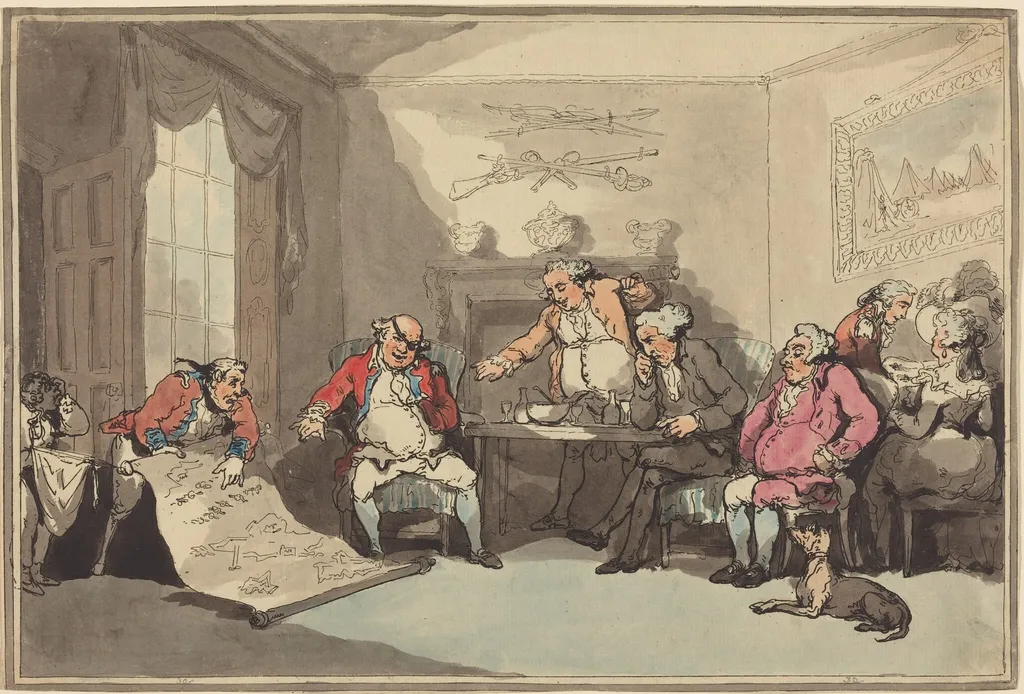
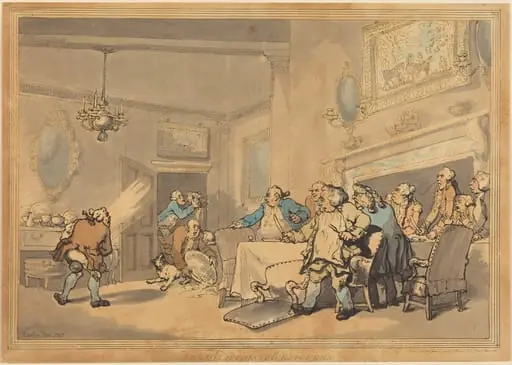
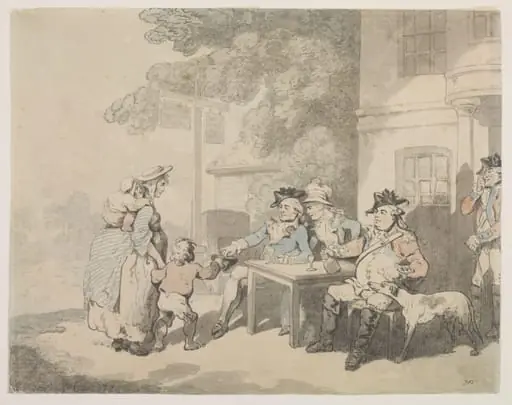
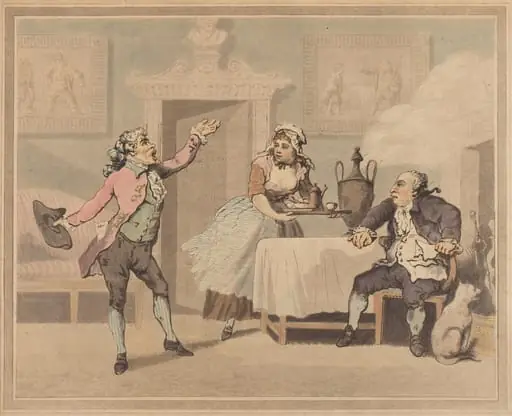
A Militia Meeting is an ink print by the Romanticist artist Thomas Rowlandson. It dates from 1799 and is held in the collection of the National Gallery of Art.
About this work
Overview
Created around 1799, Thomas Rowlandson’s *A Militia Meeting* is a hand-colored etching that captures a domestic scene with the energy of a public assembly.
Created around 1799, Thomas Rowlandson’s *A Militia Meeting* is a hand-colored etching that captures a domestic scene with the energy of a public assembly. Though titled to suggest a formal military gathering, the image instead portrays an informal, cluttered interior where civilians mingle. Rowlandson’s signature blend of observation and wit transforms a mundane moment into a commentary on social behavior, characteristic of his broader printmaking practice during the Georgian era.
Subject & Meaning
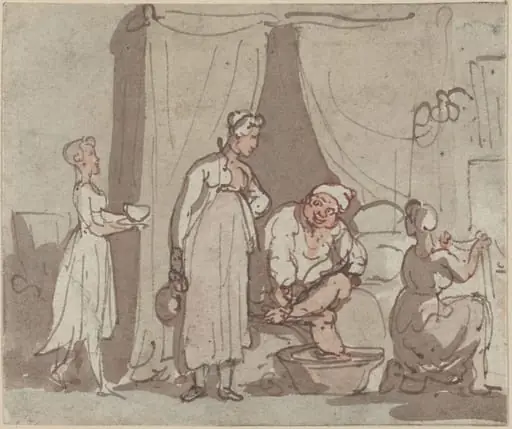
The scene depicts a group of individuals in varied states of relaxation and distraction—some seated, others standing, one partially undressed near the hearth. The presence of a red coat and a book suggests possible military affiliation and intellectual pretension, while the disarray of the room hints at disorder beneath social pretense. Rowlandson uses exaggerated postures and expressions to subtly critique the performative nature of civic duty and domestic propriety in late 18th-century England.
Technique & Style
Rowlandson employed quick, fluid etching lines to convey movement and spontaneity, enhanced by delicate hand-coloring that adds texture and life to the figures and furnishings. The sketchy, almost improvisational quality of the draftsmanship amplifies the scene’s informality. Details like scattered papers, a sleeping dog, and a half-drawn curtain contribute to a sense of lived-in chaos, reinforcing the artist’s ability to infuse everyday settings with narrative tension and visual rhythm.
History & Provenance
The print emerged during a period of heightened civic anxiety in Britain, as militia units were mobilized amid fears of French invasion. Rowlandson, a prolific printmaker with ties to London’s publishing circles, produced such works for a broad audience. While the exact initial owner is unrecorded, the image circulated widely among middle-class collectors who appreciated satirical depictions of contemporary life, securing its place in the tradition of British graphic satire.
Context
In the late 1790s, Britain’s militia system was both a practical defense measure and a social institution, often drawing participation from local gentry and tradesmen. Rowlandson’s depiction subverts the expected solemnity of such gatherings, revealing instead a scene of domestic disarray and idle conversation. This reflects broader cultural tensions between public duty and private indulgence, a recurring theme in his work during a time of national uncertainty.
Legacy
Rowlandson’s *A Militia Meeting* exemplifies the enduring power of graphic satire to capture social nuance through humor and detail. His approach influenced later generations of illustrators and cartoonists who sought to document everyday life with both precision and irony. Though not widely exhibited today, the print remains a key example of how printmaking served as a medium for public discourse in pre-Victorian Britain.
Artist & collection
Artist
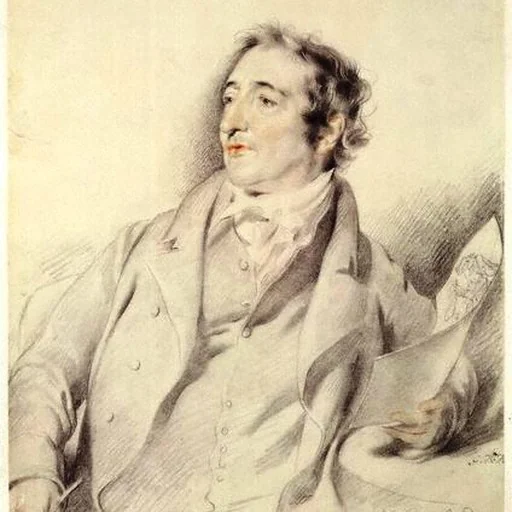
Thomas Rowlandson (; 13 July 1757 – 21 April 1827) was an English artist and caricaturist of the Georgian Era, noted for his political satire and social observation.