Artwork
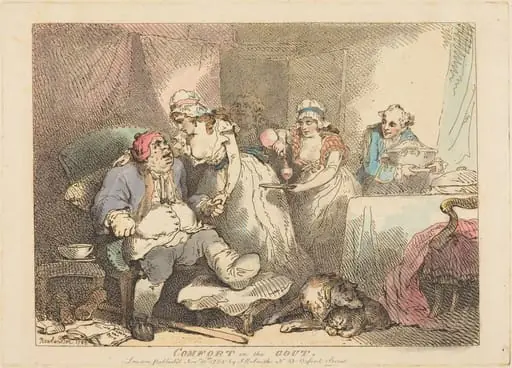
Comfort in the Gout
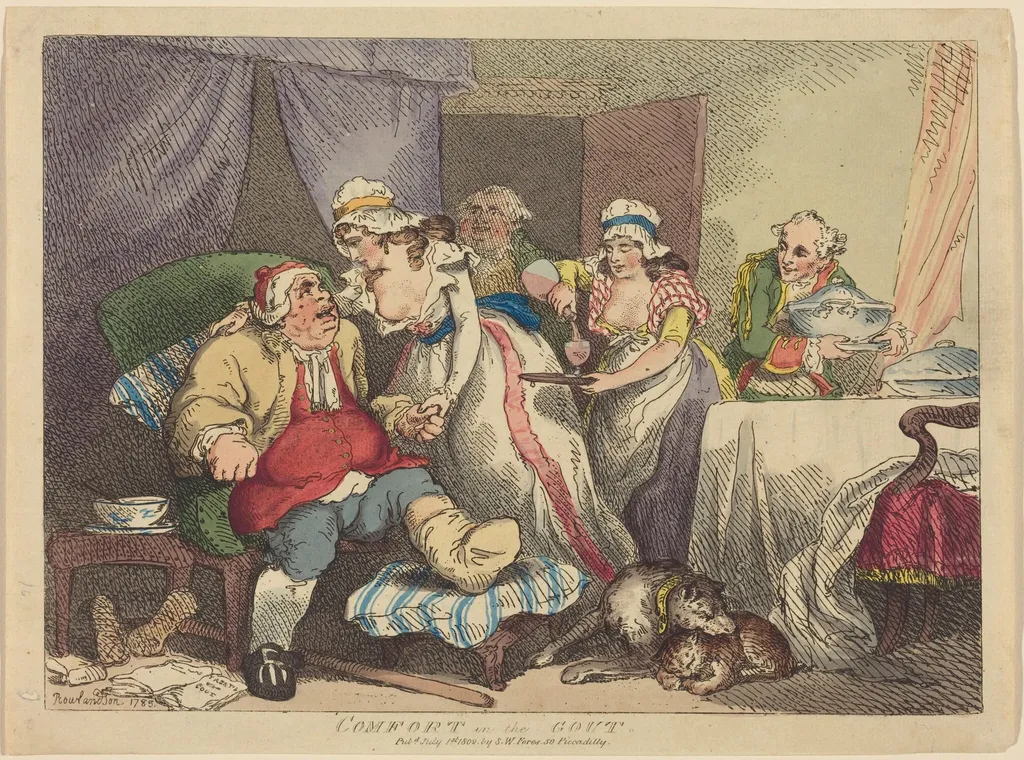
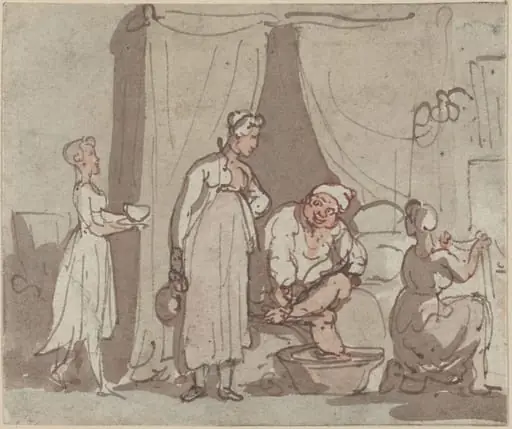
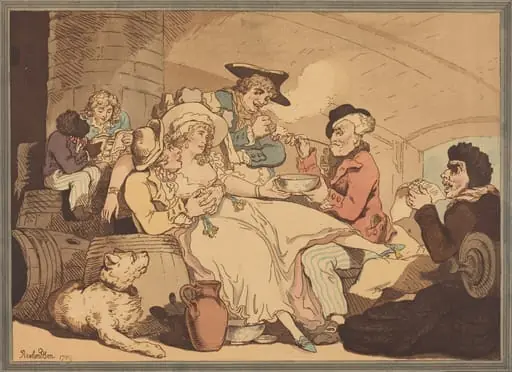
Comfort in the Gout is an ink print by the Romanticist artist Thomas Rowlandson. It dates from 1785 and is held in the collection of the National Gallery of Art.
About this work
Overview
Rowlandson, known for his incisive depictions of everyday life, uses the etching medium to deliver a sharp, visually lively critique of privilege and neglect.
Thomas Rowlandson’s 1785 hand-colored etching *Comfort in the Gout* is a satirical print that captures a moment of physical distress amid domestic disorder. Created during the height of Georgian social satire, the work blends observational detail with comedic exaggeration. Rowlandson, known for his incisive depictions of everyday life, uses the etching medium to deliver a sharp, visually lively critique of privilege and neglect.
Subject & Meaning
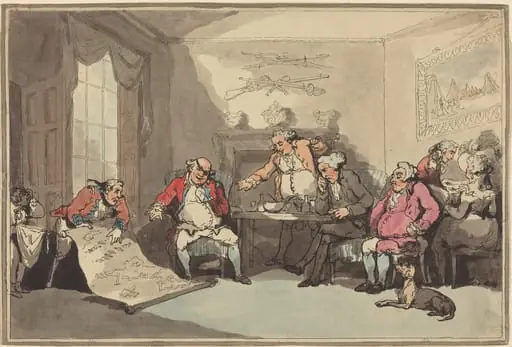
The scene centers on a man in red trousers, writhing in pain from gout, while two elegantly dressed women attend to him with detached indifference. One holds a fan, another a drink; a servant struggles with a tray in the background. The disarray of the room—spilled tea, a sleeping dog, peeling walls—contrasts with the figures’ refined attire, suggesting a farce of care. The title ironically frames suffering as comfort, mocking the performative concern of the upper classes.
Technique & Style
Rowlandson employed etching to create fluid, expressive lines that convey movement and chaos. The composition is deliberately unpolished, with loose brushwork in the hand-coloring adding vibrancy and immediacy. Bold reds and muted tones heighten the visual tension, while the uneven textures of the walls and furnishings suggest haste and neglect. The style echoes caricature traditions, prioritizing emotional impact over refinement, aligning with the energetic aesthetic of 18th-century British satirical printmaking.
History & Provenance
Produced in 1785, the print emerged during a period when Rowlandson was actively contributing to the flourishing market for social satire in London. It was likely circulated as a standalone print or included in collections of his works, popular among middle- and upper-class audiences. Though no specific early ownership records are documented, its survival in institutional collections attests to its recognition within the broader corpus of Georgian graphic satire.
Context
In late 18th-century England, gout was both a medical condition and a social symbol, often associated with indulgent lifestyles of the wealthy. Rowlandson’s depiction aligns with a broader cultural fascination with bodily frailty as a consequence of excess. His work responds to the era’s growing appetite for visual humor that exposed hypocrisy, mirroring the tone of contemporaries like Gillray but with a more domestic, less political focus.
Legacy
Rowlandson’s *Comfort in the Gout* exemplifies the enduring power of satirical print to reveal social contradictions through everyday scenes. While not as widely known as his political cartoons, the work remains a representative example of his ability to blend humor with psychological insight. Its preservation in museum collections underscores its value as a document of Georgian attitudes toward health, class, and domestic life.
Artist & collection
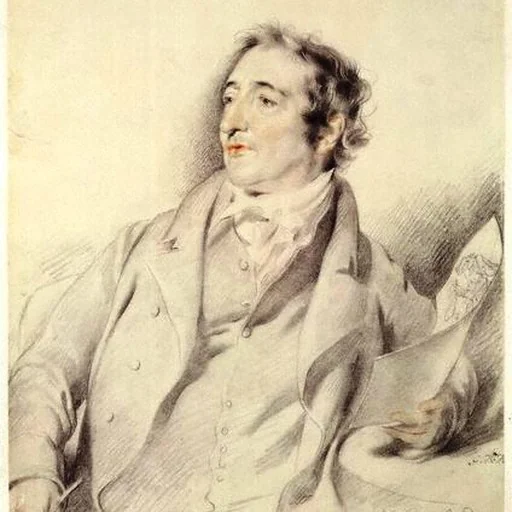
Artist
Thomas Rowlandson (; 13 July 1757 – 21 April 1827) was an English artist and caricaturist of the Georgian Era, noted for his political satire and social observation.