Artwork
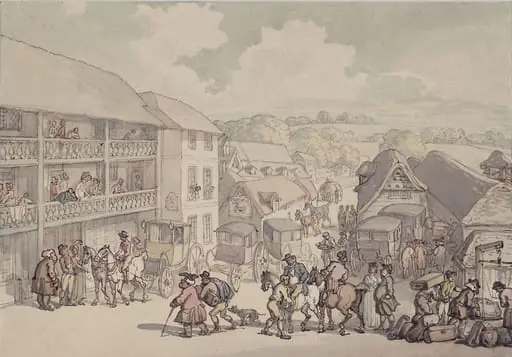
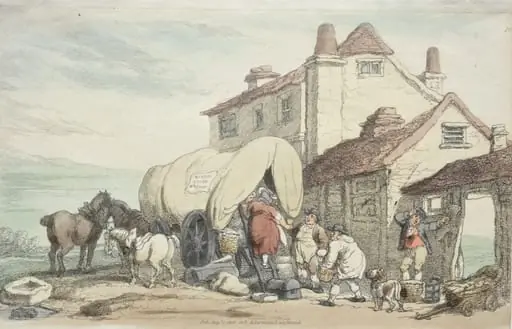
Changing Horses at a Post House in France
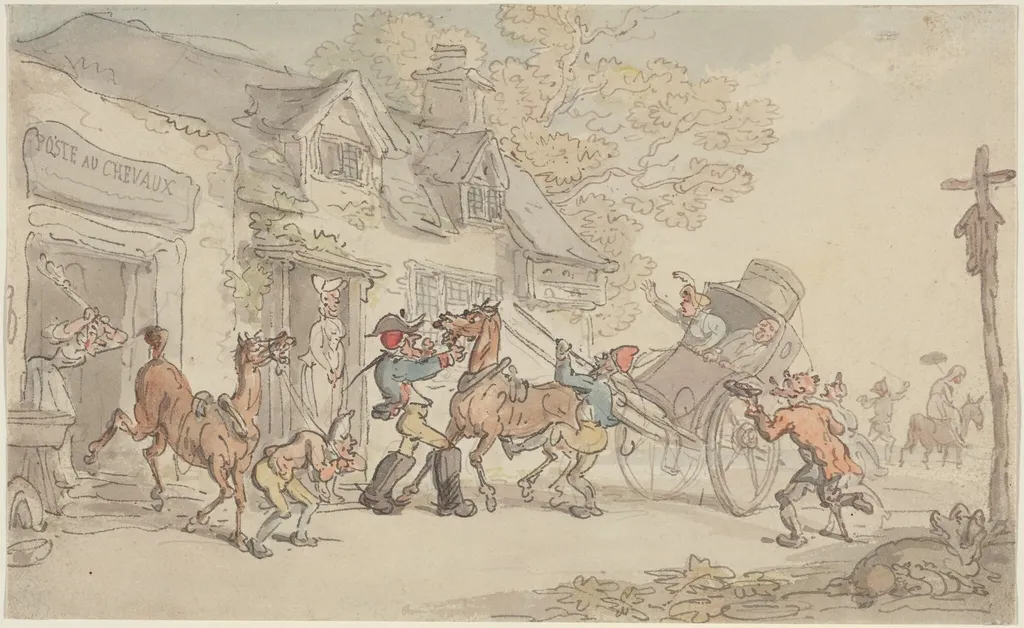
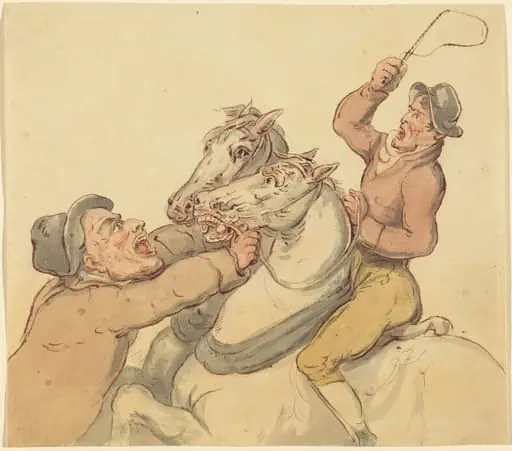
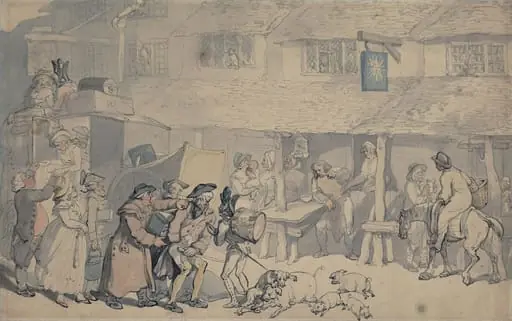
Changing Horses at a Post House in France is an ink drawing by the Romanticist artist Thomas Rowlandson. It dates from 1790 and is held in the collection of the National Gallery of Art.
About this work
Overview
Created around 1790, this watercolor drawing by Thomas Rowlandson captures a moment of transit at a French post house. Executed in black ink and graphite with layered washes, it reflects the artist’s interest in everyday scenes of travel and commerce. The work belongs to a broader body of topographical sketches Rowlandson produced during his travels, blending observation with subtle humor.
Subject & Meaning
The image suggests the friction between order and spontaneity in 18th-century travel, without overt satire but with keen attention to human behavior.
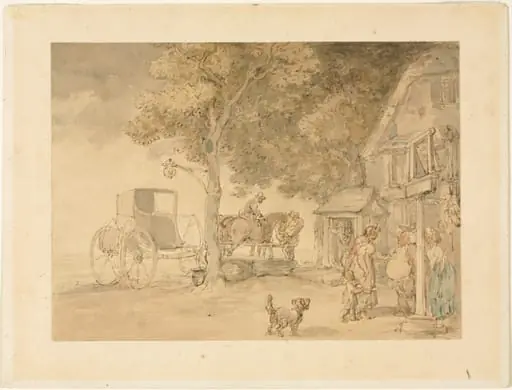
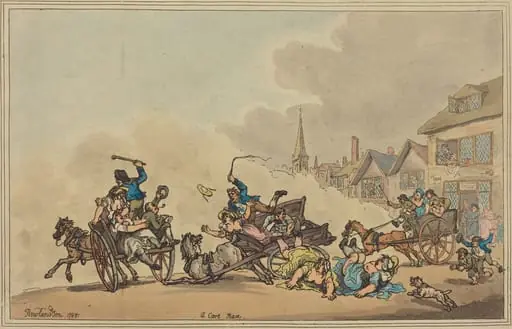
The scene depicts the organized chaos of a roadside relay station where horses are swapped for long-distance coaches. Travelers, servants, and stable hands move urgently under the sign 'Poste au Chevaux.' A top-hatted official attempts to manage the disorder, while dogs scramble among the hooves. The image suggests the friction between order and spontaneity in 18th-century travel, without overt satire but with keen attention to human behavior.
Technique & Style
Rowlandson employed rapid, fluid ink lines to convey motion, layered with translucent watercolor washes that suggest light and atmosphere. The graphite underdrawing anchors the composition, while the loose, almost sketchlike application of pigment enhances the sense of immediacy. The technique mirrors the scene’s energy—unpolished, dynamic, and responsive to the moment rather than idealized.
History & Provenance
The drawing likely originated from Rowlandson’s travels in France during the 1780s or early 1790s, a period when British artists and tourists frequently crossed the Channel despite political tensions. Its survival in private collections until entering public institutional holdings reflects its status as a personal study rather than a commissioned work, valued for its observational authenticity.
Context
In late 18th-century Europe, post houses were vital nodes in the transportation network, enabling stagecoach travel across nations. Rowlandson’s depiction aligns with a growing interest in documenting the rhythms of ordinary life, distinct from grand historical or mythological subjects. His focus on such sites reflects both the expansion of travel and the artist’s own curiosity about continental customs.
Legacy
This work exemplifies Rowlandson’s contribution to the tradition of British topographical drawing infused with social observation. While less famous than his satirical prints, such sketches influenced later artists interested in capturing transient moments with immediacy. Its unembellished realism and attention to detail remain valuable records of pre-industrial travel infrastructure.
Artist & collection
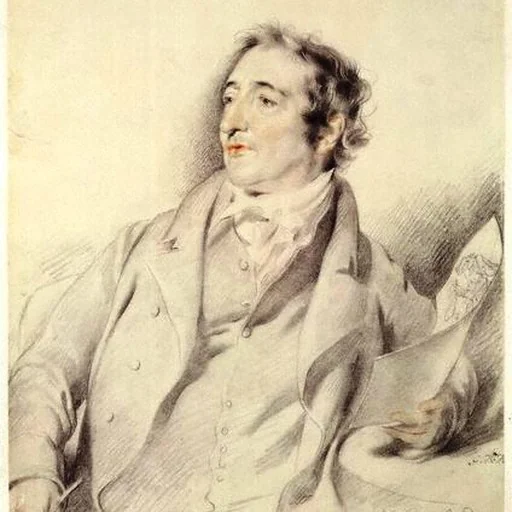
Artist
Thomas Rowlandson (; 13 July 1757 – 21 April 1827) was an English artist and caricaturist of the Georgian Era, noted for his political satire and social observation.