Artwork
The Turnpike Gate
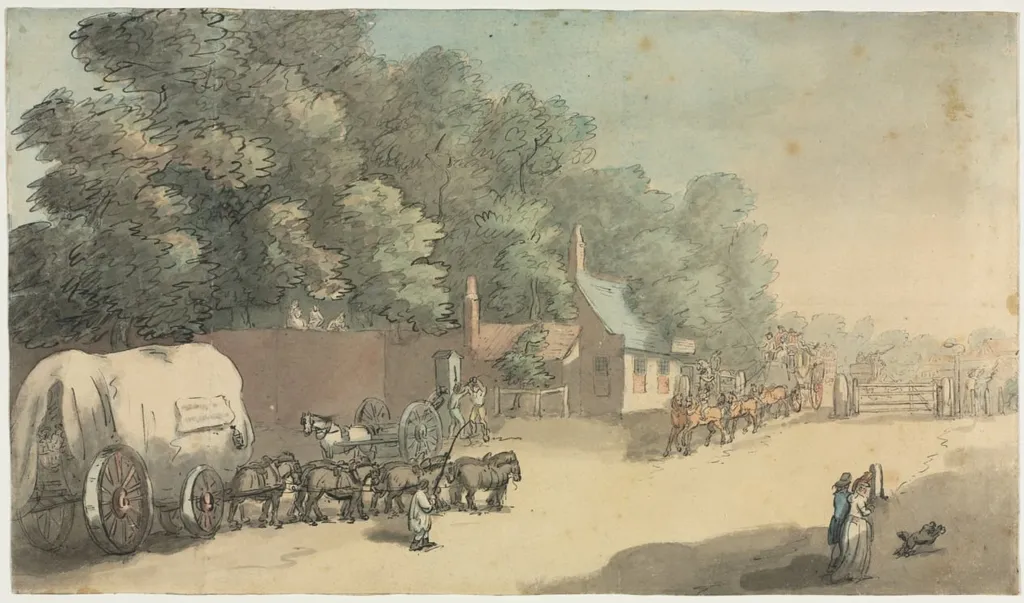
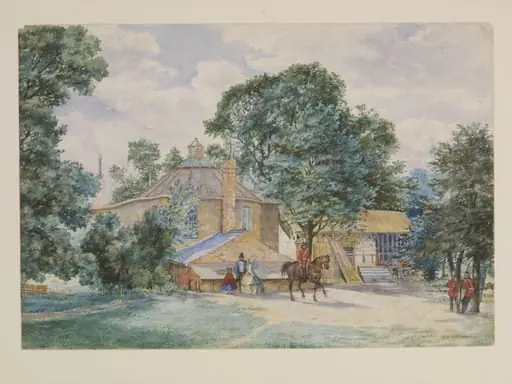
The Turnpike Gate is a drawing by the Baroque artist Unknown. It dates from 1704 and is held in the collection of the Cleveland Museum of Art.
About this work
This painting was likely made for someone who never traveled far—people who saw tollgates as a daily nuisance.
A dirt road winds through a wooden tollgate, with two men arguing beside it. A horse and cart wait in the background, while a dog sniffs the ground nearby. The scene feels ordinary, like a moment caught mid-conversation.
This painting was likely made for someone who never traveled far—people who saw tollgates as a daily nuisance. The artist didn’t sign it, so it wasn’t meant to impress collectors. It was probably just a slice of life, painted for a local patron who wanted to remember home.
If you like quiet scenes like this, look up more paintings of england, 18th century.
Overview
The Turnpike Gate is a drawing that captures a modest rural scene: a winding dirt road passes a wooden tollgate where two men are engaged in a heated exchange. A horse‑drawn cart lingers in the distance, while a dog investigates the ground nearby, lending the composition a sense of everyday activity.
Subject & Meaning
The work portrays a commonplace moment on an English turnpike, emphasizing the routine interruptions of travel by toll collection. The argument between the men suggests the minor frustrations of ordinary travelers, while the presence of the cart and dog underscores the ordinary, unremarkable nature of the setting.
Technique & Style
Rendered without a signature, the drawing relies on precise line work to delineate the wooden gate, the figures, and the surrounding landscape. The artist employs a restrained palette and careful shading to convey depth, focusing attention on the interaction rather than decorative embellishment.
History & Provenance
Created for a local audience, the piece appears intended for a patron familiar with the depicted locale rather than for the broader art market. Its unsigned status and modest subject matter indicate it was likely commissioned as a personal memento of a familiar road rather than as a collectible artwork.
Context
Turnpike gates were a regular feature of 18th‑century English travel, often viewed as nuisances by those who used them. This drawing reflects that social reality, offering a visual record of the everyday inconveniences faced by travelers during a period of expanding road networks.
Artist & collection

 Domestic Scene
 Giacomo and Cardinal Marco, investing Andrea, Abbot of San Zeno, with his Benefice
 The Nymph of Fontainebleau
 Portrait of a Woman
 Madonna and Child with Saints in the Enclosed Garden
 Venus and Minerva
 Family Group of Four on Sofa
 Wall painting from Room H of the Villa of P. Fannius Synistor at Boscoreale
 Landscape with Dray and Figures
 Watering Horses
 An Evening Landscape with a Hay Wagon
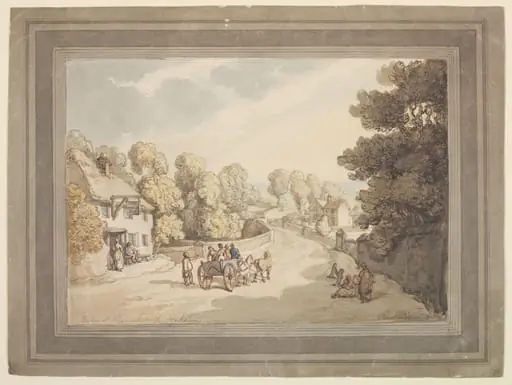 Bridge at Knaresborough
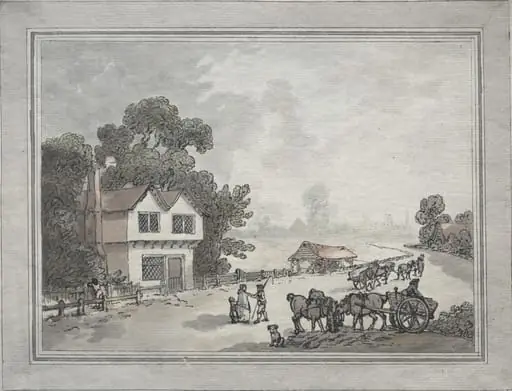 Horses and Carts on a Country Road
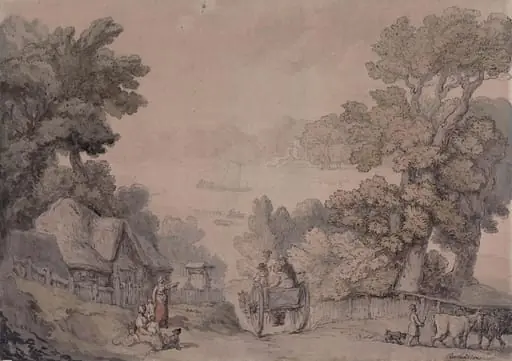 Landscape with a Cottage and Figures in the Foreground
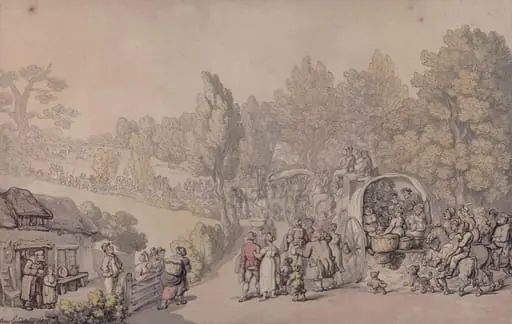 The Road to Fairlop Fair
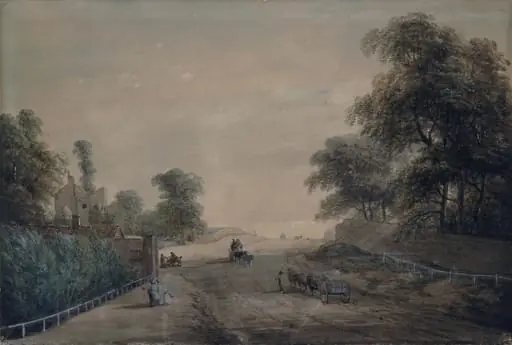 Bayswater Hill
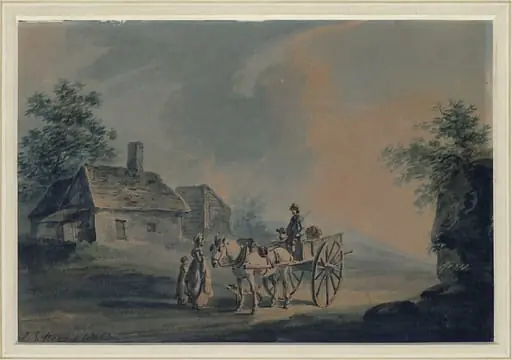 Cottage with cart and figures
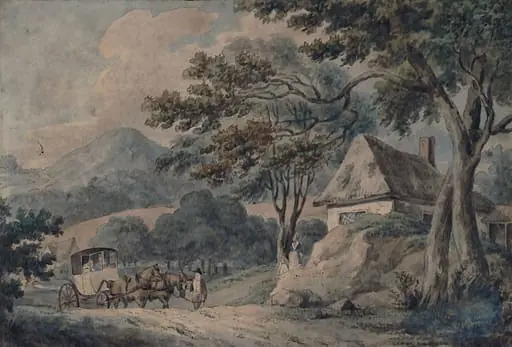 Landscape with cottage and postchaise
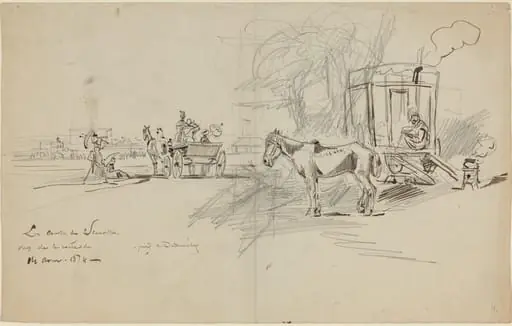 Les Courses de Deauville
 The first lecture theatre at the South Kensington Museum, later the Victoria and Albert Museum