Artwork
Kew Palace
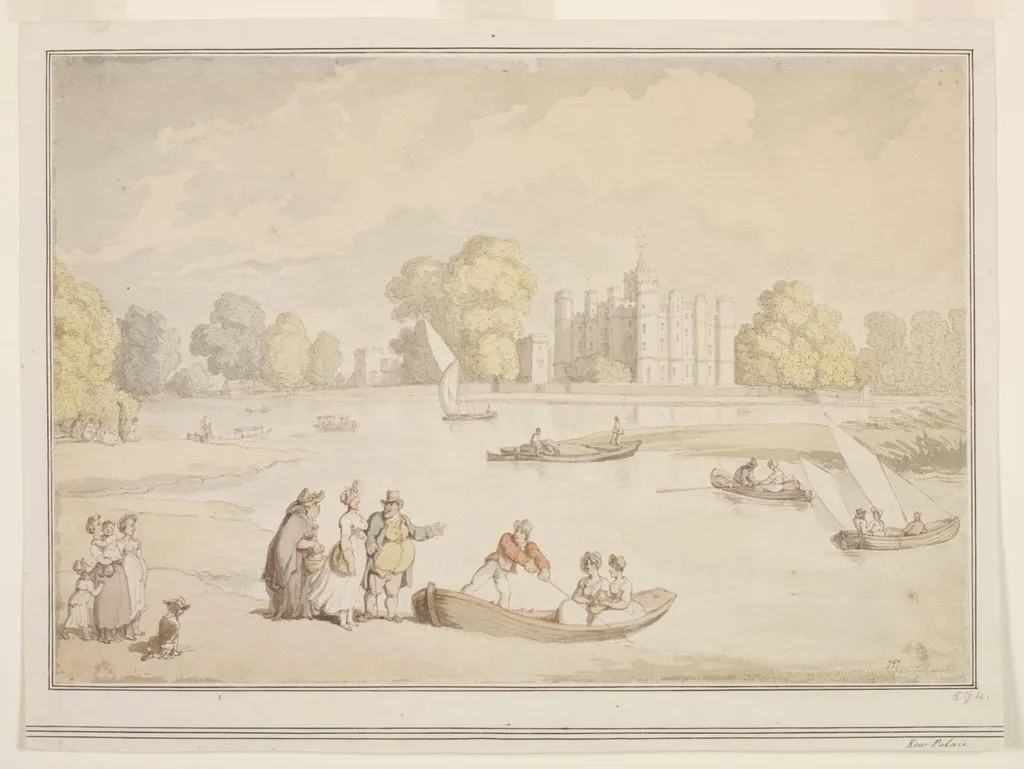
Kew Palace is a watercolor work on paper by the Rococo painting artist Thomas Rowlandson. It is held in the collection of the Victoria and Albert Museum.
About this work
Overview
The composition centers on a small boat being readied for departure, with figures engaged in casual boarding and conversation.
This watercolour by Thomas Rowlandson, dated 1850, portrays a quiet riverside scene at Kew Palace. The composition centers on a small boat being readied for departure, with figures engaged in casual boarding and conversation. Other vessels dot the water, some under sail, suggesting a common pastime among Londoners. The palace, partially obscured by foliage, anchors the background, its presence subtle yet definitive.
Subject & Meaning
The scene captures a moment of ordinary leisure, reflecting the growing popularity of river excursions among the middle classes in mid-19th century England. Rather than grand spectacle, Rowlandson emphasizes everyday interaction: individuals boarding, chatting, and settling into their surroundings. The palace, though present, is not the focus—its inclusion frames the activity as part of a broader cultural habit of rural retreats near the capital.
Technique & Style
Rowlandson employs delicate watercolour washes to suggest light and atmosphere, with soft edges and muted tones that enhance the scene’s tranquility. Figures are rendered with quick, expressive strokes, conveying movement without detailed anatomy. The water is suggested through horizontal bands of pale pigment, while trees and architecture are hinted at with minimal brushwork, prioritizing mood over precision.
History & Provenance
Created in 1850, near the end of Rowlandson’s career, this work aligns with his later focus on topographical and genre scenes. It likely originated as a private commission or personal study, given its intimate scale and lack of overt political or satirical content. The painting remained in private hands until entering institutional collection, where it is now preserved as an example of his observational work.
Context
During the 1840s and 1850s, the Thames and its tributaries became popular routes for day trips, facilitated by improved transport and rising disposable income. Kew Palace, once a royal residence, had by this time become a public attraction. Rowlandson’s depiction reflects this shift—from royal exclusivity to civic recreation—capturing a moment when leisure was becoming democratized.
Legacy
Though less known than his satirical engravings, Rowlandson’s watercolours like this one demonstrate his versatility and keen eye for social observation. This work contributes to a broader record of 19th-century British leisure culture, offering insight into how ordinary people engaged with historic landscapes. It stands as a quiet testament to the changing rhythms of urban life in the Victorian era.
Artist & collection
Artist
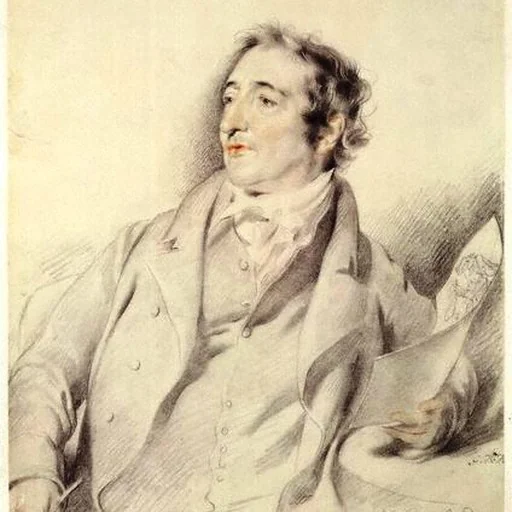
Thomas Rowlandson (; 13 July 1757 – 21 April 1827) was an English artist and caricaturist of the Georgian Era, noted for his political satire and social observation.

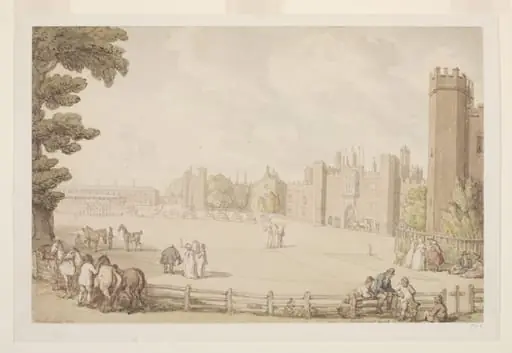 Hampton Court Palace
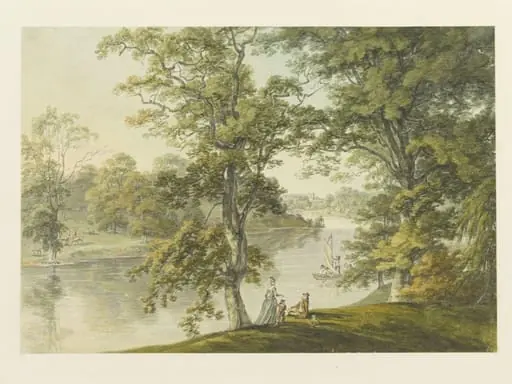 Wynnstay Park, Derbyshire
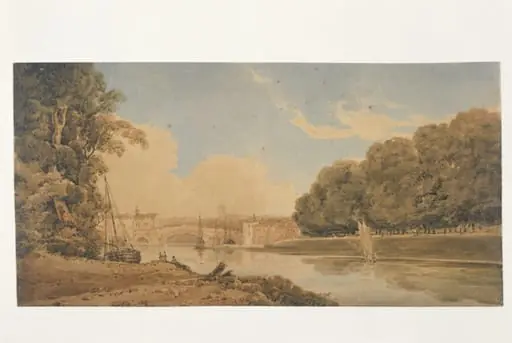 The Mayor's Walk on the Banks of the Ouse, Yorkshire
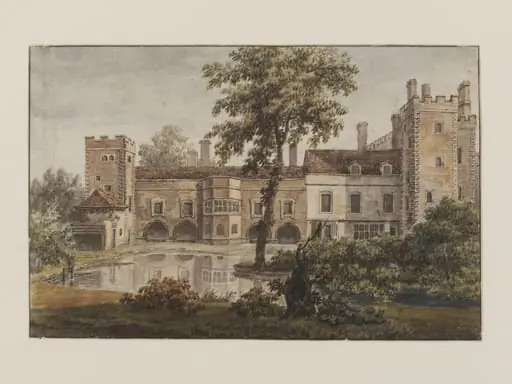 The Archbishop's Palace at Lambeth
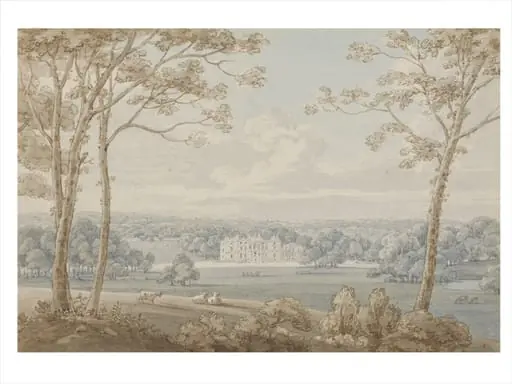 Sandbeck Park, Yorkshire
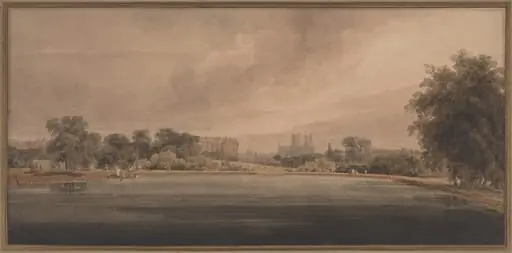 St. James' Park with a View of Westminster Abbey
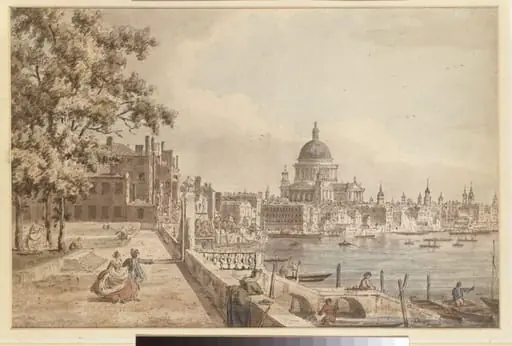 St. Paul's Cathedral, from the terrace of Old Somerset House
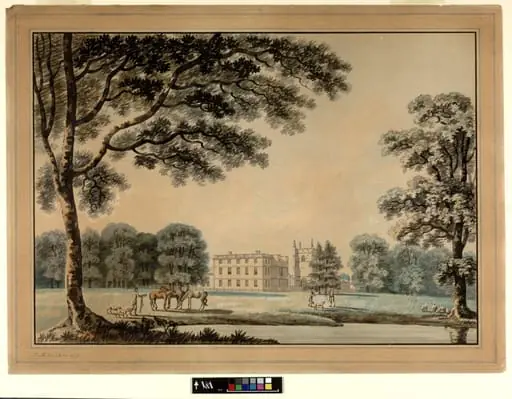 A Country House and Park, probably Norton Hall, near Sheffield
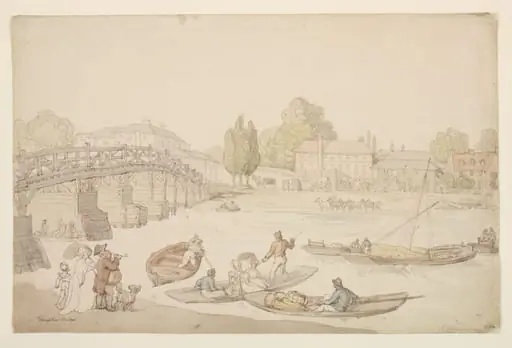 Untitled