Artwork
Sir Henry Morshead felling his timber to settle his play debts
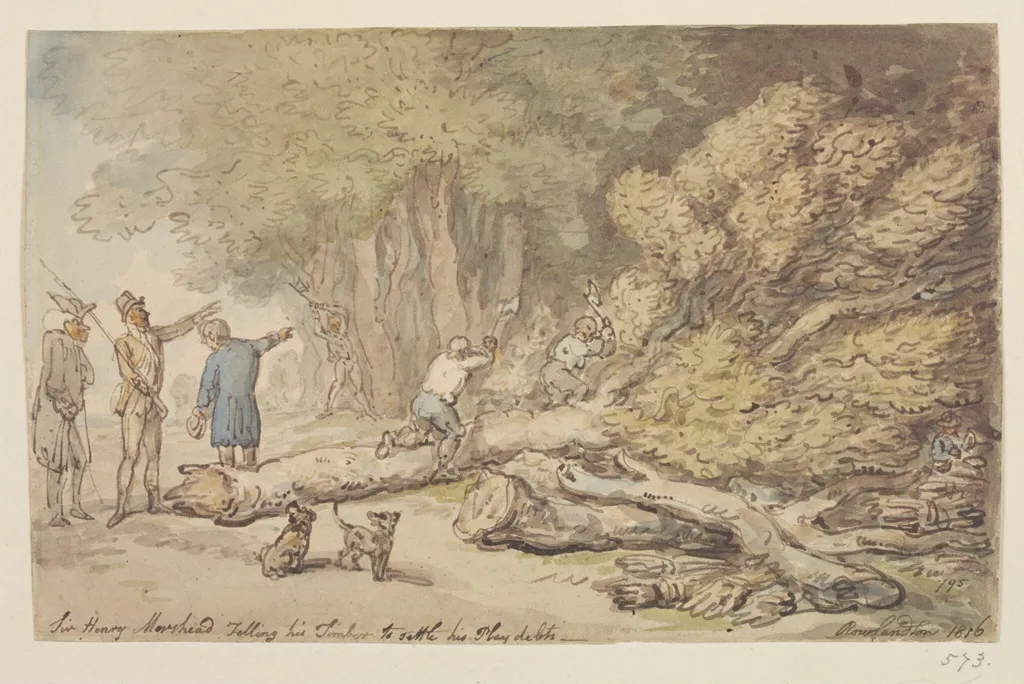
Sir Henry Morshead felling his timber to settle his play debts is a watercolor work on paper by the British Romanticist artist Thomas Rowlandson. It dates from 1816 and is held in the collection of the Victoria and Albert Museum.
About this work
Overview
The scene depicts Sir Henry Morshead overseeing the felling of timber on his estate, a direct consequence of gambling losses.
This 1816 watercolour by Thomas Rowlandson captures a moment of rural labor prompted by personal financial distress. The scene depicts Sir Henry Morshead overseeing the felling of timber on his estate, a direct consequence of gambling losses. Figures are scattered across a wooded landscape, engaged in chopping, directing, or observing, with dogs moving among them. The composition conveys motion and urgency through dynamic postures and layered foliage.
Subject & Meaning
The painting illustrates the social consequences of gambling among the British gentry. Sir Henry, once a man of means, is shown engaged in manual labor to settle debts, a humiliating reversal of status. The presence of a soldier and clergyman suggests oversight or moral commentary, framing the act as both a legal settlement and a public spectacle of downfall.
Technique & Style
Rowlandson employs loose, fluid brushwork to suggest movement and texture, with watercolour washes creating atmospheric depth in the woodland. Figures are rendered with expressive, slightly caricatured detail, emphasizing their roles rather than individual identity. The fallen tree dominates the foreground, anchoring the scene and reinforcing the theme of loss and labor.
History & Provenance
Commissioned shortly after Morshead’s financial collapse, the work was likely intended as a private record or satirical commentary. It remained within Rowlandson’s circle before entering institutional collections. No public exhibition records from the period survive, but its survival suggests it was valued as a document of contemporary social behavior.
Context
In early 19th-century Britain, gambling among the aristocracy was widespread but increasingly scrutinized. Public shame followed financial ruin, and forced labor to repay debts was not uncommon. Rowlandson’s depiction aligns with a broader tradition of satirical art that exposed the vulnerabilities of the upper classes through everyday scenes.
Legacy
The watercolour endures as a quiet testament to the fragility of social standing. Unlike overtly political works of the era, it conveys its critique through observation rather than outrage. It remains a valuable record of how personal misfortune intersected with class, labor, and public perception in Regency England.
Artist & collection
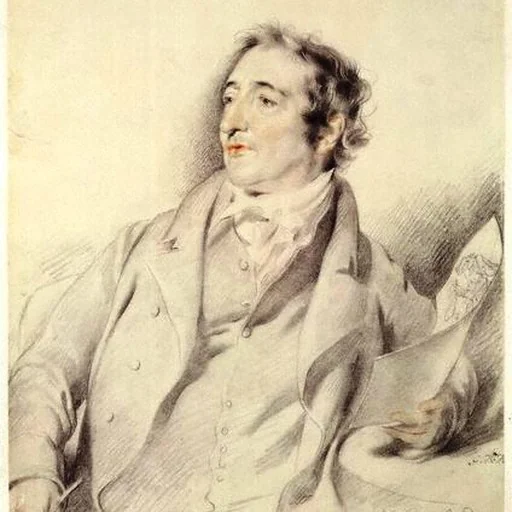
Artist
Thomas Rowlandson (; 13 July 1757 – 21 April 1827) was an English artist and caricaturist of the Georgian Era, noted for his political satire and social observation.

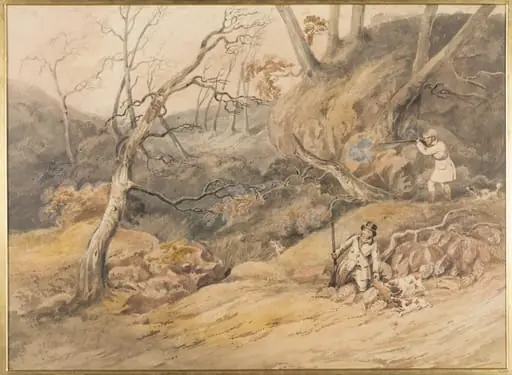 Sportsmen in a wood
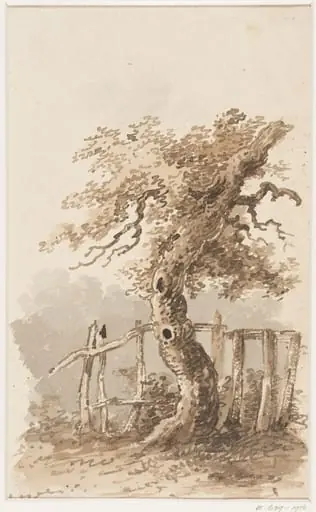 Study of trees
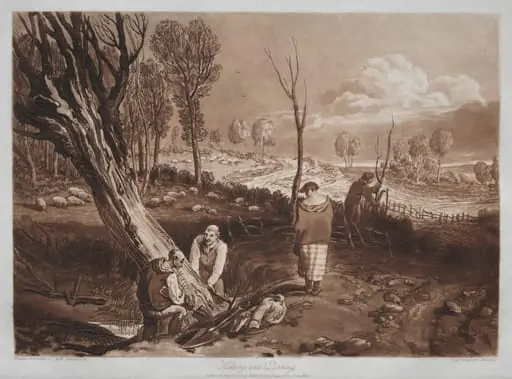 Liber Studiorum: Hedging and Ditching
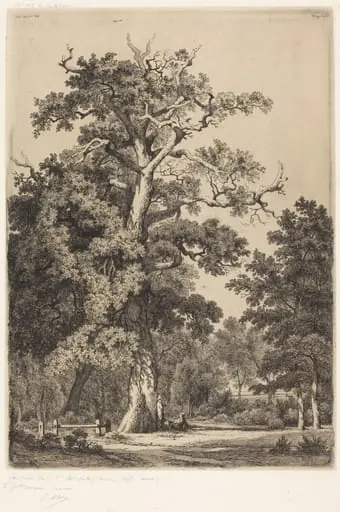 Ancient Oak in the Bois de Boulougne
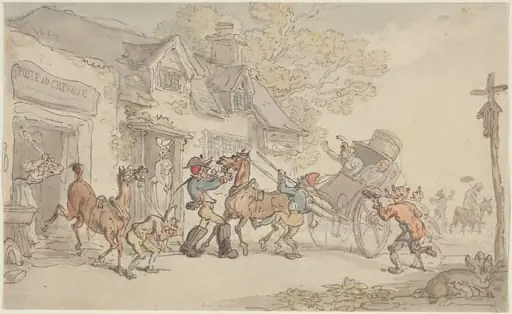 Changing Horses at a Post House in France
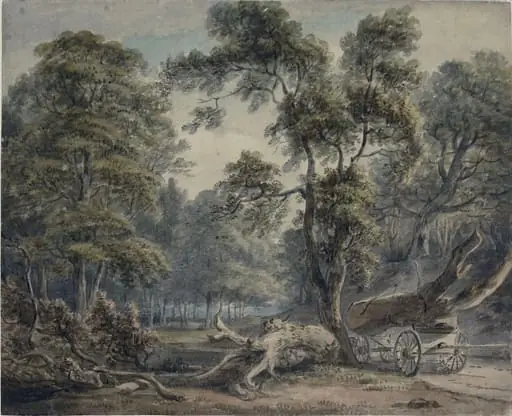 Scene in Windsor Forest
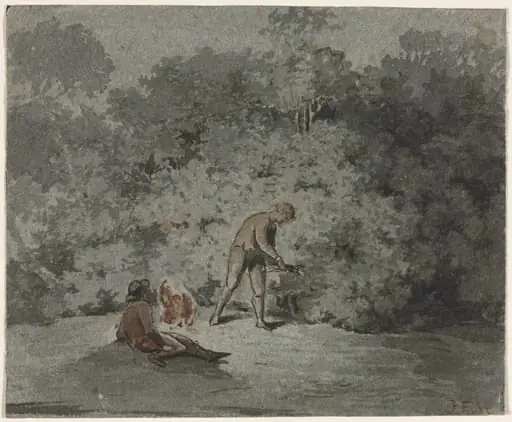 Faggot Gatherer (recto)
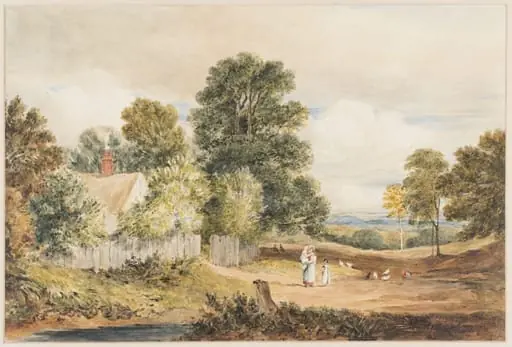 Cottage near Norwood
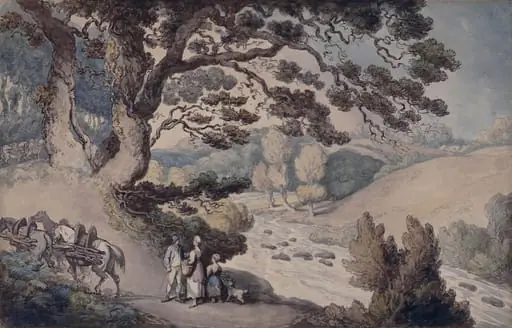 View in Carnarvon: Landscape with Figures and Packhorses
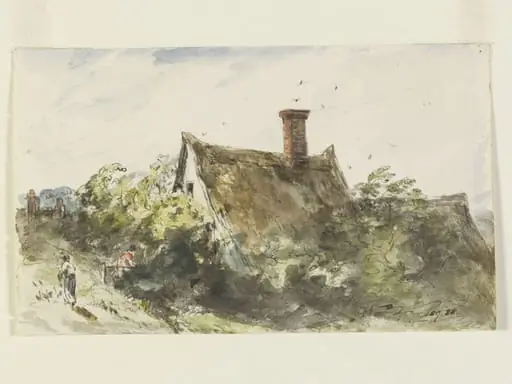 A thatched cottage and two figures
 A barn, trees and a grey horse, near East Bergholt
 The Edge of a Wood