Artwork
The Death of the Fox
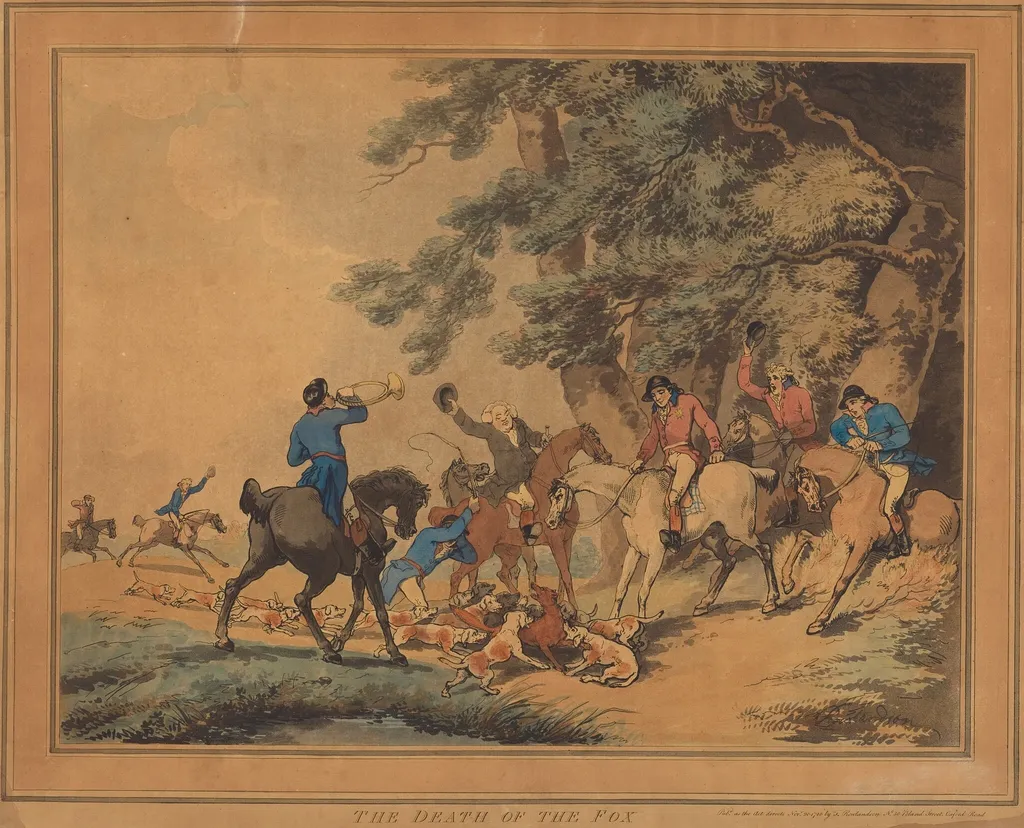
The Death of the Fox is an ink print by the Romanticist artist Thomas Rowlandson. It dates from 1786 and is held in the collection of the National Gallery of Art.
About this work
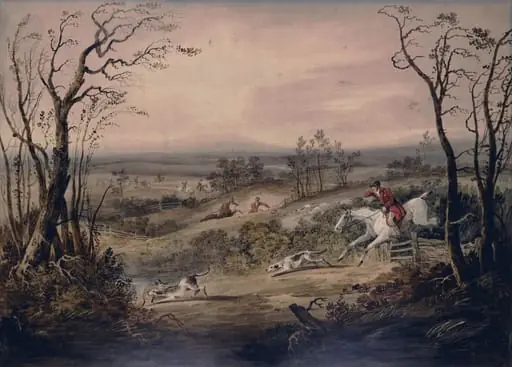
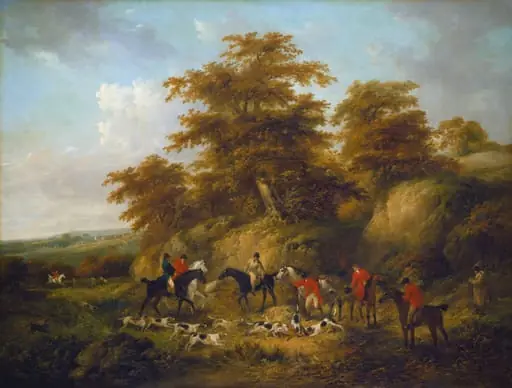
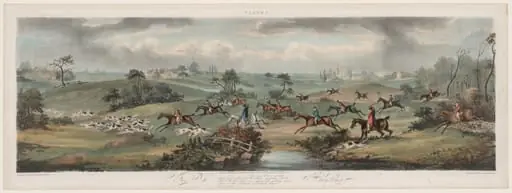
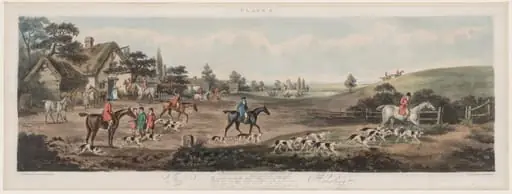
This etching shows a hunting scene gone wrong. A fox lies dead on the ground while dogs and hunters gather around. The men look tired but satisfied.
Rowlandson made this in 1786, when fox hunting was a big deal in England. The hand-colored details add grit and humor to the scene. You can almost feel the mud and hear the dogs.
If you like this, check out more by Rowlandson, Thomas.
Overview
His work often paralleled that of peers like James Gillray, though Rowlandson maintained a distinct approach to caricature and narrative.
Produced in 1786, *The Death of the Fox* is a hand-colored etching and aquatint by Thomas Rowlandson, an English artist recognized for his satirical observations of Georgian society. Executed on J. Whatman paper, the print exemplifies Rowlandson’s engagement with contemporary customs, blending humor with social critique. His work often paralleled that of peers like James Gillray, though Rowlandson maintained a distinct approach to caricature and narrative.
Subject & Meaning
The scene captures the aftermath of a fox hunt, a pursuit central to 18th-century English rural life. A lifeless fox lies at the center, surrounded by exhausted hunters and their hounds, their expressions suggesting a mix of fatigue and triumph. Rowlandson’s composition likely carries satirical undertones, questioning the rituals and social hierarchies embedded in such traditions, while the exaggerated details heighten the scene’s ironic tone.
Technique & Style
Rowlandson employed etching and aquatint to achieve a range of textures, from fine lines to broad tonal areas, which he then enhanced with hand-coloring. This method allowed for both precision and spontaneity, lending the print a dynamic, almost chaotic energy. The gritty, earthy palette reinforces the scene’s raw physicality, while the loose, expressive handling of figures and landscape underscores the artist’s satirical intent.
History & Provenance
Created during a period when Rowlandson operated as both an independent artist and illustrator, *The Death of the Fox* reflects his prolific output in printmaking. The work emerged amid a flourishing market for satirical and narrative prints, catering to an audience fascinated by social commentary. Little is documented about its early ownership, though it remains a representative example of Rowlandson’s engagement with Georgian cultural themes.
Context
Fox hunting in late 18th-century England was more than a sport; it was a symbol of aristocratic privilege and rural identity. Rowlandson’s depiction coincides with a time when such practices were both celebrated and scrutinized. By framing the hunt’s conclusion with a blend of humor and critique, the artist situates the scene within broader debates about class, tradition, and the natural world.
Artist & collection
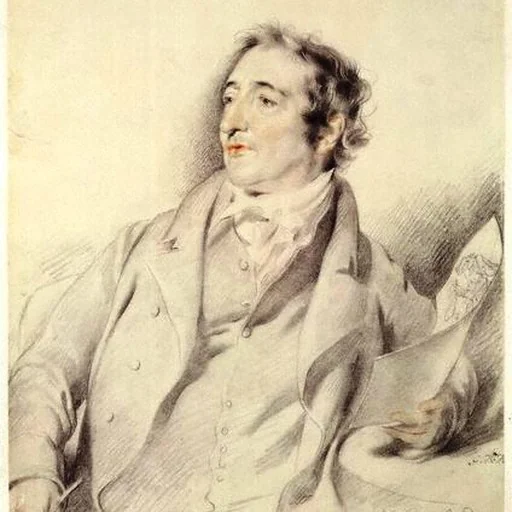
Artist
Thomas Rowlandson (; 13 July 1757 – 21 April 1827) was an English artist and caricaturist of the Georgian Era, noted for his political satire and social observation.