Artwork
The Inn Yard on Fire
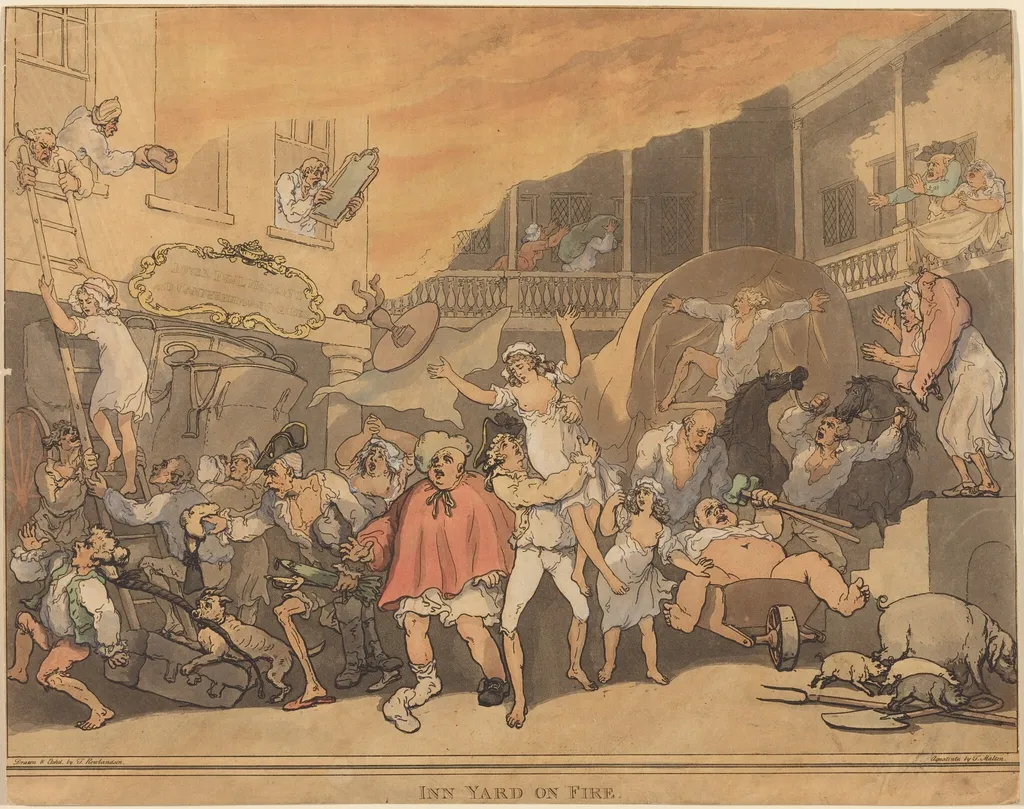
The Inn Yard on Fire is an ink print by the Romanticist artist Thomas Rowlandson. It dates from 1791 and is held in the collection of the National Gallery of Art.
About this work
Overview
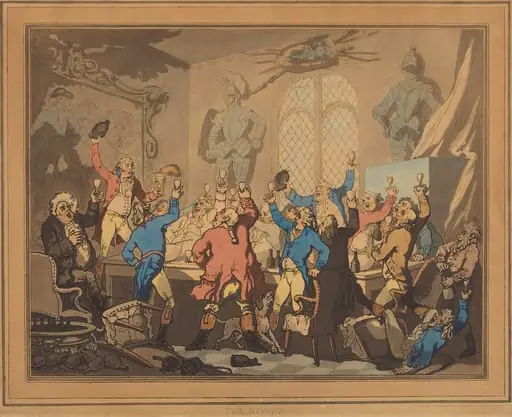
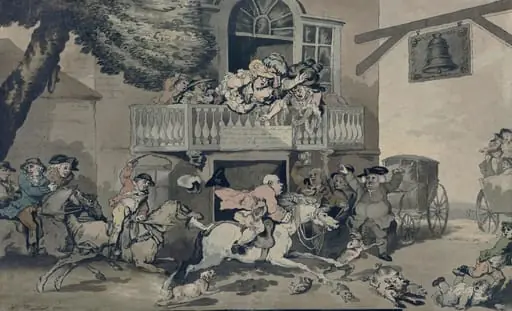
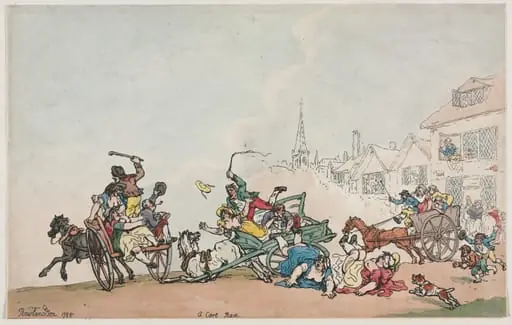
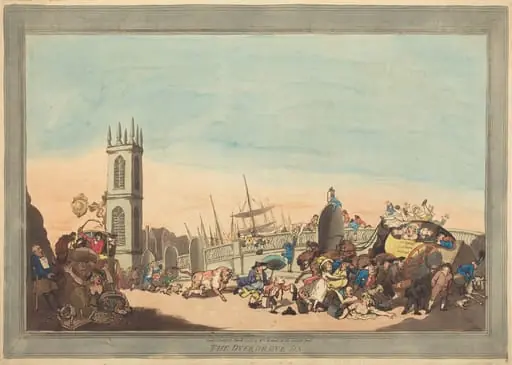
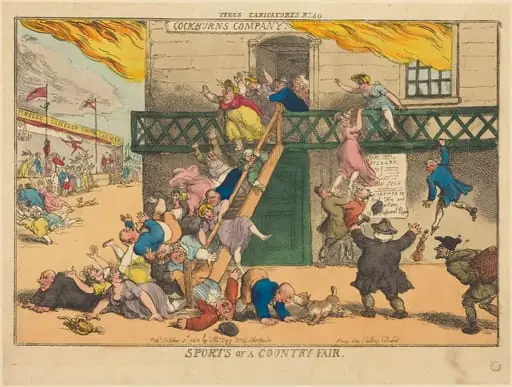
Thomas Rowlandson’s *The Inn Yard on Fire* (1791) is a hand-colored etching and aquatint that captures a moment of urban chaos. Created during the Georgian period, the print depicts a chaotic fire at a roadside inn, with figures reacting in panic. Rowlandson, known for his satirical prints, uses the scene to observe human behavior under stress rather than to glorify heroism or tragedy.
Subject & Meaning
Rowlandson highlights social contrasts and human folly, not to condemn, but to observe the unpredictability of everyday life with detached irony.
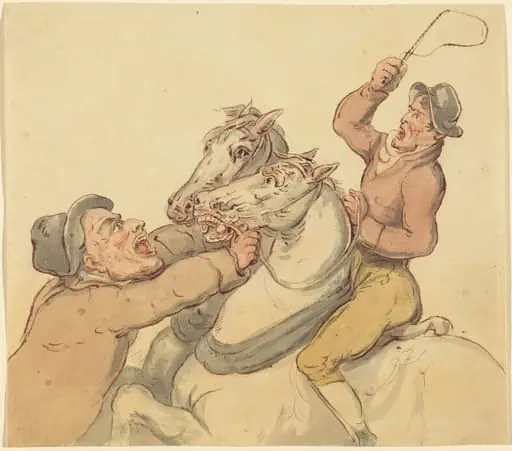
The scene portrays a disorderly evacuation, with figures in nightwear and outdoor garments scrambling to save belongings or flee. A man in a red coat is dragged away, a woman ascends a ladder, and a horse is carried off—details that underscore absurdity amid crisis. Rowlandson highlights social contrasts and human folly, not to condemn, but to observe the unpredictability of everyday life with detached irony.
Technique & Style
Rowlandson employed etching and aquatint to achieve tonal depth and texture, then added hand-coloring to heighten drama and detail. His linework is lively and precise, capturing movement through gestural figures and compressed space. The use of smoke and flame as visual anchors, combined with exaggerated postures, reflects his background in caricature, prioritizing narrative energy over naturalism.
History & Provenance
Produced in 1791, the print was part of Rowlandson’s series of satirical prints distributed commercially in London. It circulated among middle-class audiences who appreciated his sharp, humorous take on public life. No record of early ownership survives, but its survival in multiple institutional collections suggests consistent interest in his social commentary during the late 18th and early 19th centuries.
Context
In late 18th-century Britain, urban fires were common and often devastating, especially in crowded inns and lodging houses. Rowlandson’s depiction aligns with contemporary print culture that turned public disasters into subjects of entertainment and critique. His work responds to a society increasingly aware of class, disorder, and the fragility of domestic safety in rapidly growing towns.
Legacy
Rowlandson’s prints, including this one, influenced later generations of illustrators and satirists by demonstrating how everyday chaos could be rendered with both precision and wit. Though not aligned with Romanticism’s sublime ideals, his focus on emotional immediacy and human vulnerability contributed to a broader shift toward depicting real-life drama in graphic art.
Artist & collection
Artist
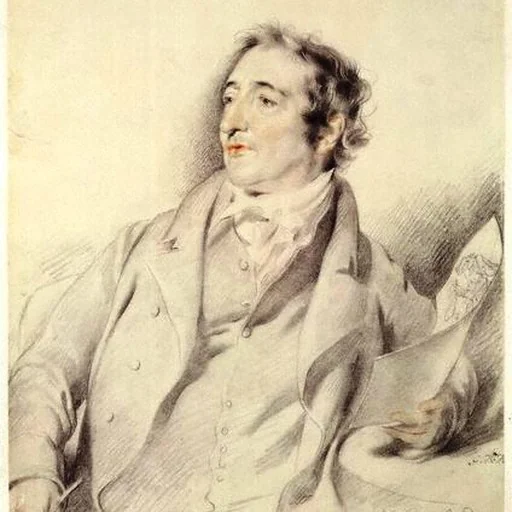
Thomas Rowlandson (; 13 July 1757 – 21 April 1827) was an English artist and caricaturist of the Georgian Era, noted for his political satire and social observation.