Artwork
Portsmouth Harbour
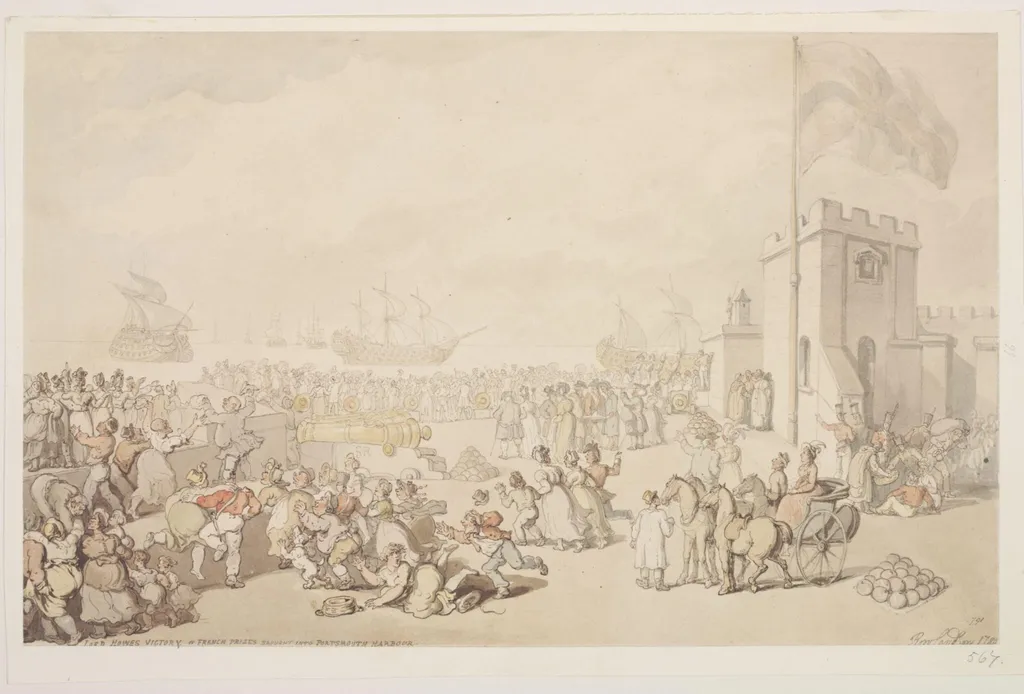
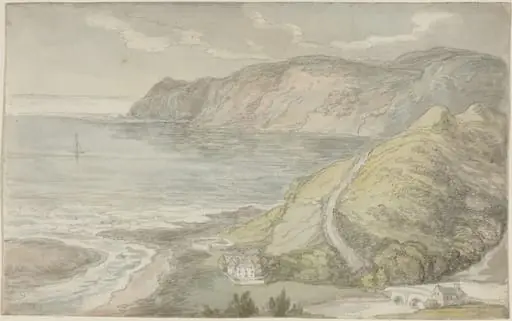
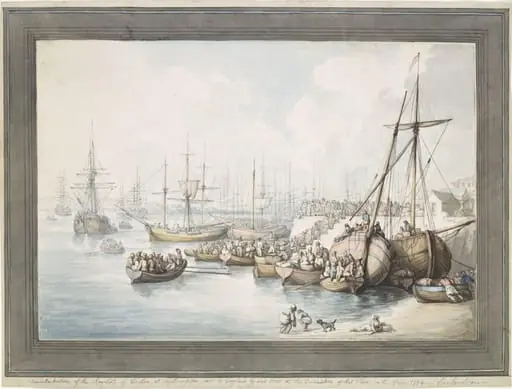
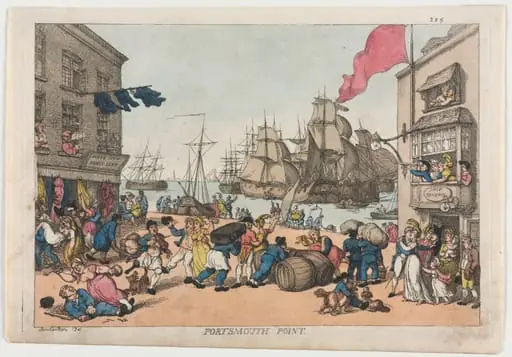
Portsmouth Harbour is a watercolor work on paper by the Rococo painting artist Thomas Rowlandson. It dates from 1780 and is held in the collection of the Victoria and Albert Museum.
About this work
Overview
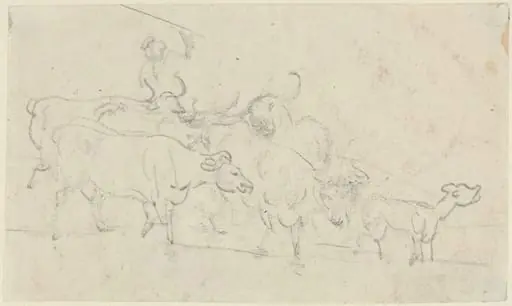
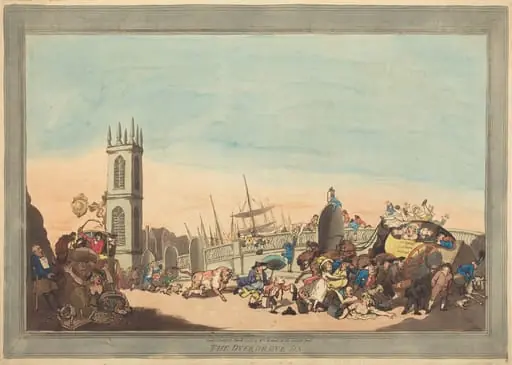
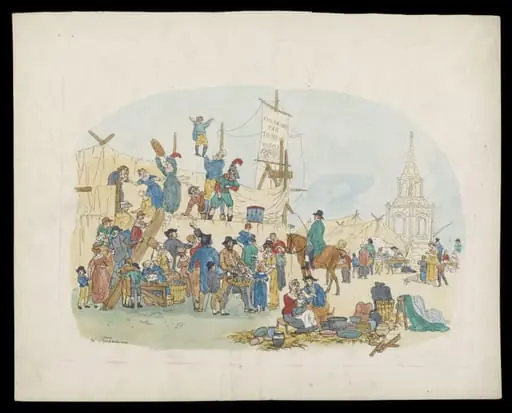
Rowlandson’s precise rendering of motion and gesture conveys the bustling energy of the moment, distinguishing it from his more simplified preparatory sketches.
Thomas Rowlandson’s 1780 watercolour captures Portsmouth Harbour during the arrival of French vessels seized by Admiral Lord Howe’s fleet. The scene is densely populated with figures engaged in varied activities, from hauling a large cannon to observing the ships. Rowlandson’s precise rendering of motion and gesture conveys the bustling energy of the moment, distinguishing it from his more simplified preparatory sketches.
Subject & Meaning
The painting documents a moment of national pride following a British naval victory. French prizes, symbolizing military success, are anchored in the harbor while civilians gather on the ramparts. The crowd’s varied reactions—curiosity, labor, play—reflect public engagement with naval events, transforming the harbor into a stage for collective celebration and civic identity.
Technique & Style
Rowlandson employed fine brushwork and layered washes to achieve subtle tonal variations in the water and architecture. Figures are individually detailed, with distinct postures and clothing, enhancing the sense of a lived-in moment. The composition avoids idealization, favoring observational accuracy and dynamic arrangement to convey spontaneity within a controlled format.
History & Provenance
Signed and dated by Rowlandson in 1780, the work was likely created shortly after the event it depicts. It entered the Victoria and Albert Museum’s collection as part of a broader acquisition of 18th-century British topographical watercolours, where it remains a key example of Rowlandson’s early documentary style.
Context
The painting reflects a period when naval victories were major public spectacles, often commemorated in art and print. Portsmouth, a key Royal Navy base, was a natural site for such displays. Rowlandson’s focus on civilian activity, rather than military hierarchy, aligns with a growing interest in everyday responses to national events during the late 18th century.
Legacy
This watercolour exemplifies Rowlandson’s transition from caricature to topographical observation. Its detailed depiction of crowd behavior influenced later British artists documenting public life. As one of the few surviving watercolours from this period with such precise dating, it offers insight into how contemporaries experienced and recorded naval triumphs.
Artist & collection
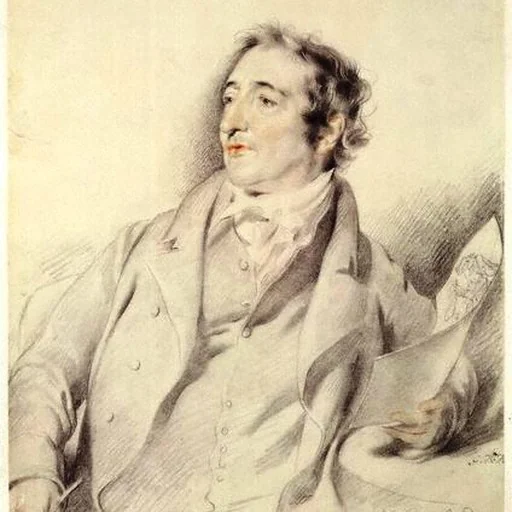
Artist
Thomas Rowlandson (; 13 July 1757 – 21 April 1827) was an English artist and caricaturist of the Georgian Era, noted for his political satire and social observation.