Artwork
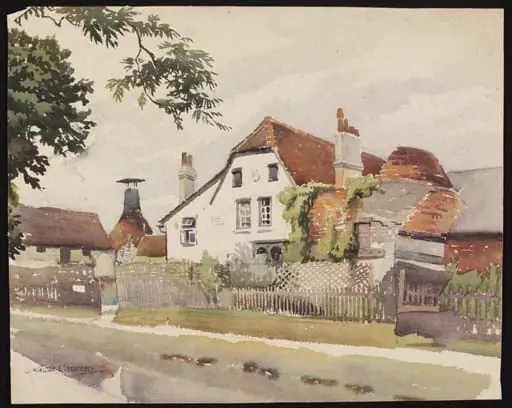
Exterior, Black Chapel North End, Nr. Dunmow
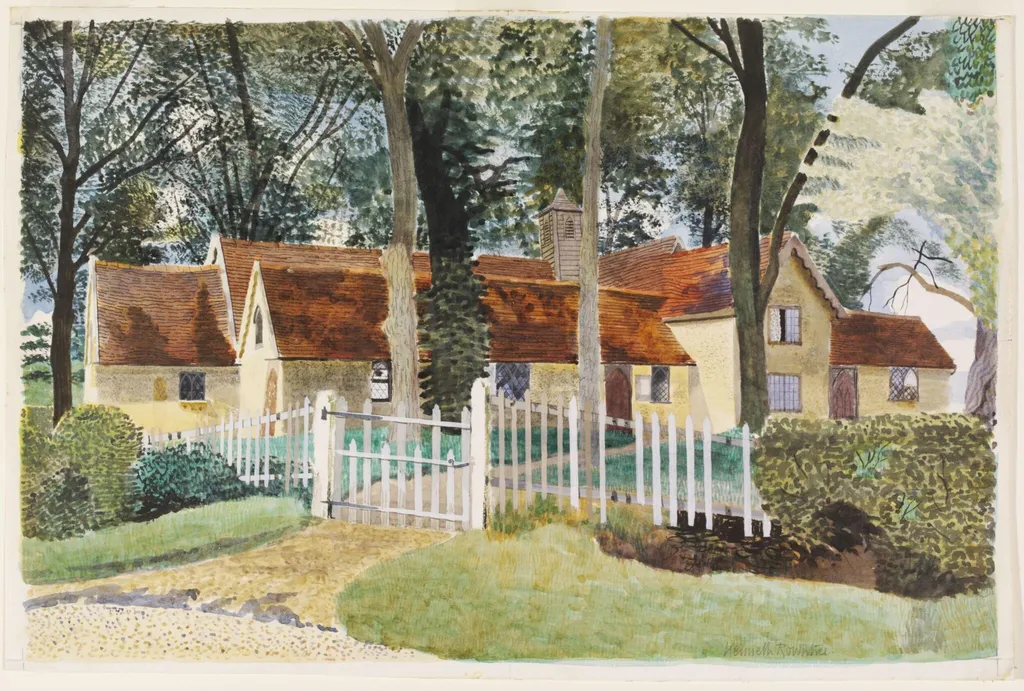
Exterior, Black Chapel North End, Nr. Dunmow is a watercolor work on paper by Rowntree. It dates from 1940 and is held in the collection of the Victoria and Albert Museum. Painted in 1940, this watercolour captures the exterior of the Black Chapel at North End, near Great Dunmow in Essex.
About this work
Overview
Executed in soft, muted tones, the work reflects the quiet dignity of a rural ecclesiastical building, rendered with careful attention to light and texture.
Painted in 1940, this watercolour captures the exterior of the Black Chapel at North End, near Great Dunmow in Essex. The structure, characterized by its low, asymmetrical form, leaded windows, central square tower, and multiple gables, is framed by a white picket fence and dense trees. Executed in soft, muted tones, the work reflects the quiet dignity of a rural ecclesiastical building, rendered with careful attention to light and texture.
Subject & Meaning
The Black Chapel, an unconsecrated Peculiar chapel, had no burial ground, and thus no gravestones appear in the scene. Its isolation and lack of ecclesiastical consecration give it a distinct, almost secular presence. The surrounding cottages, with their red-tiled roofs and light walls, suggest a quiet village life untouched by modern disruption. The absence of human figures and graves reinforces a sense of stillness and timelessness.
Technique & Style
The artist employed delicate watercolour washes to convey subtle shifts in light and atmosphere. Soft edges and restrained colour harmonies—pale greens, greys, and warm ochres—enhance the tranquillity of the scene. The trees are rendered with loose, suggestive brushwork, framing the buildings like natural arches. Shadows beneath foliage add depth without harsh contrast, preserving the gentle, contemplative mood.
History & Provenance
This work belongs to the *Recording Britain* collection, a project initiated during the Second World War to document at-risk landscapes and vernacular architecture. Funded by the Pilgrim Trust and directed by Sir Kenneth Clark, it commissioned artists to record scenes deemed vulnerable to wartime destruction or social change. The painting was created as part of this effort to preserve a visual archive of rural England.
Context
The Black Chapel’s status as a Peculiar—a church outside the jurisdiction of the local diocese—reflects England’s complex ecclesiastical history. Its location in a quiet Essex hamlet, surrounded by modest homes and mature trees, represents a fading rural order. The *Recording Britain* project sought to capture such places before they vanished under urban sprawl or wartime disruption, making this scene both a topographical record and a cultural document.
Legacy
The painting remains part of the *Recording Britain* archive, now held by the Victoria and Albert Museum. It contributes to a broader understanding of mid-20th-century British landscape and vernacular architecture. Its quiet realism offers insight into how artists responded to national anxiety through the preservation of ordinary, overlooked places, ensuring their visual memory endured beyond the war years.
Artist & collection

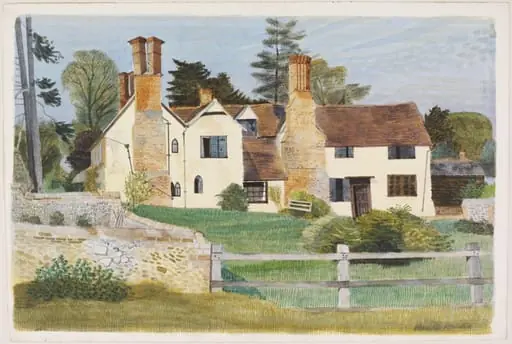 Brent Hall from the South, Finchingfield
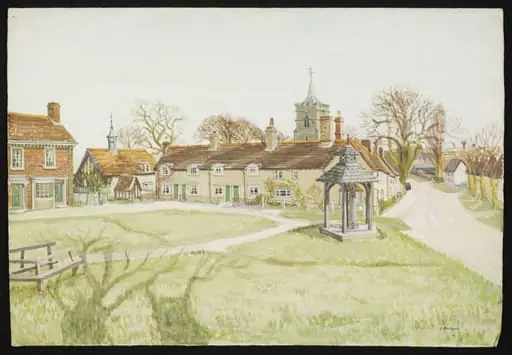 The Village Green, Westmill
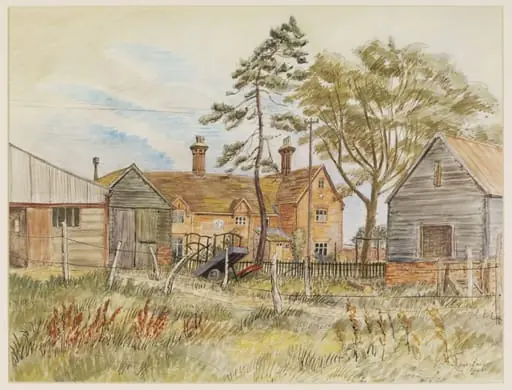 Crag Farm near Sudbourne
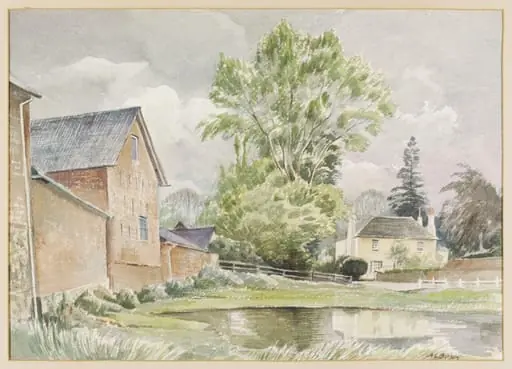 Bentworth, Near Alton
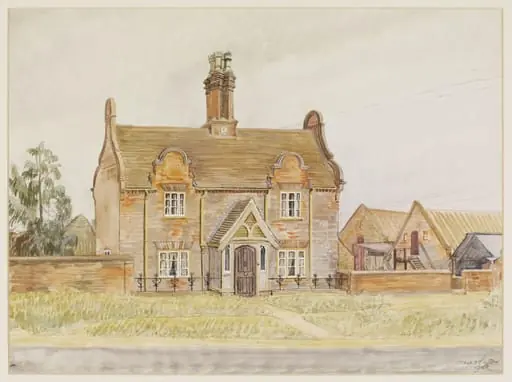 Chantry Farm in Orford
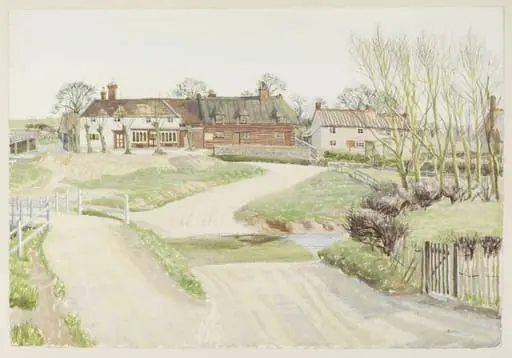 The Ford, Braughing
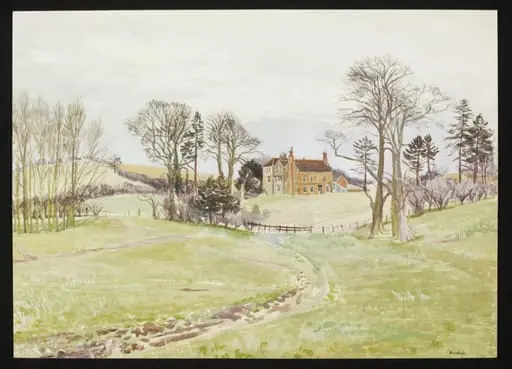 The Vicarage, Braughing
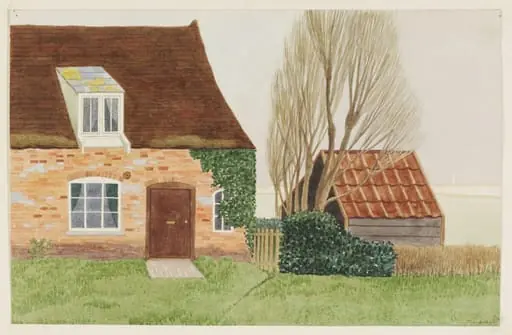 Cottage at Orford
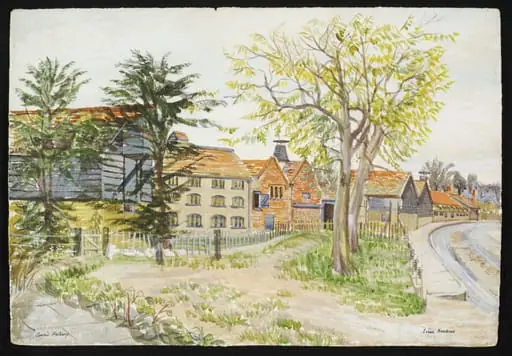 Canon's Maltings, Ware
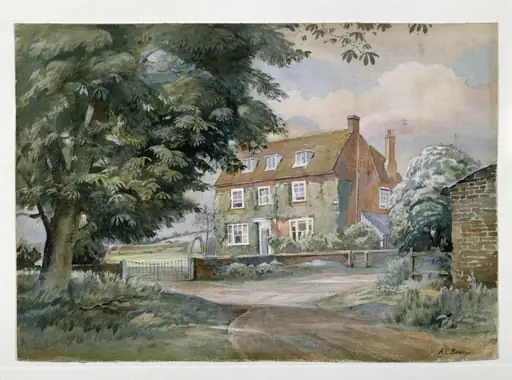 Amery Farm, Alton
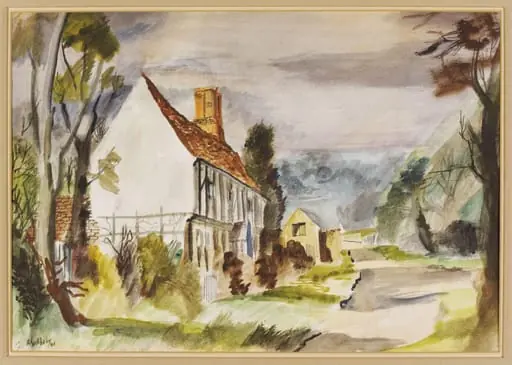 Old House at Bulmer
 Kilns and Maltings on the Canal Bank, Bishop's Stortford