Artwork
The Mill, Crathorne
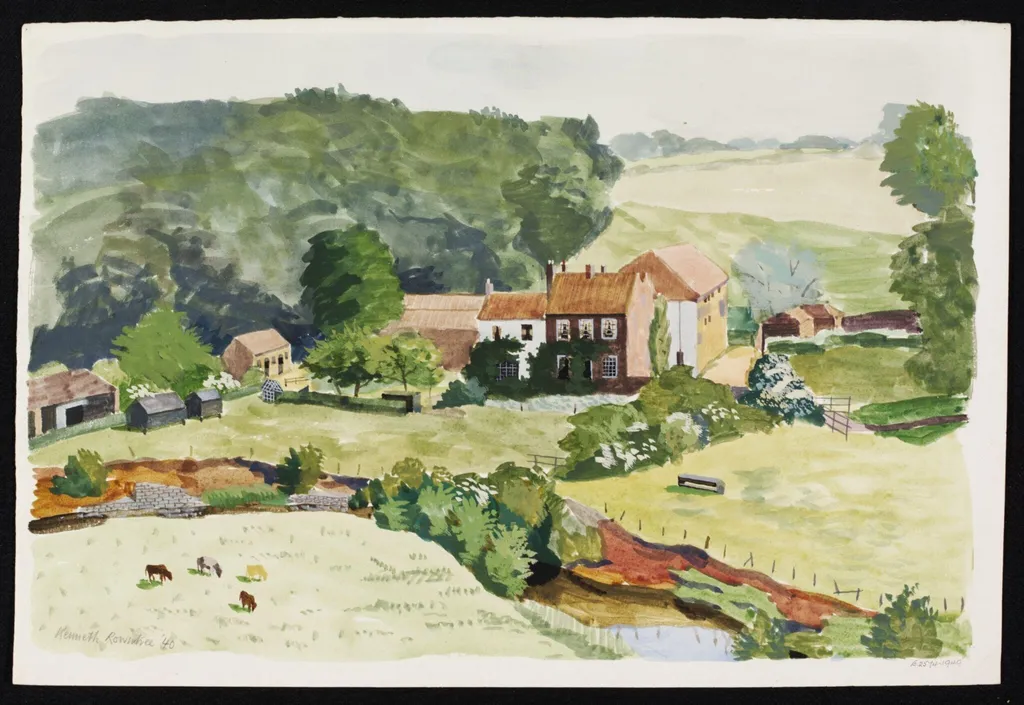
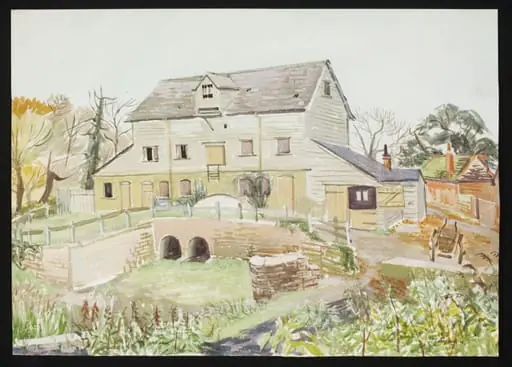
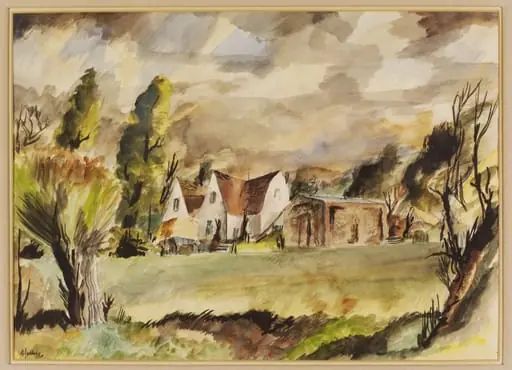
The Mill, Crathorne is a watercolor work on paper by the Social Realist artist Rowntree. It dates from 1940 and is held in the collection of the Victoria and Albert Museum.
About this work
Overview
The work is one of more than 1,500 pieces commissioned from 97 artists, all aimed at preserving a sense of place during a time of national upheaval.
Created in 1940, *The Mill, Crathorne* is a watercolour by artist Rowntree, produced under the Recording Britain project. This government-backed initiative sought to visually archive rural and architectural scenes at risk from wartime disruption and modernization. The work is one of more than 1,500 pieces commissioned from 97 artists, all aimed at preserving a sense of place during a time of national upheaval.
Subject & Meaning
The scene depicts a modest rural complex centered on a mill, surrounded by farm buildings and grazing cattle. A meandering stream divides the foreground, linking the structures to the surrounding fields and distant hills. The composition avoids drama, instead emphasizing quiet continuity. It reflects an intention to honor ordinary, unremarkable landscapes that embodied enduring British rural life.
Technique & Style
Rowntree employed loose, fluid watercolour brushwork to suggest form without rigid definition. The palette is restrained—soft greens, muted browns, and pale washes—creating a subdued, atmospheric tone. The technique captures light and texture with economy, allowing the natural irregularity of the landscape to emerge. The effect is immediate yet contemplative, avoiding sentimentality in favor of quiet observation.
History & Provenance
Commissioned by the Pilgrim Trust and overseen by Sir Kenneth Clark, the Recording Britain project was initiated in 1939 to document vulnerable landscapes before they disappeared. *The Mill, Crathorne* was completed during the early years of the war, when many rural areas faced neglect or transformation. The work entered the Victoria and Albert Museum’s collection as part of the project’s archival legacy.
Context
During World War II, Britain faced widespread disruption to its physical and cultural landscape. The Recording Britain project responded to fears of loss—whether from bombing, development, or the decline of traditional farming. Artists like Rowntree were sent across the country to record scenes deemed emblematic of national identity, not for their grandeur, but for their quiet, everyday presence.
Legacy
The Recording Britain collection remains a vital historical archive, offering insight into pre-war rural England. Rowntree’s watercolour contributes to a broader visual record that prioritizes authenticity over idealization. Today, these works are studied not only for their artistic merit but as documents of a society seeking to preserve its sense of place amid profound change.
Artist & collection

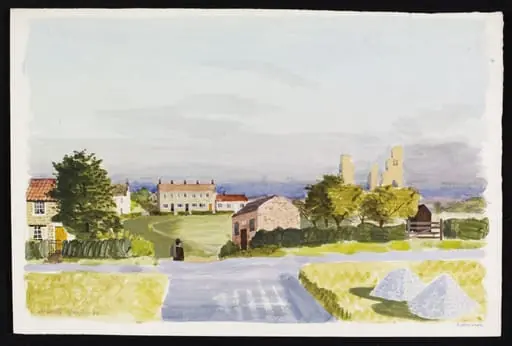 Sheriff Hutton; view over the plain of York, with York Minster in the distance
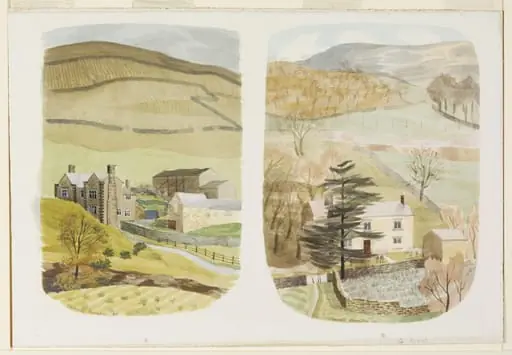 Cox's Farm, and White House, Ashopton
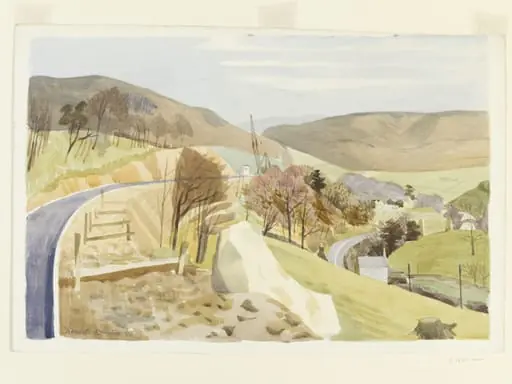 Ashopton, from the New Road
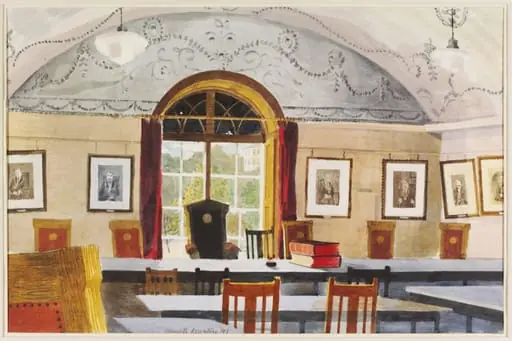 Council Chamber, Municipal Offices, Bangor, Caernarvonshire
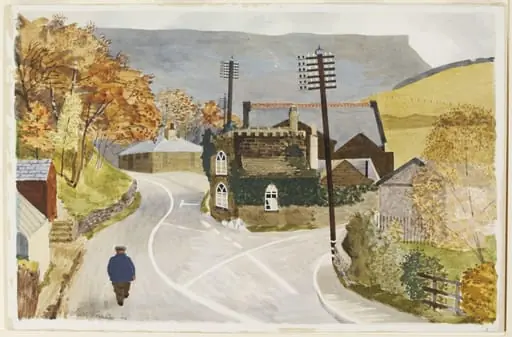 Old Toll Bar House, Ashopton
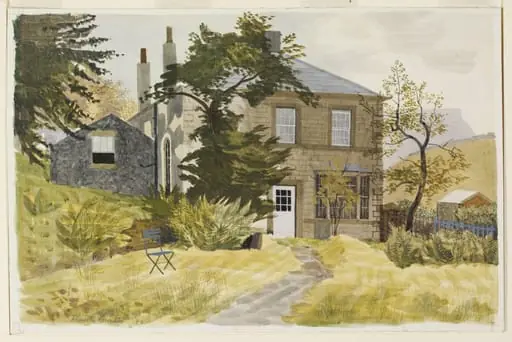 Ashopton Inn, showing Bamford Edge
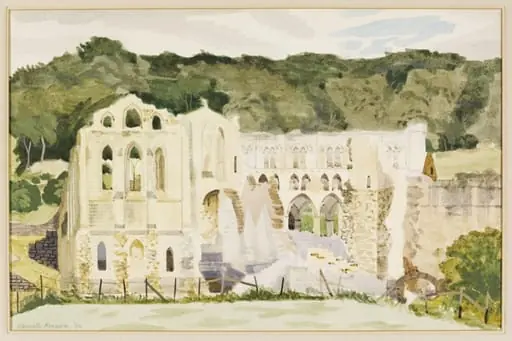 Rievaulx Abbey
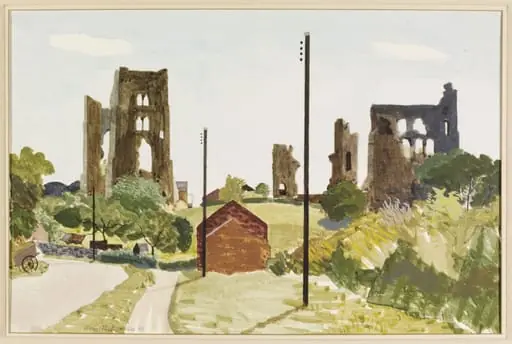 The Castle, Sheriff Hutton