Artwork
Rievaulx Abbey
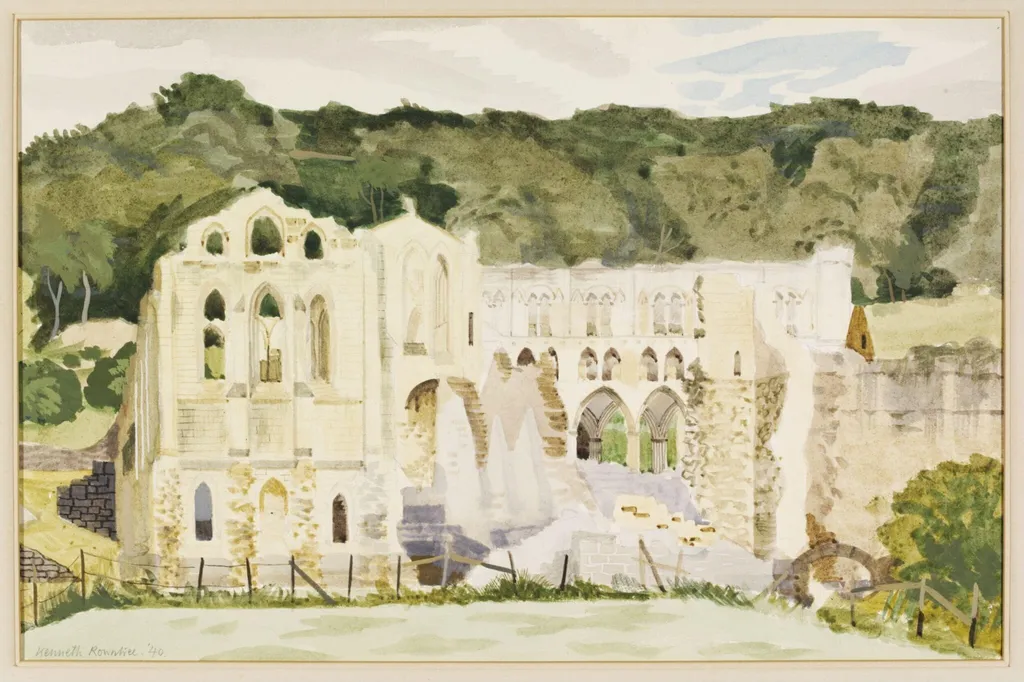
Rievaulx Abbey is a watercolor work on paper by the British Romanticist artist Rowntree. It dates from 1940 and is held in the collection of the Victoria and Albert Museum.
About this work
Overview
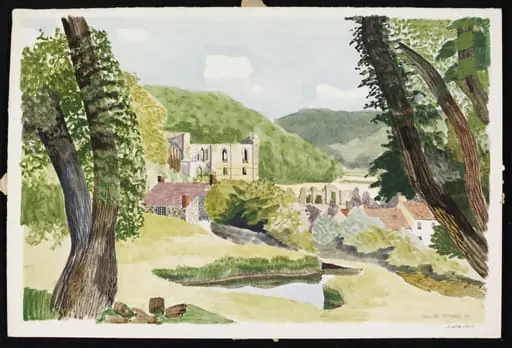
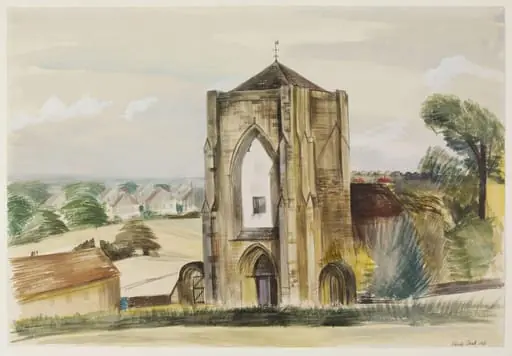
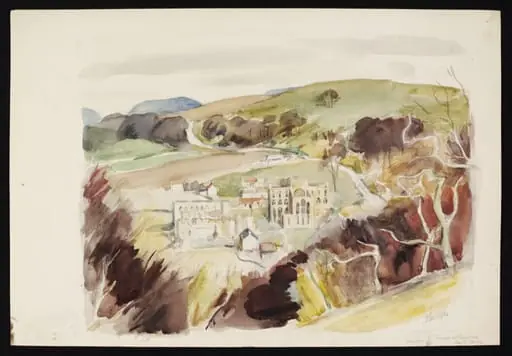
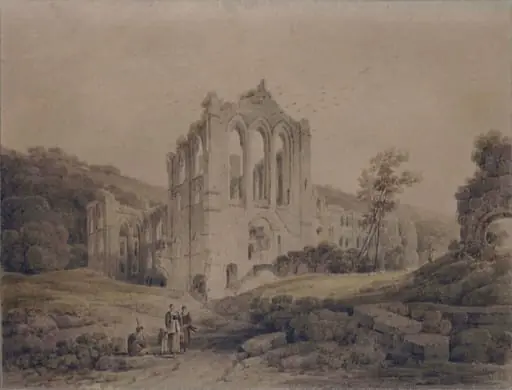
Created in 1940, this watercolour portrays the skeletal remains of Rievaulx Abbey, a former Cistercian monastery in North Yorkshire. The composition captures the weathered stone arches and fragmented walls set amid a muted landscape of grass and trees, under a pale sky that lends the scene a quiet, contemplative atmosphere.
Subject & Meaning
The image records the abbey’s ruined architecture, emphasizing the passage of time and the fragility of historic structures. By focusing on the decayed stonework and the faint suggestion of former inhabitants within the arches, the work evokes a sense of loss while also celebrating the enduring presence of the site within the English countryside.
Technique & Style
The artist employs a fluid, translucent wash of pigment, allowing light to glide across the stone surfaces. Loose brushwork softens the edges of the building, merging it into the surrounding foliage and sky. This approach creates a delicate balance between detail and atmosphere, rendering the ruins both tangible and ethereal.
History & Provenance
Commissioned as part of the Recording Britain initiative, the piece was produced under a Ministry of Labour and National Service scheme supported by the Pilgrim Trust. It belongs to a broader corpus of more than 1,500 works generated by 97 artists between 1940 and 1943, aimed at documenting Britain’s cultural landscape during wartime.
Context
The Recording Britain project sought to preserve visual records of sites deemed vulnerable to wartime alteration or destruction. Rievaulx Abbey, already a historic ruin, was included to ensure its form was captured for posterity, reflecting the government's effort to safeguard national heritage amid the upheavals of the Second World War.
Artist & collection

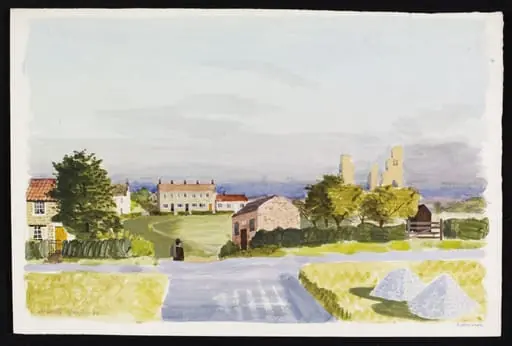 Sheriff Hutton; view over the plain of York, with York Minster in the distance
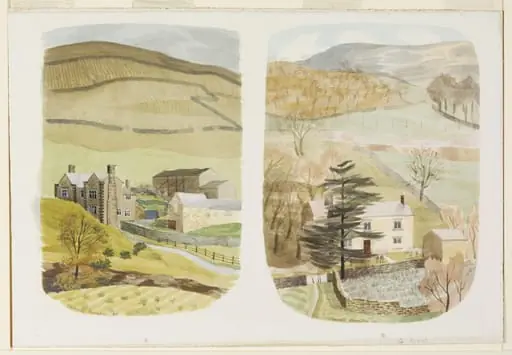 Cox's Farm, and White House, Ashopton
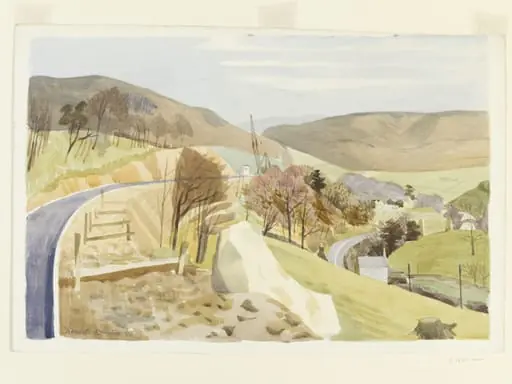 Ashopton, from the New Road
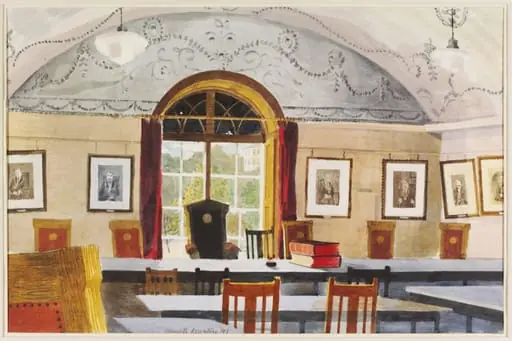 Council Chamber, Municipal Offices, Bangor, Caernarvonshire
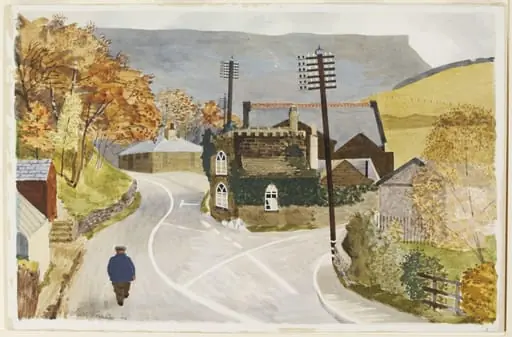 Old Toll Bar House, Ashopton
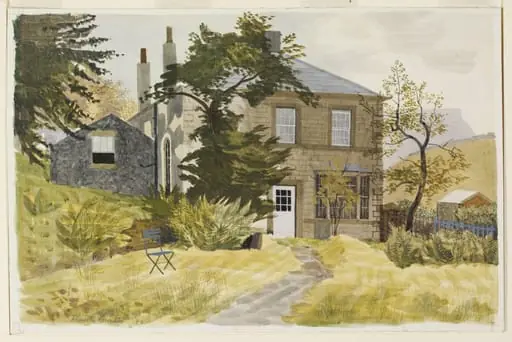 Ashopton Inn, showing Bamford Edge
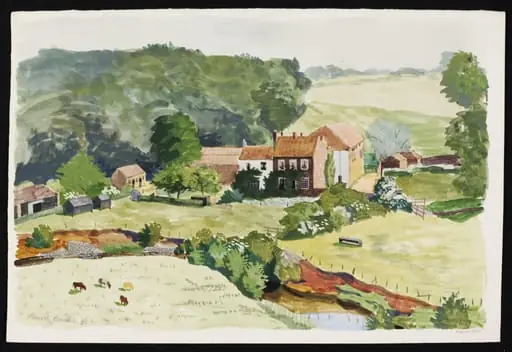 The Mill, Crathorne
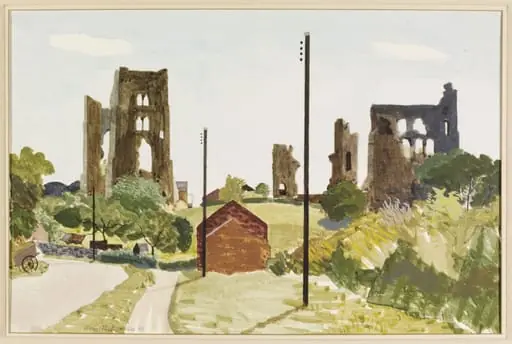 The Castle, Sheriff Hutton