Artwork
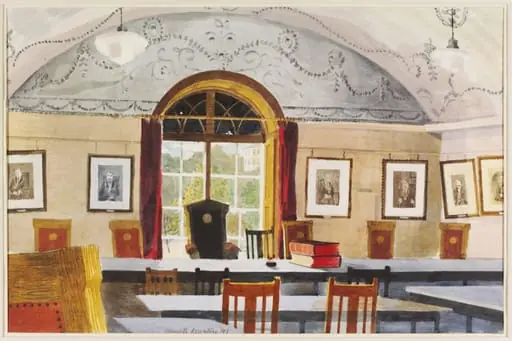
Interior of the Friends Meeting House, Great Bardfield
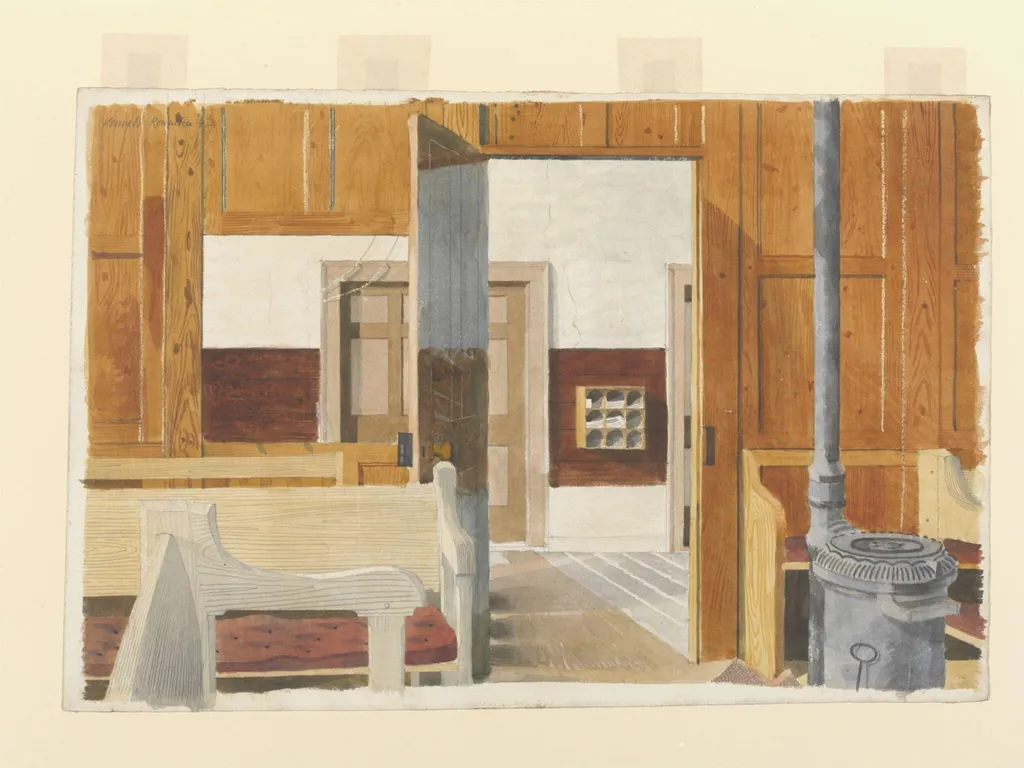
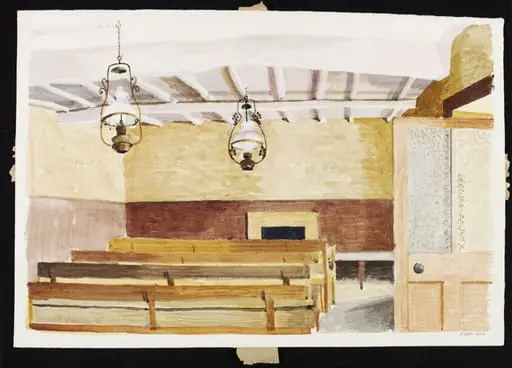
Interior of the Friends Meeting House, Great Bardfield is a watercolor work on paper by the Social Realist artist Rowntree. It dates from 1942 and is held in the collection of the Victoria and Albert Museum.
About this work
Overview
Its quiet composition reflects the initiative’s goal of preserving everyday architectural character amid the uncertainties of conflict.
Painted in 1942, this watercolour by Rowntree was commissioned as part of the Recording Britain project, a wartime effort to visually archive structures deemed culturally valuable. The work captures the interior of the Friends Meeting House in Great Bardfield, a Quaker place of worship. Its quiet composition reflects the initiative’s goal of preserving everyday architectural character amid the uncertainties of conflict.
Subject & Meaning
The scene portrays a modest, unadorned meeting room with wooden walls, two simple benches, and a single red cushion. An open doorway leads to a dimmer corridor, suggesting movement beyond the frame. The absence of figures and the soft light evoke stillness, aligning with Quaker values of introspection and simplicity. The gray pipe rising from the floor hints at functional, unembellished utility, reinforcing the space’s humble purpose.
Technique & Style
Rowntree employed transparent watercolour washes to achieve a luminous, airy effect. Delicate brushwork defines the grain of the wood and the texture of the cushion, while the warm light is suggested through subtle tonal shifts rather than bold highlights. The medium’s inherent softness enhances the sense of quietude, allowing the architecture to speak without embellishment or dramatic contrast.
History & Provenance
The painting was completed during Rowntree’s participation in the Recording Britain scheme, which commissioned artists to document at-risk or representative sites across the British Isles. Signed and dated by the artist, it entered institutional collections following the project’s conclusion. Its survival reflects the initiative’s success in preserving visual records of vernacular architecture during a period of widespread change.
Context
Created during the Second World War, the work emerged from a national effort to safeguard cultural memory against potential loss from bombing or neglect. The Friends Meeting House, like many non-conformist spaces, represented a quiet continuity in English life. Rowntree’s focus on such unassuming interiors countered the era’s emphasis on grandeur, highlighting instead the dignity of ordinary places.
Legacy
The painting remains a quiet testament to the Recording Britain project’s mission. It contributes to a broader archive of wartime documentation that values everyday architecture over monuments. Rowntree’s restrained approach continues to inform how such spaces are visually understood—not as relics, but as lived environments shaped by routine and reverence.
Artist & collection

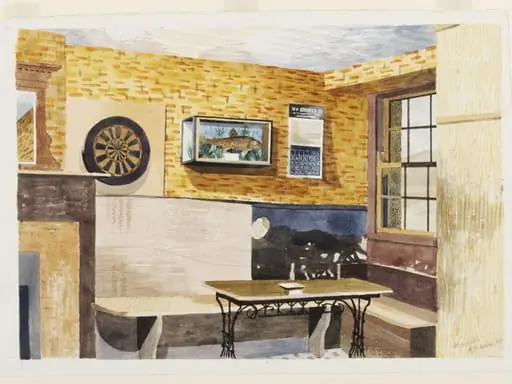 The Smoke Room, Ashopton Inn
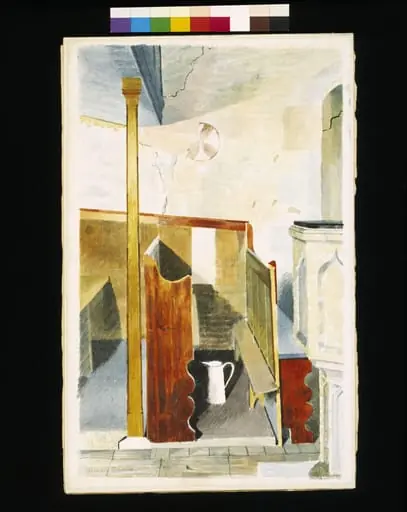 Interior of SS Peter and Paul, Little Saling, Essex
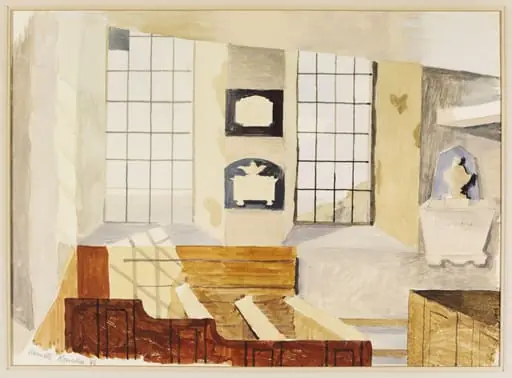 Interior of St. Mary's Church, Whitby
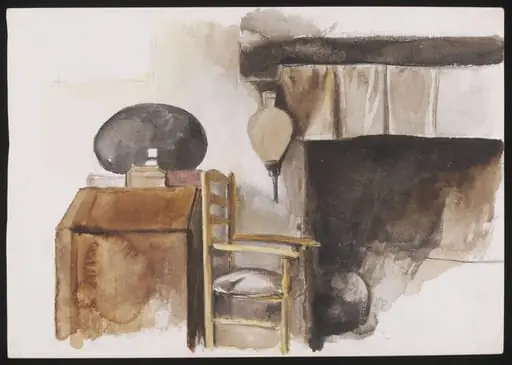 Study of a fireplace, a writing desk and a rush-seated ladderback chair
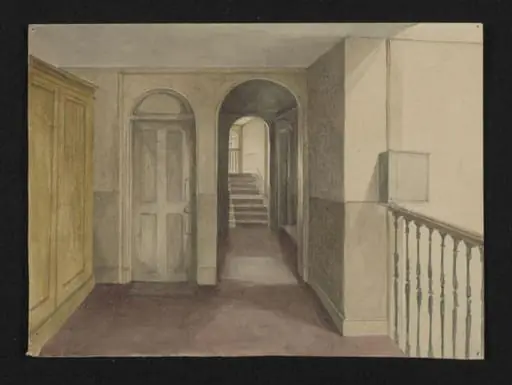 Untitled
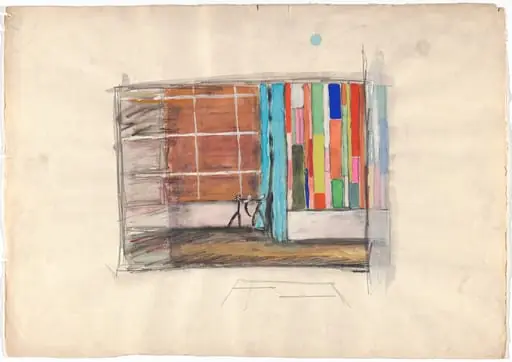 Untitled
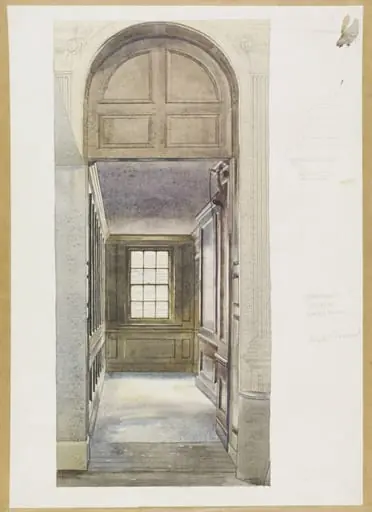 A panelled passage-way, Geffrye's Museum, Shoreditch
 Sisäkuva pohjalaisesta tuvasta
 Untitled
 Blore-Ray Church in Staffordshire
 A Welsh dresser
 Interior of the Friends' Meeting House, Laskill, Ryedale