Artwork
Detail of Ceiling at Gwydir Uchar Chapel, Llanrwst, Caernarvonshire
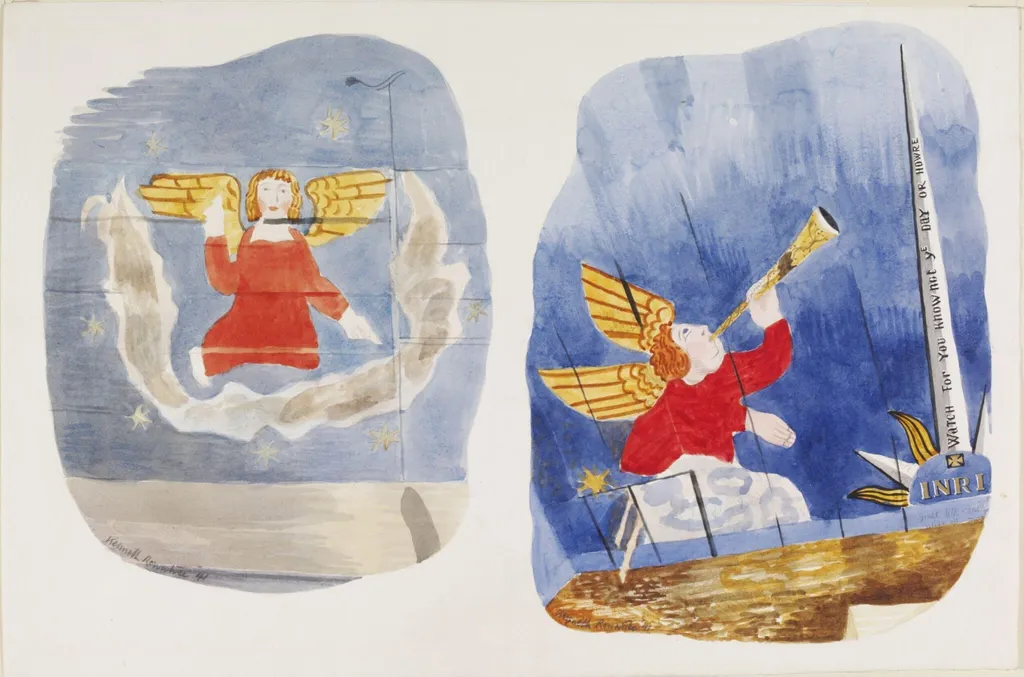
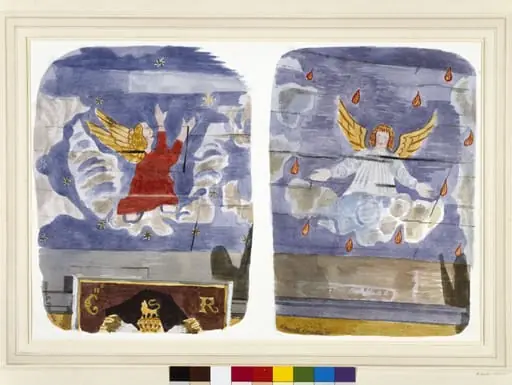
Detail of Ceiling at Gwydir Uchar Chapel, Llanrwst, Caernarvonshire is a watercolor work on paper by the Arts and Crafts movement artist Kenneth Rowntree. It dates from 1941 and is held in the collection of the Victoria and Albert Museum.
About this work
Overview
Executed as part of the *Recording Britain* initiative, it preserves a historic interior threatened by wartime disruption and changing cultural priorities.
This watercolor by Kenneth Rowntree, created in 1941, captures a fragment of the ceiling decoration in Gwydir Uchaf Chapel, North Wales. Executed as part of the *Recording Britain* initiative, it preserves a historic interior threatened by wartime disruption and changing cultural priorities. The work is a faithful record of the chapel’s original 17th-century imagery, rendered in the artist’s distinctive, simplified style using transparent washes and clear outlines.
Subject & Meaning
The scene illustrates the descent of the Holy Spirit at Pentecost, drawn from the chapel’s original religious iconography. Two angels, clad in red robes and golden wings, float above calm waters, one sounding a trumpet and the other plucking a harp. Above them, small stars dot a deep blue sky, evoking divine presence. The inclusion of 'INRI' on a nearby banner references Christ’s crucifixion, linking Pentecost to the broader Christian narrative of sacrifice and revelation.
Technique & Style
Rowntree employed a flat, non-perspectival approach, rejecting illusionistic depth in favor of decorative clarity. His watercolor technique relies on thin, layered washes to build color intensity without heavy shading. The forms are outlined with precision, and the gold stars and wing details are subtly suggested rather than modeled. The composition emphasizes pattern and symbolic presence over naturalism, aligning with the original ceiling’s medieval-inspired aesthetic.
History & Provenance
The painting was produced in 1941 under the *Recording Britain* project, commissioned by the Pilgrim Trust and directed by Sir Kenneth Clark. Rowntree was one of many artists tasked with documenting at-risk architectural and artistic heritage during World War II. This watercolor was made on-site at Gwydir Uchaf Chapel, preserving a visual record of its ceiling before potential damage or decay. It remains part of the Victoria and Albert Museum’s collection from the project’s archive.
Context
The original 17th-century ceiling paintings in Gwydir Uchaf Chapel reflect a blend of local Welsh craftsmanship and continental religious imagery, likely influenced by post-Reformation devotional art. Rowntree’s watercolor does not reinterpret but records this heritage, capturing its stylized angels and symbolic elements as they appeared in the early 20th century. The *Recording Britain* initiative emerged as a cultural safeguard, responding to fears that wartime neglect and modernization would erase such regional artifacts.
Legacy
Rowntree’s watercolor endures as a key document in the *Recording Britain* archive, offering insight into how mid-20th-century artists approached historical preservation. Its restrained palette and deliberate flatness reflect both the limitations of watercolor and a conscious stylistic choice to honor the original ceiling’s non-naturalistic character. Today, it serves as a reference for conservators and historians studying Welsh ecclesiastical art and wartime cultural efforts.
Artist & collection
Artist
Kenneth Rowntree painted quiet British places in watercolour around 1940, from barn-stacked Essex fields to the carved oak pews of Caernarvonshire chapels.

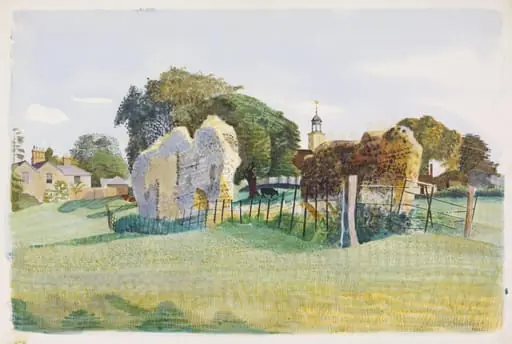 View of the Ruins of the Cloister, the Belfry of St. Mary's Church, and the Vicarage, Tilty
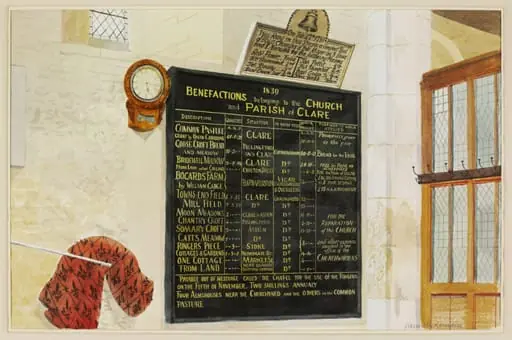 The Bellringer's Chamber, SS. Peter and Paul Church, Clare
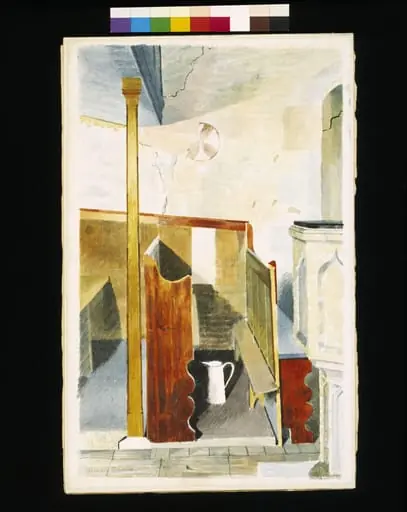 Interior of SS Peter and Paul, Little Saling, Essex
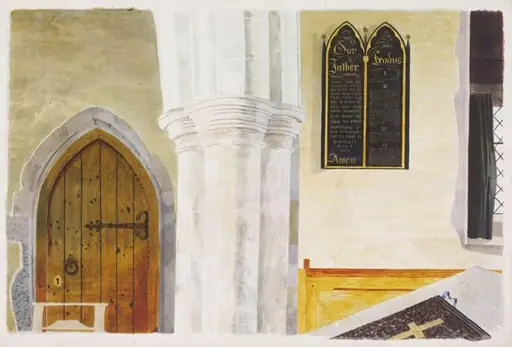 Interior of the Church of St. Mary the Virgin, Lindsell
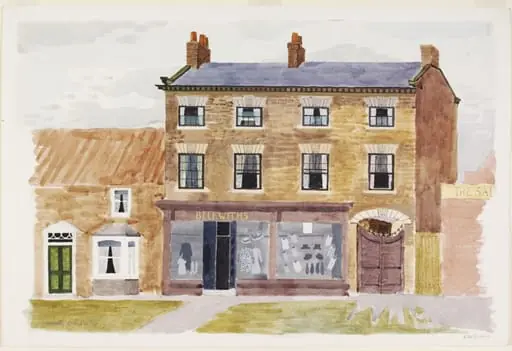 House at Easingwold
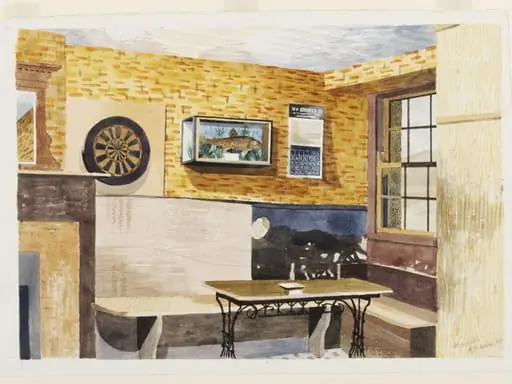 The Smoke Room, Ashopton Inn
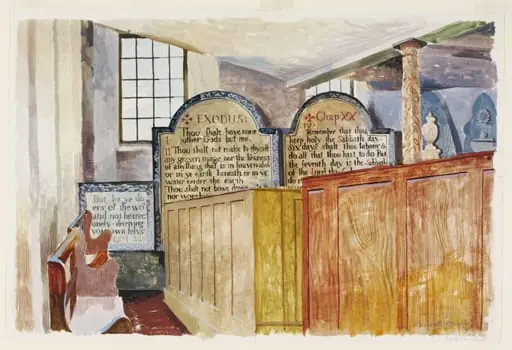 Pews in St Mary's Church, Whitby
 West Front of the Priory Church, Dunstable, Bedfordshire