Artwork
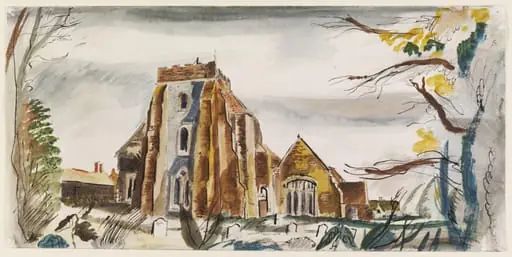
West Front of the Priory Church, Dunstable, Bedfordshire
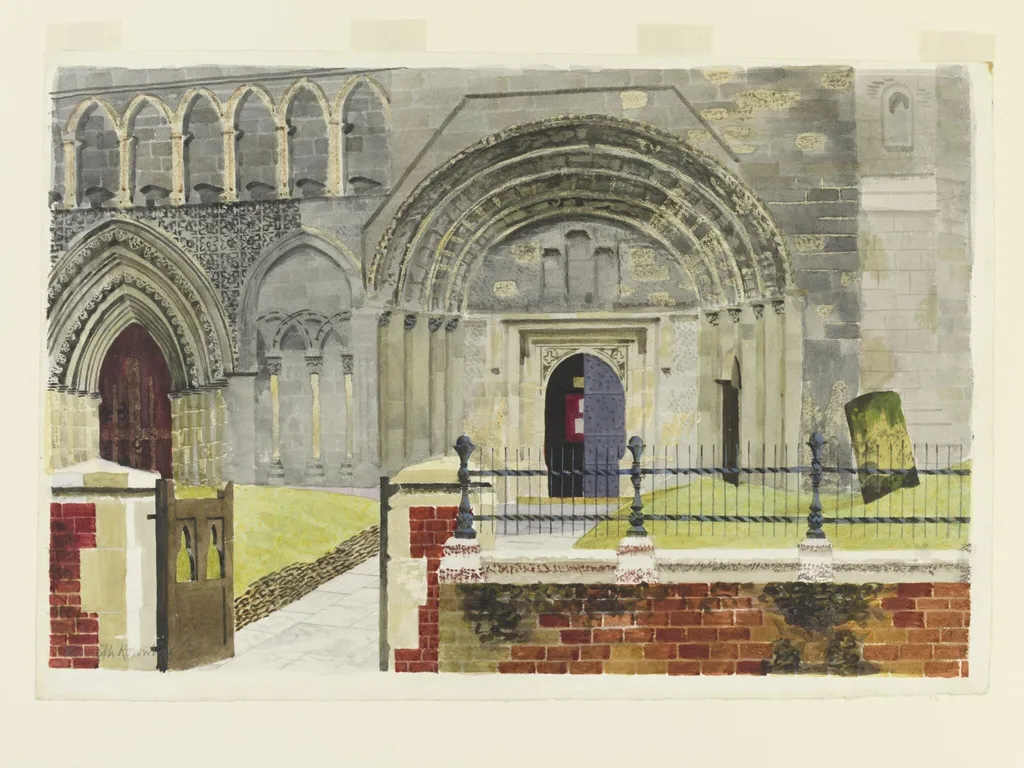
West Front of the Priory Church, Dunstable, Bedfordshire is a watercolor work on paper by the British Romanticist artist Kenneth Rowntree. It dates from 1941 and is held in the collection of the Victoria and Albert Museum. This 1941 watercolour captures the west facade of the Priory Church of St Peter and St Paul in Dunstable, Bedfordshire.
About this work
Overview
The artist employed delicate washes to convey the church’s weathered stonework and the quiet, overgrown churchyard surrounding it.
This 1941 watercolour captures the west facade of the Priory Church of St Peter and St Paul in Dunstable, Bedfordshire. Executed during the Second World War, it was produced as part of the Recording Britain project, which sought to visually archive the nation’s architectural heritage amid wartime threats. The artist employed delicate washes to convey the church’s weathered stonework and the quiet, overgrown churchyard surrounding it.
Subject & Meaning
The composition centers on the church’s west front, where Norman and Early English Gothic elements meet in a layered facade. A central arched doorway, flanked by smaller arches and supporting columns, anchors the scene. The inclusion of leaning tombstones, a low brick wall, and a distant gate suggests a space both sacred and worn by time, evoking continuity amid disruption rather than grandeur or celebration.
Technique & Style
The artist used soft, translucent watercolour washes to render the stone’s muted greys and buffs, allowing the texture of weathering to emerge subtly. Grassy mounds are suggested with light greens and ochres, while the brick wall and fence are rendered in restrained reds and browns. Delicate linework defines architectural details without sharpness, creating a quiet, contemplative tone consistent with the project’s documentary aim.
History & Provenance
Painted in 1941, the work was commissioned under the Recording Britain initiative, funded by the Pilgrim Trust and directed by Sir Kenneth Clark. The project enlisted artists to record landscapes and buildings deemed at risk from bombing or neglect. This watercolour, signed and dated by the artist, entered the Victoria and Albert Museum’s collection as part of the project’s archival legacy.
Context
During the Second World War, Britain faced widespread destruction of historic sites. The Recording Britain project responded by mobilizing artists to document vernacular architecture and rural scenes before they vanished. Dunstable’s priory church, though not in immediate danger, represented a fading medieval landscape—its quiet decay symbolizing the fragility of cultural memory in wartime.
Legacy
The watercolour remains part of a broader visual archive that preserved Britain’s architectural character during a period of upheaval. Its restrained aesthetic and attention to ordinary details—lichen-darkened stones, worn brickwork, overgrown grass—offer a quiet counterpoint to wartime propaganda. Today, it serves as a historical record of a place’s physical presence at a critical moment in its long history.
Artist & collection
Artist
Kenneth Rowntree painted quiet British places in watercolour around 1940, from barn-stacked Essex fields to the carved oak pews of Caernarvonshire chapels.

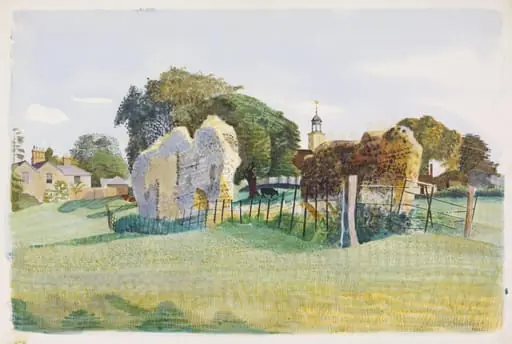 View of the Ruins of the Cloister, the Belfry of St. Mary's Church, and the Vicarage, Tilty
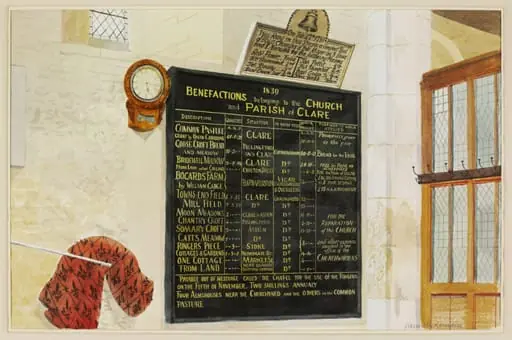 The Bellringer's Chamber, SS. Peter and Paul Church, Clare
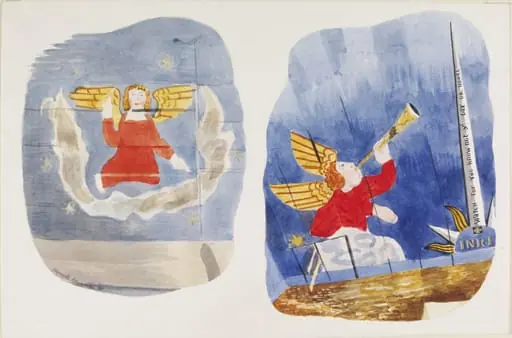 Detail of Ceiling at Gwydir Uchar Chapel, Llanrwst, Caernarvonshire
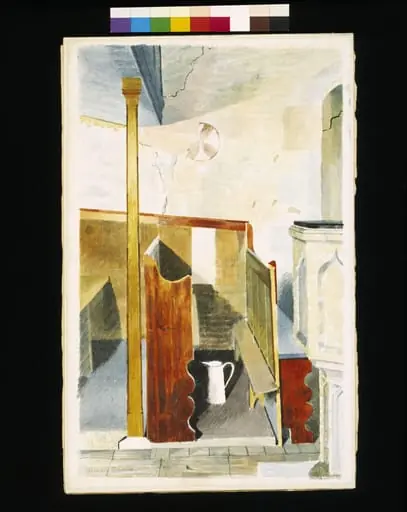 Interior of SS Peter and Paul, Little Saling, Essex
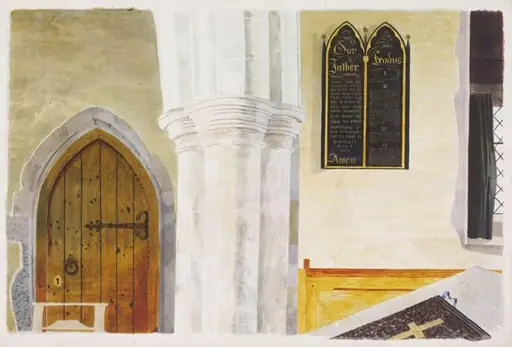 Interior of the Church of St. Mary the Virgin, Lindsell
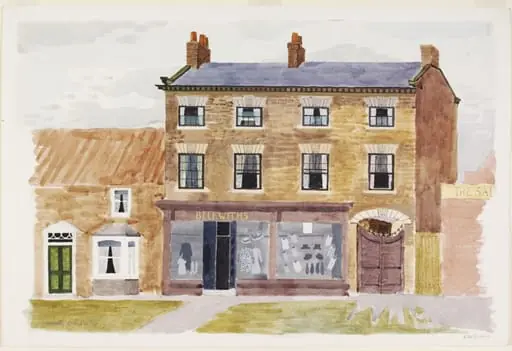 House at Easingwold
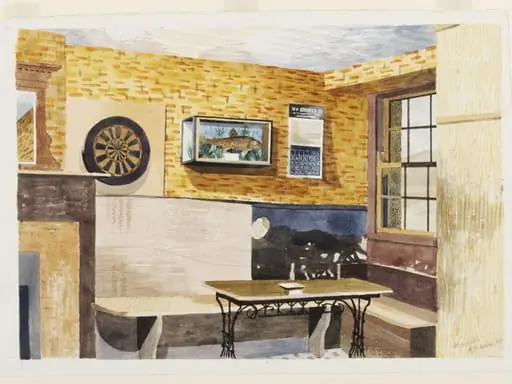 The Smoke Room, Ashopton Inn
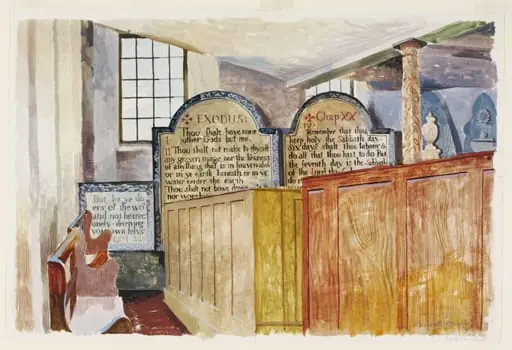 Pews in St Mary's Church, Whitby
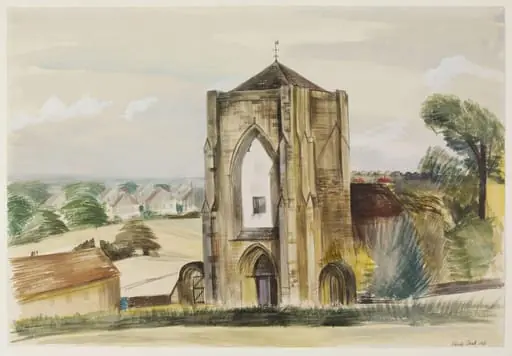 Beauchief Abbey
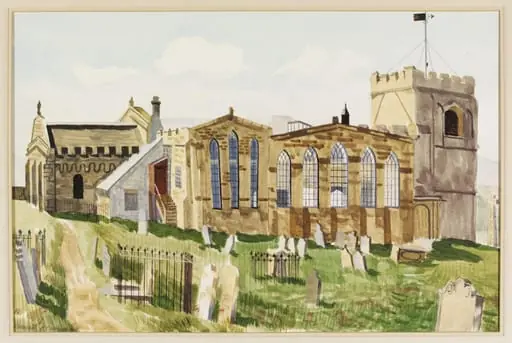 St. Mary's, Whitby - Exterior
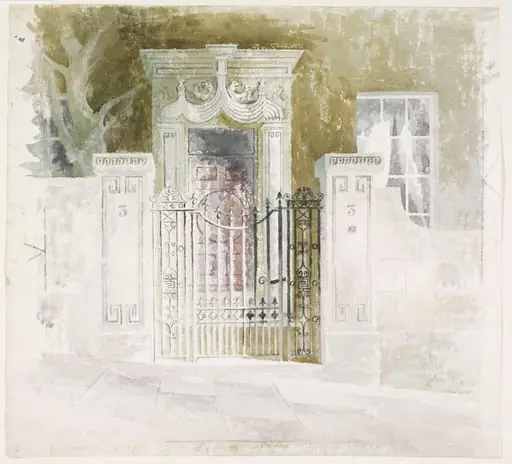 3, Bathwick Hill, Bath
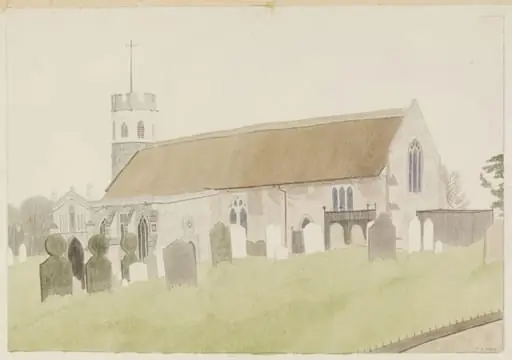 St. Peter's Church, Theberton
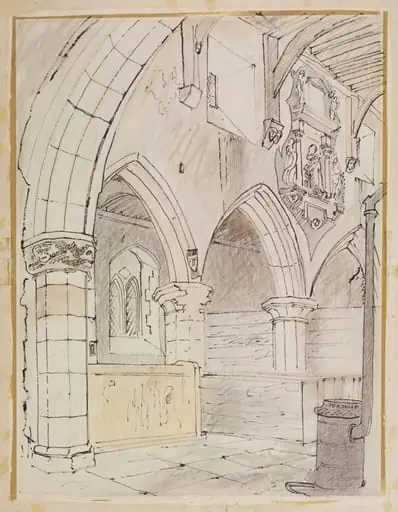 Interior of the Church of St. Denis, Faxton
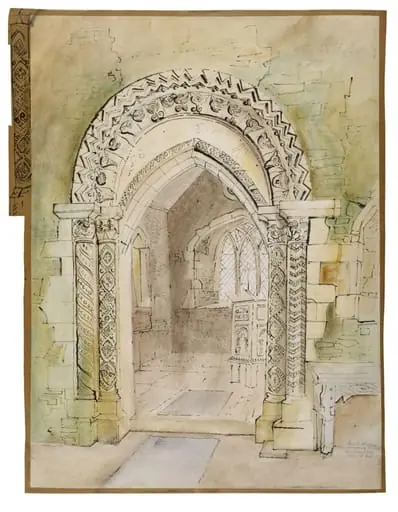 Chancel Arch, St. Peter's, Stanton Low, Buckinghamshire
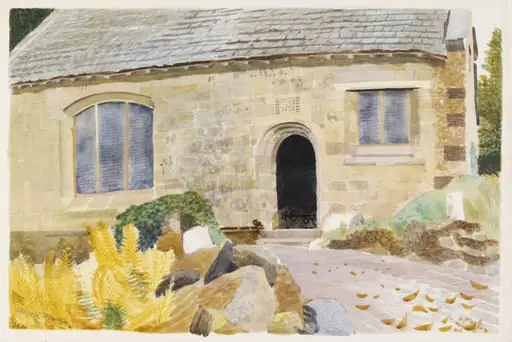 Gwydir Uchaf - the Chapel built by Sir Richard Wynne, 1673. Caernarvonshire
 St. Osyth's Church
 East Bergholt Church: view from the east