Artwork
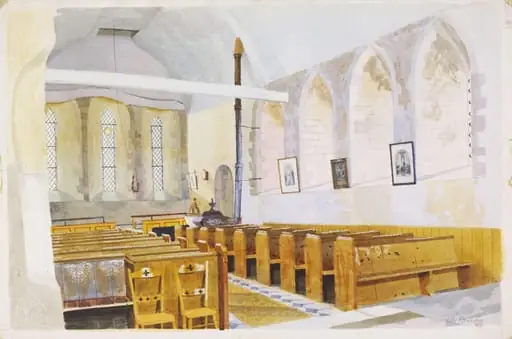
Interior of the Church of St. Mary the Virgin, Lindsell
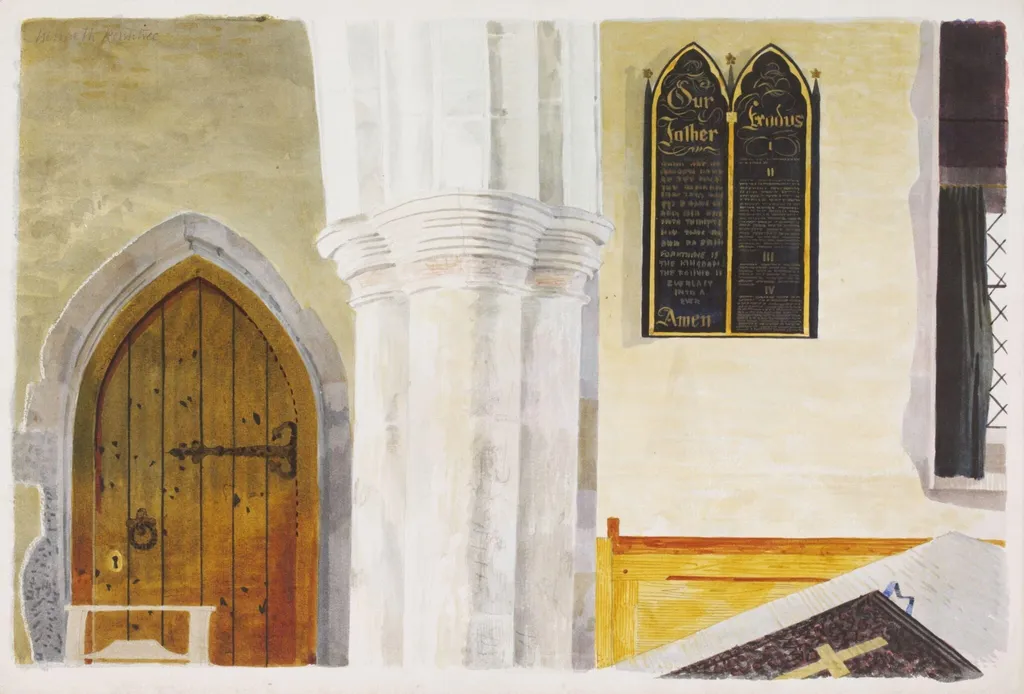
Interior of the Church of St. Mary the Virgin, Lindsell is a watercolor work on paper by the Social Realist artist Kenneth Rowntree. It dates from 1942 and is held in the collection of the Victoria and Albert Museum.
About this work
This watercolour painting is titled Interior of the Church of St. Mary the Virgin, Lindsell. It's a depiction of a church interior.
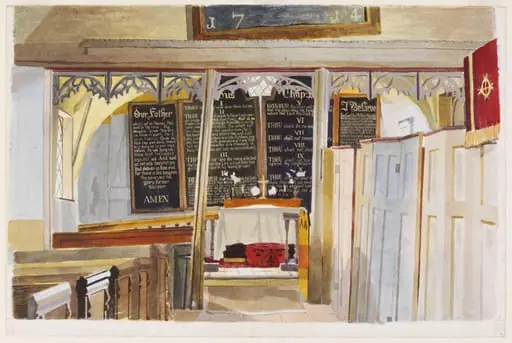
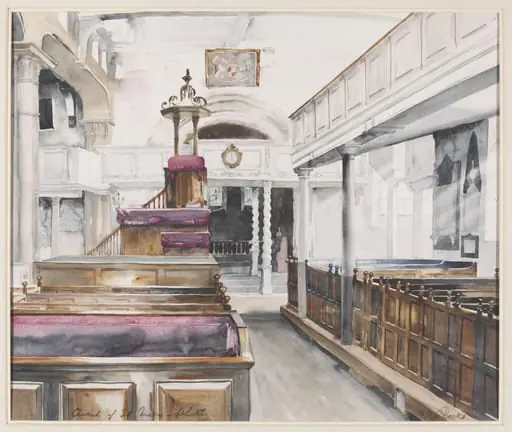
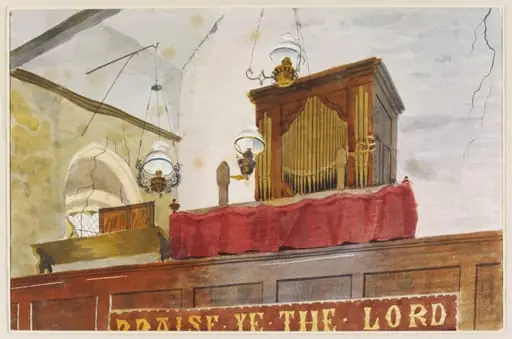
The painting was created by Kenneth Rowntree around 1942 as part of the Recording Britain scheme. It's one of ten views of churches and chapels in Essex.
To learn more about the techniques used in this painting, consider looking up the technique of sfumato.
Overview
Kenneth Rowntree’s watercolour, Interior of the Church of St. Mary the Virgin, Lindsell, dates to about 1942. It forms part of a series of ten ecclesiastical interiors he produced for the Recording Britain project, which aimed to document threatened historic sites across the country.
Subject & Meaning
The work captures the nave of the parish church at Lindsell, emphasizing the vaulted space and the gilded lettering of the Lord’s Prayer that adorns the walls. Rowntree, a Quaker, could not recite the prayer himself, so he reproduced the text as a visual object, highlighting the tension between personal belief and public heritage.
Technique & Style
Executed in transparent watercolour, the painting employs subtle gradations of tone reminiscent of sfumato, allowing light to diffuse across stone arches and illuminated manuscripts. Rowntree’s characteristic blend of precise observation and a slightly surreal atmosphere creates a sense of quiet reverence within the architectural setting.
History & Provenance
Commissioned under the wartime Recording Britain scheme, the piece was intended to preserve visual records of vulnerable buildings. After its completion, the work entered the collection of the scheme’s archive and has remained in public custody, serving as a reference for both scholars and conservators.
Context
The series of ten Essex churches documented by Rowntree reflects a broader effort during World War II to safeguard cultural memory against bomb damage and neglect. By focusing on interior spaces, the artist highlighted the liturgical and communal functions that define English parish churches.
Artist & collection
Artist
Kenneth Rowntree painted quiet British places in watercolour around 1940, from barn-stacked Essex fields to the carved oak pews of Caernarvonshire chapels.

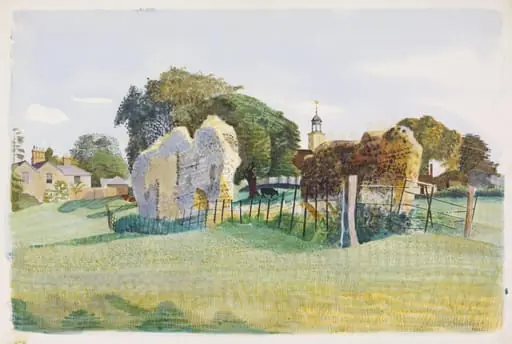 View of the Ruins of the Cloister, the Belfry of St. Mary's Church, and the Vicarage, Tilty
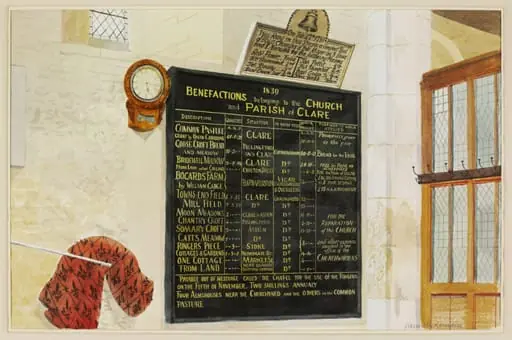 The Bellringer's Chamber, SS. Peter and Paul Church, Clare
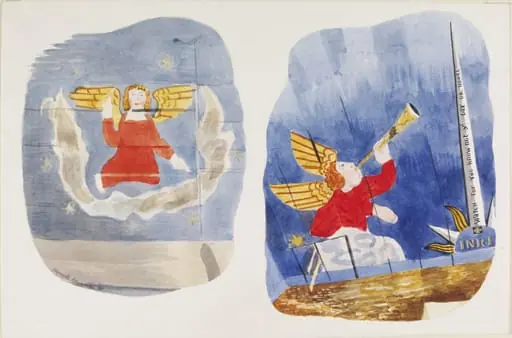 Detail of Ceiling at Gwydir Uchar Chapel, Llanrwst, Caernarvonshire
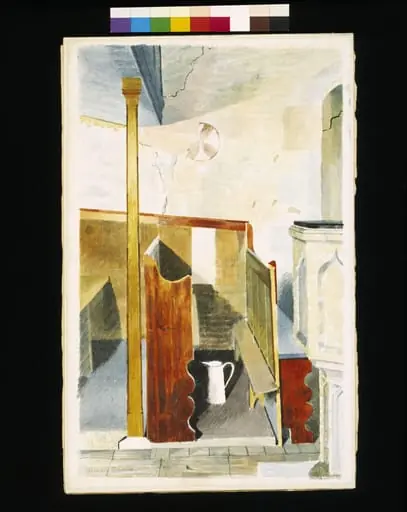 Interior of SS Peter and Paul, Little Saling, Essex
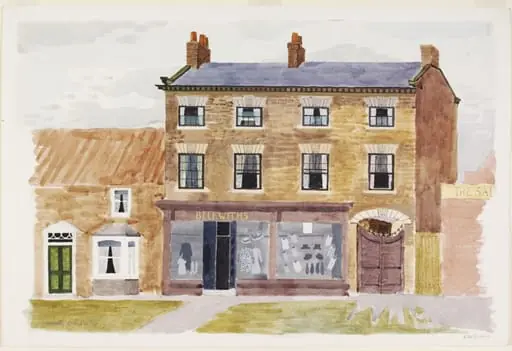 House at Easingwold
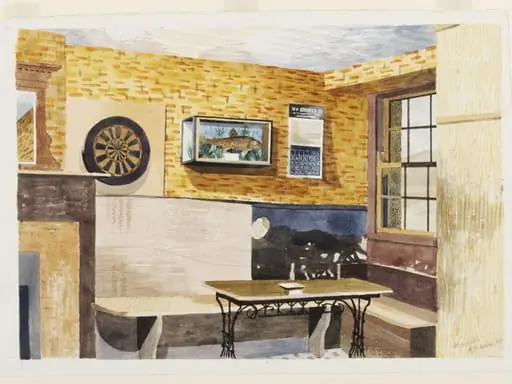 The Smoke Room, Ashopton Inn
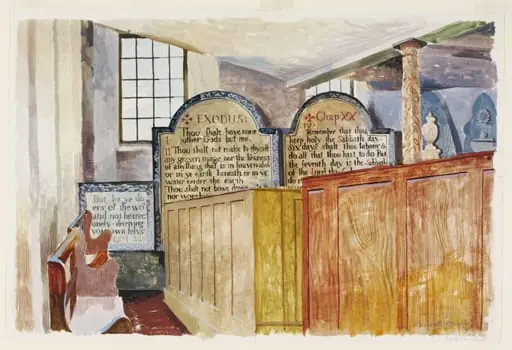 Pews in St Mary's Church, Whitby
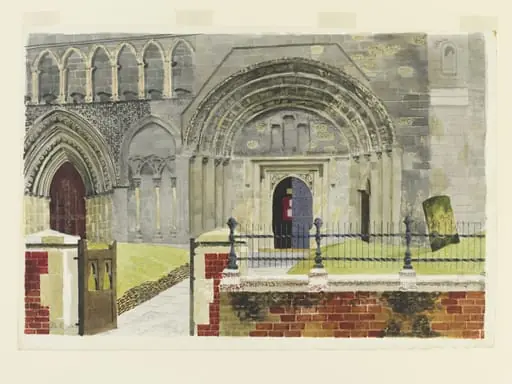 West Front of the Priory Church, Dunstable, Bedfordshire