Artwork
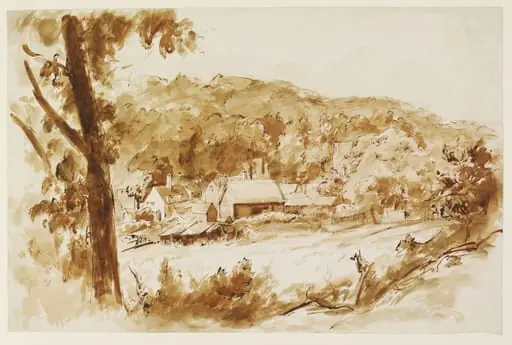
Princes Farm, Fingest
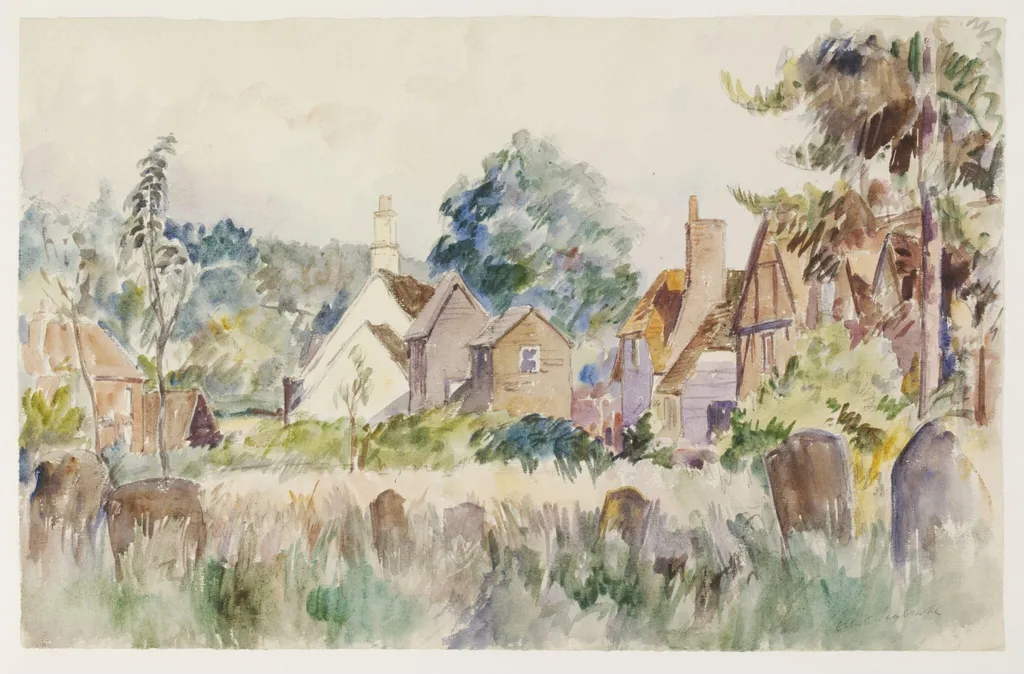
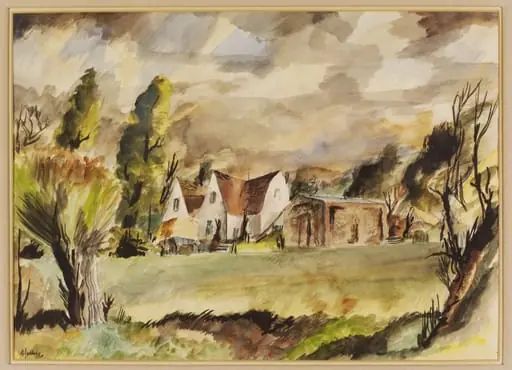
Princes Farm, Fingest is a watercolor work on paper by Seabrooke. It dates from 1940 and is held in the collection of the Victoria and Albert Museum.
About this work
Overview
The work is signed and dated, aligning with the initiative’s goal of preserving visual records of England’s countryside before potential wartime destruction.
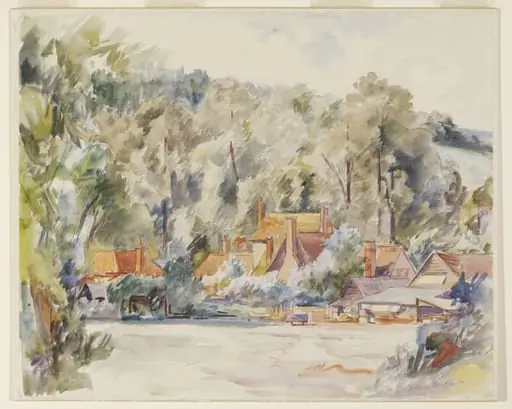
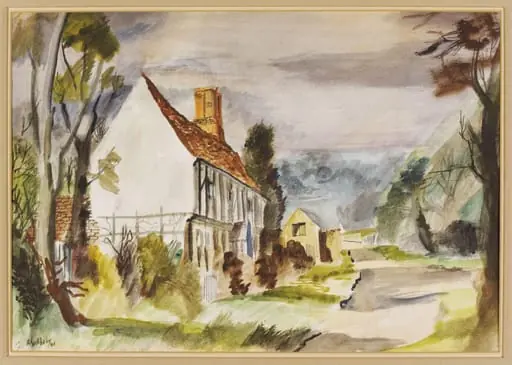
Painted in 1940 by Seabrooke, this watercolour captures a quiet rural scene in Fingest, Buckinghamshire. Executed as part of the 'Recording Britain' project, it documents a pastoral landscape during a time of national uncertainty. The work is signed and dated, aligning with the initiative’s goal of preserving visual records of England’s countryside before potential wartime destruction. Its modest scale and medium reflect the project’s emphasis on accessible, observational art.
Subject & Meaning
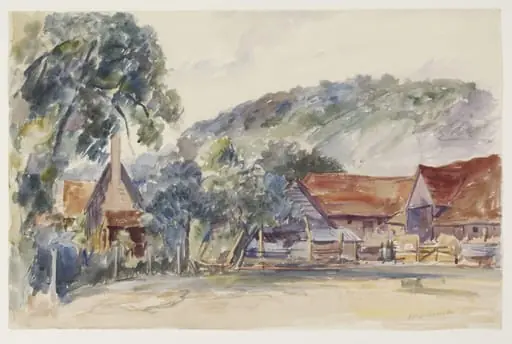
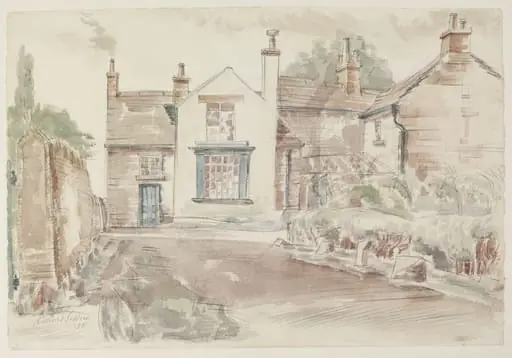
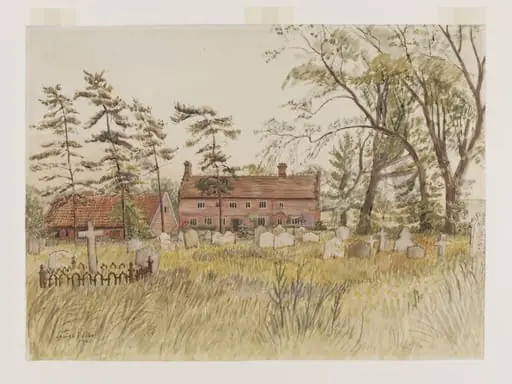
The scene centers on a cluster of farm buildings, including a structure with a tall chimney, set against a backdrop of rolling fields and trees. A stone wall in the foreground frames the view, leading the eye toward the distant structures. Gravestones in the churchyard suggest a quiet, enduring presence of community and memory. The painting conveys a sense of stillness, evoking the quiet resilience of rural life amid the anxieties of war.
Technique & Style
Seabrooke employed transparent watercolour washes to render soft, muted tones across the landscape. The buildings are suggested with gentle gradients rather than sharp outlines, enhancing the atmospheric quality. The foliage and grass are rendered with loose, fluid strokes, while the stone wall adds subtle texture through layered pigments. The composition avoids dramatic contrast, favoring harmony and quiet observation over emotional intensity.
History & Provenance
Created under the 'Recording Britain' initiative, this work was commissioned by the Pilgrim Trust and overseen by Sir Kenneth Clark. The project enlisted 97 artists to document vulnerable rural and urban scenes across England between 1939 and 1942. Seabrooke’s contribution, like others, was intended for archival preservation rather than public exhibition. The painting remains part of the project’s collective archive, held in institutional collections today.
Context
During the early years of the Second World War, fears of aerial bombardment and cultural loss prompted efforts to visually archive Britain’s landscapes. 'Recording Britain' responded to these anxieties by focusing on vernacular architecture, farmland, and churchyards—elements perceived as emblematic of national character. Seabrooke’s depiction of Fingest reflects this mission: a deliberate act of preservation through observation, not heroism or propaganda.
Legacy
The 'Recording Britain' collection endures as a significant historical record of the English countryside during wartime. Seabrooke’s watercolour contributes to a broader visual archive that captures everyday scenes now altered or lost. Though not widely exhibited, such works inform scholarly understanding of how art was mobilized for cultural preservation, offering a quiet counterpoint to wartime narratives of conflict and destruction.
Artist & collection
Artist
This watercolor artist recorded the rolling hills and stone cottages of the Chilterns in the 1940s.