Artwork
Untitled
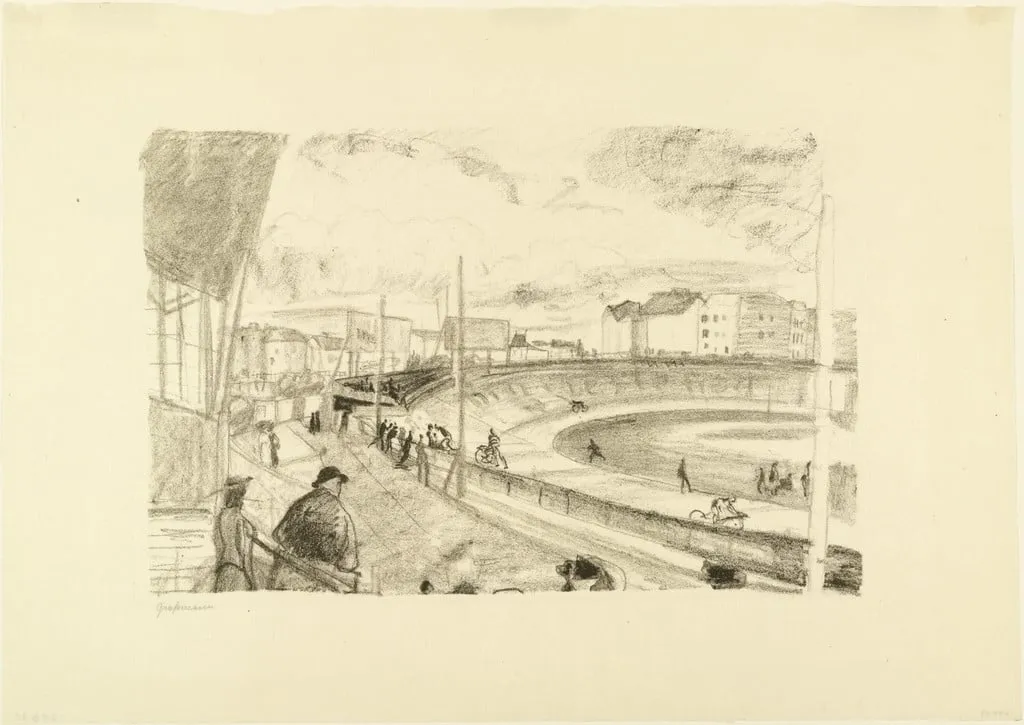
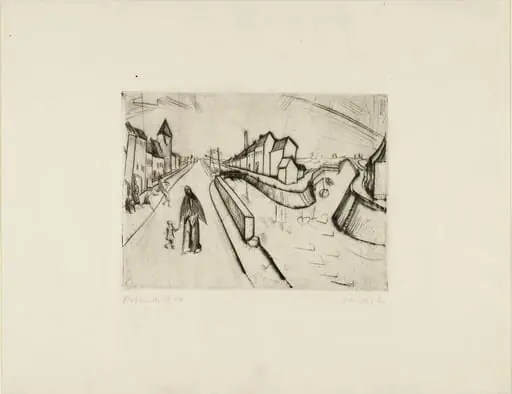
Untitled is an ink print by Rudolf Grossmann. It dates from 1912 and is held in the collection of the Museum of Modern Art.
About this work
Overview
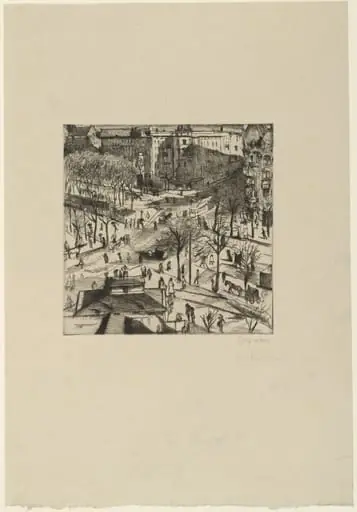
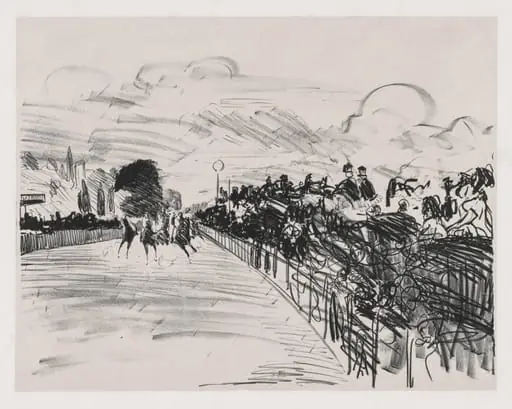
Rudolf Grossmann created this lithograph in 1912, capturing a moment of urban transit. The work is part of The Museum of Modern Art’s collection and exemplifies early 20th-century printmaking practices. Its informal, spontaneous quality suggests an observational sketch rather than a polished composition, reflecting the artist’s interest in everyday motion and public space.
Subject & Meaning
The scene depicts a train station platform crowded with waiting figures, a stationary locomotive, and a few individuals cycling nearby.
The scene depicts a train station platform crowded with waiting figures, a stationary locomotive, and a few individuals cycling nearby. The architecture is minimal, suggesting a common, unremarkable urban setting. The focus on transient movement—pedestrians, cyclists, and the implied arrival of the train—conveys a quiet meditation on the rhythms of modern life, without narrative or emotional emphasis.
Technique & Style
Grossmann employed lithographic crayon to produce rapid, fluid lines that convey energy and immediacy. The sketchy, uneven strokes suggest a direct, on-the-spot rendering, avoiding detail in favor of suggestive form. Light washes and sparse shading define the sky and structures, reinforcing the sense of a fleeting moment captured with minimal intervention.
History & Provenance
Created in 1912, the work entered The Museum of Modern Art’s collection as part of its early commitment to documenting modern graphic art. Its acquisition reflects the institution’s interest in works that bridge drawing and printmaking, particularly those that capture contemporary life with informal precision. No earlier provenance is publicly documented.
Context
In early 1910s Europe, urbanization and expanding rail networks reshaped daily experience. Artists like Grossmann turned to printmaking to record these changes with speed and accessibility. Lithography, allowing direct drawing on stone, suited this impulse. The work aligns with broader trends in German and Austrian art that valued spontaneity over academic finish.
Legacy
Though not widely exhibited, the piece contributes to understanding how printmakers of the period engaged with modernity through informal observation. Its presence in MoMA’s collection situates it within a lineage of artists who used lithography to document the pulse of city life, influencing later generations interested in the aesthetics of the everyday.
Artist & collection

Artist
Rudolf Grossmann (1882–1942), known by his pseudonym Pierre Ramus, was an Austrian anarchist and pacifist.