Artwork
Untitled
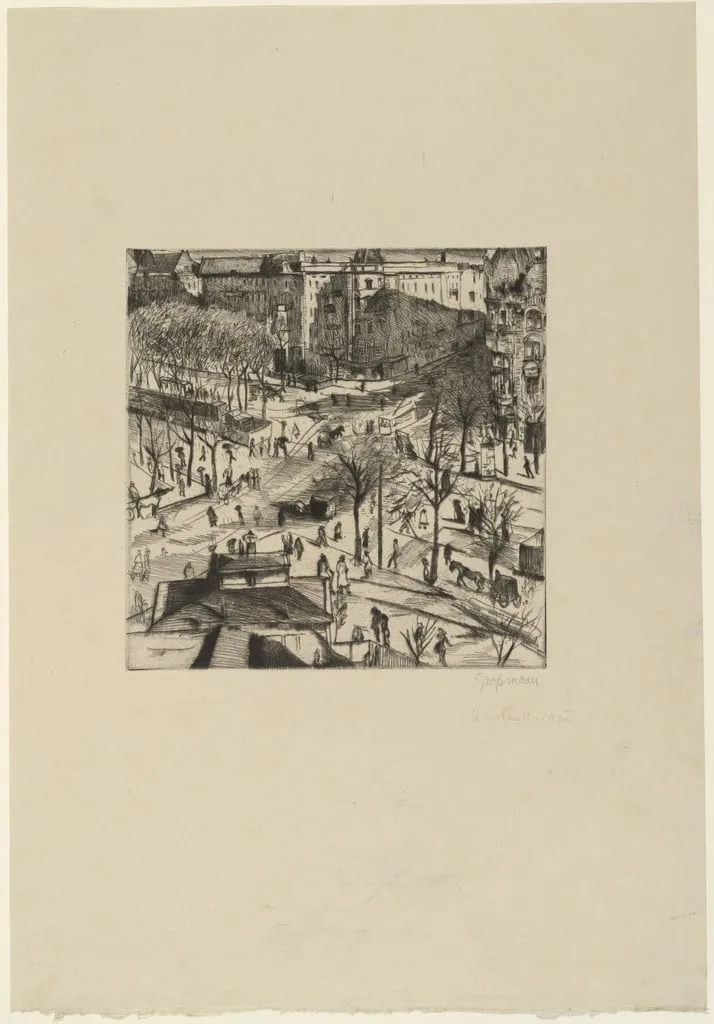
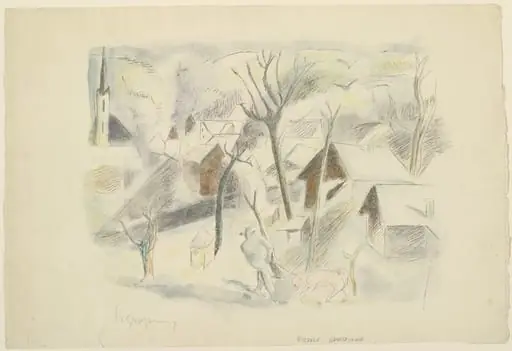
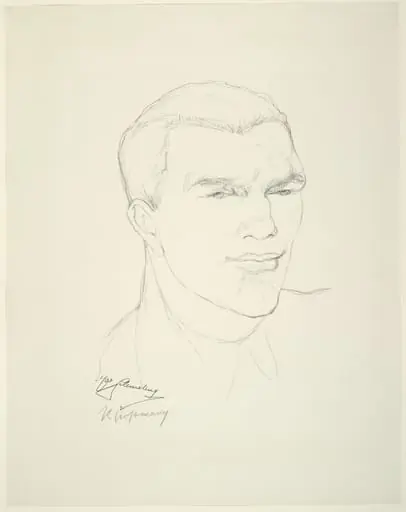
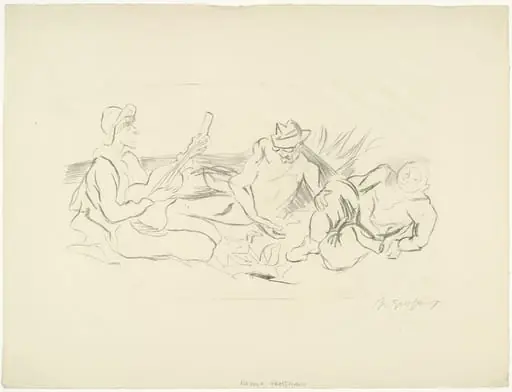
Untitled is an ink print by Rudolf Grossmann. It dates from 1920 and is held in the collection of the Museum of Modern Art.
About this work
Overview
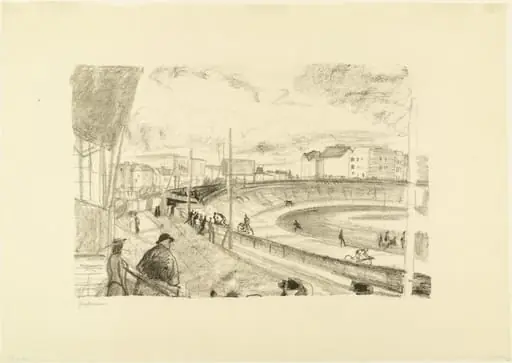
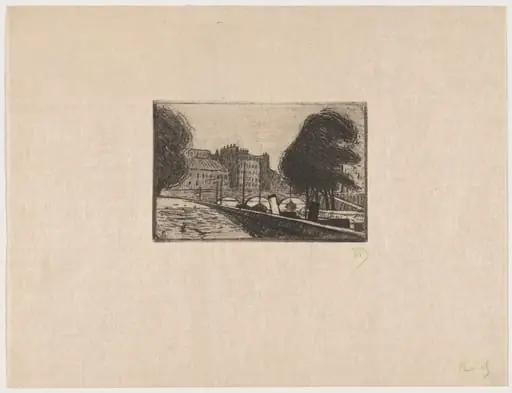
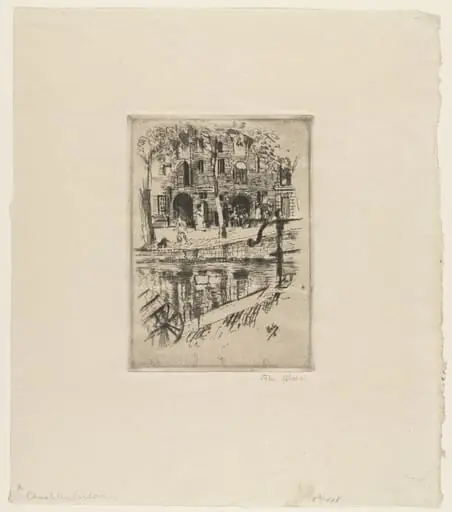
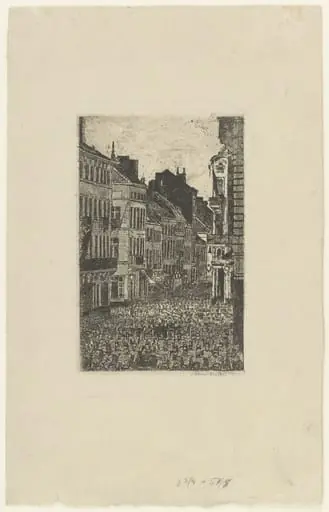
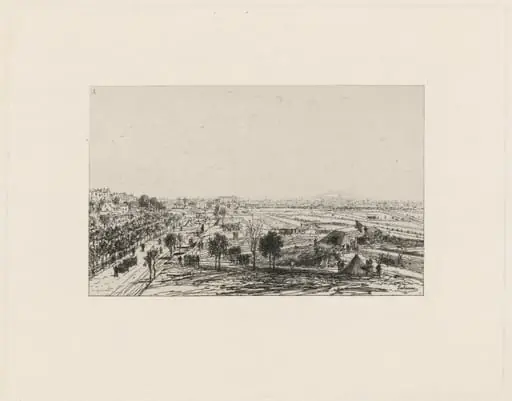
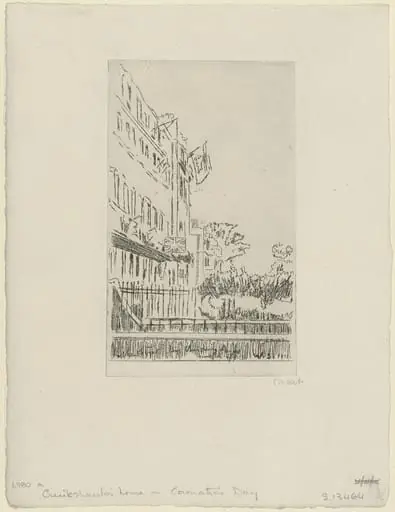
Created in 1920, this print by Rudolf Grossmann combines etching and drypoint techniques to depict an urban street scene. It is part of the collection at The Museum of Modern Art. The work is rendered entirely in black and white, capturing movement and structure through fine, incised lines and varied tonal contrasts. Its composition conveys a sense of daily life without color or overt narrative.
Subject & Meaning
The absence of identifiable landmarks suggests a generalized urban environment, emphasizing rhythm and motion over specific location.
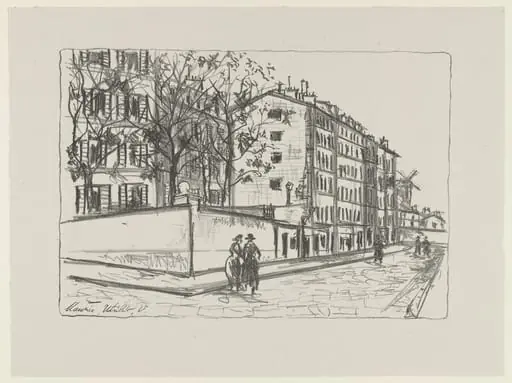
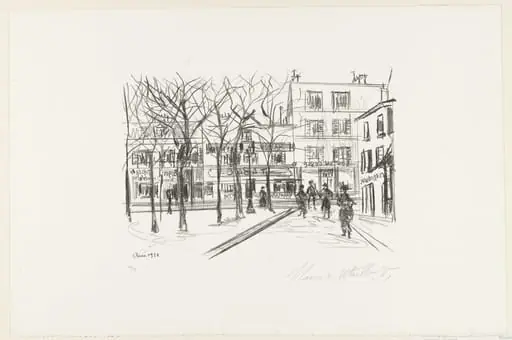
The scene portrays a bustling city thoroughfare with pedestrians, a horse-drawn cart, and modest architecture. Trees frame the space, while a bridge spans the lower edge, anchoring the composition. The absence of identifiable landmarks suggests a generalized urban environment, emphasizing rhythm and motion over specific location. The work reflects the quiet energy of early 20th-century street life.
Technique & Style
Grossmann employed etching and drypoint to achieve fine, expressive lines and rich textures. Drypoint’s burr creates soft, velvety darks, while etching provides crisp contours. Shading is built through layered incisions, not washes, giving depth to figures and buildings. The high contrast between light and dark enhances spatial recession, and the dense line work conveys a sense of crowded vitality.
History & Provenance
The print was made in 1920, during a period of artistic experimentation in Central Europe. It entered The Museum of Modern Art’s collection through established acquisition channels, likely as part of early 20th-century print holdings. No documented exhibition history or prior ownership is publicly recorded beyond its current institutional custody.
Context
Produced in the aftermath of World War I, the work aligns with European printmakers who turned to everyday scenes as a response to social upheaval. Unlike expressionist extremes, Grossmann’s approach is observational, rooted in the quiet realism of urban observation. Etching and drypoint were favored by artists seeking intimate, handcrafted alternatives to mass-produced imagery.
Legacy
Though not widely reproduced, the print exemplifies the continued relevance of intaglio techniques in modern printmaking. It contributes to the understanding of how artists used traditional methods to capture modern life without romanticism or abstraction. Its presence in MoMA’s collection affirms its role in documenting early 20th-century print culture.
Artist & collection

Artist
Rudolf Grossmann (1882–1942), known by his pseudonym Pierre Ramus, was an Austrian anarchist and pacifist.