Artwork
Millbank
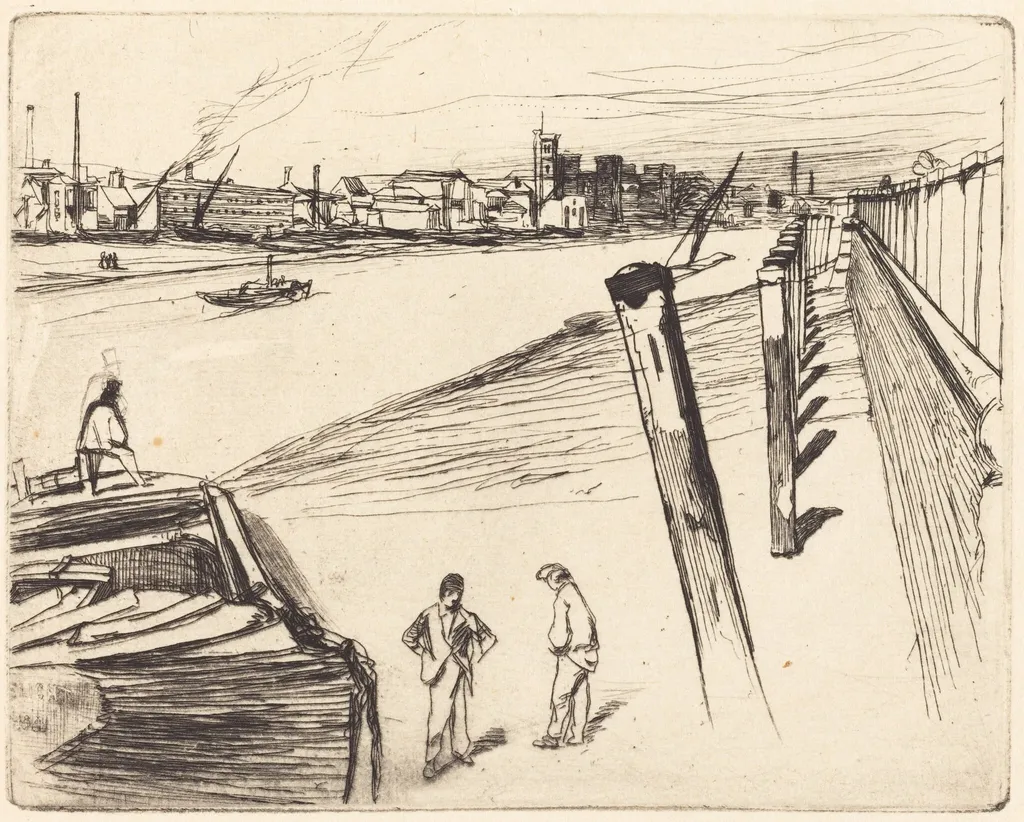
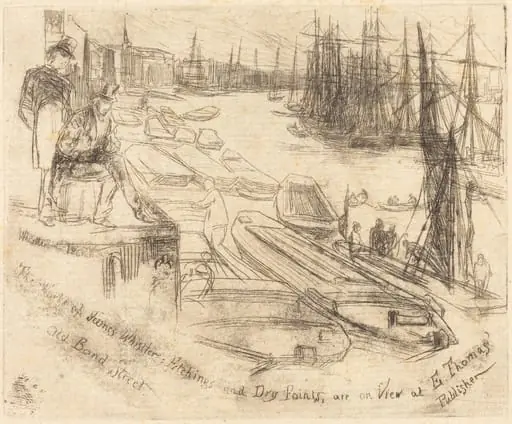
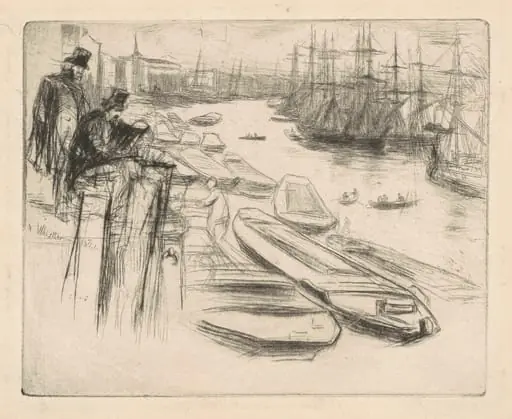
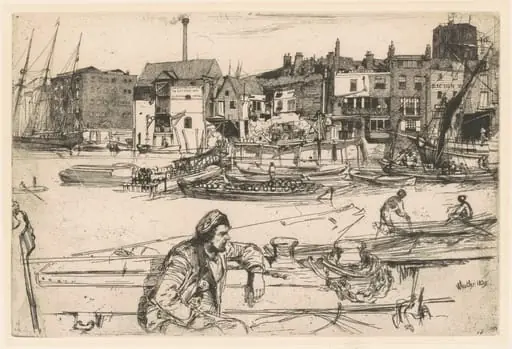
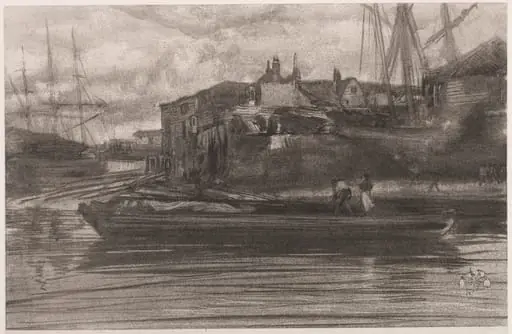
Millbank is an ink print by the Impressionist artist James McNeill Whistler. It dates from 1861 and is held in the collection of the National Gallery of Art.
About this work
Overview
Millbank is an etching and drypoint print created by James Whistler in 1861, during his London residency. Characteristic of his early graphic output, it exemplifies his emphasis on formal composition over narrative.
Subject & Meaning
The print captures a Thames riverside industrial scene, featuring a dock with stacked wood, figures amidst the activity, and background buildings. The depiction prioritizes visual arrangement and texture, reflecting Whistler's adherence to 'art for art's sake'.
Technique & Style
Executed in black on laid paper, Millbank showcases Whistler's use of delicate linework and expressive, sketchy rendering of light, shadow, and texture. The butterfly monogram, a hallmark of the artist, is also present.
History & Provenance
Created in 1861, Millbank is part of Whistler's early London-period prints. Specific provenance details are not provided in the available information.
Context
Millbank's style, emphasizing formal qualities and texture through innovative linework, was novel for its time. It reflects Whistler's contribution to the evolution of printmaking techniques, notably etching and drypoint.
Legacy
While specific legacy details of Millbank are not provided, as a work from this period, it contributes to Whistler's broader influence on the development of printmaking and the 'art for art's sake' movement.
Artist & collection
Artist
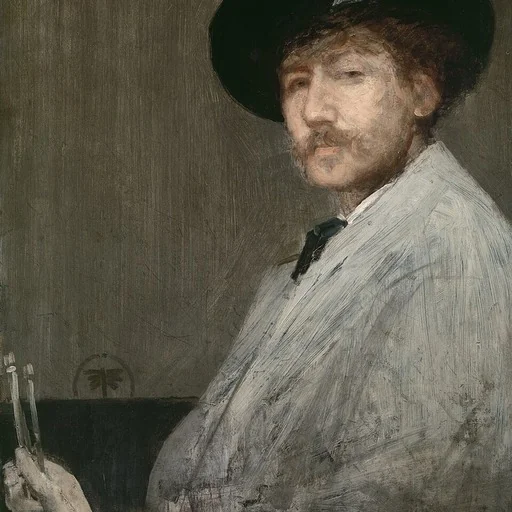
James Abbott McNeill Whistler was an American painter in oils and watercolor, and printmaker, active during the American Gilded Age and based primarily in the United Kingdom.

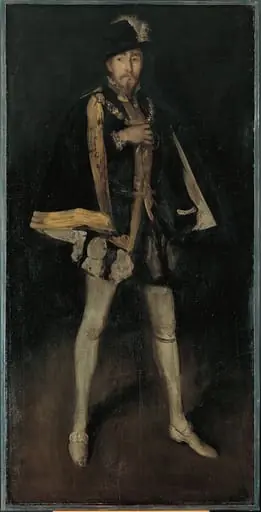 Arrangement in Black, No. 3: Sir Henry Irving as Philip II of Spain
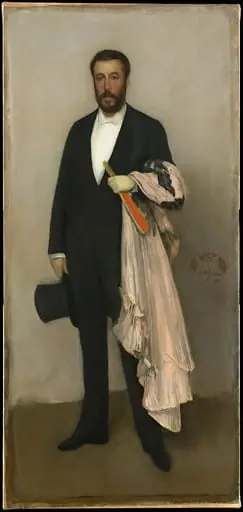 Arrangement in Flesh Colour and Black: Portrait of Theodore Duret
 Gold and Brown: Self-Portrait
 Edward Guthrie Kennedy
 Harmony in Yellow and Gold: The Gold Girl—Connie Gilchrist
 George W. Vanderbilt
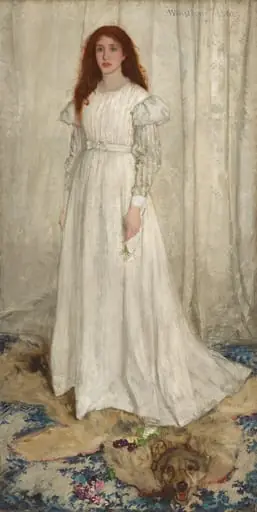 Symphony in White, No. 1: The White Girl
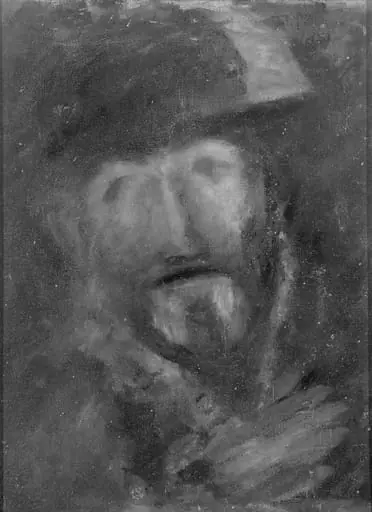 Henry Irving as Philip II of Spain