Artwork
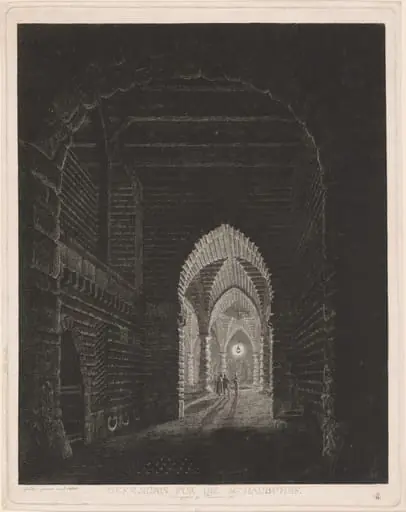
Cisterns at Carthage, Near Tunis
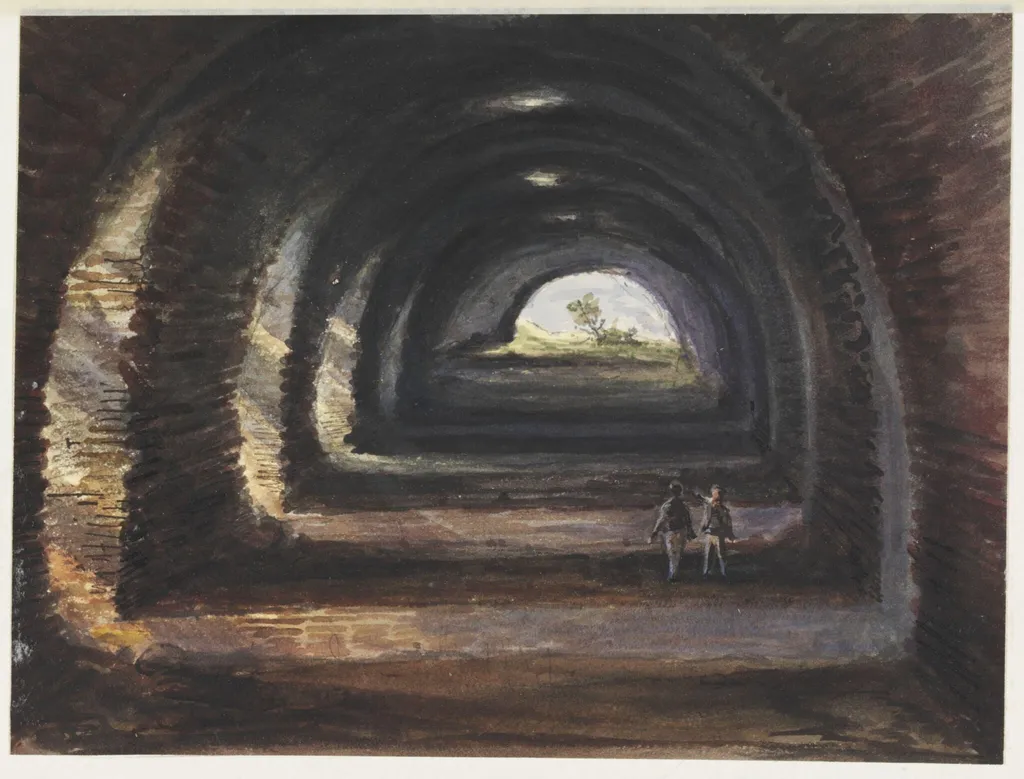
Cisterns at Carthage, Near Tunis is a watercolor work on paper by the Impressionist artist Joseph Sparkhall Rundle. It dates from 1857 and is held in the collection of the Victoria and Albert Museum.
About this work
Overview
The piece is a quiet, observational study of architecture and atmosphere, rendered in delicate washes rather than detailed precision.
Created in 1857, this watercolour by Joseph Sparkhall Rundle depicts underground cisterns near Carthage, Tunisia. Rundle, then a naval officer aboard HMS Brunswick, produced the work during a period of service in the Mediterranean. The piece is a quiet, observational study of architecture and atmosphere, rendered in delicate washes rather than detailed precision. Its modest scale and intimate subject reflect the artist’s personal engagement with the sites he encountered on duty.
Subject & Meaning
The scene captures a subterranean storage chamber, its vaulted stone passages dimly lit by a distant opening. Two tiny figures move through the space, emphasizing the scale and solitude of the ancient structure. The contrast between the cool, shadowed interior and the sunlit exterior—marked by grass and a solitary tree—suggests a transition between the buried past and the living landscape above, hinting at the enduring presence of Roman engineering in the Tunisian terrain.
Technique & Style
Rundle employed loose, rapid brushwork to convey texture and light. The stone walls are suggested through layered washes, with darker crevices and luminous edges creating a sense of depth without heavy outlining. The sunlight piercing the far arch is rendered with minimal pigment, allowing the paper’s white to suggest brightness. This restrained approach prioritizes mood over detail, aligning with the tradition of topographical watercolours used by military officers to document foreign landscapes.
History & Provenance
The watercolour remained in the artist’s family after his death, eventually passing to Sir Ronald Windgate. It was offered for sale by Marshall Spink and Beach’s of Salisbury in July 1973, where it fetched £25. Its journey from naval sketch to private collection reflects the shifting status of such works—from functional records to objects of historical interest. No public institution acquired it immediately after the sale, and its current location is not publicly documented.
Context
Rundle’s work emerged during a period when British naval officers frequently documented sites across the Mediterranean, often as part of broader imperial and scientific curiosity. Carthage, long a symbol of ancient civilization, attracted attention for its ruins and infrastructure. These watercolours served as personal records, distinct from formal surveys, offering intimate glimpses of places rarely illustrated in detail by professional artists of the time.
Legacy
Though not widely exhibited or reproduced, Rundle’s watercolour contributes to a lesser-known body of 19th-century British maritime art that valued observation over grandeur. It stands as an example of how non-professional artists contributed to the visual record of antiquities in North Africa. Its quiet realism and sensitivity to light offer a counterpoint to more dramatic Orientalist works of the era, preserving a subdued, authentic encounter with the past.
Own this work as a print
Artist & collection
Artist
Joseph Sparkhall Rundle painted watercolours of North African ruins in the mid-1800s.

 Grotto Interior
 View from inside a cave
 Cave of Jeremiah, Jerusalem
 Fountains
 On the Beach, Brighton
 The Tunnel in the grounds of Buckland House, near Faringdon
 Ancient Roman Ruins Overgrown with Trees and Bushes
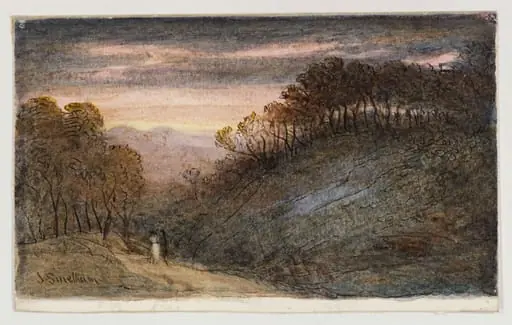 Landscape
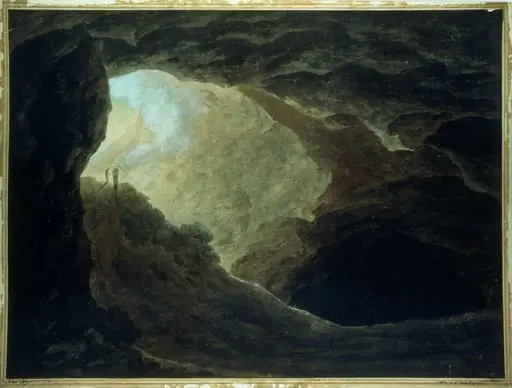 A Cavern in the Campagna, Rome
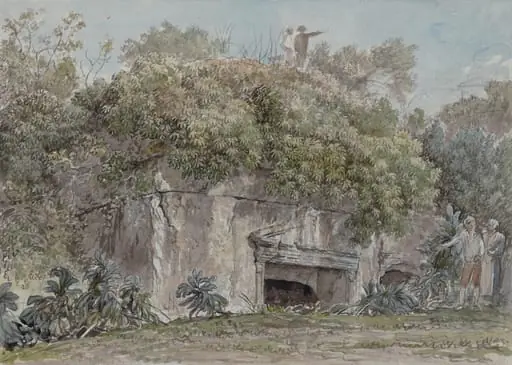 Ruins near Castel Gandolfo
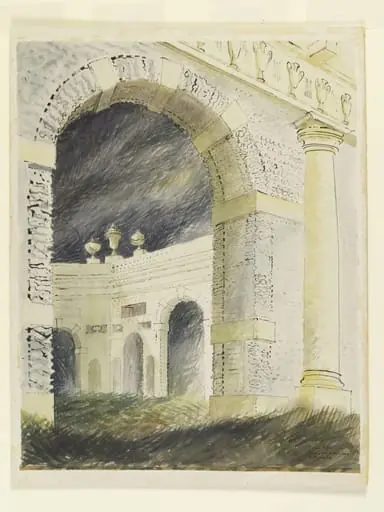 Dashwood Mausoleum, West Wycombe
 Gefængnis für die Schaubühne (Scenographic Design for a Prison)