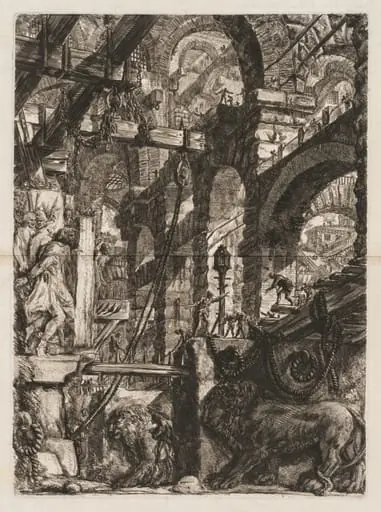
Artwork
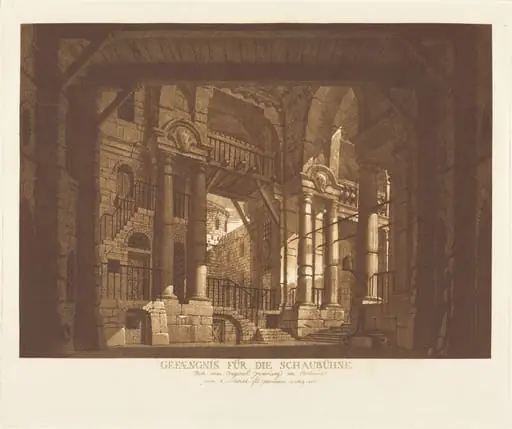
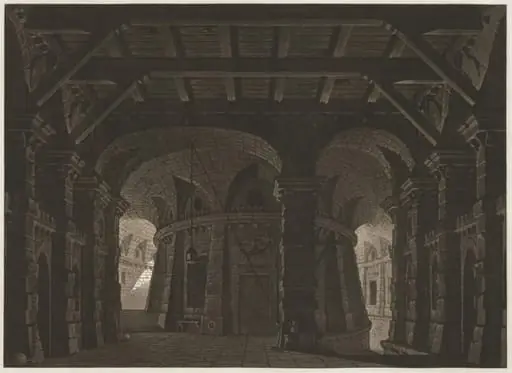
Gefængnis für die Schaubühne (Scenographic Design for a Prison)
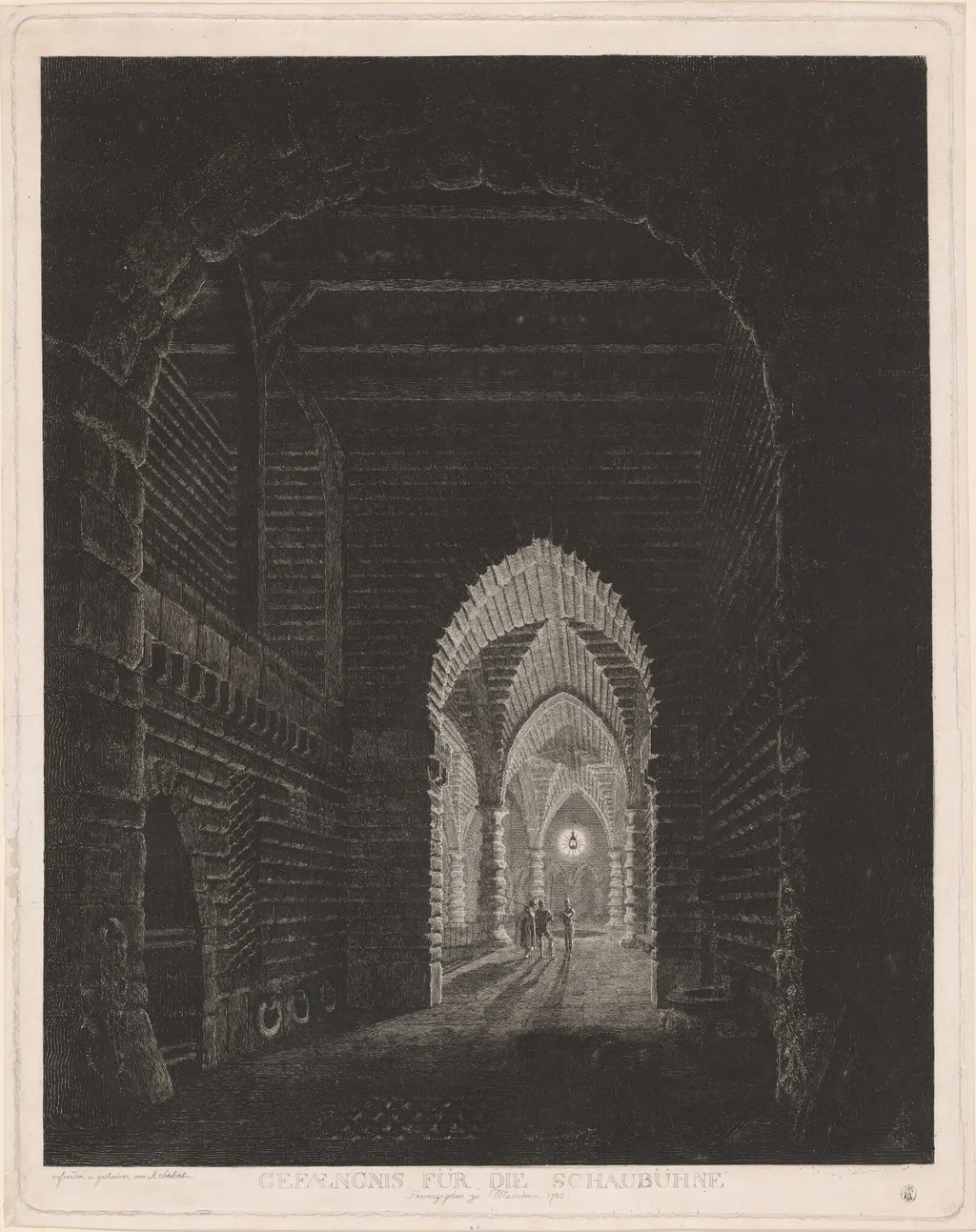
Gefængnis für die Schaubühne (Scenographic Design for a Prison) is an ink print by the Romanticist artist Abel Schlicht. It dates from 1785 and is held in the collection of the National Gallery of Art.
About this work
Overview
Gefængnis für die Schaubühne is an 1785 etching by Abel Schlicht, currently in the collection of the National Gallery of Art, Washington. The print depicts a somber, atmospheric prison corridor.
Subject & Meaning
The scene presents a dark, narrow prison hallway with rough stone walls and a wooden-beamed ceiling, illuminated by distant light casting long shadows. Two diminutive figures approach the light source. The title suggests the design was intended for theatrical use, implying a set piece for a play.
Technique & Style
Schlicht employed a rough, scratchy etching technique to convey the textured quality of the prison's stone walls and wooden beams, enhancing the overall sense of austerity and gloom.
History & Provenance
Created in 1785, the etching is now part of the National Gallery of Art's collection in Washington, D.C., though specific details of its provenance before acquisition are not provided here.
Context
As a scenographic design, this etching reflects 18th-century theatrical practices where detailed set designs were crucial for immersive performances. Its existence highlights the intersection of art and theater in Schlicht's work.
Legacy
While specific influences or notable uses of this design in plays are not detailed here, the etching remains a notable example of late 18th-century scenographic art, offering insight into period theatrical aesthetics.
Artist & collection


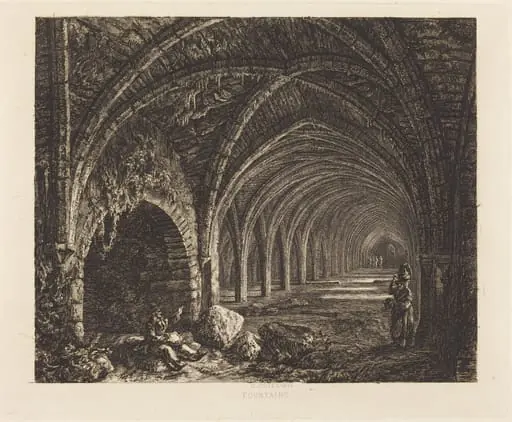 Fountains
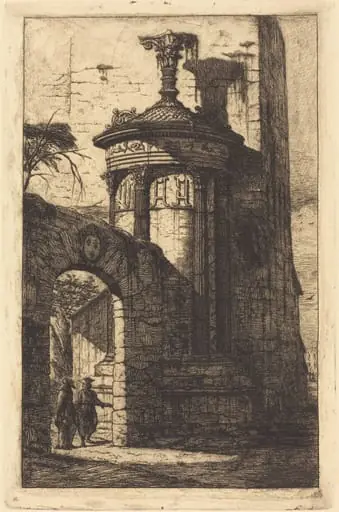 Entrée du Couvent des Capucins français à Athenes (Entrance to the French Capuchin Convent at Athens)
 The Ancient Gallery
 Subterranean Jail for the Stage
 Prospettiva della Scala della conserva d'acqua de' già detti alloggiamenti, accennati in pianta nella Tav. XIII con la lett. G.
 La galerie Notre-Dame, Paris (The Gallery of Notre Dame, Paris)
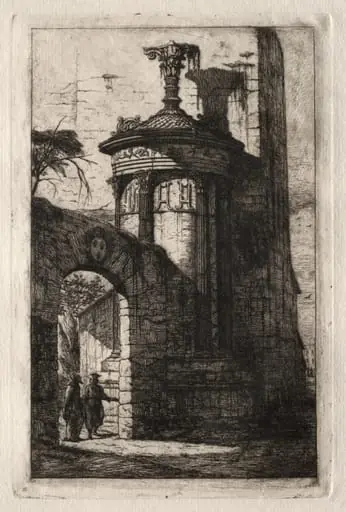 Entrance to the French Capuchin Convent at Athens