Artwork
Xenocrates and Phryne
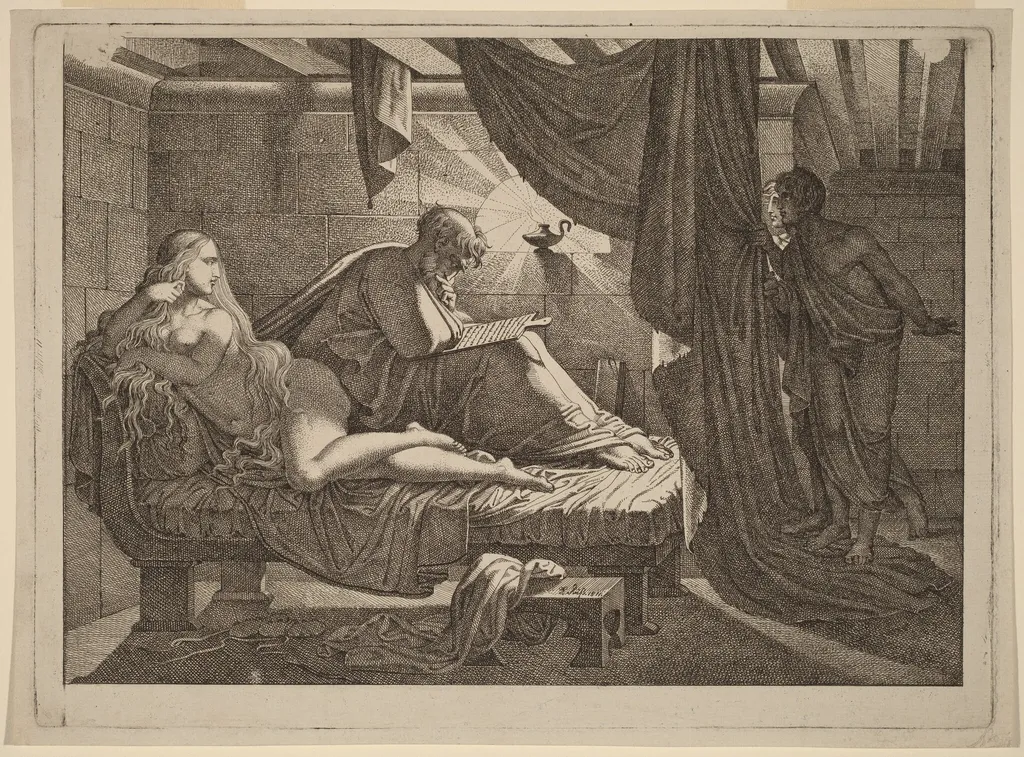
Xenocrates and Phryne is an ink print by the Romanticist artist Carl Russ. It dates from 1811 and is held in the collection of the National Gallery of Art.
About this work
Overview
Carl Russ's 1811 etching, Xenocrates and Phryne, depicts a serene yet dramatic scene in a dimly lit room, featuring three figures in a contemplative interaction.
Subject & Meaning
The print illustrates a moment of intimate connection between a reclining woman (Phryne) and a seated man (Xenocrates), with a third figure observing from a distance, conveying a sense of quiet emotional depth.
Technique & Style
Russ employed expressive shading techniques in this etching to capture the play of light on the subjects' faces and hands, enhancing the overall mood and depth of the composition.
History & Provenance
Created in 1811, the etching exists as a proof on wove paper, indicating an early stage in the print's production process.
Context
As an etching, the work exemplifies a traditional printmaking method where designs are carved into metal plates, a technique highlighted by the artist's nuanced use of shading to evoke light and atmosphere.
Artist & collection


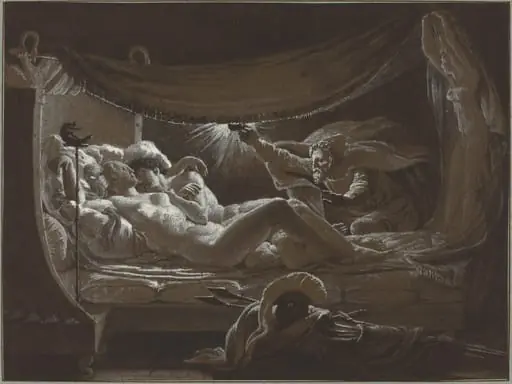 Vulcan Discovering Venus and Mars
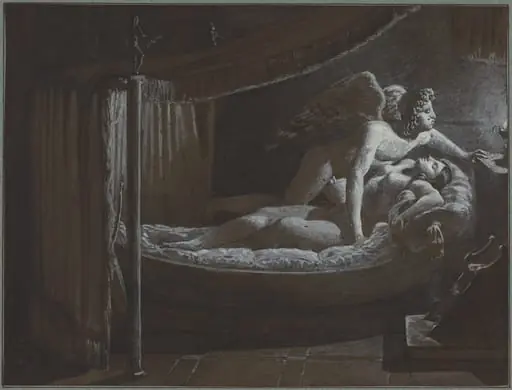 Cupid with Psyche Extinguishing the Lamp
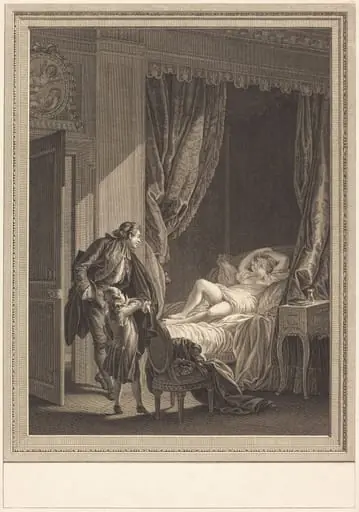 Le matin
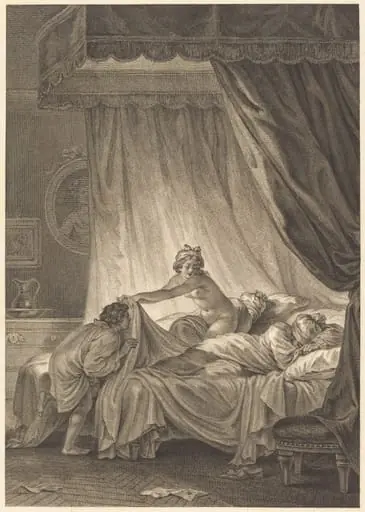 Joconde: Le lit
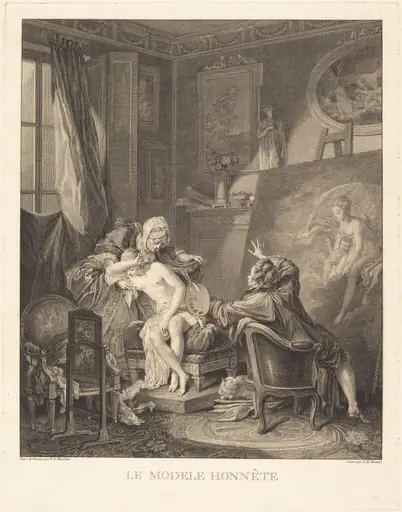 Le modèle honnête
 La gageure des trois commeres: Le fil
 Paris and Helen, with Hymen
 Joconde: Le lit
 The Mocking of Ceres
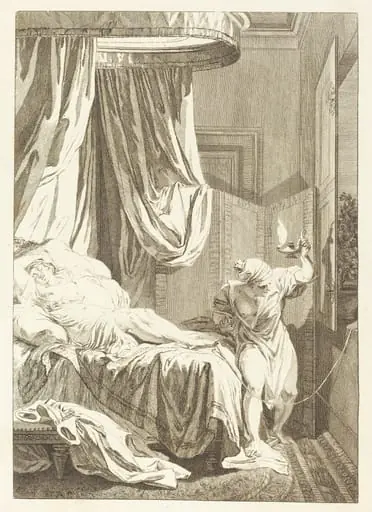 La gageure des trois commeres: Le fil
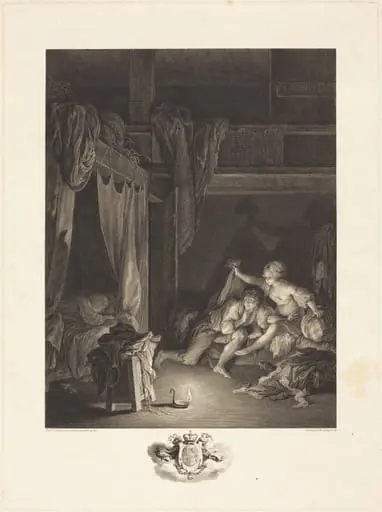 La Sentinelle en défaut
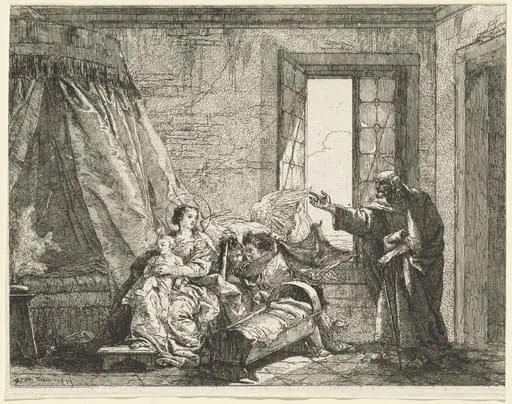 Joseph Relays to Mary God's Command to Flee