Artwork
L'Assomption de Hannele Mattern; En l'attendant
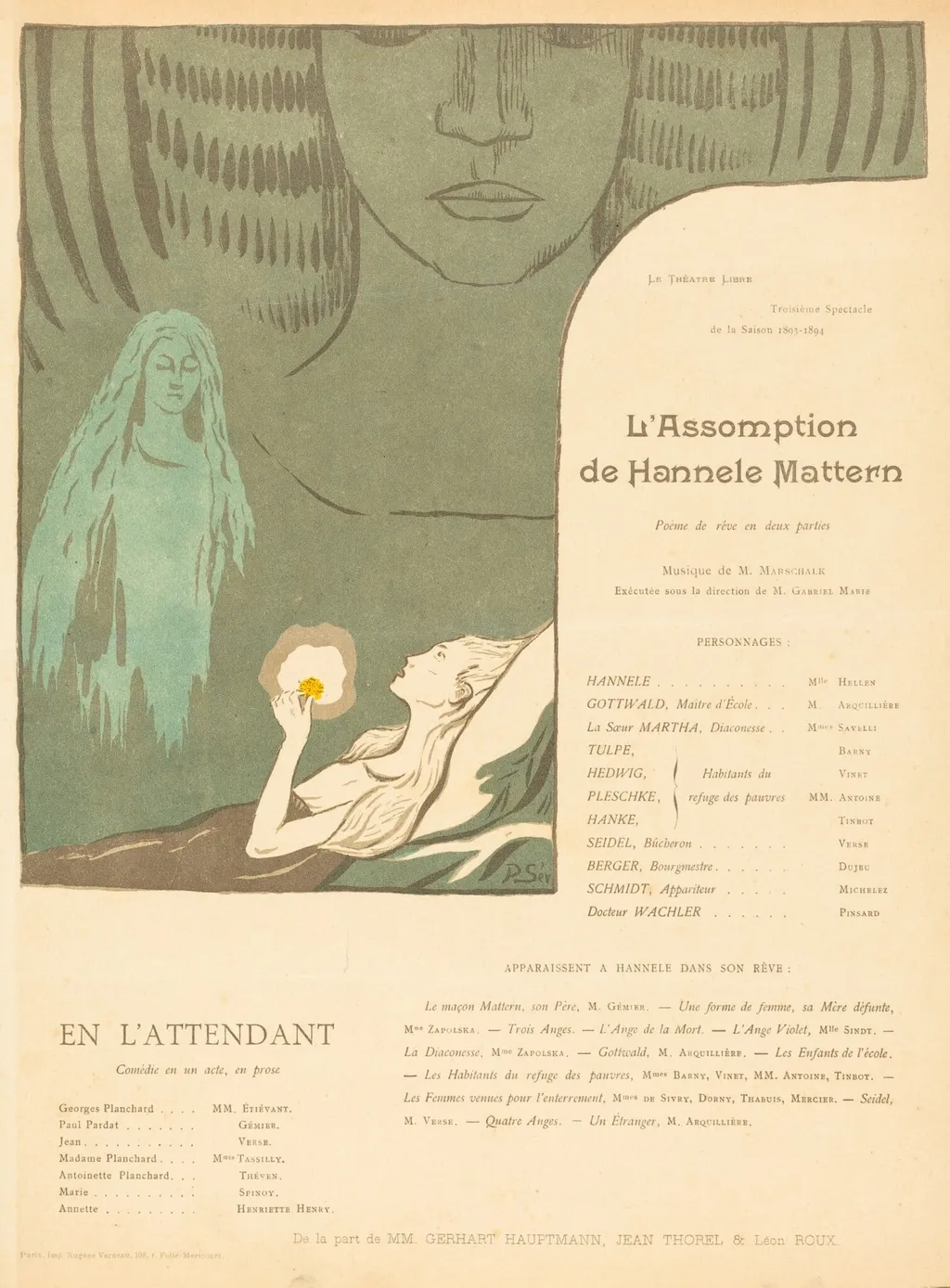
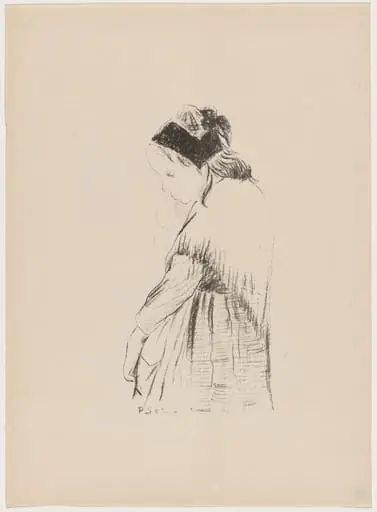
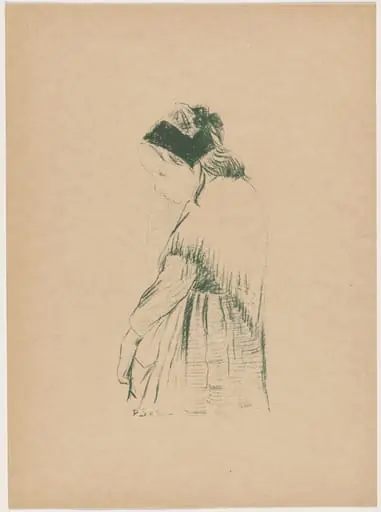
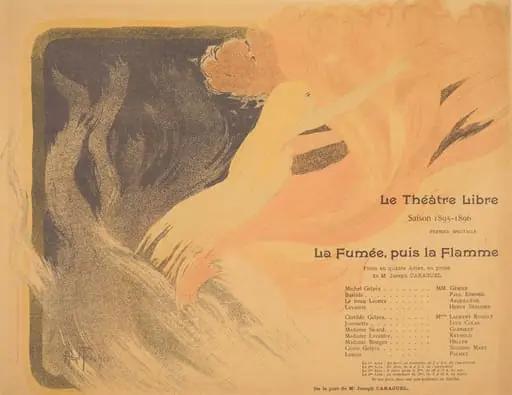
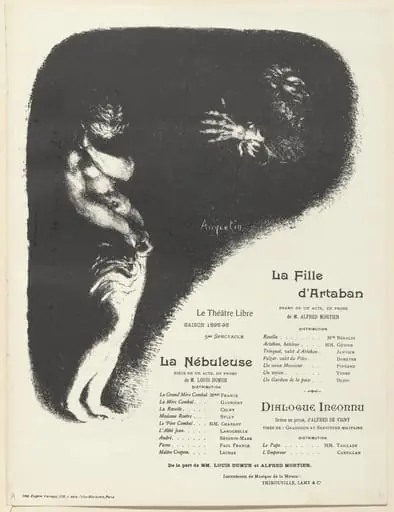
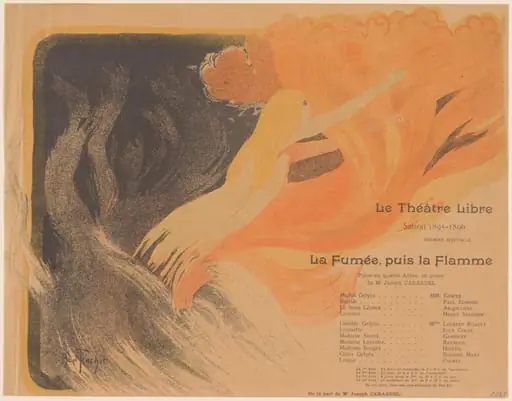
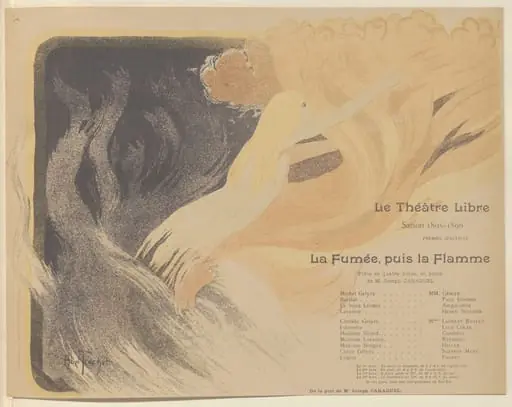
L'Assomption de Hannele Mattern; En l'attendant is an ink print by the Impressionist artist Paul Sérusier. It dates from 1894 and is held in the collection of the National Gallery of Art.
About this work
Overview
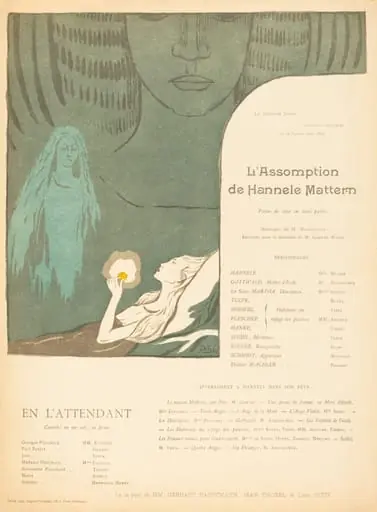
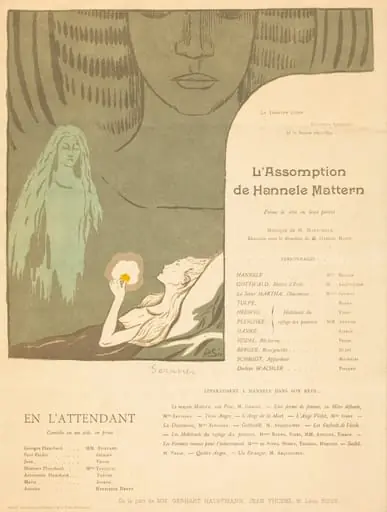
Created in 1894, L’Assomption de Hannele Mattern ; En l’attendant is a five‑color lithograph on wove paper by French artist Paul Sérusier. The work presents a solitary female figure in a contemplative pose, rendered in a restrained palette of greens and earth tones that emphasize mood over detail.
Subject & Meaning
The central figure reclines on a couch, her long hair spilling over her shoulders, while she lifts a yellow blossom to her nose. A large, ambiguous face appears in the background, and another woman in a green dress stands to the left, suggesting a layered narrative of introspection and perhaps an unseen dialogue between the figures.
Technique & Style
Executed as a five‑color lithograph, Sérusier employs the medium’s capacity for flat, uniform washes to achieve a muted chromatic scheme. The use of wove paper provides a smooth surface that enhances the subtle gradations of green and brown, while the limited palette aligns the piece with the post‑Impressionist interest in color harmony and symbolic content.
History & Provenance
The print was produced during Sérusier’s mature period, following his involvement with the Nabis group. It entered the collection of Hannele Mattern, after whom the work is partially titled, and has since been documented in several European print exhibitions, confirming its circulation among collectors of early modern French prints.
Context
Sérusier’s lithograph emerges at a time when French artists were exploring alternatives to naturalistic representation, focusing instead on mood and interiority. The work reflects the Nabis’ emphasis on decorative flatness and spiritual resonance, situating it within the broader shift from Impressionism toward Symbolist and abstract tendencies.
Artist & collection