Artwork
Paysage (Landscape)
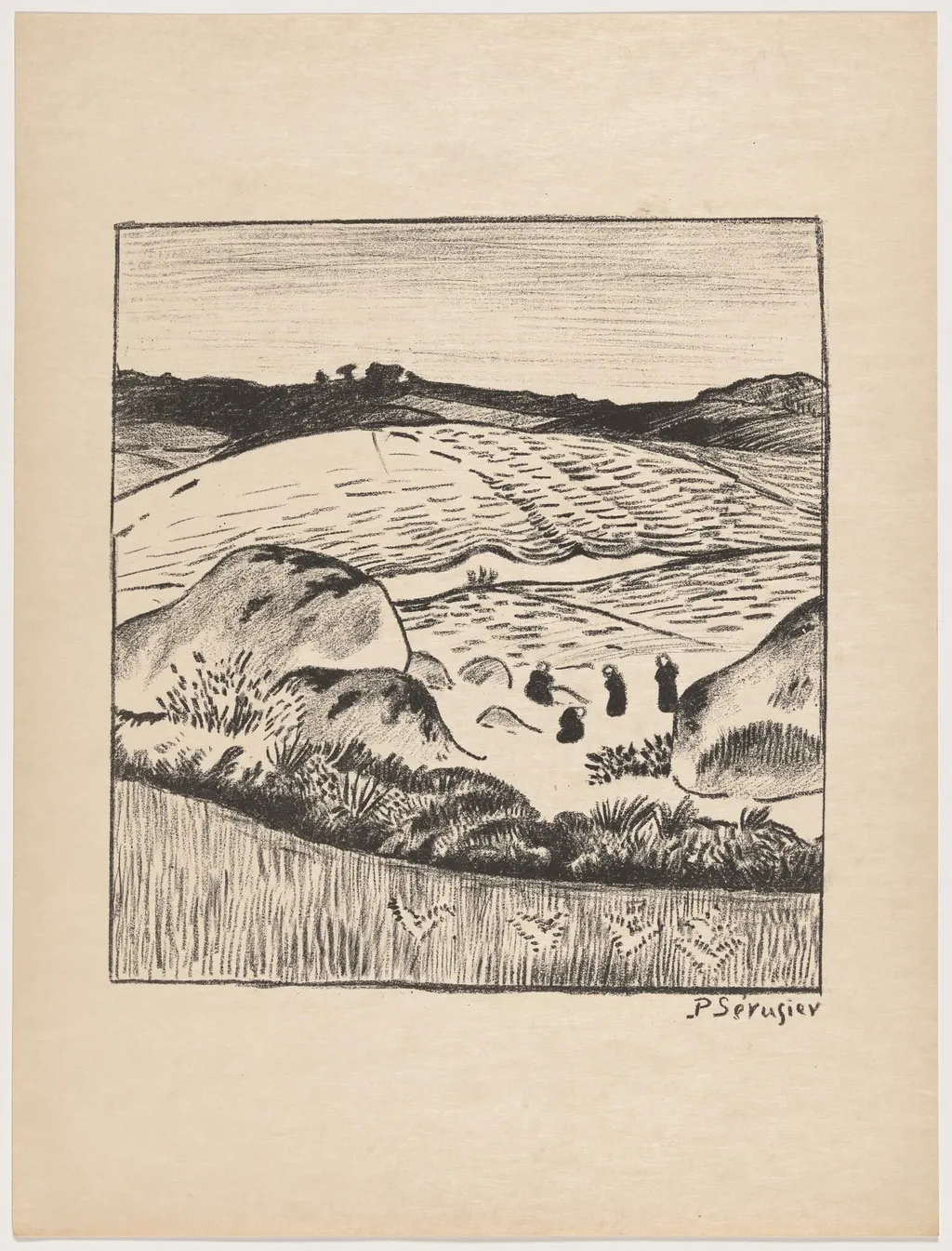
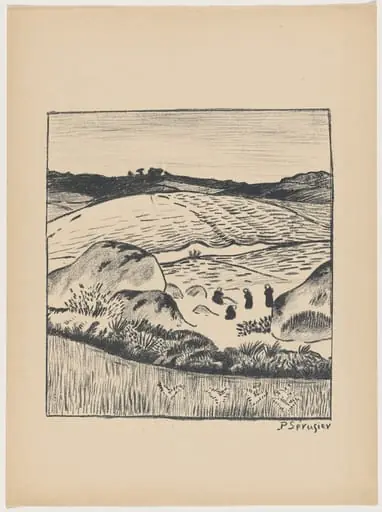
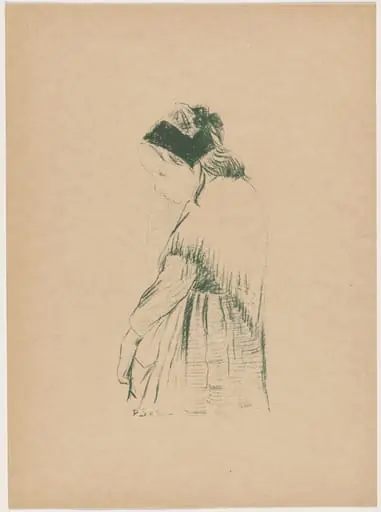
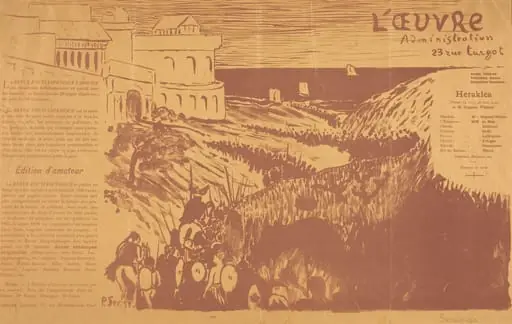
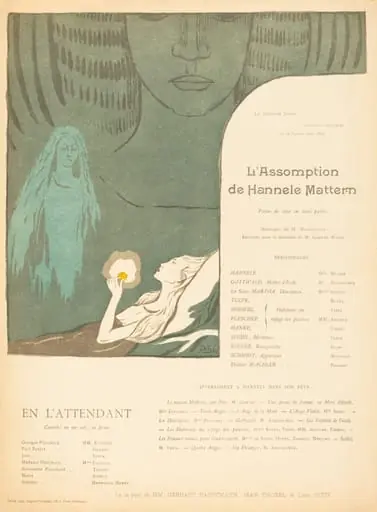
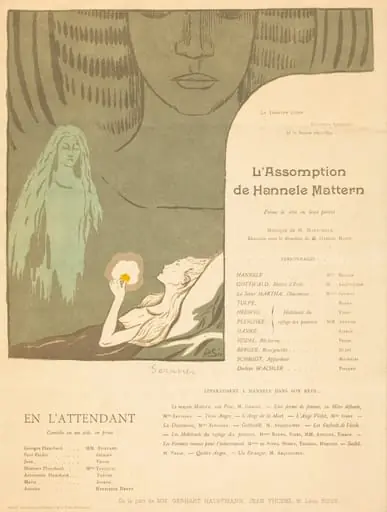
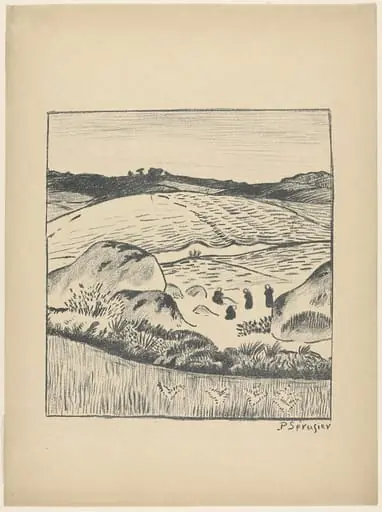
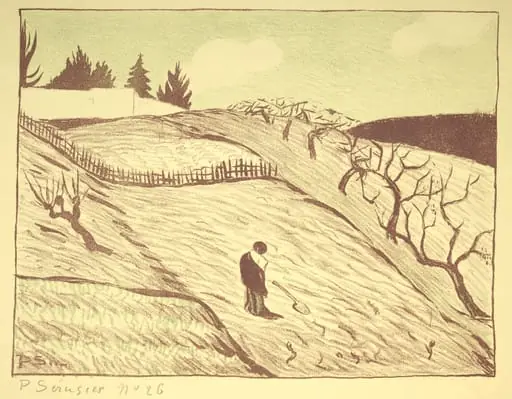
Paysage (Landscape) is an ink print by the Impressionist artist Paul Sérusier. It dates from 1895 and is held in the collection of the National Gallery of Art.
About this work
Overview
Paul Sérusier produced this lithograph in 1895, using black ink on heavy Japanese paper to create a quiet, atmospheric landscape.
Paul Sérusier produced this lithograph in 1895, using black ink on heavy Japanese paper to create a quiet, atmospheric landscape. The work belongs to his post-Nabis period, when he increasingly turned to printmaking as a means of exploring tone and form. Unlike his earlier symbolic works, this piece emphasizes naturalism through restrained composition and minimal detail, focusing on the interplay of earth and sky.
Subject & Meaning
The scene depicts undulating hills under a muted sky, with faint human figures far in the distance and sparse vegetation in the foreground. There is no narrative or symbolic intent; instead, the image invites quiet observation. The absence of sharp detail and the soft transitions between forms suggest a meditative engagement with nature, reflecting Sérusier’s interest in inner stillness over external representation.
Technique & Style
Sérusier employed lithography to achieve subtle tonal gradations, using dense black ink to build depth without color. The heavy Japanese paper absorbed the ink evenly, enhancing the smooth blending of hills and sky. Textural elements—rocks, shrubs—are rendered with minimal lines, avoiding definition in favor of atmospheric suggestion. The technique aligns with his move toward abstraction through tonal harmony rather than line or color.
History & Provenance
Created in 1895, this print emerged during a period when Sérusier was distancing himself from the symbolic intensity of the Nabis group. It was likely produced in small editions for private circulation rather than public exhibition. No major public collection records its early ownership, suggesting it remained within artist or collector circles, valued for its quiet craftsmanship rather than public acclaim.
Context
In mid-1890s France, lithography was gaining traction among artists seeking alternatives to oil painting. Sérusier’s work here reflects broader trends toward tonal experimentation and introspective subjects, influenced by Japanese prints and Symbolist ideals. While contemporaries like Toulouse-Lautrec used lithography for bold imagery, Sérusier pursued restraint, aligning his prints with a contemplative, almost monastic aesthetic.
Legacy
This lithograph exemplifies Sérusier’s quieter, later phase—less known than his Nabis-era paintings but significant for its influence on printmakers seeking emotional resonance through minimalism. It contributed to a shift in French print culture, demonstrating that quietude and tonal nuance could hold artistic weight without spectacle. Its understated presence continues to inform discussions on the expressive potential of monochrome printmaking.
Own this work as a print
Artist & collection